e
magazine
 |
 |
 |
|
Over the past year, numerous important Resolutions have been promulgated, notably Resolutions No. 57, 59, 66, 68, 70, 71, and 72 [Resolution No. 57-NQ/TW on breakthroughs in the development of science, technology, innovation, and national digital transformation (issued on December 22, 2024); Resolution No. 59-NQ/TW on international integration in the new context (issued on January 24, 2025); Resolution No. 66-NQ/TW on reforming the formulation and enforcement of laws to meet the requirements of national development in the new era (issued on April 30, 2025); Resolution No. 68-NQ/TW on private economic development (issued on May 4, 2025); Resolution No. 70-NQ/TW on ensuring national energy security through 2030, with a vision to 2045 (issued on August 20, 2025); Resolution No. 71-NQ/TW on breakthroughs in education and training development (issued on August 22, 2025); and Resolution No. 72-NQ/TW on several breakthrough solutions to strengthen the protection, care, and improvement of people’s health (issued on September 9, 2025)]. These Resolutions cover most of the country’s key sectors. They represent major, comprehensive orientations, reflecting innovative thinking, a long-term vision, and the Party’s strong political determination; they serve as a foundation for the nation to rise and achieve robust and prosperous development in the new era. The issuance of seven Resolutions by the Politburo within a short period demonstrates the Party’s strategic vision and strong political resolve in realizing the aspiration for a powerful and prosperous nation.
Resolution No. 57-NQ/TW dated December 22, 2024 of the Politburo on breakthroughs in the development of science and technology, innovation, and national digital transformation. In this process, the Central Policy and Strategy Commission has actively conducted research, provided advice, and made recommendations to the Party Central Committee, particularly to the Politburo and the Secretariat, on numerous major guidelines and policies. Notably, the Commission acted as the focal point, coordinating with relevant agencies to draft and submit two Resolutions to the Politburo for consideration and promulgation: Resolution No. 57-NQ/TW and Resolution No. 70-NQ/TW. With regard to the other Resolutions, the Commission proactively and closely coordinated with relevant agencies throughout the research and drafting process, ensuring timely submission to the Politburo for issuance.
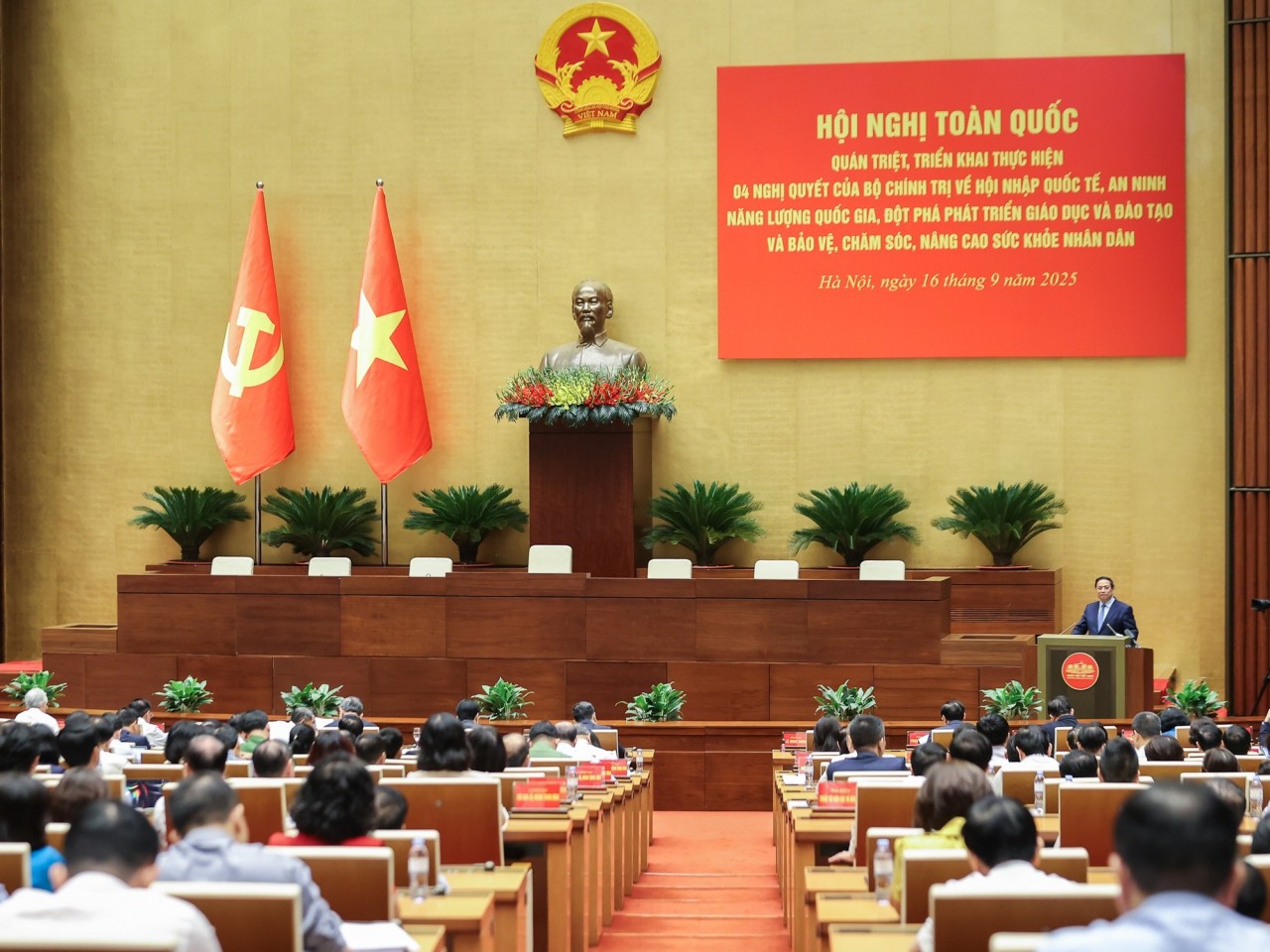
The National Conference to Disseminate and Implement Four Resolutions, organized by the Politburo and the Secretariat, took place on the morning of September 16, 2025 in Hanoi. In carrying out the above tasks, the Commission has consistently adhered to and demonstrated the guiding spirit of General Secretary To Lam, namely that Party resolutions must be concise, specific, easy to grasp, and easy to implement. Bringing the seven Resolutions into practice is a process that requires a high degree of unity in both awareness and action across the entire political system.
From the central to the grassroots level, each Party committee, Party organization, state agency, and mass organization must concretize the Resolutions into clear programs, projects, and action plans, linking the responsibility of leaders with implementation outcomes, and ensuring “clear tasks, clear responsibilities, clear timelines, and clear effectiveness.” At the National Conference on the dissemination and implementation of four Politburo Resolutions (September 16, 2025), General Secretary To Lam emphasized that the overarching spirit of the Resolutions is to swiftly shift from “issuing guidelines” to “governing implementation,” placing people and businesses at the center and taking practical effectiveness as the measure. Each agency, organization, and individual bears responsibility for transforming the content of the Resolutions into daily tasks and concrete action programs, with allocated resources, defined timelines, measurable indicators, and mechanisms for supervision and accountability. Initial implementation of the aforementioned Resolutions has generally received positive feedback, particularly from the public, the business community, and local authorities, regarding their innovative, substantive, and practical nature. It can be observed that both awareness and action across the entire political system have undergone positive changes, affirming the soundness of these policies. Institutional development and improvement, as well as mechanisms, policies, and implementation, have been renewed in both thinking and approach; many “bottlenecks” have been promptly addressed; and institutional obstacles have, in essence, been largely resolved. The Party’s Resolutions have been swiftly translated into policies, programs, and practical outcomes, contributing to socio-economic development, institutional improvement, and the strengthening of public and business confidence. |
 |
|
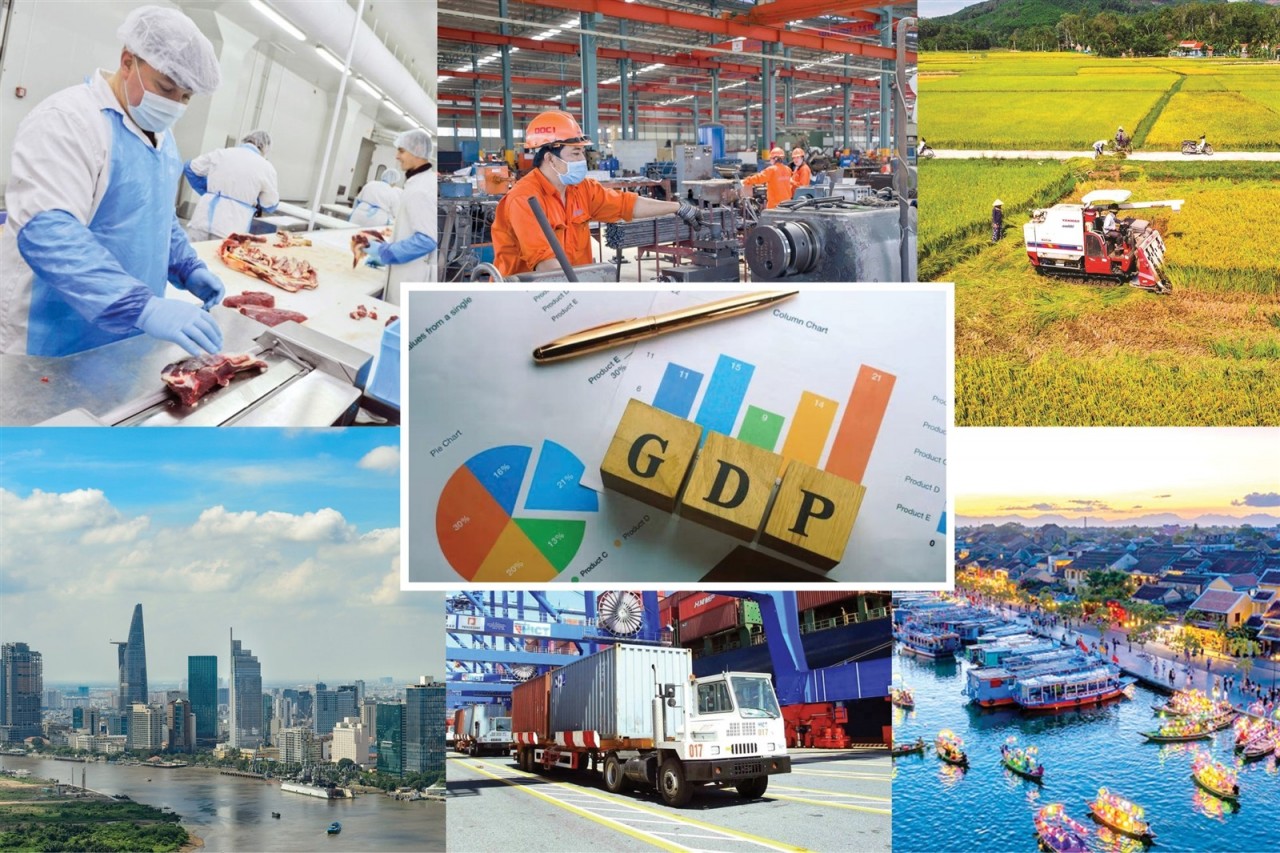
We are continuing to advance the renewal process in a comprehensive and urgent manner so as not to miss development opportunities, avoid falling into the middle-income trap, and prevent the risk of lagging behind the world. Accordingly, the Central Policy and Strategy Commission has identified the need to continue focusing on comprehensive research, advisory work, and policy proposals, particularly in the fields of economic and social development, environmental protection, sustainable development, and national integration.
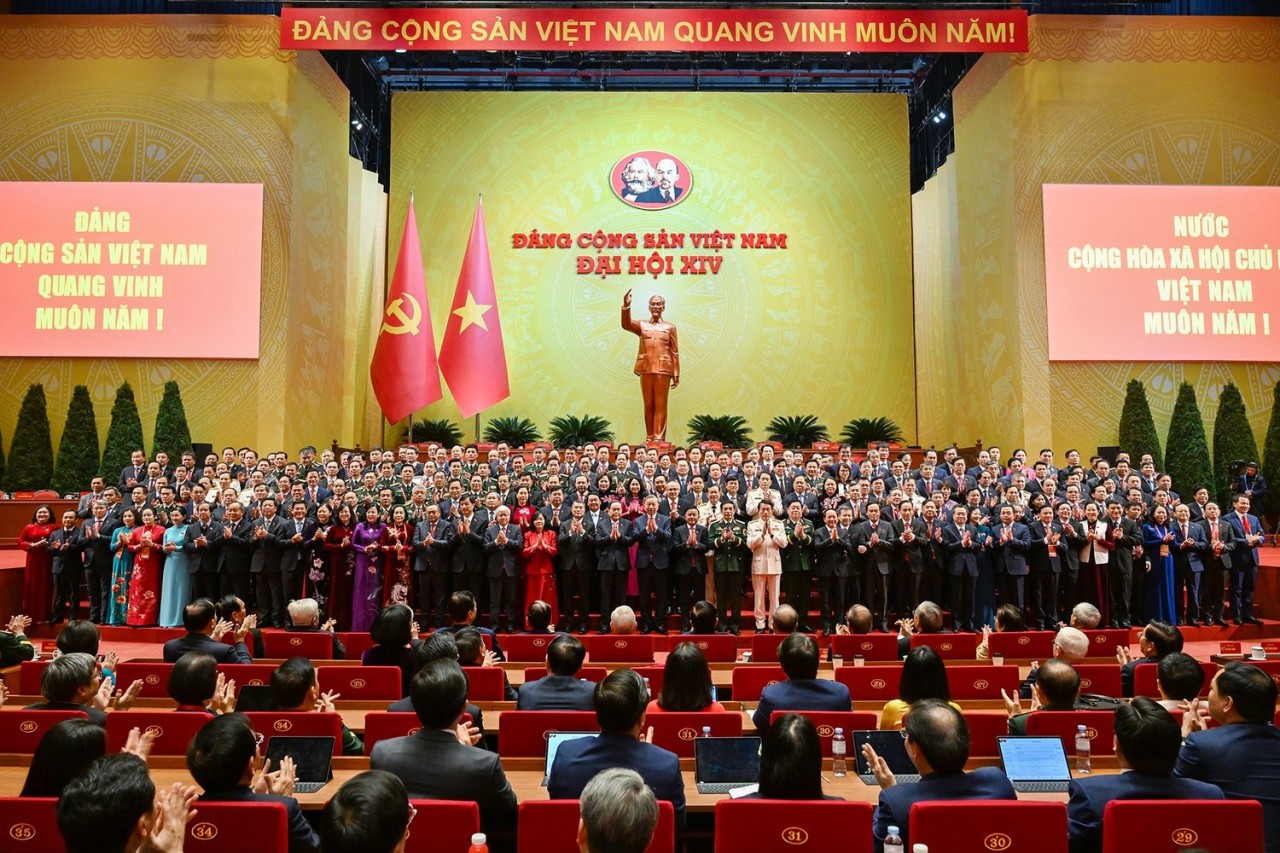
The Central Policy and Strategy Commission has determined to closely adhere to the Party’s overarching orientations as set out in the documents submitted to the 14th National Congress. Regarding key areas and priorities, the Commission closely follows the Party’s overall orientation as set out in the documents submitted to the 14th National Party Congress, especially the key tasks and strategic breakthroughs identified for the 2026-2030 period, namely: (1) Prioritizing the synchronous development of institutions for development, with a focus on the legal system, mechanisms, and policies to promptly and thoroughly remove bottlenecks and obstacles, promote innovation, ensure coherence and harmony, and meet the requirements for rapid and sustainable national development in the new era; (2) Continuing to intensify Party building and rectification and to build a clean and strong political system in a comprehensive manner; (3) Promoting the development of a modern, internationally integrated socialist-oriented market economy that meets the requirements of new productive forces; (4) Focusing on breakthroughs in science, technology, innovation, and digital transformation as a foundation for developing new and modern productive forces; (5) Developing human resources and fostering culture to truly become a foundation, an internal strength, and a powerful driving force for the country’s rapid and sustainable development; (6) Advancing foreign affairs work in a synchronous, creative, and effective manner to create a favorable environment for national development. As for strategic breakthroughs, these include: (1) Making strong breakthroughs in development institutions and enhancing the capacity for policy formulation and implementation of the Party’s guidelines and the State’s policies and laws in order to unlock, mobilize, and effectively utilize all resources; (2) Focusing on restructuring and improving the quality of human resources, particularly high-quality and highly skilled human capital; (3) Continuing to comprehensively improve and make strong breakthroughs in the development of socio-economic infrastructure. |
 |
|
The Central Policy and Strategy Commission consistently maintains that the quality of strategic advisory work depends significantly on its ability to mobilize, connect, and harness the intellectual resources of experts, scientists, managers, and reputable practitioners in society. As a strategic advisory body of the Party on socio-economic development, the Commission’s research activities are macro-level, interdisciplinary, and long-term in nature. Therefore, it is all the more necessary to selectively inherit and build upon research achievements that have been validated both theoretically and practically. In working sessions with the Commission, the General Secretary has emphasized that strategic advisory work must “truly be grounded in collective wisdom and in the vivid practical experience of the country, avoiding closed thinking within the confines of a single agency.” This is a very important orientation for the Commission to continue expanding spaces for consultation and policy feedback, viewing the listening to opinions from the intellectual elite not as supplementary, but as an indispensable component of the strategic policy-making process. |
|
General Secretary To Lam worked with the Central Policy and Strategy Commission on May 28, 2025 in Hanoi. |
|
Practical experience in 2025, particularly during the period when the Commission officially operated under its new organizational model, functions, and tasks, shows that proactively organizing seminars, forums, and thematic workshops with the participation of leading scientists and strategic research institutions both domestically and internationally has made substantive contributions to improving the quality of reports, proposals, and policy recommendations submitted to the Party Central Committee. Many new and complex issues have been approached from multi-dimensional perspectives, enabling the Commission’s advisory work to be more grounded in reality and more in-depth. However, the Commission also candidly acknowledges that there remains room for further improvement in mobilizing societal intellect. As the General Secretary has noted, strategic advisory work “requires not only numerous opinions, but mechanisms to refine and crystallize those opinions into valuable arguments.” In this spirit, in the time ahead, the Commission will continue to refine consultation mechanisms, strengthen connections with domestic and international expert networks, and gradually build professional databases to serve strategic analysis and forecasting, ensuring that contributions from the intellectual elite are substantively integrated into the formulation and refinement of the Party’s major guidelines and policies. |
 |
|
The Central Policy and Strategy Commission is the Party’s strategic advisory body on socio-economic development, tasked with researching and proposing major guidelines and orientations that are comprehensive, long-term, and interdisciplinary in nature. On that basis, the Commission consistently defines the requirement to strictly fulfill its assigned position, role, functions, and responsibilities, while considering coordination with the agencies of the National Assembly, the Government, ministries, sectors, and localities as a fundamental principle throughout the implementation of its tasks. In discussing the role of strategic agencies, the General Secretary emphasized that the Party’s advisory bodies must truly perform well the role of a “general staff headquarters,” contributing to orientation, guidance, and unity in the formulation and implementation of major guidelines and policies. In line with this spirit, the Central Policy and Strategy Commission always attaches importance to close coordination with state agencies from the stages of research and practical review to project formulation, appraisal, and the monitoring and supervision of the implementation of the Party’s guidelines and policies in practice. |
 |
|
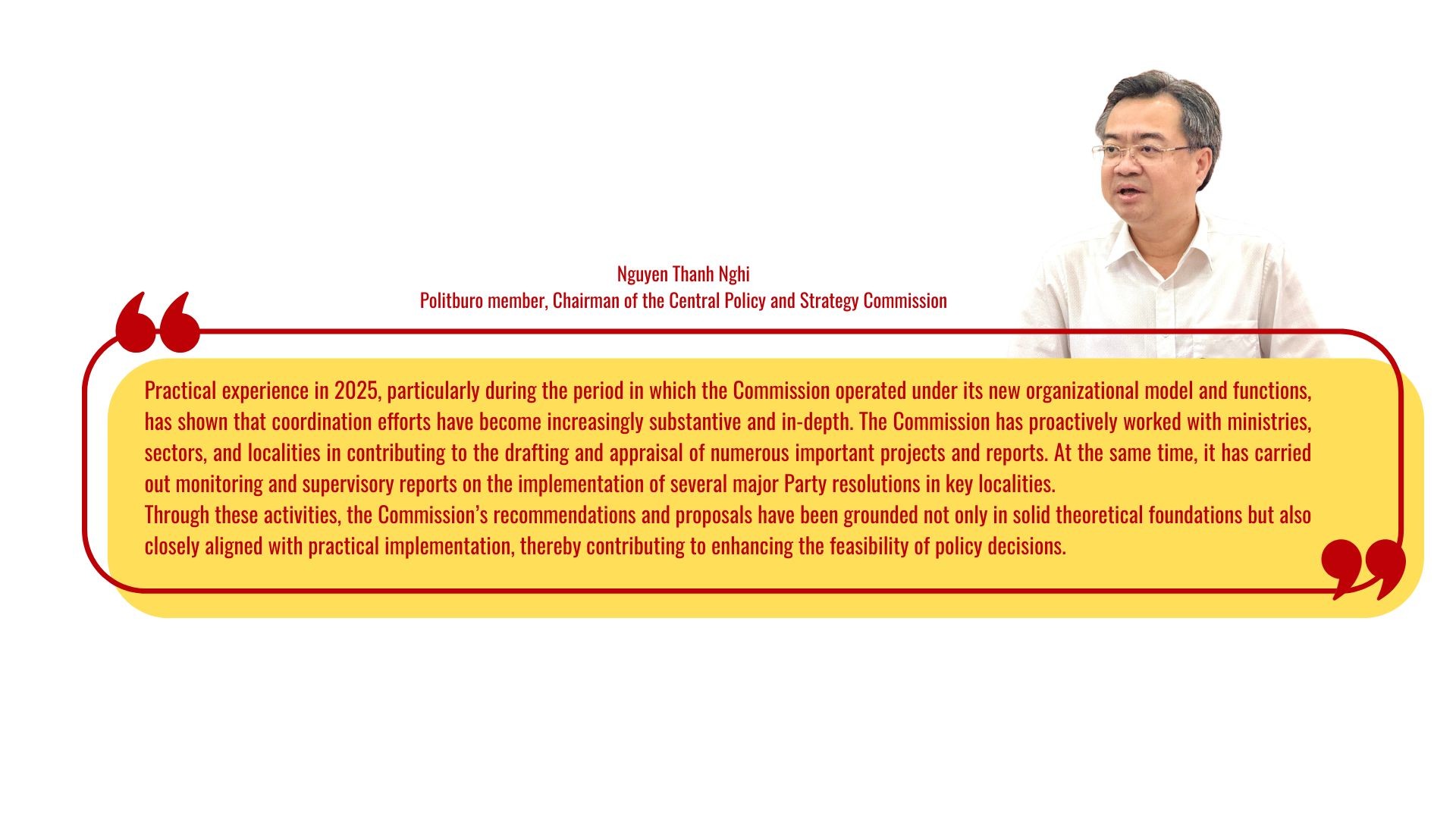
Practical experience in 2025, particularly during the period when the Commission operated under its new organizational model and functions, shows that coordination has increasingly deepened. The Commission has proactively worked with ministries, sectors, and localities in developing and appraising numerous important projects and reports, while also conducting monitoring and supervisory reports on the implementation of several major Party resolutions in key localities. Through this process, the Commission’s recommendations and proposals have been grounded not only in theoretical foundations but also closely aligned with practical implementation, thereby enhancing the feasibility of policy decisions. In the time ahead, to further improve coordination effectiveness, the Central Policy and Strategy Commission will continue to adhere closely to its assigned functions and responsibilities; strengthen the sharing of information, data, and research results with relevant agencies; and refine coordination mechanisms in a direction that clarifies responsibilities and focal points, while forging closer links between strategic research and practical implementation. More importantly, as the General Secretary has emphasized, every agency and official involved in the policy-making process must place the nation’s overall interests above sectoral interests, coordinating in a spirit of partnership, responsibility, and commitment to the country’s sustainable development goals. |
 |
|
As the country enters a new stage of development marked by intertwined opportunities and challenges, the Central Policy and Strategy Commission is expected to more strongly affirm its role and mission as the Party’s “strategic brain trust on socio-economic development.” To meet these expectations, I have several aspirations as follows: First, the Commission should continue to receive close attention and direction from the Party Central Committee, the Politburo, and the Secretariat, especially from the General Secretary. This is a prerequisite for ensuring that the Commission’s activities remain practical, effective, and closely aligned with advising on the Party’s socio-economic guidelines and orientations. Second, the Commission must renew its thinking and enhance its advisory capacity, working methods, and research, analytical, and forecasting capabilities. Advisory work must be strategic and forward-looking, while promptly translating the Party’s guidelines, first and foremost the Resolution of the 14th National Party Congress, into feasible action programs. This will provide a solid foundation for the Party to make sound and timely decisions under new conditions. Third, in 2026, the Commission will focus on advising on the development of a Resolution on “double-digit” economic growth associated with a new growth model. This is a key task of particular importance, serving not only as a professional requirement but also as a measure of the Commission’s strategic thinking capacity and its ability to help shape the country’s future. Setting a high growth target in tandem with a new development model will create strong momentum, unlock the potential and creativity of society as a whole, and accelerate economic restructuring and the transformation of the growth model toward a modern, green, sustainable, and inclusive direction. This Resolution will be closely linked with the major objectives of the 14th National Party Congress, ensuring synchronization between economic growth and cultural and social development, environmental protection, improved living standards, and strengthened national defense and security. It will stand as evidence of the Party’s mettle, intellect, and vision in leading national development, while affirming the pioneering role of the Central Policy and Strategy Commission in advising on breakthrough decisions that create turning points in Vietnam’s development process in the new period. Fourth, theoretical research must be closely linked with practical review. The Commission must promote its core role in theoretical research, improve the quality of advisory work, and at the same time strengthen inspection and supervision of the implementation of resolutions. The close connection between theory and practice will ensure that solutions are both scientifically grounded and suited to real conditions. Fifth, the Commission must remain proactive, creative, and capable of making breakthroughs in strategic research and advisory work. The expectation is that the Commission will not merely react to developments but will move ahead of emerging, complex, and challenging issues, thereby proposing feasible, effective, and even breakthrough solutions.
In 2026, the Commission will focus on advising on the formulation of a Resolution on achieving double-digit economic growth in association with a new growth model. Sixth, continued emphasis should be placed on organizational and personnel development and effective coordination. Alongside its professional duties, the Commission should further consolidate its organizational structure, assign personnel according to their strengths and capabilities, strengthen coordination with other Party commissions, ministries, sectors, and localities, and expand international cooperation to mobilize resources and experience for strategic advisory work. Seventh, the Commission should coordinate with relevant agencies to strengthen communication, dissemination, and the broad diffusion of policies. In addition to strategic advisory work, attention must be paid to communication so that the Party’s guidelines and resolutions are widely disseminated, easily understood, and accessible, thereby fostering social consensus and inspiring a sense of responsibility and creativity among the entire population. Effective linkage between policy formulation and communication will enhance public trust and mobilize the collective strength of the entire political system and society in implementing the Party’s guidelines. Eighth, the Commission must affirm its role in the country’s renewal process. Ultimately, the greatest expectation is that the Central Policy and Strategy Commission will continue to uphold its tradition, solidarity, and sense of responsibility, overcome difficulties, and successfully fulfill its tasks. The Commission’s contributions will be decisive in successfully implementing the Resolution of the 14th National Party Congress, enabling the country to achieve rapid and sustainable development and affirming Vietnam’s position in the region and the world. Thank you very much! |
|
By Le Son Design: Mai Anh |