e
magazine
 |
 |
 |
|
After six years studying at Siba International Institute, Venerable Thich Phap Quang decided to establish Truc Lam Monastery, the first Vietnamese pagoda in Sri Lanka. This first Vietnamese pagoda in the South Asian nation was founded in 2020 on a 2,000 m² plot of land donated by Siri Sugatha Thapowanaya Temple. At the pagoda, the monks recite scriptures in Vietnamese in the morning and in Pali at night. As a result, more and more local residents came to know the pagoda and began visiting it. After repeatedly hearing Dharma talks in Vietnamese, children in the town grew curious, gradually developing an interest and wanting to learn the language so they could speak with the monks and better understand Vietnam. The abbot decided to open Vietnamese language classes for local children. |
|
The Vietnamese class at Truc Lam Monastery (Ambakote, Kandy, Sri Lanka) attracted many local residents on its first day in July 2022. |
|
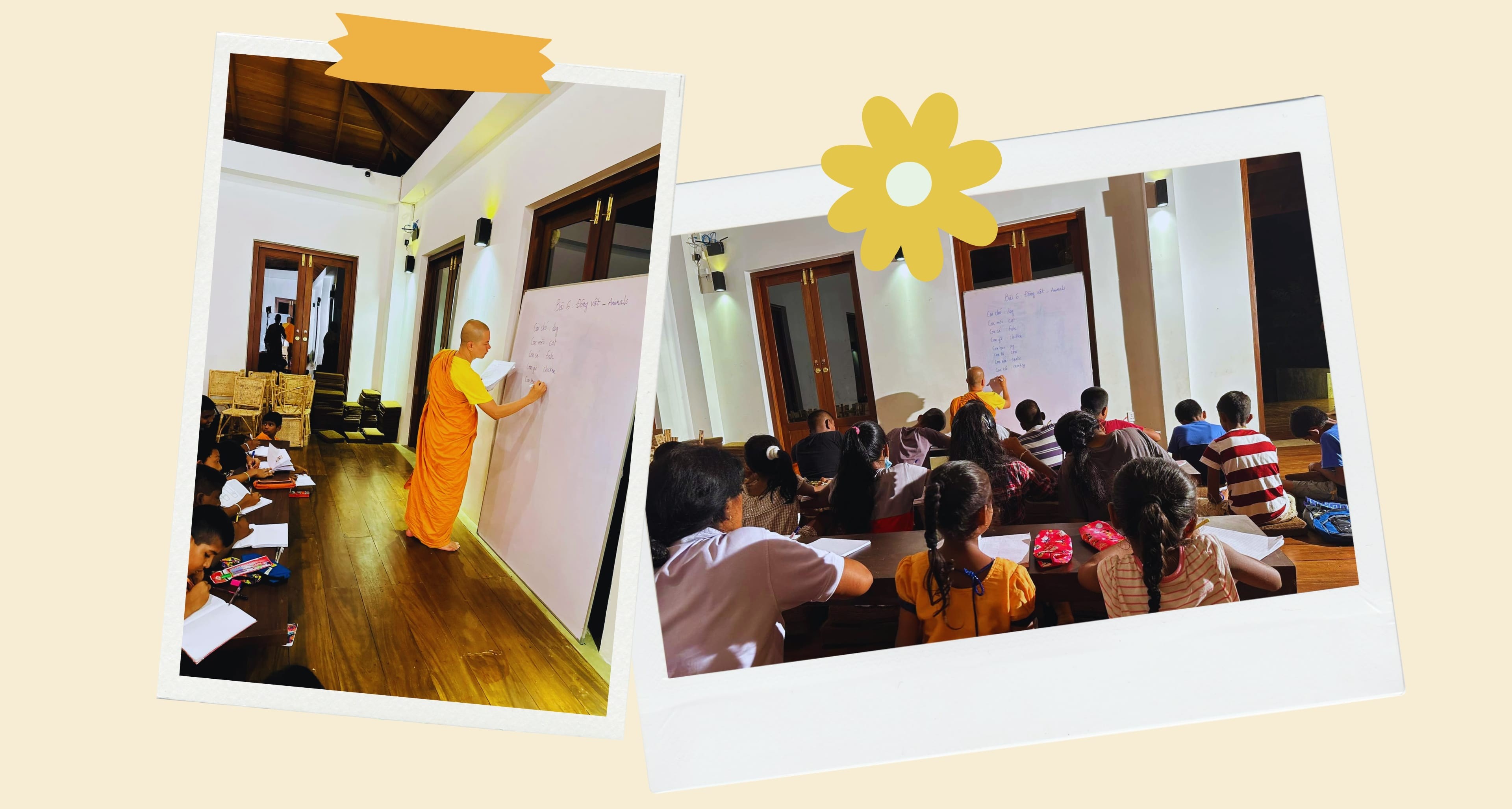
The first class was launched in 2022, when the monastery had become stable. Without desks, without a lectern, and without tuition fees, the class opened in the pagoda’s main hall in June. On the very first day, it welcomed 30 students. “The youngest was five, the oldest seventy-one. Everyone was eager to learn, which surprised and delighted me,” the monk said. The presence of multiple generations in the same class created a warm, friendly, and inspiring learning environment. Classes were held regularly from 6:30 p.m. to 8:00 p.m., Monday through Friday. At first, the monk taught simple phrases such as “Hello” and “Thank you, Master” for the students to practice speaking with one another. In addition, he taught Vietnamese songs and introduced the country’s traditional culture through fan dances and performances of the áo dài. As the number of learners continued to grow, he later divided them into two classes. |
|
The Vietnamese class at Truc Lam Monastery has been maintained consistently. |
|
“The most joyful moments are when the children sing Vietnamese enthusiastically. I sometimes feel as if I am living in a Vietnamese community. It helps ease the monks’ homesickness,” he shared. After three months, the children who came to the pagoda had developed the habit of communicating with one another in Vietnamese. He recounted that one day, he met a parent who greeted him with a cheerful “Hello, Master.” Only later did he learn that the children had been teaching Vietnamese to their parents at home. From those young learners, a movement of families learning Vietnamese together began to spread. “In this town, around 50% of households have children studying Vietnamese,” Venerable Phap Quang said. |
|
Sri Lankan and Myanmar monks pronouncing Vietnamese. |
|
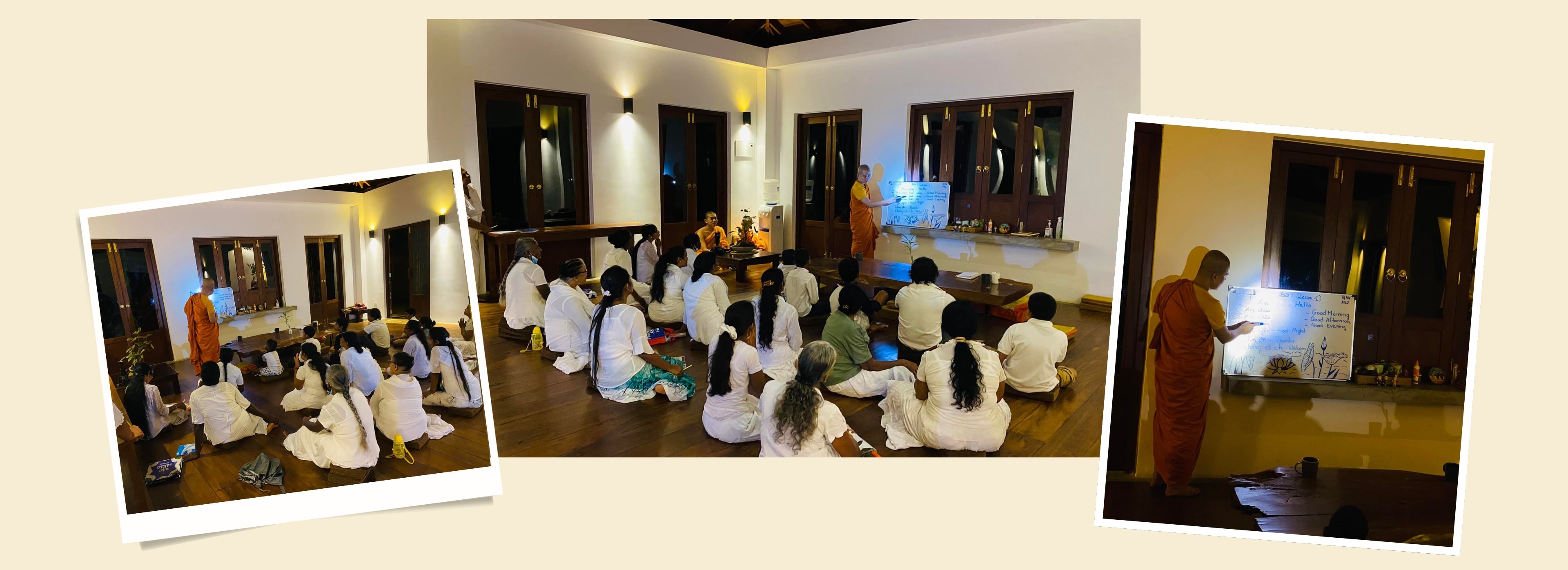
On late evenings at the end of 2022, Sri Lanka experienced frequent power outages, yet learners still came to class regularly, studying under oil lamps or using battery lights to illuminate the board. Most Venerable Thich Phap Quang recalled: “At that time, I truly felt compassion for the children. I never imagined that the people here would love the Vietnamese language so much.” “At first, this was just a small and humble model, but with constant effort and warm support from the community, it has become a highlight in community education, incorporating both language and cultural elements, contributing to strengthening solidarity and friendship between the two peoples,” Most Venerable Thich Phap Quang shared. |
|
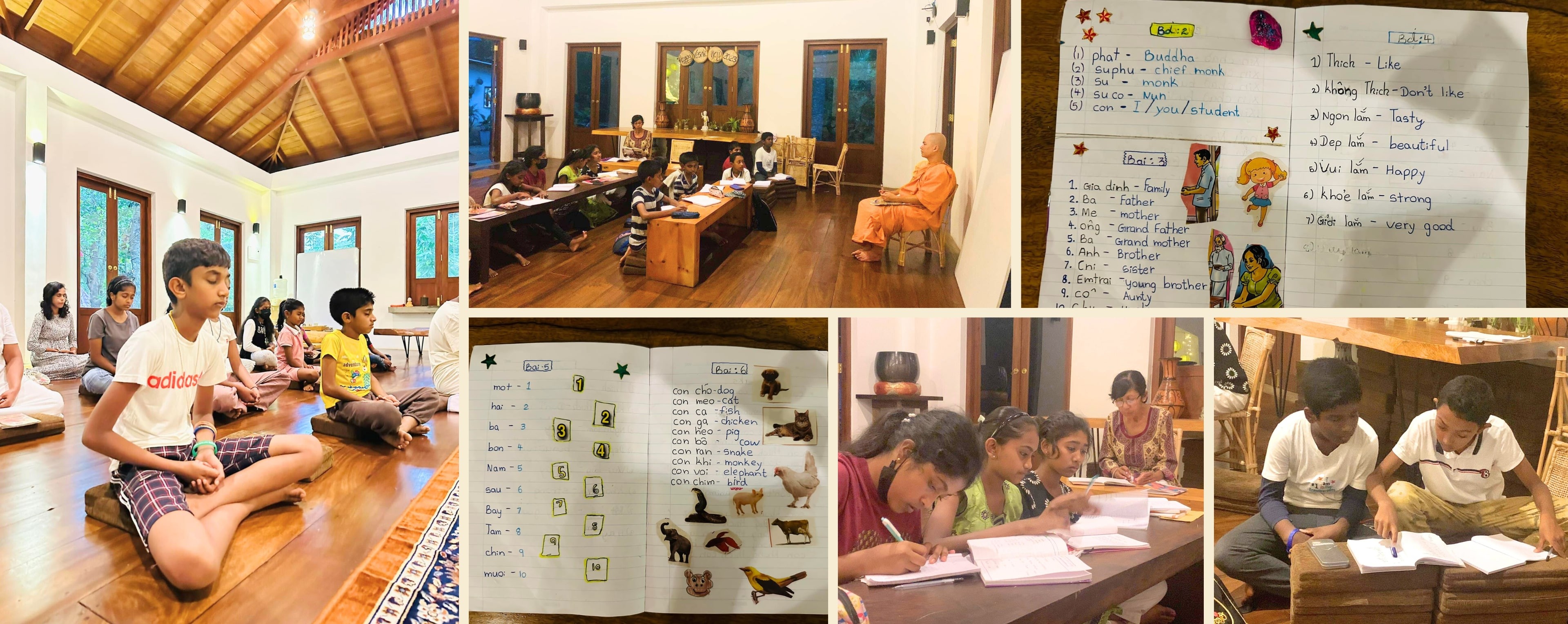
Local residents visiting Truc Lam Monastery (Ambakote, Kandy, Sri Lanka) to meditate and learn Vietnamese. |
 |
|
Truc Lam Sri Lanka Monastery is not only a place of learning but also an open school. Learners are not confined to traditional classrooms; they can sit in the meditation hall, around Buddha statues, or in the monastery courtyard. The tranquil environment helps calm their minds, making it easier for them to absorb knowledge. Most Venerable Thich Phap Quang personally compiled the curriculum based on the principle: “Teach what learners need and can use immediately.” The curriculum revolves around basic sentence patterns: greetings, self-introduction, expressing thanks, apologizing, and simple conversations. Most Venerable Thich Phap Quang personally compiled the curriculum based on the principle: “Teach what learners need and can use immediately.” The curriculum focuses on basic sentence patterns: greetings, self-introduction, expressing thanks, apologizing, and simple conversations. |
|
Local residents learning Vietnamese at Truc Lam Monastery. |
|
The teaching method is highly interactive: “Learning through play, playing while learning.” Learners are encouraged to listen - speak - sing - perform. Vietnamese children’s songs, language games, pronunciation contests, and storytelling sessions using vivid images help students practice communication naturally. Cultural activities such as ao dai performances, fan dances, Mid-Autumn Festival celebrations, and traditional Vietnamese New Year events are integrated into lessons, enabling learners to better understand the culture and thereby develop affection for the language. Classes are held from Monday to Friday, from 6:30 p.m. to 8:00 p.m. When the number of learners exceeded 50, the Most Venerable divided the class into two groups based on age to ensure teaching methods suited the learning ability of each group. |
 |
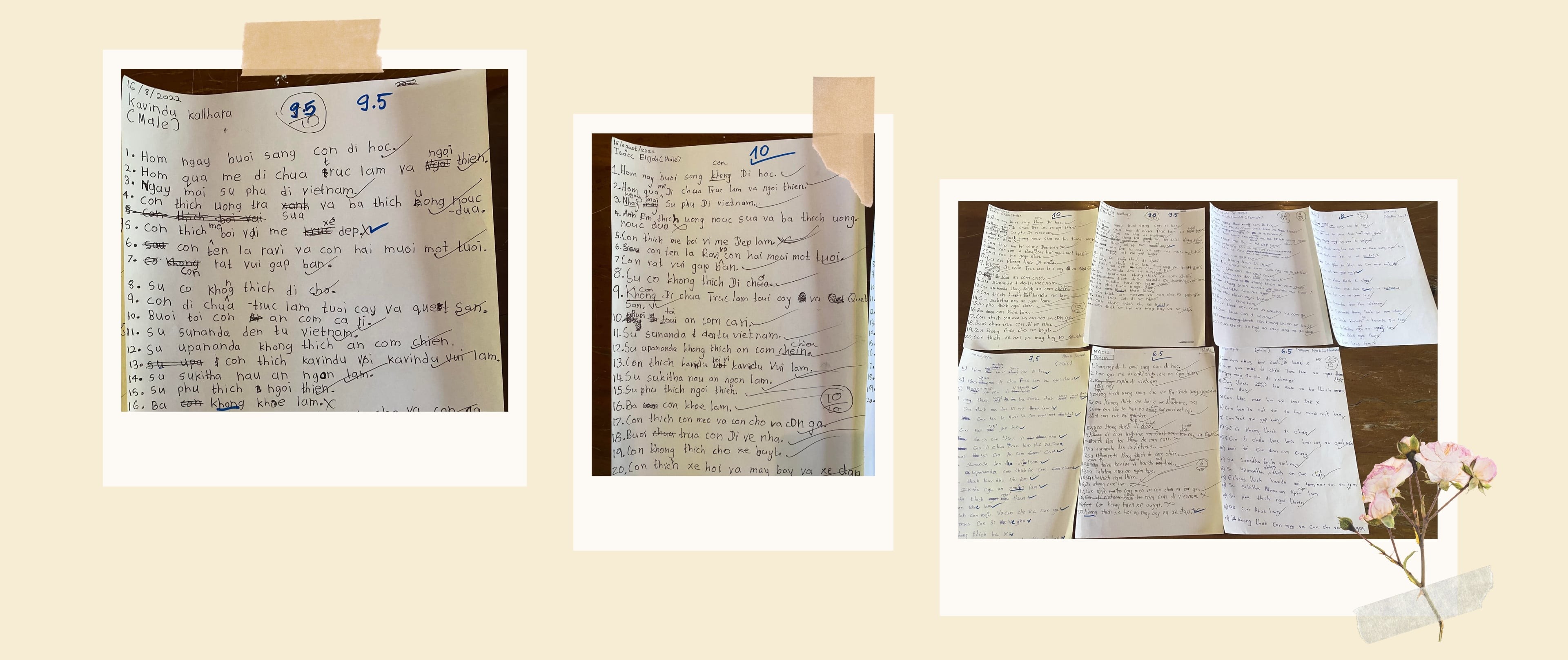
| According to Most Venerable Thich Phap Quang, after 3-6 months of consistent learning, the efforts of both teacher and students began to bear fruit: more than 70% of learners could confidently introduce themselves, greet others, and engage in simple conversations in Vietnamese. Many learners became “teachers” at home, teaching Vietnamese to their family members. Today, nearly half of the households in Ambakote village have members who are studying or have studied Vietnamese at the monastery, indicating that the language has found its way into daily life and become familiar and beloved. |
|
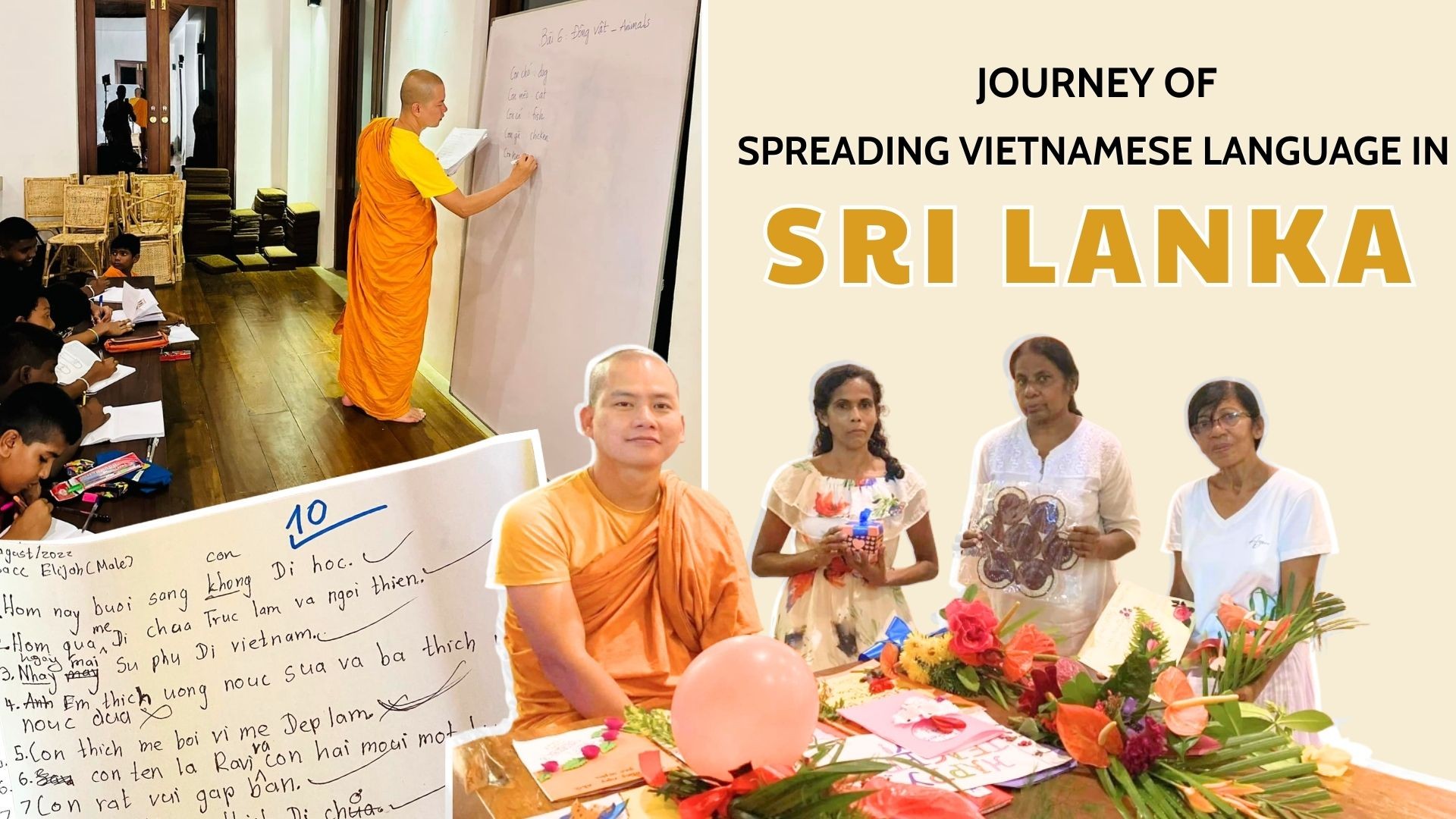
Vietnamese language test papers with high scores by Sri Lankan learners. |
|
Vietnamese has also become a bridge of friendship between the two nations. During Buddhist festivals and Vietnam’s traditional celebrations, learners perform cultural shows, singing, dancing, and reciting poetry in Vietnamese. These moments not only reflect the learners’ pride but also serve as evidence of the strong bond between Vietnam and Sri Lanka. Arakita, 58, a resident of Ambakote, shared: “I began learning Vietnamese after hearing my grandchild sing the song ‘Kia con buom vang.’ After three months, I can now have basic communication with Vietnamese people. Learning Vietnamese has been a way for me to find joy in life.” Abhi, 15 years old, has memorized many songs such as “Di hoc,” “Bong hong cai ao,” the Vietnamese national anthem… He learns by humming along, listening to explanations of the lyrics, and imagining the meaning, nurturing his dream of visiting Vietnam one day. |
|
Two children, Hiranya and Osteen, performed the song “Di hoc” on the occasion of Vietnamese Language Appreciation Day on September 8, 2023, after one year of learning Vietnamese at Truc Lam Monastery. |
 |
| From his teaching experience in Sri Lanka, Most Venerable Thich Phap Quang identified three lessons: language must go hand in hand with culture and emotion; internal motivation determines success; and teachers must be dedicated, approachable, and creative. Teaching Vietnamese is not just about conveying vocabulary or grammar; it is a process of sowing cultural affinity, nurturing love for Vietnam and its people. When learners feel the warmth and beauty of Vietnamese culture, they naturally open their hearts to the language. This requires teachers not only to impart knowledge but also to convey emotion and understanding. |
|
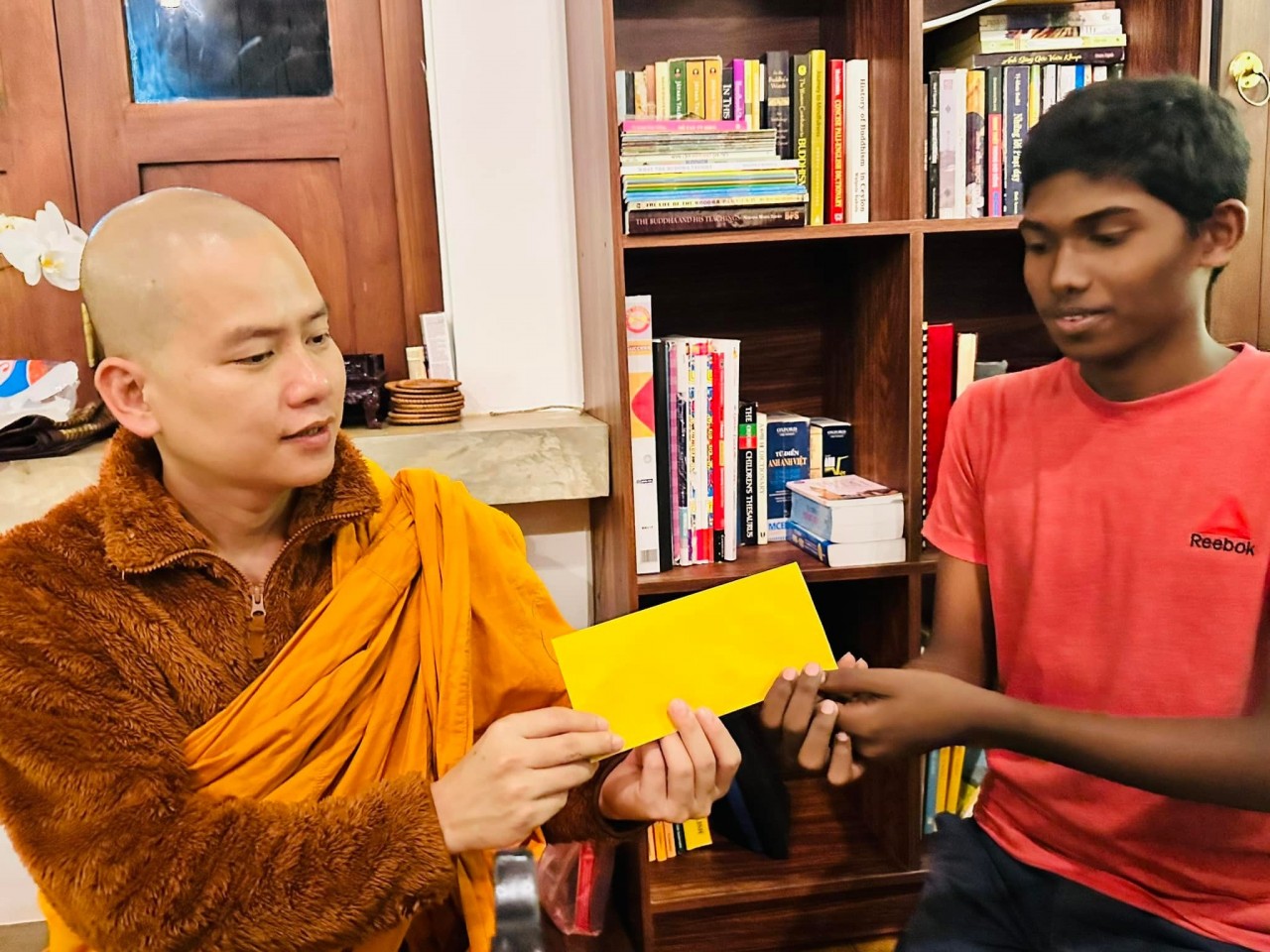
Most Venerable Thich Phap Quang (left) awarding a scholarship to student Praveen (Lam Phong) for ranking first in class and being fluent in both Vietnamese and English. |
|
He also recommended expanding this model to countries with overseas Vietnamese communities, Vietnamese Buddhist centers, or countries interested in cultural cooperation. These places often already have some foundation of interest or connection to Vietnam, making it easier and more effective to implement such classes. Particularly, Vietnamese Buddhist centers abroad can serve as important hubs for promoting the Vietnamese language and culture. He proposed supporting the development of Vietnamese language curricula for foreigners, tailored to different ages and cultural backgrounds, in an open format. A standardized curriculum, scientifically designed and flexible enough for teachers to adapt to learners’ characteristics and cultural contexts, would be invaluable. The curriculum should focus on practical communication, incorporate cultural elements, and include rich audiovisual materials. At the same time, building a network linking centers and organizations teaching Vietnamese in various countries would allow the sharing of resources, teaching experiences, and training support for teachers. This synergy would enhance the effectiveness and professionalism of Vietnamese language promotion worldwide. |
|
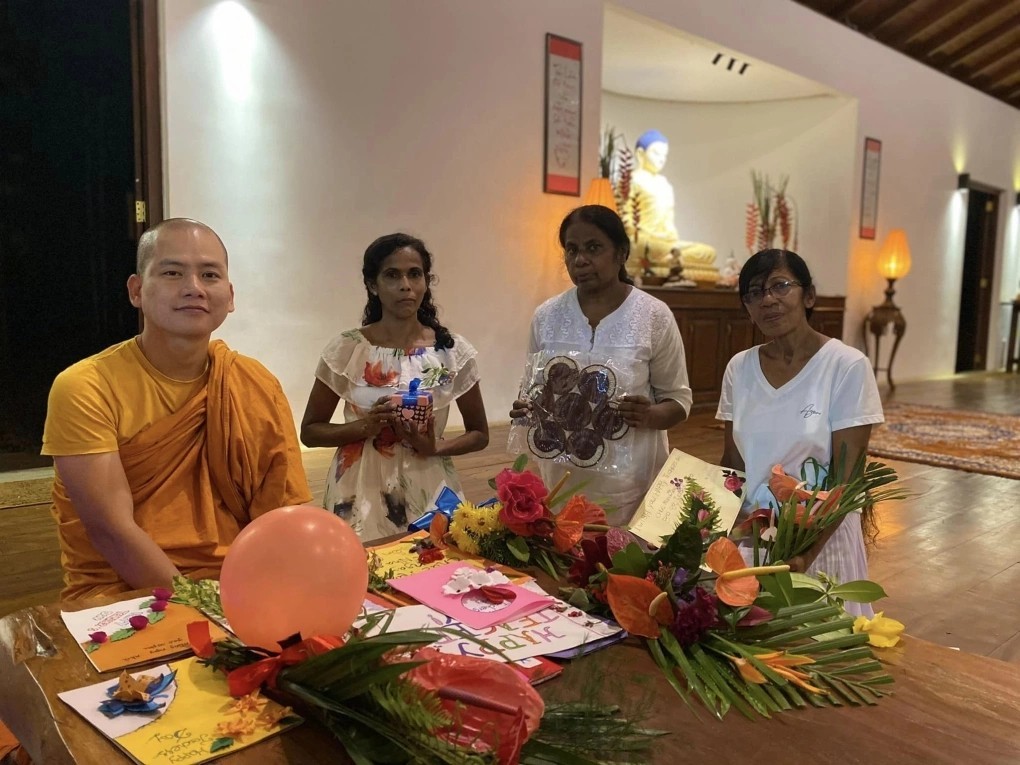
Most Venerable Thich Phap Quang receives gifts from students on November 20 at Truc Lam Monastery (Ambakotte, Kandy, Sri Lanka). |
|
In August 2024, during a working trip to Kandy, Vietnamese Ambassador to Sri Lanka Trinh Thi Tam visited and met with children learning Vietnamese at the monastery. She was moved as she watched them perform Vietnamese songs and dances, praised the model, and expressed her hope that the monks would continue spreading the Vietnamese language and culture. Most Venerable Thich Phap Quang emphasized: “From the first greetings and the pure voices singing children’s songs to cultural and Dharma experiences, each Vietnamese seed planted in Sri Lanka will grow into a great tree of understanding, solidarity, and wisdom.” |
|
By: Phan Anh Graphics: Mai Anh Published on: December 03, 2025 |