
Resolution 23: Unlocking Potential of Overseas Vietnamese
| Bridging Overseas Vietnamese Resources with Country’s Development Needs Supporting Vietnamese Citizens Following Kumamoto Earthquake (Japan) |
Ambassador Pham Quang Vinh, former Deputy Minister of Foreign Affairs:
Creating an ecosystem for overseas Vietnamese to contribute more broadly to the country
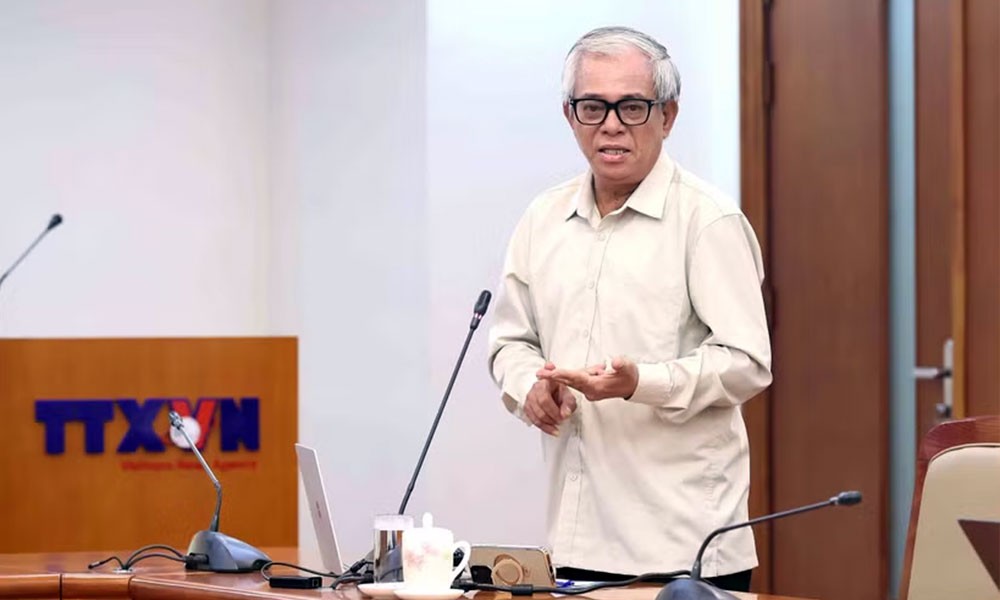 |
| Ambassador Pham Quang Vinh, former Deputy Minister of Foreign Affairs. (Photo: VNA) |
A notable new aspect of Resolution 23 is its recognition that the overseas Vietnamese community is not only an inseparable part of the great Vietnamese national family, but also a strategic resource that contributes to strengthening the country’s overall national strength.
This resource should not be understood merely in terms of money or investment, but in a much broader sense, encompassing people, knowledge, technology, experience, and international connectivity. This also represents a new development in thinking about work concerning overseas Vietnamese: moving from mobilizing, gathering, and caring for the community toward accompanying it, creating mechanisms, and harnessing its resources.
Previously, contributions to the homeland depended largely on the circumstances and wishes of each individual. When overseas Vietnamese turned their attention toward the homeland, the State always facilitated their business activities, residence, studies, or return to live with their families. Under Resolution 23, the goal should be to establish networks, mechanisms, and an ecosystem that enables such contributions to take place on a broader, more regular, and more effective basis.
The development of technology is also opening up entirely new ways of contributing. Overseas Vietnamese do not necessarily have to return to Vietnam to make a contribution. Intellectuals, scientists, and businesspeople can participate remotely in the process of building, developing, and protecting the country. Therefore, establishing networks of distinguished individuals, intellectuals, scientists, and businesses is of great importance.
The way we view financial resources also needs to change. In the past, remittances were often regarded as a flow of money returning to Vietnam. Today, overseas Vietnamese can participate in the stock and financial markets and invest in production, while also connecting businesses and partners in their countries of residence with Vietnam.
The important “measure” should not lie solely in how much money is brought into the economy. Rather, attention should be paid to the outcomes generated by these resources and the value they create, as well as how they contribute to Vietnam’s production capacity and technology transfer.
To achieve this, reforming economic institutions, removing bottlenecks, developing the private sector, improving the quality of the economy, and strengthening integration capacity remain fundamental conditions. When these reforms are combined with new mechanisms for overseas Vietnamese, the community’s resources can generate greater synergies in the country’s development process.
Another particularly noteworthy aspect of Resolution 23 is the goal of building an overseas Vietnamese community with a solid legal status, deep integration, and stable development. When Vietnamese people have a stronger position in their countries of residence, their capacity to contribute to the homeland also increases. Each Vietnamese person can become an “ambassador” for Vietnamese culture, the country, and its people, thereby contributing to strengthening national soft power and prestige.
In this process, Vietnamese representative missions abroad need to become strategic connectivity hubs, with a clear understanding of both the resources available within the overseas Vietnamese community and domestic needs. Developing maps and digitizing data on intellectuals, experts, businesspeople, and other overseas Vietnamese resources will help connect the right people with the right fields. For example, when Vietnam needs resources in semiconductors, chips, or emerging technologies, representative missions must be able to identify those who can contribute and connect them with appropriate ministries, sectors, localities, organizations, and businesses.
Truong Thi Hong, President of the Association of Vietnamese People in Israel:
Connecting right overseas Vietnamese resources with domestic development needs
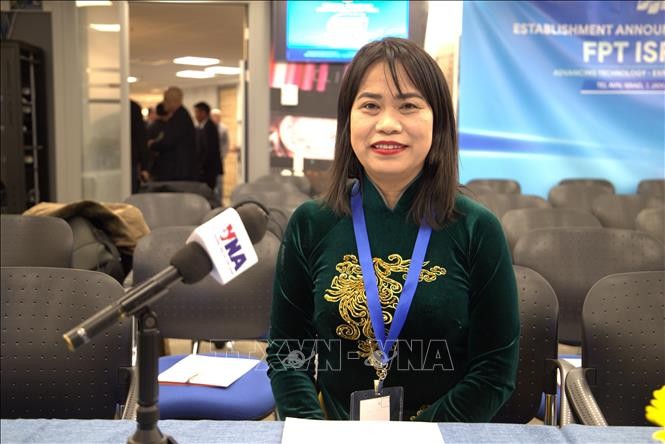 |
| Truong Thi Hong, President of the Association of Vietnamese People in Israel. (Photo: VNA) |
What I value about Resolution 23 is that it raises the approach to work concerning overseas Vietnamese to a new level. If the focus previously was primarily on mobilizing, gathering, and caring for the community, it has now shifted strongly toward accompanying the community, creating mechanisms, and harnessing its resources.
This change is consistent with the reality that the overseas Vietnamese community is becoming increasingly mature and deeply integrated, with an increasingly stronger position and greater capacity to contribute. The more than 6.5 million overseas Vietnamese possess not only financial resources. Equally important are their knowledge, technology, management experience, international networks, credibility, and understanding of their countries of residence.
From the experience of Israel, I see this potential very clearly. Israel has strengths in science and technology, innovation, high-tech agriculture, and many advanced fields. The Vietnamese community there can serve as a bridge between Vietnamese experts, businesses, and intellectuals and Israeli partners, promoting exchanges, cooperation, and the transfer of knowledge and technology for domestic development.
For this potential to translate into concrete results, it is essential to establish regular and substantive channels of connection between domestic agencies and the overseas Vietnamese community.
Building databases and networks of experts, intellectuals, scientists, businesspeople, and young Vietnamese around the world will help connect the right people with the right needs. Vietnamese representative missions abroad need to further strengthen their role as focal points, proactively identify the potential of the community while also understanding the needs of localities, businesses, research institutes, and universities in Vietnam.
What the community hopes for in the coming period is not merely to receive support when facing difficulties, but also to be given the conditions to proactively participate in the country’s development programs. When information about domestic needs is fully shared and connection mechanisms are sufficiently accessible, overseas Vietnamese will know where and how they can contribute.
The spirit of national reconciliation, putting the past aside and looking toward the future, is also strongly emphasized in the Resolution and carries great significance. When working toward the common interests of the nation and the country, differences in circumstances, experiences, or viewpoints can be addressed within a more open and constructive space for dialogue.
The more united the overseas Vietnamese community is, and the better it integrates and develops sustainably in its host countries, the greater its capacity to contribute to the country. Therefore, it is essential to soon translate the spirit of “accompanying, creating mechanisms, and mobilizing resources” into programs, policies, and forms of cooperation in which overseas Vietnamese can directly participate.
Dr. Nguyen Tuan Nghia, Artificial Intelligence Expert, Founder and CEO of ANSCENTER, President of the New South Wales Chapter of the Vietnamese Association of Scientists and Experts in Australia (VASEA):
From “calling for” to “commissioning” overseas Vietnamese intellectuals
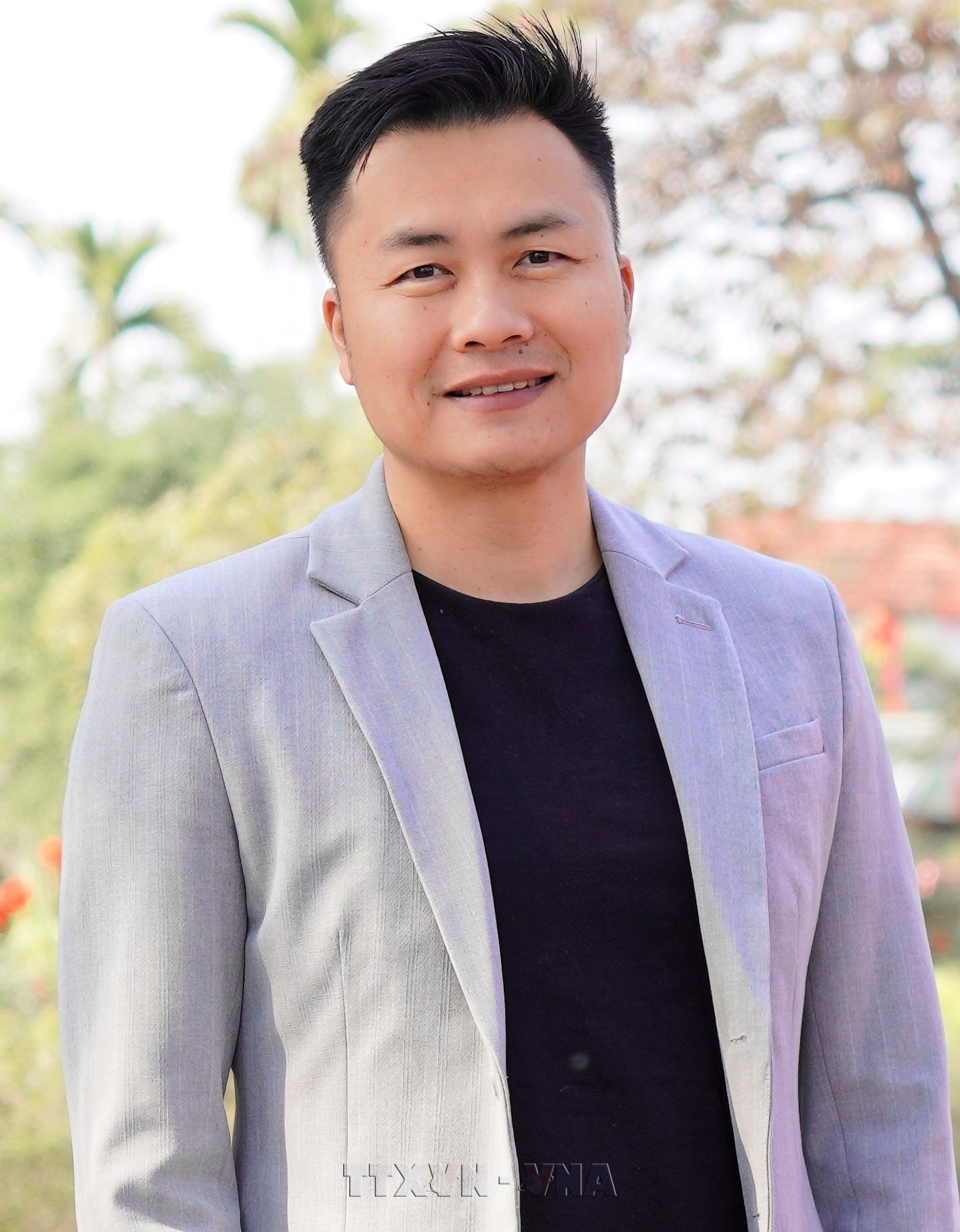 |
| Dr. Nguyen Tuan Nghia, Artificial Intelligence Expert, Founder and CEO of ANSCENTER, Chairman of the New South Wales Chapter of the Vietnamese Association of Scientists and Experts in Australia (VASEA) |
When discussing the resources of overseas Vietnamese, remittances are often mentioned first because they are an easily measurable resource. However, greater value lies in knowledge, technology, governance standards, and international networks.
The overseas Vietnamese community includes many experts working in fields such as AI, semiconductors, biomedical technology, and clean energy. Their contributions do not necessarily have to take the form of capital. They can include knowledge transfer, co-supervising postgraduate researchers, technology consulting, human resource training, or helping Vietnamese businesses shorten the path to accessing new technologies.
Through ANSCENTER’s practical activities, we have developed platforms for construction engineers and implemented models in Dien Bien Province for production quality inspection, smart monitoring, and management. We have also cooperated with international corporations such as Advantech and NVIDIA to introduce and pilot solutions in Vietnam. The value of these activities lies not only in software or technology, but also in helping Vietnamese engineers gain access to global supply chains and gradually master technology.
What I value most about Resolution 23 is the shift from “caring for and mobilizing” to “accompanying and creating mechanisms.” But for this change in thinking to produce tangible results, we need to take one step further: moving from “calling for” to “commissioning” resources from overseas Vietnamese.
Instead of making general invitations, specific national challenges should be announced, with clear identification of the lead agency, requirements, funding, and timelines. This would allow experts abroad to quickly determine what they can contribute, whom they need to coordinate with, and what requirements the final product must meet.
It is also necessary to recognize remote and part-time forms of contribution. Most Vietnamese experts abroad cannot return permanently because of work and family commitments. However, they can fully participate as visiting professors, co-principal investigators, council members, or advisers if appropriate mechanisms are established and procedures for cross-border contracting and payments are made convenient.
Another issue is reducing administrative “friction.” There should be a dedicated focal point and digital platform for overseas Vietnamese human resources, while issues concerning long-term visas, work permits, recognition of qualifications, taxation, and intellectual property should be addressed in a coordinated manner. In many cases, enthusiasm for contributing can be eroded more by administrative procedures than by a lack of funding.
In the long term, investment should be made in the younger generation of Vietnamese descent through scholarships, internships, and opportunities to participate in specific projects in Vietnam. This is a long-term investment in human capital that will determine the community’s connection with the homeland in the decades to come.
The effectiveness of policies to attract overseas Vietnamese resources should also be measured by the number of completed projects, technologies transferred, and people trained, rather than simply by the number of conferences or meetings held. Overseas Vietnamese intellectuals do not need special privileges. What we want is to be involved from the design stage, to be trusted, to be entrusted with tasks, and to see our efforts translated into concrete results for the country.
 Honoring Eight Individuals for Promoting Vietnamese Abroad Honoring Eight Individuals for Promoting Vietnamese Abroad Recently, in Hanoi, the 2026 Gala Beloved Vietnamese Language, themed “The Kite Soaring High from the Mother Tongue,” honored eight individuals for their significant contributions to teaching, promoting and spreading the Vietnamese language abroad. |
 Vietnamese Community Builds Bridges Between Vietnam and Thailand Vietnamese Community Builds Bridges Between Vietnam and Thailand From preserving the Vietnamese language and national culture to fostering people-to-people exchanges, the Vietnamese community in Thailand is making practical contributions to nurturing increasingly close, substantive and profound relations between Vietnam and Thailand. |


Most read


Related Stories
 Overseas Vietnamese
Vietnamese Community Becomes Japan’s Second-Largest Foreign Community
 Handbook
Science and Technology Key to Viet Nam’s Sustainable Growth
 Friendship
Viet Nam’s Key Strength Lies in Its People
 Overseas Vietnamese
Pho and the Bridges That Lead Back Home
Recommended
 Overseas Vietnamese
“Honorary Citizen of Seoul” Tran Ngoc Lam Appointed Prosecutor of Seoul Migrant Network
 Overseas Vietnamese
Vietnamese Community Makes Positive Contributions to Host Society
 Multimedia
Vibrant Vietnamese Community Football Tournament Held in Chubu Region (Japan)
 Overseas Vietnamese
Vietnamese Account for Majority of Highly Skilled Foreign Workers in Japan
Popular article
 Overseas Vietnamese
Vietnamese Oratory for Young Generation in RoK
 Overseas Vietnamese
Mid-Autumn Festival Brings Vietnamese Youth Together in Japan
 Overseas Vietnamese
National Day Celebrations Abroad: Remembering History, Strengthening Community and Friendship
 Overseas Vietnamese