
Three Years in the Land of Fairytales and Green Energy
| Children’s Drawings Spread Spirit of Viet Nam-Denmark Friendship Top Vietnamese Leader Receives Denmark’s Highest-Ranked Honour |
When Denmark is mentioned, people often think of the fairytale homeland of Hans Christian Andersen and its ancient, moss-covered castles. For me, however, after three years of diplomatic service there, Denmark embodied a perfect balance: between tradition and modernity, between economic development and environmental protection, and, above all, a philosophy of life that respects people, alongside an extraordinarily captivating cultural, culinary and musical scene.
From the “shock” of bicycles to green diplomacy
I arrived in Copenhagen on a windy day in early autumn. The first thing that caught the eye of an Ambassador who had only just arrived to take up his post was not the diplomatic corps' luxurious Mercedes 500 cars, but rather... endless streams of bicycles.
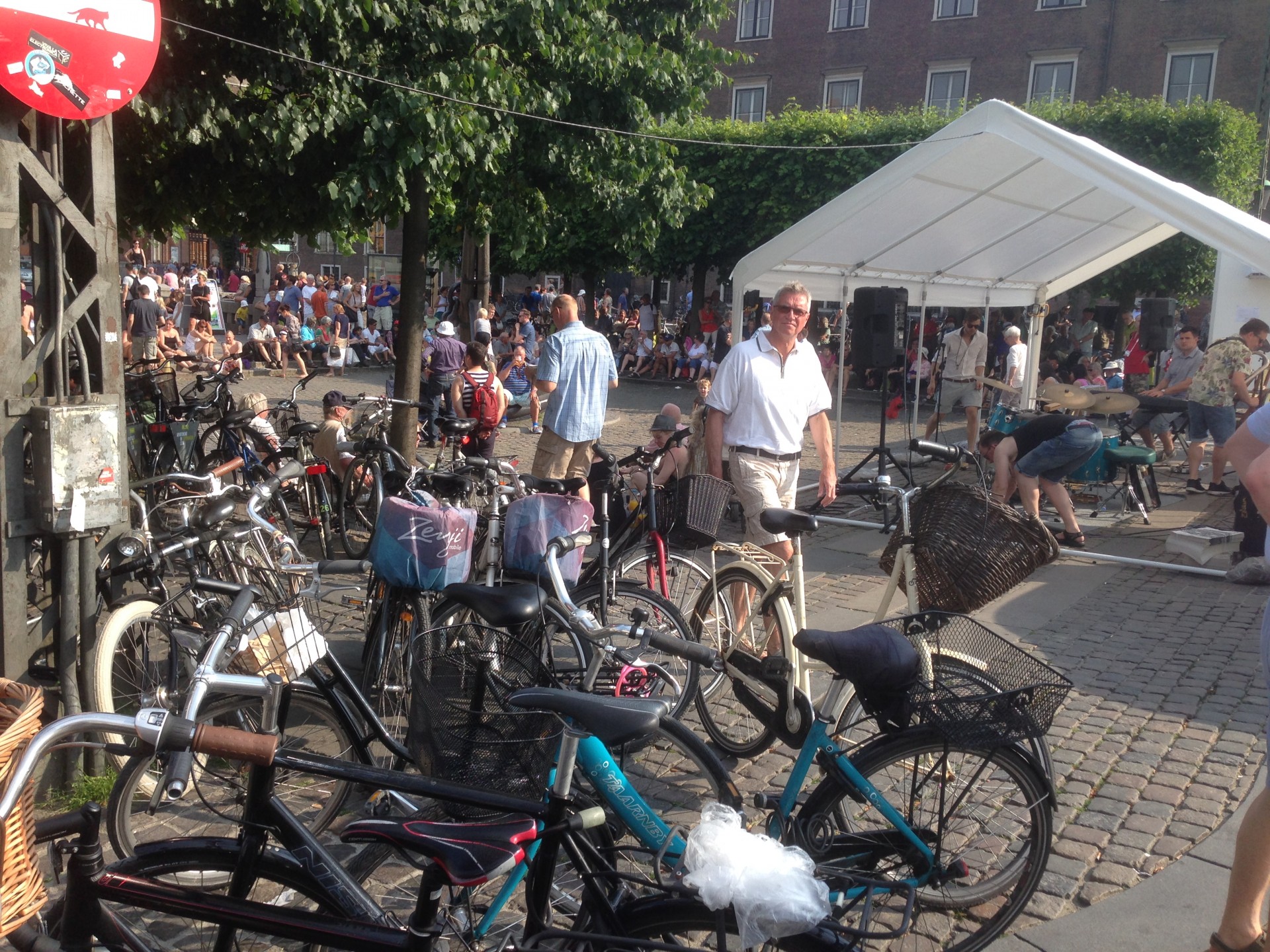 |
| Denmark is one of the countries with the most developed and vibrant cycling cultures in the world. (Photo: Provided by Ambassador Lai Ngoc Doan) |
In Copenhagen, bicycles are not a means of transport for those who cannot afford a car. They are almost a “religion” - a way of life. I was once astonished to see Danish ministers and parliamentarians, impeccably dressed in suits and carrying backpacks, casually cycling to Christiansborg Palace, the seat of Parliament, regardless of whether it was raining or snowing. I also saw mothers rushing to take their young children to nursery in bicycle trailers before heading to work.
These sights prompted me to reflect more deeply on the way diplomacy should be conducted. I realised that to understand Denmark and bring tangible value to Viet Nam-Denmark relations, we had to learn how to practise “diplomacy on two wheels” or “fume-free diplomacy”, as we jokingly called it.
Throughout my tenure, one of the key tasks entrusted to me by the Government was to promote bilateral cooperation in climate change, the environment, energy and green growth. Among the documents handed over by my predecessors were numerous materials relating to the United Nations Climate Change Conference (COP15), which was held in Copenhagen. Denmark is a global pioneer in the energy transition. From a country heavily dependent on imported oil in the 1970s, it has emerged as a powerhouse in wind energy and clean technologies.
I held dozens of meetings with major Danish corporations, including DONG Energy (now Ørsted), CIP (Copenhagen Infrastructure Partners) and Vestas. Field visits to offshore wind farms in Esbjerg gave me a profound understanding of how the Danes harness the power of the sea breeze to generate revenue and clean electricity.
During my tenure, I helped connect wind power partners from the two countries. One notable milestone came in September 2013, during President Truong Tan Sang's visit to Denmark, when Vestas signed a wind power development cooperation agreement with Viet Nam's Refrigeration Electrical Engineering Corporation (REE).
I also cannot forget two historic events: the first-ever visit to Viet Nam by a Danish Prime Minister, Helle Thorning-Schmidt, in November 2012, whom I had the honour of accompanying from Copenhagen to Hanoi, and the subsequent visit to Denmark by President Truong Tan Sang. Witnessing the signing of the Joint Statement on the Viet Nam-Denmark Comprehensive Partnership, along with numerous cooperation documents, and seeing Nordic green technologies become part of the development trajectory of my homeland, I realised that my more than three years of youth spent in Denmark had truly been a fulfilling chapter of my life.
“Hygge”, the Law of Jante and the subtleties of social etiquette
Denmark is often described as the happiest country in the world. When I first arrived, I was somewhat sceptical. In a country where winters are long, darkness descends as early as three or four in the afternoon, and drizzle and icy winds cut through to the bone, where could happiness possibly be found?
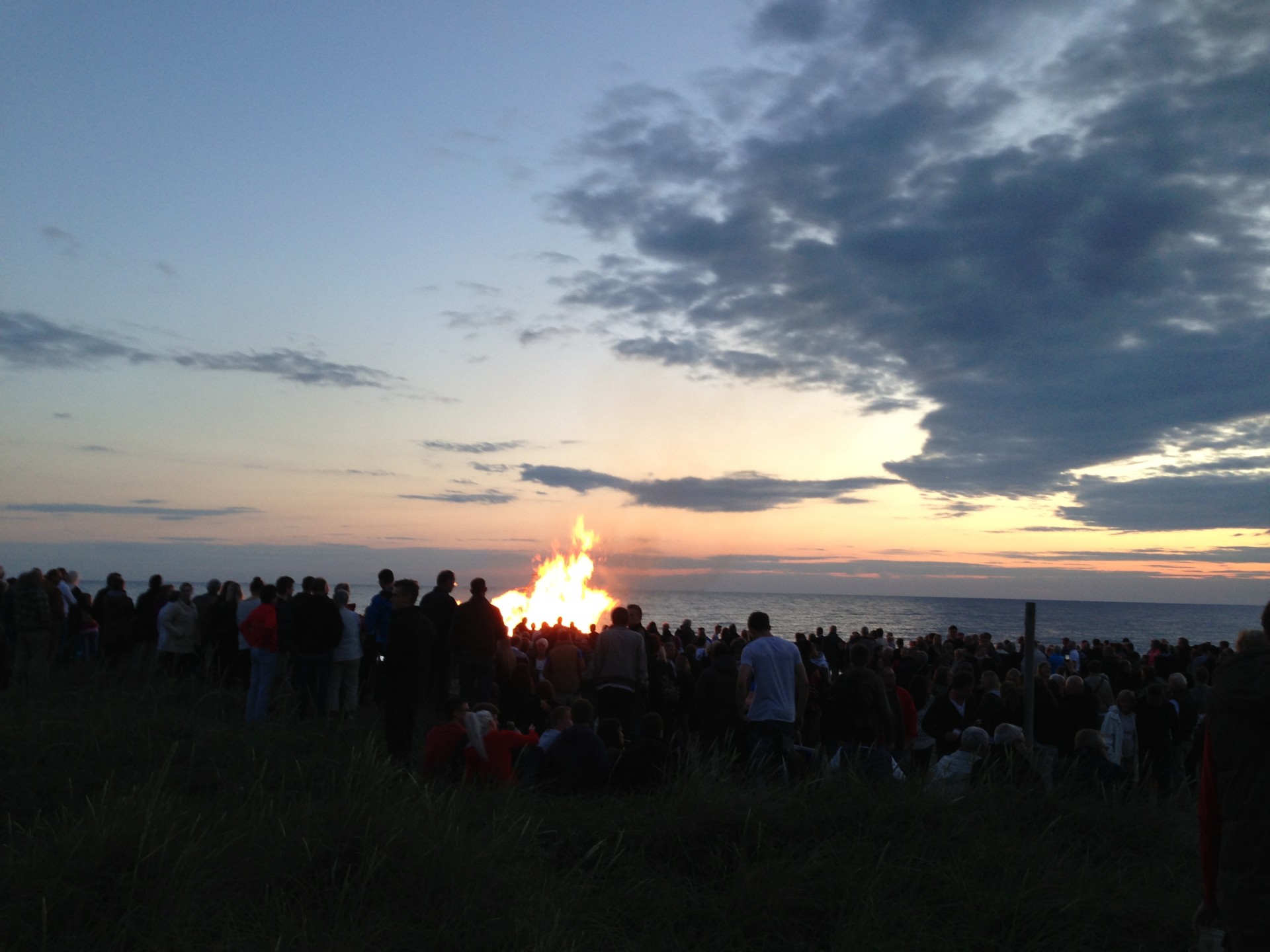 |
| The summer festival in Denmark. (Photo: Provided by Ambassador Lai Ngoc Doan) |
The answer lies in a single word: “Hygge”. No Vietnamese word can fully capture its meaning, but it can be understood as a feeling of warmth and tranquillity, and the enjoyment of simple pleasures in the company of loved ones. During the cold Nordic winters, Danes light candles everywhere. They gather in warm rooms, drink tea, talk and warm their souls.
Alongside “Hygge”, another set of unwritten rules that shapes their social behaviour is the “Law of Jante” (Janteloven) - a cultural philosophy that teaches people to be humble, avoid arrogance and never consider themselves more special than others.
I clearly sensed the spirit of equality in Danish society. In my eyes, that society operates on the foundation of an enormous sense of trust. People trust the Government, businesses trust the law, and colleagues trust one another. When working with Danish partners on memoranda of understanding (MOUs), I generally felt confident because, through our interactions, I found them to be pragmatic and deeply committed to honouring their commitments.
From a simple open sandwich to the art of architecture on a plate
Talking about Danish culture without mentioning its cuisine would be a major omission. Before arriving in Denmark, I assumed that the cuisine of a cold-climate country would be rather monotonous. However, my three years there completely transformed my palate.
Their iconic national dish is Smørrebrød, an open-faced sandwich. Although commonly called a “sandwich”, it consists of just one thick slice of dense, slightly sour rye bread (rugbrød) as its base, topped with layers of ingredients such as pickled herring, boiled shrimp, eggs and roast beef, accompanied by herbs and sauces. The Danes do not eat Smørrebrød simply to satisfy their hunger. They carefully arrange and layer the ingredients as though constructing a miniature architectural masterpiece on a plate. The dish is eaten leisurely with a knife and fork, perfectly reflecting their unhurried way of life.
On major festive occasions and at diplomatic receptions, I was often treated by my Danish hosts to Flæskesteg (Danish-style roast pork), with its crispy crackling and fragrant bay leaf aroma, served with sweet-and-sour pickled red cabbage. The delicate combination of the richness of the meat and the refreshing taste of the pickled vegetables suddenly reminded me of roast pork served with pickled vegetables during the traditional Vietnamese Lunar New Year.
Gastronomic diplomacy has always produced unexpected results. At the Ambassador's residence, my wife and I often hosted “culinary exchange evenings” for our Danish friends. The dining table featured spontaneous combinations: Nordic salmon served with Vietnamese garlic and chilli fish sauce, or Vietnamese spring rolls accompanied by locally grown organic vegetables. It was this openness around the dining table that brought us closer together and dispelled the bitter cold of the Nordic winter.
Every year, on the occasion of Viet Nam's National Day on September 2, we hosted receptions at the Embassy for local friends, representatives of ministries and sectors, businesses and the diplomatic corps. The menu always included fresh spring rolls, fried spring rolls and pho - Vietnamese flavours that any Dane who had ever visited Viet Nam would wish to enjoy again in the heart of Copenhagen.
Every year, with the support of Simon, the golf course owner and a great admirer of Viet Nam, we organised the Viet Nam Golf Cup. On these occasions, Vietnamese cuisine was introduced alongside traditional Danish dishes to members of the Danish Royal Family, Government officials, business representatives and foreign Ambassadors based in Copenhagen.
At the Royal Copenhagen Shooting Society, a club with a history spanning more than 580 years, close ties to the Danish Royal Family and approximately 150 members, one can discover the finest elements of Danish cuisine, preserved and passed down through generations. Each dish is savoured after performances of traditional music dating back hundreds of years.
I will never forget the exquisite dishes served at the state banquet hosted by Queen Margrethe II of Denmark for President Truong Tan Sang at the historic Fredensborg Palace, which I had the honour of attending. They were among the most distinctive and traditional dishes of this Nordic country - delicacies that are not available to enjoy on just any occasion.
Nordic melodies and musical bridges with Viet Nam
Denmark is a country with an boundless love of music. In Copenhagen, music is everywhere, from street musicians playing jazz at the historic Nyhavn harbour to classical concerts at the Copenhagen Opera House by the sea.
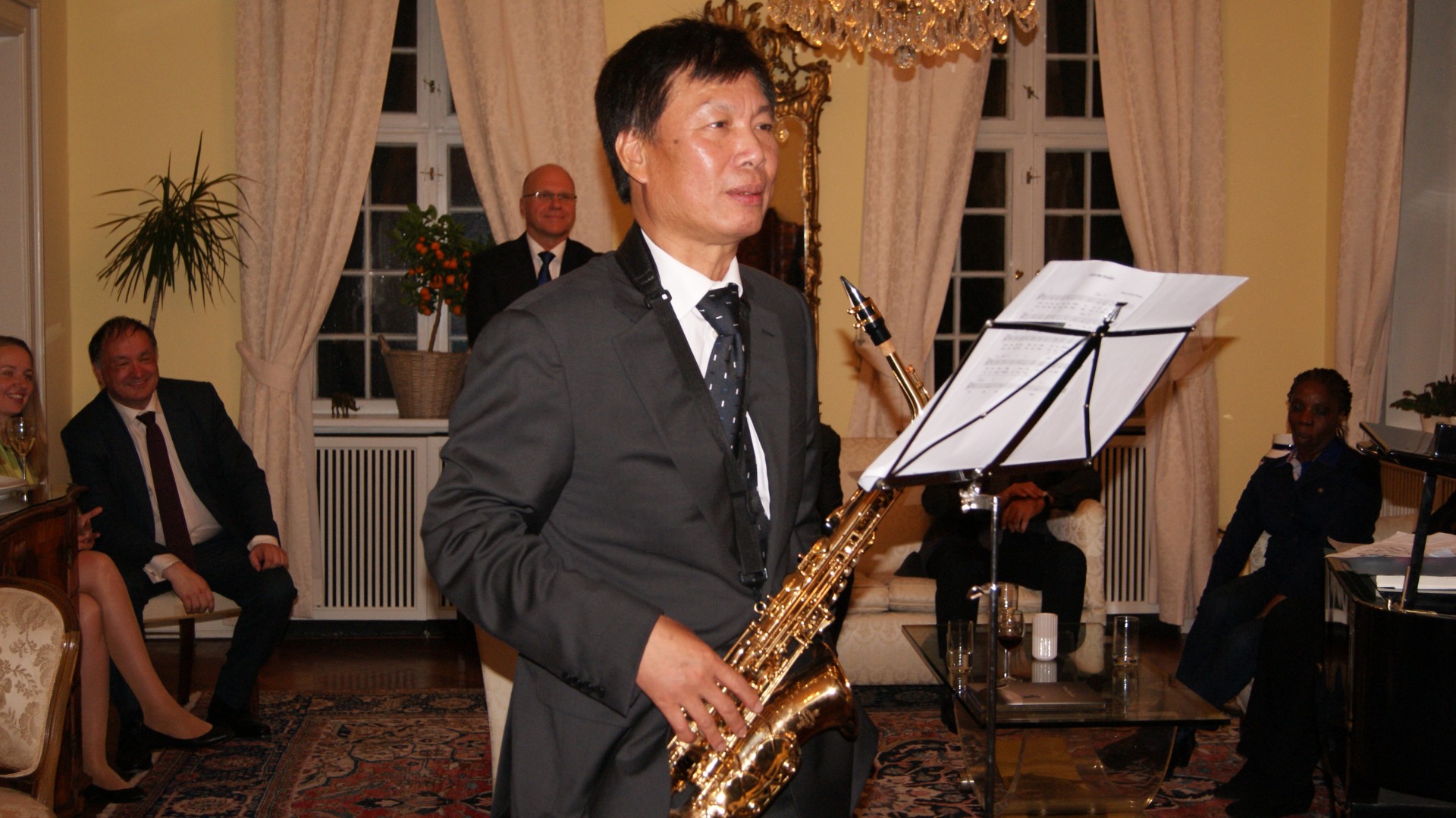 |
| Ambassador Lai Ngoc Doan performing the saxophone. (Photo: Provided by Ambassador Lai Ngoc Doan) |
I was particularly impressed by the tradition of “Fællessang” (communal singing). This is a longstanding tradition in which groups of people - whether a family, an organisation or an entire community - gather to sing traditional songs from the national songbook, Højskolesangbogen. They do not sing to perform, nor do they need sophisticated vocal techniques. They sing to find harmony and strengthen their bonds with one another.
I once took part in a Fællessang gathering during the Midsummer celebration (Sankthans), when thousands of people stood around a huge bonfire by the sea, singing “Midsommervisen” together. Their voices rang out against the sound of the Baltic Sea waves, clear, peaceful and filled with national pride. As someone who loves music, I was deeply moved.
During my tenure, I also made efforts to bring Vietnamese music to Danish audiences. Several Vietnamese art troupes travelled to Denmark to perform traditional musical instruments such as the monochord (đàn bầu), bamboo xylophone (đàn tơ-rưng) and bamboo flute at the Royal Danish Academy of Music.
During President Truong Tan Sang's visit to Denmark with his wife, a large Vietnamese delegation of artists presented a wonderful programme featuring traditional musical instruments, which received high praise from Danish hosts and members of the diplomatic corps.
We also established connections with a delegation from the Viet Nam National Academy of Music, led by artist Bui Cong Duy, to perform in Denmark as part of an Asia-Europe musical exchange programme, helping to enhance Viet Nam's image in this music-loving country.
Friends who were accustomed to Western music marvelled at Viet Nam's simple bamboo instruments, which could nevertheless produce deeply moving sounds and convey the full range of human emotions. Music truly is a language that needs no translation, serving as one of the gentlest yet most enduring bridges of diplomacy.
The Vietnamese community in Denmark - Bamboo bridges across the Baltic Sea
An indispensable part of my time in Denmark, and one that holds many of my tears and smiles from those years, was the Vietnamese community living, studying and working in the country.
The Vietnamese community in Denmark has a distinctive history. Yet, despite the ups and downs, its members have gradually built stable lives and earned the affection of local people through their hard work, dedication to education and respect for the law.
During my posting in Copenhagen, there was a Vietnamese family-owned restaurant called “Lele Restaurant”. By then, the two owners, an elderly couple, had entrusted its management to their daughter and son. The restaurant was always bustling with customers. Tables for lunch and dinner often had to be booked well in advance. The daughter had once spent several months in Viet Nam learning to cook and consulting culinary experts. Many Danish customers told me that dining there felt no different from sitting in the middle of Hanoi or Ho Chi Minh City and enjoying authentic Vietnamese cuisine.
I travelled to remote areas, including the Jutland Peninsula, and visited Vietnamese-owned farms to meet members of the community. Seeing Vietnamese people running their own software companies and large restaurants, as well as second- and third-generation Vietnamese who spoke fluent Danish while retaining their Vietnamese language skills and continuing to celebrate the traditional Lunar New Year, filled me with an indescribable sense of pride.
The Vietnamese community in Denmark maintains close ties with the Denmark-Viet Nam Friendship Association as a way of staying connected to their homeland. Many community members participate in and enthusiastically support the Association's activities.
During my tenure, the Embassy was not merely an administrative institution; it truly became a “Vietnamese Home” in the heart of Copenhagen. We provided numerous sets of Vietnamese-language textbooks featuring advanced teaching methods to support Vietnamese classes for children in the community, while also helping youth and student associations strengthen their connections. It was the overseas Vietnamese community itself that served as enduring bamboo bridges, linking the two peoples despite the great geographical distance between them.
Carrying a piece of the Nordic world in my heart
On my last day in Denmark, I cycled around Sortedams Sø lake. A light drizzle fell over Copenhagen, and the familiar crisp chill seeped into my skin. More than three years earlier, I had arrived as a stranger carrying out a national mission. More than three years later, I departed as a friend, as someone who had come to love this land deeply.
Denmark taught me what sustainable development truly means - development that does not sacrifice the environment for economic growth. It taught me to appreciate a simple piece of Smørrebrød, lose myself in the melodies of Fællessang on winter nights, and cherish life's simple pleasures as a way of finding genuine happiness.
Having returned to Viet Nam and embarked on new responsibilities, I have kept a small corner of my office in Hanoi dedicated to Denmark. It holds a model sailing ship, a symbol of Copenhagen, a Hygge candle lamp, and a collection of Danish folk songs that I translated into Vietnamese, personally typed and bound as a gift for the Queen during my farewell audience that year.
Whenever I listen to a gentle instrumental melody, my thoughts drift back to the cobblestone streets of Copenhagen, where I left behind one of the most beautiful chapters of my diplomatic life.
Farewell, Denmark - thank you for everything! (Tak for alt!)
 Viet Nam and Denmark Strengthen Friendship Through People-to-People Exchanges |
 Viet Nam-Denmark: Building Bridges of Friendship |
Most read


Related Stories
 Friendship
Viet Nam-Denmark: Building Bridges of Friendship
 Focus
Viet Nam and Denmark Strengthen Friendship Through People-to-People Exchanges
 National
Viet Nam News Today (Oct. 23): Vietnam Values EU as Priority Partner, Seeks Deeper Strategic Ties
 National
Viet Nam News Today (Oct. 21): Viet Nam Outlines Four Priority Themes for APEC Finance Ministers’ Process 2027
Popular article
 Friendship
Viet Nam-Thailand Friendship Association Visits Ban Dong Ho Chi Minh Museum
 Friendship
Children of Viet Nam to Provide 1,000 Scholarships to Students in Quang Ngai Province from 2026 to 2030
 Friendship
Vietnamese and RoK Youth Join Hands to Strengthen Environmental Protection
 Friendship