
Vietnam Promotes Sci-tech Diplomacy to Enhance National Development Capacity
| Breakthrough actions Required to Turn decisions into Results: Top Leader Foreign Ministry Honors Overseas Vietnamese Entrepreneur Nguyen Thanh My |
On the afternoon of August 5 in Hanoi, as part of the 33rd Diplomatic Conference, the Ministry of Foreign Affairs hosted the session titled “Science and technology diplomacy in building national development capacity.”
The session was co-chaired by Minister of Foreign Affairs Le Hoai Trung, Member of the Central Steering Committee for Science, Technology, Innovation and Digital Transformation Development, and General Luong Tam Quang, Minister of Public Security and Standing Deputy Head of the Central Steering Committee for Science, Technology, Innovation and Digital Transformation Development.
Attending the session in person and online were leaders of central Party bodies, ministries, sectors, mass organizations, and provincial and municipal authorities; representatives of the Central and Government Steering Committees for Science, Technology, Innovation, Digital Transformation, and Project 06; members of the National Advisory Council; representatives of Vietnam's leading technology corporations; heads of Vietnamese representative missions abroad; and more than 500 delegates from research institutes, universities, associations, and technology enterprises.
Comprising two discussion sessions, the event focused on clarifying Vietnam's needs for international cooperation in science, technology, innovation, and digital transformation; identifying opportunities, priority partners, and solutions to enhance the role of the diplomatic sector, particularly Vietnam's network of representative missions abroad.
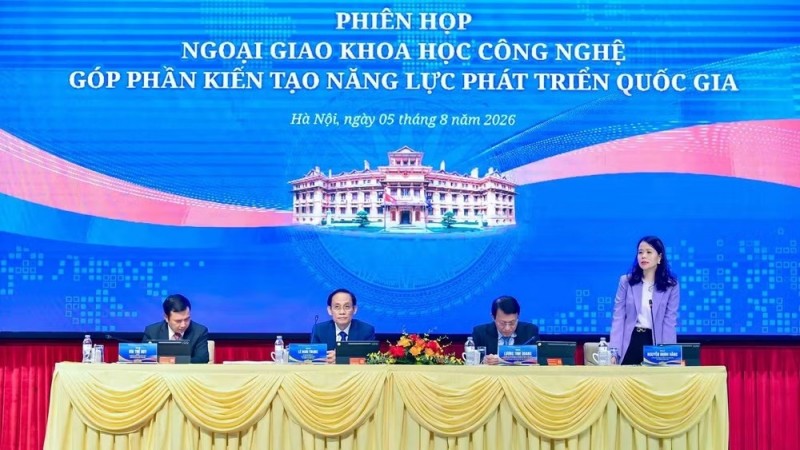 |
| The session titled “Science and technology diplomacy in building national development capacity.” (Photo: Nhan Dan Newspaper) |
Bringing international science and technology resources to Vietnam
In his opening remarks, Minister of Foreign Affairs Le Hoai Trung emphasized that science, technology, and innovation diplomacy is becoming a key pillar of development-oriented diplomacy. It plays a pioneering role in opening pathways, fostering connections, and creating favorable international conditions to strengthen scientific, technological, and innovation capacity; promote mastery of strategic technologies; safeguard technological security; and enhance the country's standing in the emerging global technology order.
According to Minister Le Hoai Trung, science and technology diplomacy has contributed to establishing cooperation frameworks and deepening partnerships, particularly with the world's leading science and technology hubs. As a result, opportunities for collaboration in research, innovation, digital transformation, and strategic technologies have continued to expand.
The diplomatic sector has also actively connected international technology corporations, research institutes, universities, and investment funds with Vietnam, creating numerous opportunities for cooperation in research and development, human resource training, and technology investment. Through the network of Vietnamese representative missions abroad, many localities, enterprises, research institutes, and universities have received support in identifying partners, expanding cooperation networks, and gradually integrating into global technology value chains.
Efforts to bring together Vietnamese intellectuals and experts overseas have also become increasingly substantive, contributing to the formation of a knowledge network capable of participating directly in the country's science, technology, and innovation development process.
However, Minister Le Hoai Trung stressed that the current task of science and technology diplomacy extends beyond seeking more opportunities or signing additional agreements. What matters most is clearly identifying the country's development challenges and selecting the right partners, technologies, and modes of cooperation. International commitments and agreements are meaningful only when translated into concrete programs, projects, and products that contribute to strengthening the economy's endogenous capacity.
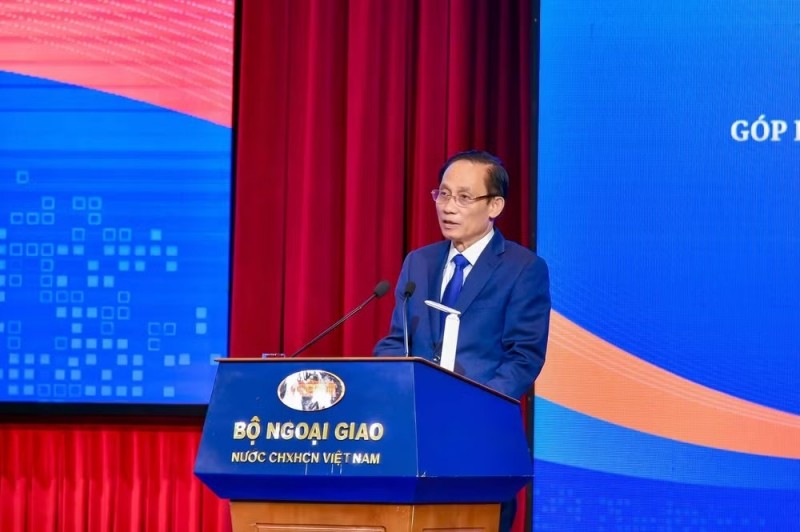 |
| Minister of Foreign Affairs Le Hoai Trung, Member of the Central Steering Committee for Science, Technology, Innovation and Digital Transformation Development. (Photo: Nhan Dan Newspaper) |
During the discussion, delegates focused on analyzing the need to access and master strategic technologies to create new growth drivers and a foundation for long-term development; the role of international cooperation and diplomacy in achieving breakthroughs in science, technology, innovation, and digital transformation; and key tasks in implementing the Politburo's Resolution No. 57-NQ/TW.
Drawing on local and business experiences, many participants highlighted the need to attract high-tech investment, connect with international investment funds, support technology startups, develop a national artificial intelligence platform, and strengthen the support provided by the Ministry of Foreign Affairs and Vietnamese representative missions abroad in the process of accessing, selecting, and mastering technologies.
Heads of Vietnamese representative missions abroad shared practical experience from their host countries, analyzed changes in the global science and technology landscape, and examined how technology competition, export controls, and the restructuring of innovation systems affect Vietnam's ability to access advanced technologies.
Delegates proposed strengthening cooperation with partners that possess strengths in strategic technologies, connecting Vietnam with global high-tech ecosystems, attracting and leveraging overseas Vietnamese technology experts and intellectuals, and supporting Vietnamese enterprises in integrating more deeply into global supply chains and international markets.
They also called for the establishment of regular and substantive coordination mechanisms between the Ministry of Foreign Affairs and Party and State agencies, ministries, sectors, localities, research institutes, universities, and businesses.
Shifting from connectivity to development creation
In his concluding remarks and directives, General Luong Tam Quang emphasized that the session was of special significance, reflecting the diplomatic sector's dedication, determination, and sense of responsibility in implementing the Party's and the State's strategic decisions. The role of international cooperation and science and technology diplomacy has been affirmed in numerous central policy documents, including Resolution No. 57-NQ/TW, Resolution No. 59-NQ/TW, and Resolution No. 06-NQ/TW.
According to Minister Luong Tam Quang, the new development phase requires a shared understanding of the role of science and technology diplomacy, along with a fundamental shift in mindset, approaches, and implementation methods. International cooperation should move away from seeking sponsorship and aid toward promoting mutually beneficial partnerships between Vietnam and its partners, while remaining flexible and proactive in identifying priority areas where Vietnam can effectively participate and make meaningful contributions.
The focus of resource mobilization should also shift from attracting investment capital alone to acquiring knowledge, technology, and expertise. High-level commitments and agreements must be translated into implementation plans with clearly defined outcomes and deliverables.
Minister Luong Tam Quang called on science and technology diplomacy to continue strengthening its advisory role by shifting from fostering connections to creating development and accompanying implementation; from signing agreements to organizing their execution; and from mobilizing external resources to building endogenous capacity. Diplomatic activities should become an effective channel for attracting international knowledge, technologies, experts, and other resources based on the specific needs of each ministry, sector, locality, and enterprise.
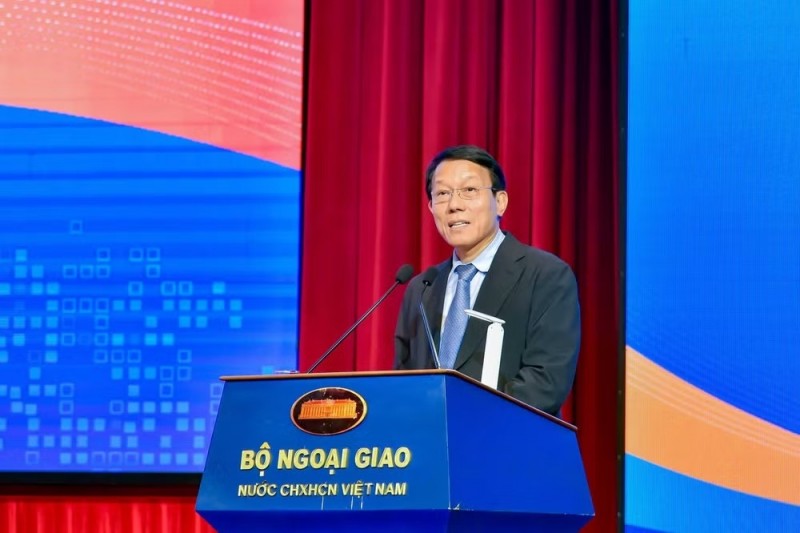 |
| General Luong Tam Quang, Minister of Public Security and Standing Deputy Head of the Central Steering Committee for Science, Technology, Innovation and Digital Transformation Development. (Photo: Nhan Dan Newspaper) |
The Minister also urged the establishment of a network of partners comprising technology corporations, investment funds, research institutes, universities, businesses, and experts, as well as the development of a database of leading experts in strategic technology fields. Each overseas posting should develop an “opportunity map” identifying corporations, investment funds, research institutes, universities, and other partners with strengths and potential for cooperation with Vietnam.
Vietnamese representative missions abroad should strengthen their role as technology bridges by proactively providing policy advice, connecting partners, mobilizing networks of overseas Vietnamese experts, and supporting Vietnamese enterprises in integrating more deeply into global value chains.
According to Minister Luong Tam Quang, Vietnamese representative missions abroad are trusted by domestic enterprises seeking partners, technologies, and cooperation opportunities in foreign markets. Therefore, stronger coordination mechanisms and clear assignment frameworks should be established between representative missions and ministries, sectors, localities, organizations, and businesses at home. At the same time, ministries, sectors, localities, and enterprises must proactively prepare projects, institutional mechanisms, sites, human resources, and other conditions necessary to receive international cooperation. External opportunities can only be transformed into development resources when domestic capacity is fully prepared.
Relevant agencies and organizations should work closely with the Central Steering Committee and the Government Steering Committee to establish a demand-driven assignment mechanism linking domestic needs with Vietnam's representative missions abroad, aligned with specific tasks in implementing Resolution No. 57-NQ/TW.
Minister Luong Tam Quang stressed that science and technology diplomacy is the responsibility of the entire political system. Policy-making and implementing agencies are responsible for accurately identifying development needs and priorities while creating a favorable environment and innovation ecosystem. The Ministry of Foreign Affairs, Vietnamese representative missions abroad, and cooperation promotion agencies play the role of identifying opportunities, connecting partners, and advancing cooperation. Research institutes, universities, and businesses, meanwhile, must proactively strengthen their human resources and capabilities to absorb, research, master, and commercialize technologies.
Only when the three key pillars - policy-making and implementation agencies; the diplomatic and cooperation promotion system; and research institutes, universities, and businesses - operate in a coordinated manner can science and technology diplomacy truly generate new drivers of national development.
Minister Luong Tam Quang affirmed that the Central Steering Committee and the Government Steering Committee would continue their efforts to effectively advance science and technology diplomacy. He expressed his hope that the Ministry of Foreign Affairs and heads of Vietnam's representative missions abroad would demonstrate the highest sense of responsibility, serve as a genuine pioneering force, and make active contributions and breakthroughs in building the country's scientific, technological, innovation, and digital transformation capacity.
 Overseas Vietnamese Ready to Contribute to National Development Overseas Vietnamese Ready to Contribute to National Development Overseas Vietnamese has become an important resource in building and developing a prosperous and strong Vietnam. They also serve as a bridge to foster friendship and promote investment cooperation with other countries. |
 Vietnam Marks Significant Milestones in Gender Equality Vietnam Marks Significant Milestones in Gender Equality On March 25 in Hanoi, the Central Committee of the Vietnam Women's Union, in collaboration with the UN Women in Vietnam, organized the Intergenerational Media Forum titled “Women and Gender Equality in the New Era.” The event marked the 30th anniversary of the Beijing Declaration and Platform for Action and the 10th anniversary of the Sustainable Development Goals (SDGs) implementation. |




Related Stories
 National
Local External Affairs Must Deliver Tangible Outcomes and Concrete Results
 Seas and islands
Ministry of Foreign Affairs Updates on Rescue Efforts after Khoi Nguyen 18 Vessel Sinks at Sea
 National
Vietnam, China Step Up Bilateral Cooperation
 Seas and islands
Vietnam Reaffirms Goodwill in Adhering to 1982 UNCLOS
Recommended
 National
Hanoi Receives Approximately VND 74 Billion for “For the Poor” Fund in 2026
 National
Key Results of 500-Day Campaign to Search For, Recover and Identify Fallen Soldiers’ Remains
 National
Viet Nam News Today (Oct. 27): Vietnamese, Polish PMs Seek ways to Boost All-round Cooperation
 National
Vietnam, Poland Issue Joint Statement on Establishment of Strategic Partnership
Popular article
 National
Proactively Identifying Development Needs to Expand Cooperation with Foreign NGOs
 National
Viet Nam News Today (Oct. 25): Viet Nam, Mozambique Seek Stronger Agricultural Ties
 National
Viet Nam News Today (Oct. 24): European Media Highlights Substantive Progress in Vietnam-EU Relations
 National