
Arctic Warming Accelerates, Sea Ice Shrinks by Nearly 500,000 sq km Every Decade
 Overseas Vietnamese Professor Researches Antarctica's Icy Wonders Overseas Vietnamese Professor Researches Antarctica's Icy Wonders |
 Overseas Vietnamese in Brazil Passionate About Antarctica Overseas Vietnamese in Brazil Passionate About Antarctica |
According to The Straits Times, the combined temperature of the sea surface and ice surface in the Arctic has risen by around 4.2°C between 1982 and 2024. The average increase was approximately 1°C per decade, compared with around 0.12°C per decade for global sea surface temperatures.
The Kara Sea, north of Siberia, is one of the fastest-warming areas. Temperatures there have risen by around 6.7°C since 1982, or 1.68°C per decade.
Arctic sea ice has also declined by nearly 500,000 sq km per decade since 1979, an area roughly equivalent to the size of Spain. As the protective layer of ice shrinks, waves can reach coastlines more directly, increasing erosion. According to Karina von Schuckmann, one of the report's authors, around 60% of Arctic coastal infrastructure is at risk from erosion and rising sea levels.
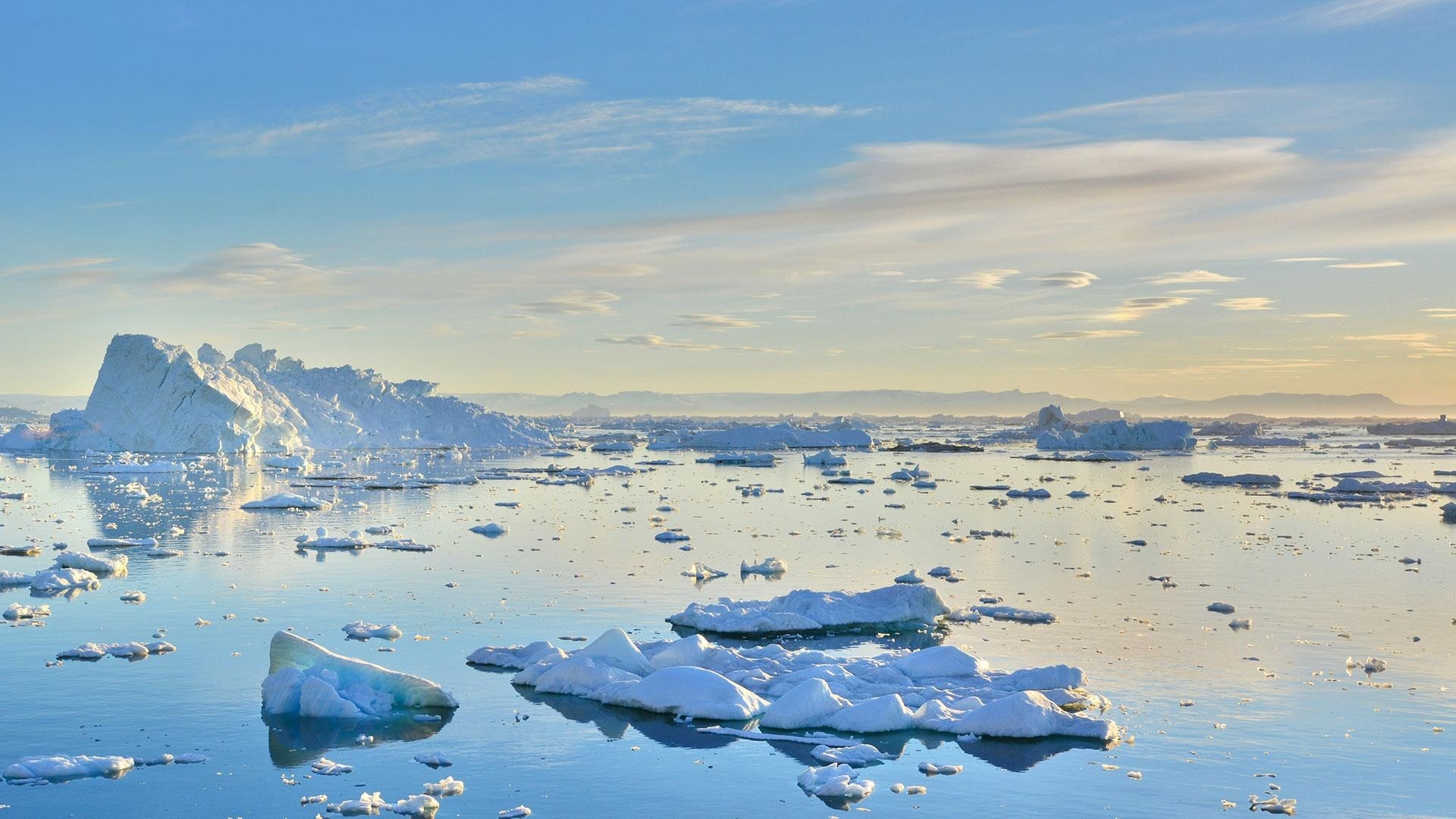 |
| Melting sea ice in the Arctic. (Photo: United Nations) |
In Antarctica, declining sea ice is putting direct pressure on emperor penguins. The species depends on stable sea ice to breed and raise its young. If the ice melts too early, chicks can fall into the water before developing waterproof feathers. In April 2026, the International Union for Conservation of Nature (IUCN) upgraded the emperor penguin's conservation status from “Near Threatened” to “Endangered.” The IUCN projects that the species' population could decline by half by the 2080s if the loss of sea ice continues.
Climate change is also affecting other Antarctic species. The IUCN reports that the population of Antarctic fur seals has declined by more than 50% since around 2000. Warmer seawater and shrinking sea ice are making food sources such as krill more difficult to access.
These changes are taking place as the world's oceans continue to absorb most of the excess heat generated by human activities. A United Nations assessment says the oceans have absorbed more than 90% of excess heat and around 30% of the carbon dioxide emitted from fossil fuel burning. This process is warming seawater, causing it to expand and contributing to rising sea levels.
Warming is also spreading beyond the polar regions. The EU's Copernicus Climate Change Service (C3S) reported that in 2025, average sea surface temperatures across European waters reached their highest level on record. Around 86% of the region's marine area experienced at least one strong marine heatwave, while more than one-third recorded severe or extreme conditions.
By the summer of 2026, marine heatwaves continued to have a major impact on the Mediterranean, the Bay of Biscay and other European waters. Reuters reported that around 95% of kelp forests had disappeared in some areas of northern Spain. The decline has triggered changes among species that depend on kelp ecosystems, including lobsters, crayfish and sea urchins.
The latest data show that the impact of climate change on the oceans goes far beyond rising temperatures. Sea ice, coastlines, ecosystems, and the lives of species dependent on polar environments are all changing at an increasingly rapid pace.
 UN warns global warming can slash equivalent of 80 million jobs by 2030 UN warns global warming can slash equivalent of 80 million jobs by 2030 As climate change worsens, growing heat stress on workers in agriculture and other sectors will cause a productivity loss equal to 80 million full-time jobs over the next decade, the UN warned Monday (Jul 1). |
 Environmental Education for More Than 400 Students in Tuyen Quang Environmental Education for More Than 400 Students in Tuyen Quang More than 400 students and teachers from Yen Ha Primary and Secondary School (Bang Lang Commune, Tuyen Quang Province) participated in the Environmental Education Program themed Waste and Waste Recycling, recently organized by GNI. |


Most read


Poland Inaugurates Memorial Plaque Honouring Architect Who Helped Preserve Hoi An

First Congress of the Dong Thap Union of Friendship Organizations for the 2026-2031 Term


Related Stories
 Vietnamese Culture
Over 100 Youth in Vietnam for Summit to Work for Greener World
 World
World
Bloomberg: 90% Of Apple Suppliers Consider Leaving China For Vietnam And India
 National
Vietnam Attends Fifth International Conference For World Balance
 Overseas Vietnamese
Kim Ji Eun - Nguyen Tuong Vy Bridges Korean, Vietnamese Education
Recommended
World
Poland Inaugurates Memorial Plaque Honouring Architect Who Helped Preserve Hoi An
 World
World
India enlarged defense cooperation with Tajikistan, Turkmenistan in Central Asia
 World
World
Viet Nam-Japan Concert Raises Funds for Agent Orange Victims
 World
World
India, US plan strategic cooperation in Indian Ocean with focus on ports, maritime and digital infrastructure
Popular article
 World
World
Viet Nam Hosts Dialogue on Promoting Older Persons’ Right to Health
 World
World
EU Updates Rules on Environmental Claims
 World
World
Four European countries support India’s bid for a permanent UNSC seat
 World
World