
Promoting People-to-People Diplomacy to Build a Solid Foundation Rooted in “the People’s Hearts”
| Strengthening People-to-People Exchanges, Nurturing Viet Nam-RoK Friendship Hai Phong: Vietnamese and International Melodies Foster Friendship |
For me personally, as well as for the members of our Committee, May 6, 2026, was a date of immense pride. Through the facilitation of Ambassador Nguyen Thanh Hai, our nine-member delegation had the honour of meeting with General Secretary of the Central Committee of the Communist Party of Viet Nam and President of the Socialist Republic of Viet Nam To Lam, in New Delhi during his state visit to India.
During the hour-long meeting, General Secretary and President To Lam affirmed the strategic importance of people-to-people diplomacy, describing it as a core pillar of Viet Nam’s diplomacy. He emphasised the importance of exchanges among younger generations, cultural preservation and educational linkages as means of strengthening mutual trust. He also expressed his deep appreciation for the sustained efforts to nurture the shared “home” of India-Viet Nam solidarity - a relationship of friendship and mutual respect, deeply rooted in history and initiated and laid on a firm foundation by the great leader Ho Chi Minh and the revolutionary predecessors of India. Recalling the deeply moving memories of his visit to Kolkata 14 years earlier, he candidly shared that Viet Nam was closer to Kolkata than to Delhi, not only geographically but also emotionally, and that both sides should continue their efforts to bring the relationship even closer.
It would be no exaggeration to say that our dedicated comrades and colleagues have made tremendous and particularly significant contributions to consolidating, developing and expanding bilateral cooperation across various fields. This is a remarkable achievement worthy of recognition, one that few individuals or organisations in India can match. Over the years, the Committee has welcomed numerous senior Vietnamese leaders, including General Vo Nguyen Giap, General Secretary Nong Duc Manh, National Assembly Chairwoman Nguyen Thi Kim Ngan, President Tran Dai Quang, and General Secretary and President To Lam, along with many other senior leaders and delegates.
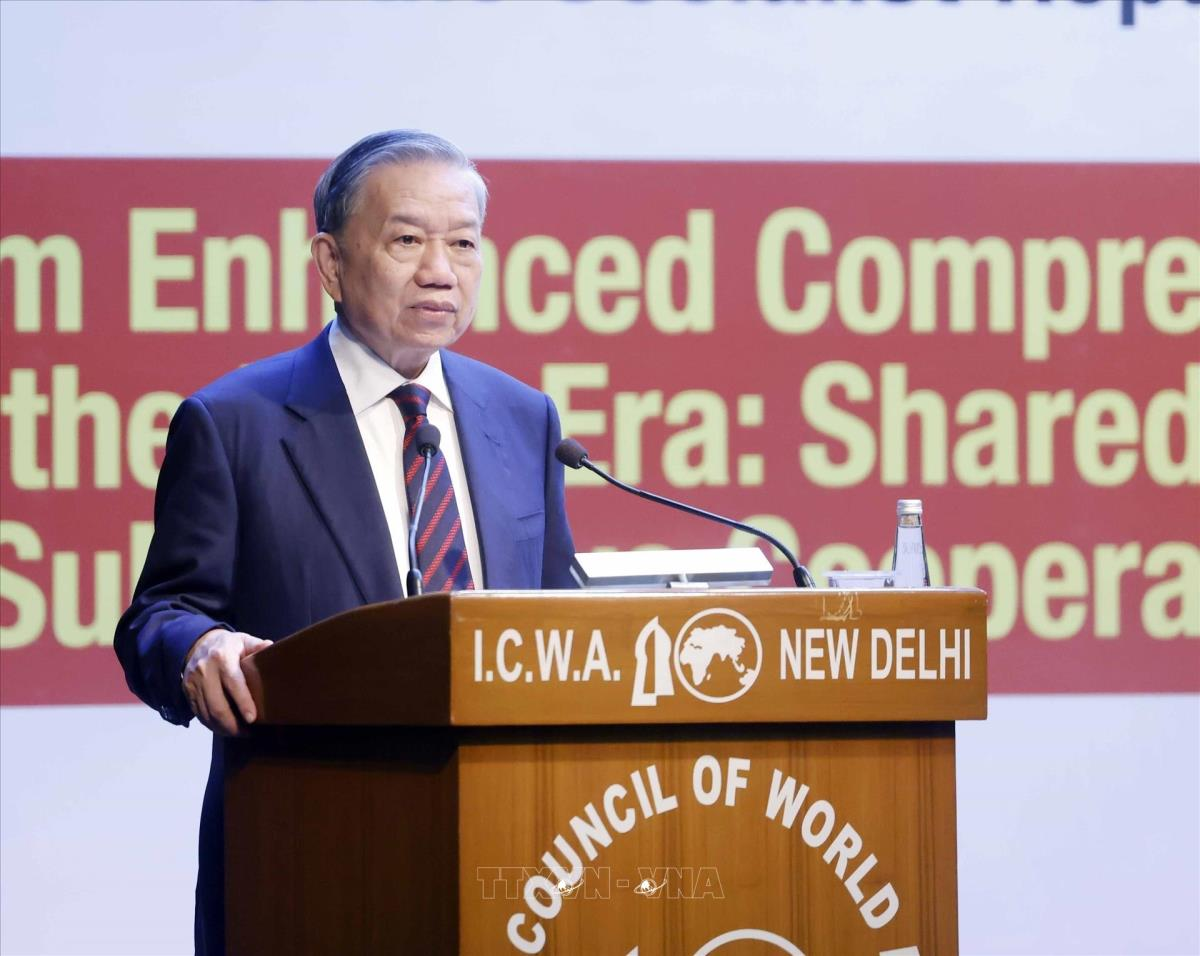 |
| General Secretary and President To Lam delivers a policy address at the Indian Council of World Affairs on May 6, 2026. (Photo: Thong Nhat/VNA) |
Each and every one of us is an integral part of people-to-people diplomacy. This is a truth that I have come to understand and appreciate through the works of President Ho Chi Minh and late General Secretary Nguyen Phu Trong, as well as through direct encounters with people ranging from senior leaders to ordinary citizens in both India and Viet Nam. I am immensely proud to have been a member of the India-Viet Nam Solidarity Committee since 1976. The Committee’s predecessor was established in the early 1970s under the leadership of Comrade Bhupesh Gupta, Professor Santimoy Roy and Mr Geetesh Sharma, with the aim of providing both moral and material support to the resilient and indomitable Vietnamese people in their struggle for national liberation. Since its establishment, the Committee has consistently played a pivotal role in promoting people-to-people exchanges between the two countries.
Even before the two countries gained independence, Motilal Nehru (father of Prime Minister Jawaharlal Nehru) held a historic meeting with President Ho Chi Minh in February 1927 at the First Congress of the League Against Imperialism and Colonial Oppression, held in Brussels, Belgium. Upon returning from the congress, Motilal Nehru shared with Jawaharlal Nehru his impressions of leader Ho Chi Minh and the latter’s vision for Viet Nam’s independence. This marked the beginning of the bond between the two countries. The connection between Prime Minister Nehru and President Ho Chi Minh was built on a profound spiritual and intellectual foundation, even though the two had never met in person. President Ho Chi Minh even wrote a poem about Prime Minister Nehru while both men were imprisoned in their respective countries.
In October 1946, in his capacity as head of the Interim Government of India, Prime Minister Jawaharlal Nehru sent a congratulatory telegram to President Ho Chi Minh on the establishment of the Democratic Republic of Viet Nam. The telegram was personally delivered to President Ho Chi Minh by M.S. Aney, India’s representative in Kandy, Ceylon, on October 10, 1946, when Ho Chi Minh was transiting through Ceylon (now Sri Lanka) following tense negotiations with the French authorities. The telegram, published in The Hindu on October 13, 1946, read as follows:
“I would be greatly honoured if I could meet the Head of the Republic of Viet Nam in person to convey, on behalf of India, our greetings and best wishes to your people. We welcome the independence of all Asian nations and look forward to the cooperation of every country and every people on this continent in the cause of freedom and peace. There is currently a proposal to hold an Asian Relations Conference in New Delhi in March 1947. We hope to welcome representatives from most Asian countries to attend this conference. I firmly believe that the Republic of Viet Nam will also contribute to this important event.”
In the congratulatory telegram, Prime Minister Jawaharlal Nehru formally invited the Democratic Republic of Viet Nam to send representatives to the Asian Relations Conference, held from March 23 to April 2, 1947, and organised by the Indian Council of World Affairs to promote cultural, intellectual and social exchanges among Asian countries. In response to the invitation, President Ho Chi Minh dispatched a three-member delegation led by Mai The Chau to represent the Democratic Republic of Viet Nam. Overcoming numerous geographical barriers and a difficult journey, the Vietnamese delegation attended the conference to seek international solidarity and support for its resistance war against French colonialism. At the conference, the delegation openly appealed to 28 countries and more than 200 delegates in attendance for moral, political and material support for its anti-colonial struggle. Notably, alongside Prime Minister Jawaharlal Nehru, Mahatma Gandhi, the leader of the movement, and poet Sarojini Naidu also delivered forceful speeches calling for Asian solidarity and an end to colonialism. In this historic atmosphere, Mai The Chau delivered a deeply moving speech:
“On this historic occasion, when representatives from countries across Asia have gathered together, I wish, on behalf of the Vietnamese people and the Vietnamese delegation, to extend my best wishes for the success of the Conference. I hope that the outcome of the Conference will contribute to lasting peace and indivisible, progressive freedom and democracy, while laying the foundations for effective and friendly cooperation among the peoples of Asia for the common happiness of humanity. I wish to express my sincere gratitude to the Indian Council of World Affairs for organising this cordial gathering, which has created an opportunity for the peoples of the East to strengthen their bonds of solidarity and brotherly friendship. I deeply regret that, despite the non-political nature of the Conference, Indochina has been unable to secure full and free representation because of the political barriers of the time. I would like to take this opportunity to once again express my deepest gratitude to the great people of India, as well as to the peoples and leaders of other Asian countries, for their profound sympathy and tremendous moral support for the Vietnamese people in their struggle for freedom. I am not a gifted orator, and at a time when the very survival of my country is at stake, what can save my country is not eloquent words, but action. We have gathered here not merely out of curiosity to understand one another; for if we understand one another but cannot help one another, such mutual understanding will not save us from perishing one by one under the shackles of those who oppose justice and freedom. We have spoken far too much about Asian solidarity. Now is the time for us to act.” (Excerpted from documentary sources)
In 1947, on the occasion of India’s declaration of independence, President Ho Chi Minh sent a congratulatory telegram to Prime Minister Jawaharlal Nehru:
“On the occasion of India’s Independence Day, we share the joy of the Indian people and place our full confidence in the victory of the peoples of Asia in their struggle for freedom and progress. We hope that the friendship between the peoples of our two countries will grow ever closer and stronger over the years, and that a new era of prosperity, happiness and peace will soon dawn in Asia.”
This message clearly reflected a core aspect of President Ho Chi Minh’s people-centred diplomatic philosophy: his emphasis on “friendship between the peoples of our two countries”, rather than merely between the two states. (According to “India and Indo-China: A Cooperative Perspective” by T.N. Kaul, Patriot Publishers, New Delhi, July 1987.)
The friendly diplomatic relations between India and Viet Nam, which originated with the meeting between President Ho Chi Minh and Motilal Nehru in Brussels in February 1927, have been continuously tested and deepened over time through people-to-people exchanges. From government authorities at all levels to ordinary citizens, everyone has played their part in strengthening this relationship. People-to-people diplomacy played a decisive role in shaping developments and bringing the war in Viet Nam to an end. Immediately after independence, amid an extremely complex and perilous situation marked by threats from both within and outside the country, President Ho Chi Minh elevated the concept of people-to-people diplomacy and established a “Diplomatic Front”. He was a pioneering architect of a people-centred diplomatic tradition. Research based on archival records in Viet Nam and the United States shows that this Diplomatic Front established crucial links with anti-war activists overseas, thereby lending considerable credibility to grassroots efforts to portray Viet Nam as a nation fighting for a just cause and acting in good faith in the eyes of the international community.
Despite facing blockades and embargoes and lacking recognition from Western countries in the early years after independence, Viet Nam received tremendous support from progressive people around the world. Defying government-imposed restrictions, people in France, the United States and Japan took to the streets to protest against the war and the embargoes. They raised funds, provided essential supplies and stood alongside the Vietnamese people through their most difficult times. This was the unparalleled power of people-to-people diplomacy.
In 1998, a three-member delegation was invited to visit Viet Nam by the Ho Chi Minh City Union of Friendship Organisations (HUFO). The delegation comprised the late H.A. Halim, former Speaker of the West Bengal Legislative Assembly; the late Geetesh Sharma, former Chairperson of the India-Viet Nam Solidarity Committee; and myself. After visiting Ho Chi Minh City, we travelled to Hanoi under HUFO’s arrangements. On subsequent visits, I also travelled to Da Nang at the invitation of the Da Nang Union of Friendship Organisations (DAFO). Almost every province and city in Viet Nam has a member union affiliated with the Viet Nam Union of Friendship Organisations (VUFO). The organisation also has a People’s Aid Coordination Committee (PACCOM), established in 1993. VUFO is Viet Nam’s specialised socio-political organisation for people-to-people diplomacy, one of the three core pillars of the country’s modern diplomatic framework. It connects friendship associations from the central to local levels with an extensive network of international partners.
VUFO’s illustrious journey began with an impassioned letter dated November 17, 1950, sent by President Ho Chi Minh from the Viet Bac resistance base to the founding congress of the Viet Nam Committee for the Defence of World Peace. The letter inspired the establishment of the Viet Nam Committee for the Defence of World Peace, guided by the principle that “Viet Nam wishes to be friends with all countries”. After decades of sustained development, this network evolved into the Viet Nam Union of Friendship Organisations as it exists today. November 17 has been designated as the organisation’s Traditional Day. This people-to-people diplomatic front was established to go beyond official government channels, mobilising international support and solidarity while inspiring anti-war movements and public support for Viet Nam in countries around the world. Following national reunification, VUFO renewed its approach to external relations, incorporating the principles of multilateralisation and diversification into its activities.
It is important to emphasise that visits by heads of state and high-level delegations serve as powerful catalysts for strengthening people-to-people diplomacy. Such summits open up new avenues for people to connect through joint cultural and economic initiatives, thereby helping to ease geopolitical tensions. These visits also pave the way for bilateral cooperation funds, agreements and joint ventures that promote exchanges at the grassroots level. Political goodwill signals stability and friendship, creating practical opportunities for bilateral trade and tourism while enabling non-governmental organisations, friendship associations and the media to serve as cultural ambassadors and foster the natural, grassroots development of bilateral relations.
India-Viet Nam relations have continued to deepen and strengthen over the past more than 80 years. Visits by senior leaders of the two countries have elevated their friendly relations from economic cooperation to a strategic partnership, a comprehensive strategic partnership, and now an enhanced comprehensive strategic partnership. During General Secretary and President To Lam’s recent visit to India, the two countries agreed to elevate their comprehensive strategic partnership to a new level. This is the highest tier of bilateral diplomatic relations between India and Viet Nam, reflecting extensive, multi-sectoral cooperation that goes beyond conventional strategic alliances. The upgraded partnership focuses on both traditional and emerging fields, including defence, trade, critical minerals, energy security, education, digital technology and finance, culture, tourism, and Indo-Pacific cooperation. It also aims to increase bilateral trade from US$16 billion in 2026 to US$25 billion by 2030.
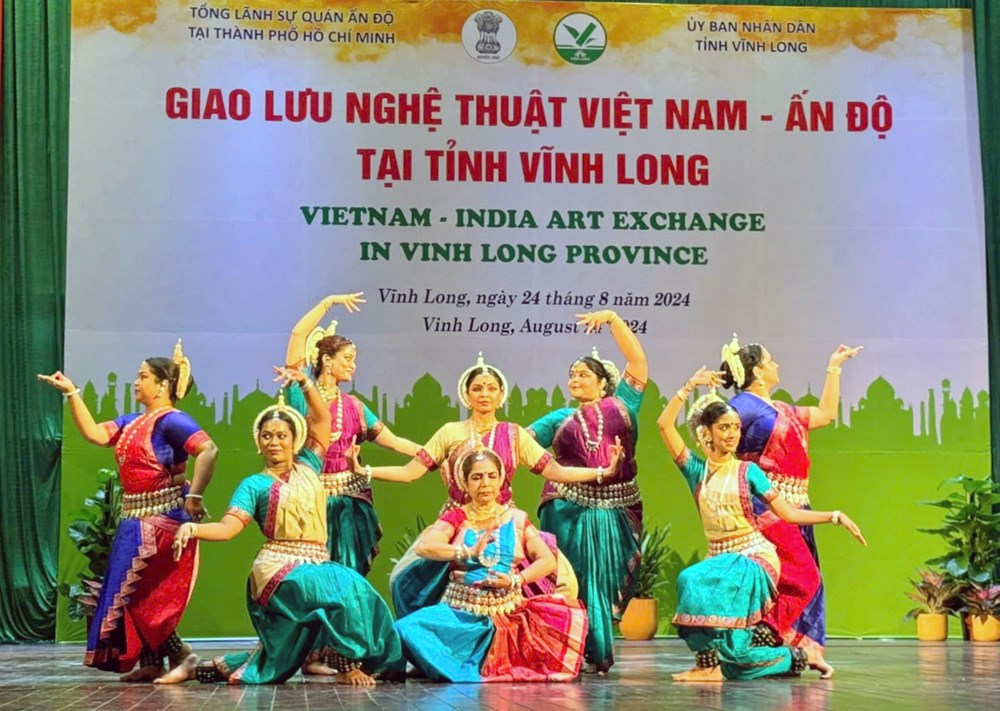 |
| Viet Nam-India people-to-people exchanges. (Illustrative photo: Van Hoa Newspaper) |
People-to-people diplomacy will continue to take exchanges between the younger generations and the peoples of the two countries to new heights. We hope that the India-Viet Nam Solidarity Committee (IVSC) and other organisations will play an even greater role in fostering people-to-people relations through a wide range of activities. Geetesh Sharma, whom we lost forever during the COVID-19 pandemic, made immense contributions. He initiated efforts to establish direct air routes between India and Viet Nam and drew public attention to Cham culture and the ancient Cham towers scattered throughout central Viet Nam. He authored more than 10 books on Viet Nam and spoke at numerous national and international forums about the remarkable development he had witnessed firsthand during his 26 visits between 1982 and 2019. His dedication to strengthening India-Viet Nam friendship stands as an inspiring example for us all. He firmly believed that culture was a form of soft power and a key to enhancing mutual trust and advancing people-to-people diplomacy. This is a strategic instrument in India-Viet Nam relations under India’s Act East Policy.
Today, the Viet Nam Union of Friendship Organisations (VUFO) has officially established partnerships with organisations in more than 120 countries, vigorously promoting people-to-people diplomacy, international cooperation and solidarity exchanges through an extensive network of 117 member organisations. The India-Viet Nam Solidarity Committee has participated in numerous international events at VUFO’s invitation, and on every occasion, our delegation has received a warm welcome from VUFO’s President. During their respective tenures, Comrades Nguyen Phuong Nga, Vu Xuan Hong and Phan Anh Son provided us with the utmost support and cooperation. Comrade Phan Anh Son has always been ready to help. I am also deeply grateful to Comrade Nguyen Manh Hung, President of VIFA, who has consistently supported and stood alongside our cause. Comrade Phan Lan Tu, President of HAVIFA, won the hearts of every member of the Solidarity Committee when she led an 11-member delegation to Kolkata. Comrade Phan Anh Son, the incumbent President of VUFO, is taking an active role in promoting a people-centred approach to “bamboo diplomacy”, deeply imbued with President Ho Chi Minh’s thought and philosophy.
VUFO is the embodiment of President Ho Chi Minh’s vision. He was a true internationalist with a profound national perspective, leaving no room for narrow nationalism. He inspired the establishment of VUFO to build friendships with peoples around the world in the cause of peace and global solidarity. VUFO is translating this vision of international solidarity into practice and steadfastly upholding its principles, serving as a bridge that elevates international friendship.
President Ho Chi Minh provided an insightful explanation of people-to-people diplomacy to diplomats in northern Viet Nam at a conference in January 1964. He emphasised that diplomacy conducted by mass organisations and individuals was just as important as state diplomacy. This diplomatic front encompassed writers, caricaturists, workers, women, school and university students, performing artists, filmmakers, architects, doctors, nurses, scholars, lawyers and athletes. This expanded diplomatic front also included anti-war activists overseas, who opposed American intervention and thereby lent greater moral legitimacy to Viet Nam’s struggle.
In this context, I would like to reiterate that the Indian people in general, and the people of Calcutta in particular, wholeheartedly supported and contributed to the Vietnamese people’s heroic struggle for independence from as early as the 1940s. Calcutta and its people sympathised so deeply with Viet Nam’s freedom fighters that every political party, regardless of ideology, and members of the intellectual community, without exception, voiced their support for Viet Nam’s war of liberation. In January 1947, just seven months before India gained independence from British colonial rule, two students, Dhir Ranjan Sen and Sukhendu Bikash Nath, lost their lives, many others were injured when police opened fire and beat demonstrators with batons, and hundreds more students were arrested for participating in protests against French colonial aggression. On January 21, demonstrators in Calcutta declared the day “Vietnam Day”.
Another unprecedented event took place on May 19, 1970. The student community expressed its outrage at the brutal aggression of US imperialism in Viet Nam by chanting the resounding slogan “Hands off Viet Nam” directly in front of the US Consulate General on Harrington Street in central Calcutta. The youth demonstrators broke through police barricades on the street where the US Consulate General and the British Deputy High Commission were located. The young people participating in the protest spontaneously decided to rename Harrington Street Ho Chi Minh Street in honour of Vietnam’s legendary freedom leader, a statesman of great international standing. Almost immediately, the surrounding walls were painted with the new name, Ho Chi Minh Sarani, replacing the old name Harrington. The people of Calcutta thus made this deeply moving, spontaneous decision to rename the street, and the new name, “Ho Chi Minh Sarani”, was formally approved by the Calcutta Municipal Corporation several years later. This stands as an extraordinary testament and an exemplary symbol of people-to-people diplomacy.
The late General Secretary Nguyen Phu Trong, an outstanding theorist and eminent intellectual of the Communist Party of Viet Nam, authored a book of profound ideological significance entitled Building and Developing Viet Nam’s Comprehensive and Modern Foreign Relations and Diplomacy with the Distinctive Identity of Vietnamese Bamboo. The book represents a significant continuation and development of President Ho Chi Minh’s thought on a diplomatic tradition that links national independence with socialism, harmoniously combining traditional Eastern cultural values and humanism with modern thinking towards the goal of “making more friends and fewer enemies”. Diplomacy has always been a vital instrument of Viet Nam’s foreign policy, whether in Party-to-Party relations, state diplomacy or people-to-people diplomacy. Through its evolution and renewal, Vietnamese diplomacy has forged a distinctive tradition grounded in the fundamental values of internationalism, peace and solidarity. These values have guided the Communist Party of Viet Nam and the Government in formulating foreign policy from the pre- and post-Doi Moi periods to the present day.
With unwavering faith in the diplomatic philosophy of the Ho Chi Minh era, rooted in the image of Vietnamese bamboo, it is imperative to raise public awareness of this philosophy, particularly among younger generations. Comparing Vietnamese diplomacy to bamboo is a profound and highly symbolic metaphor. Bamboo represents not only inner strength, flexibility, adaptability and resilience, but also steadfastness, uprightness and an ability to grow stronger through adversity. Just as bamboo needs the freedom to sway in the wind while remaining firmly anchored in the earth by its strong roots, its stalks may bend but are never weak or submissive. Guided by this clearly defined diplomatic philosophy, Viet Nam has successfully undertaken Doi Moi, a reform process grounded in enduring socialist values. Since national reunification and throughout the Doi Moi process, people-to-people diplomacy has created new opportunities for diversification, multilateralisation and deeper international integration.
This article would be incomplete without mentioning a heroic woman, hailed as the fiery flower of the Vietnamese revolution. At 99, she remains a living legend and a master of people-to-people diplomacy. She worked tirelessly and devoted herself wholeheartedly throughout the resistance wars against French colonialism and American aggression, national reunification, the Doi Moi process and the subsequent period, serving in several positions of critical importance.
She endured perilous years in her youth, facing arrest, torture and imprisonment, yet never surrendering. She was an extraordinary woman with formidable inner strength, which President Ho Chi Minh recognised early on. He entrusted her with the crucial responsibilities of Minister of Foreign Affairs of the Provisional Revolutionary Government of the Republic of South Viet Nam (PRG) and Head of the PRG delegation to the Paris Conference on June 6, 1969. She possessed captivating beauty, was a tireless worker with exceptional powers of persuasion, and spoke gently while maintaining the steadfast spirit of bamboo. As chief negotiator throughout the Paris peace talks from 1968 to 1973, she skilfully employed both state diplomacy and people-to-people diplomacy. She successively put forward 10-point, eight-point, seven-point and two-point proposals during the protracted negotiations. Throughout nearly five years of arduous talks, Nguyen Thi Binh embodied the voice of peace while steadfastly defending the just cause of her nation. Through her courage, flexibility and masterful negotiating tactics, she helped generate enormous international pressure that compelled the United States to negotiate seriously and make successive concessions. Finally, in January 1973, the Paris Peace Accords, the historic document officially ending the war and restoring peace in Viet Nam, were signed. She was the only woman among the four representatives who signed this historic agreement.
On April 30, 1975, North and South Viet Nam were reunified, but the country faced countless challenges both at home and abroad. She was once again entrusted with a major responsibility, becoming Minister of Education of reunified Viet Nam. This was no easy task given the severe devastation inflicted on the Vietnamese economy by the war. Rebuilding and merging two entirely different education systems into one, training teachers and eradicating illiteracy were long-term campaigns to which she devoted herself selflessly. From 1992 to 2002, she became the first woman to serve as Vice President of the Socialist Republic of Viet Nam, overseeing state diplomacy, education, healthcare and judicial reform. She always believed in the power of the people, who could exert pressure on their governments to change policies. This was why people-to-people diplomacy remained a vital component of her diplomatic philosophy.
The policy of economic Doi Moi was adopted in December 1986 at the Sixth National Congress of the Communist Party of Viet Nam. This marked Viet Nam’s transition from a centrally planned, bureaucratically subsidised economy to a socialist-oriented market economy. Nguyen Thi Binh herself fully understood the importance of Doi Moi in rebuilding, developing and modernising the country to bring prosperity and happiness to its people. While working with peace, solidarity and friendship organisations, she proactively redirected their activities to incorporate economic and cultural cooperation initiatives aligned with the spirit of Doi Moi. She promoted multilateralisation and diversification, ushering the country into a new era that demanded rapid, sustainable and inclusive progress for all segments of society.
Over the past 40 years, the fruits of Doi Moi have become evident across all sectors. The 2025 Human Development Report ranked Viet Nam among countries with a high Human Development Index (HDI), placing it 93rd out of 193 countries. This is a remarkable achievement, clearly demonstrating the substantial results delivered by the country’s reform policies.
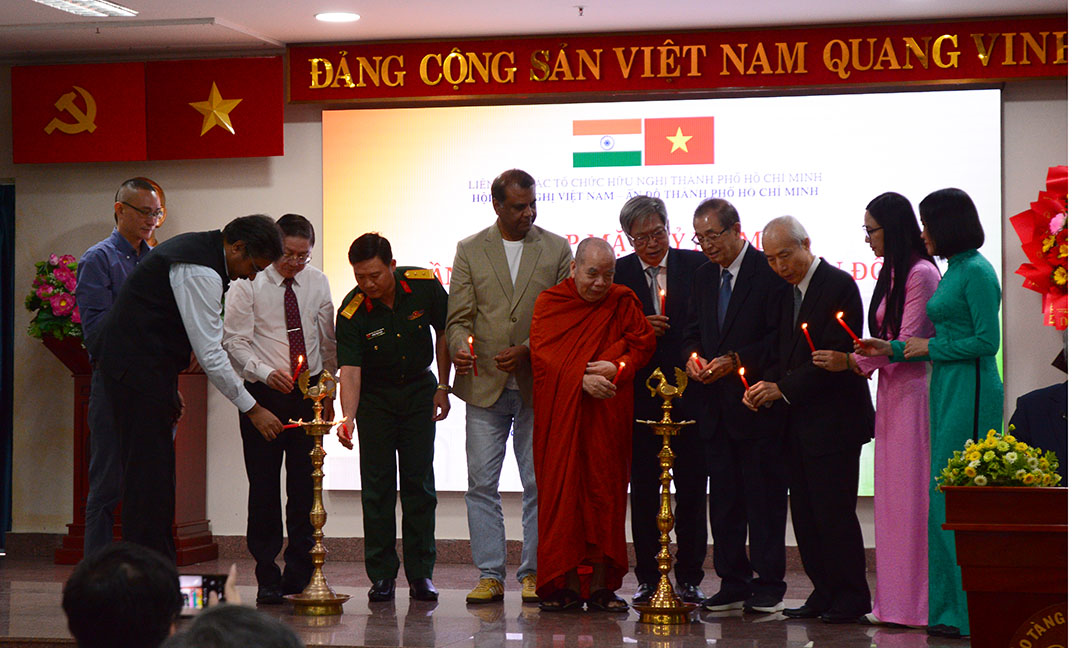 |
| Delegates take part in a candle-lighting ceremony at the celebration marking the 80th anniversary of India’s Independence (August 15, 1947 - August 15, 2026), organised by the Ho Chi Minh City Union of Friendship Organisations. (Photo: People’s Army Newspaper) |
People-to-people diplomacy is now entering a new phase of transformation. In this regard, I would like to quote Professor Nguyen Xuan Thang’s assessment of diplomacy in the new era. As President of the Ho Chi Minh National Academy of Politics and a member of the Party’s strategic advisory body, Professor Thang stated: “Rooted in Marxism-Leninism, Ho Chi Minh’s diplomatic thought, the nation’s rich diplomatic traditions and the intellectual advances of humanity, the country’s diplomacy must be comprehensive and modern. Alongside defence and security, diplomacy must serve as a pioneering force, harmoniously combining domestic and international resources to expand development opportunities, create new prospects and support Viet Nam’s strategic breakthroughs. Moreover, diplomacy must enhance Viet Nam’s image and global influence, making meaningful contributions to international affairs.”
The State and the people have always worked hand in hand, complementing one another in realising strategic objectives through people-to-people exchanges across various fields. This is a core pillar of the enhanced Comprehensive Strategic Partnership, nurtured by a shared civilisational heritage, including Buddhism and Cham culture, as well as cultural festivals, tourism and spiritual exchanges. This pillar will play an important role both nationally and internationally through Viet Nam’s comprehensive and modern diplomacy. It has become an indispensable instrument of the foreign policies of both India and Viet Nam, helping to build broad-based support worldwide, shape public opinion, resolve conflicts and generate mutual benefits by fostering deeper international understanding. In the near future, new policies, strategies and initiatives in people-to-people exchanges will accelerate cooperation towards sustainable peace and development, contributing to the resolution of regional conflicts.
 Promoting People-to-People Exchanges Between Vietnamese and Palestinian Youth On November 25 in Hanoi, President of the Viet Nam Union of Friendship Organizations (VUFO) Phan Anh Son received Minister of Foreign Affairs and Expatriates of the State of Palestine Varsen Aghabekian Shahin, on the occasion of her official visit to Vietnam from November 25-27. |
 Promoting People-to-People Cooperation on the Occasion of the 55th Anniversary of Vietnam-Chile Relations On February 10 in Hanoi, President of the Viet Nam Union of Friendship Organizations (VUFO) Phan Anh Son received Ambassador of Chile to Vietnam Nasly Isabel Bernal Prado, who paid a courtesy call upon assuming her post in Vietnam. |
Most read

Poland Inaugurates Memorial Plaque Honouring Architect Who Helped Preserve Hoi An

First Congress of the Dong Thap Union of Friendship Organizations for the 2026-2031 Term


Related Stories
Friendship
First Congress of the Dong Thap Union of Friendship Organizations for the 2026-2031 Term
 National
Da Nang Taps Foreign NGO Resources to Promote Green Development
 Vietnamese Culture
Italian Ambassador to Viet Nam: Culture Brings Peoples of Two Countries Closer Together
 Friendship
Hai Phong: Vietnamese and International Melodies Foster Friendship
Popular article
 Friendship
American Friends Help Ease the Pain of Agent Orange
 Friendship
65 Years of the Agent Orange Disaster: Dialogue to Spur Action
 Friendship
Aris Alip: The Filipino Friend Who Helped Build the TYM Fund
 Friendship