
Viet Nam-Sweden: A Friendship That Endures
| PM Modi’s Sweden Visit Marks Milestone In Deepening Ties Vietnam-Sweden Children's Film Week Opens in Hanoi |
Trust earned in Uong Bi
In the spring of 2018, during a return visit to the Viet Nam-Sweden Hospital in Uong Bi, Quang Ninh Province, Anders Öhrström, who had previously served as a medical procurement adviser at the hospital, visited Dr. Nguyen Ngoc Ham, its former director. The two shared tea, reminisced about the past, and enjoyed hearty laughter. “Six months later, he passed away. I will always remember his words of encouragement and his wise leadership,” Anders recalled.
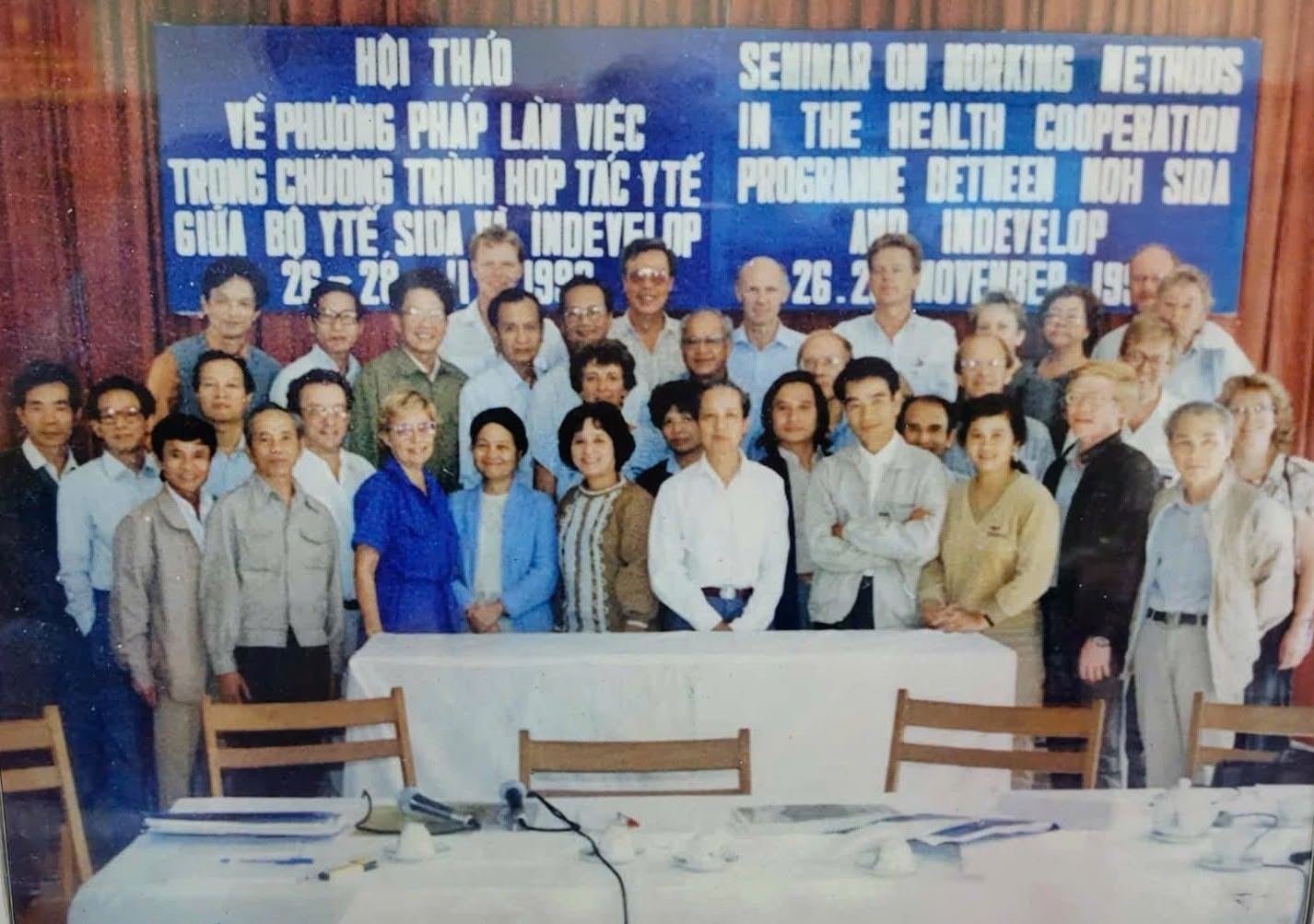 |
| Anders Öhrström in his younger years (fifth from right, back row). (Photo courtesy of the Embassy of Sweden in Viet Nam) |
Those words of encouragement dated back to a meeting in Uong Bi in 1982. At the time, Anders was just 25 years old and working at Karolinska Hospital in Stockholm, where he was responsible for procuring medical consumables. Recruited to serve as a procurement adviser in Uong Bi, he was tasked with training Vietnamese staff in this field. As the youngest member of the expert team, he faced doubts about his experience. “I felt that I needed to prove my abilities. I worked very hard, but the situation did not seem to change,” he recalled.
During one meeting, Dr. Nguyen Ngoc Ham, then Director of the Viet Nam-Sweden Uong Bi Hospital, spoke up: “Do not doubt Anders. A young eagle flies higher than an old goose.”
“And those words put an end to the doubts about me,” Anders recounted. More than four decades later, he still remembers the encouragement from the Vietnamese hospital director, who was subsequently awarded the titles of Hero of Labour and People's Physician.
The early days in Uong Bi were far from easy for the young expert. Although the hospital was equipped with modern medical equipment, it relied heavily on imported supplies and spare parts. Its warehouses held tens of thousands of different items, while transporting goods through Hai Phong Port presented numerous difficulties.
His Vietnamese colleagues welcomed him warmly, but communication was not always straightforward. He learned Vietnamese and combined newly acquired words with English and French to discuss work-related matters. The Swedish experts even developed a hybrid language blending Swedish and Vietnamese, which only a handful of Vietnamese people could understand.
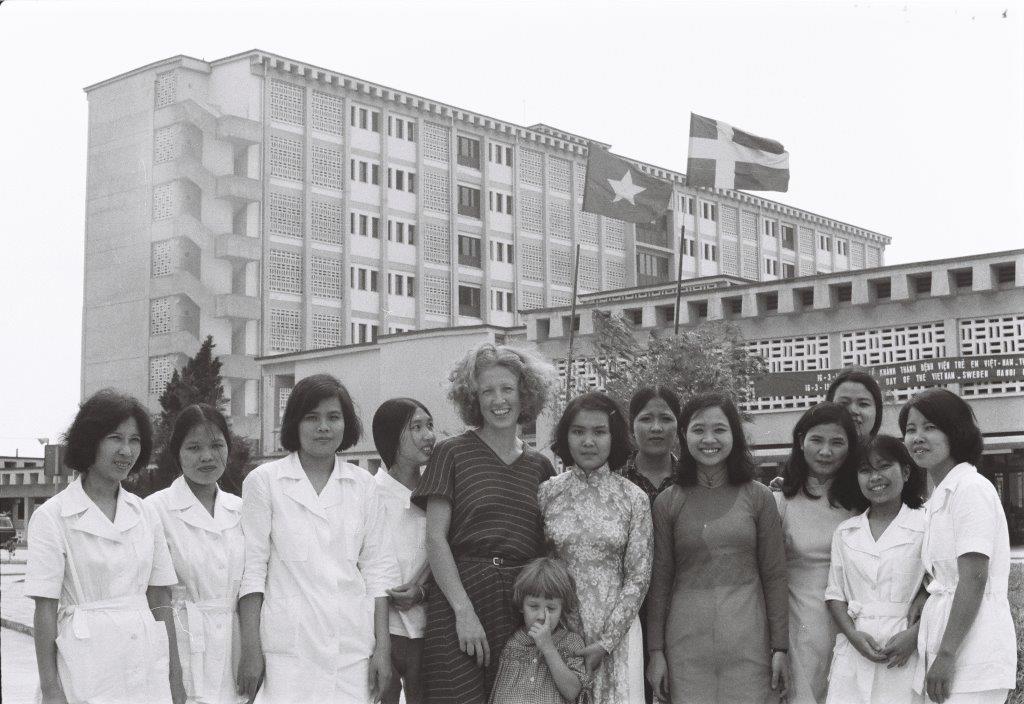 |
| Swedish medical expert Eva Lindskog (fifth from left) and her four-year-old daughter pose for a photograph with medical staff at the National Children's Hospital in March 1981. (Photo courtesy of the Embassy of Sweden in Viet Nam) |
During the same period, Elisabeth Dahlin was also involved in healthcare cooperation activities in Viet Nam. Between 1980 and 1981, alongside her studies in Hanoi, she worked at the Institute for the Protection of Children's Health (now the National Children's Hospital) as the facility was preparing to begin operations.
She moved to Uong Bi in 1981-1982 and continued working in Viet Nam until 1984. She later returned to the country as Sweden's Deputy Ambassador from 1997 to 2001.
Elisabeth vividly remembers the challenges of constructing the two hospitals and bringing them into operation. Equipment had to be transported through Hai Phong, roads had been damaged during the war, and many bridges had yet to be restored. Designs based on Nordic conditions also proved impractical when applied in Viet Nam. For example, Swedish architects had designed a large dining hall for hospital staff and patients, whereas in Viet Nam, family members traditionally brought food to their hospitalized relatives.
Frequent power outages made elevators unreliable during emergencies, while the staircases were too narrow to accommodate stretchers. As a result, new staircases had to be constructed outside the buildings. Operating rooms also required modifications because their large glass windows made them excessively hot under the Vietnamese sun.
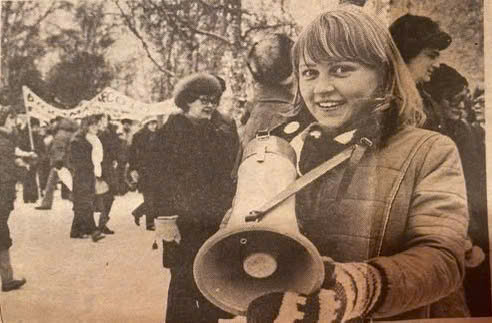 |
| Elisabeth Dahlin in her younger years, when she was among the volunteers collecting signatures in Sweden to protest the war in Viet Nam. (Photo courtesy of the Embassy of Sweden in Viet Nam) |
In Elisabeth's memories, Uong Bi in the early 1980s was almost a world of its own. The hospital stood on a hill surrounded by rice fields and grassy areas where buffaloes grazed. On some mornings, when she cycled to the market, she would find only a single cabbage, a few onions, and a small amount of fresh herbs. Around 75 Swedish experts and their families lived in a residential compound next to the hospital, and securing food supplies for the communal dining hall was a constant challenge. At times, the experts had to butcher beef and pork themselves, relying on cookbooks to prepare meals for everyone.
Another unforgettable memory was the hospital's inauguration. Days of heavy rain had turned the dirt road leading to the hospital into a muddy stretch that was almost impassable. Local authorities brought in bulldozers from nearby coal mines to level the road. According to Elisabeth, within a remarkably short time, a road wide enough for six lanes of traffic had appeared in front of the hospital, allowing people to travel to and from the facility in time for the inauguration ceremony.
Enduring projects, enduring friendships
The year 2026 marks 50 years of healthcare cooperation between Viet Nam and Sweden, dating back to the start of construction of the Viet Nam-Sweden Uong Bi Hospital in 1976. Alongside the new facility of the Institute for the Protection of Children's Health in Hanoi, the hospital was among the landmark projects built with Swedish assistance. Both facilities were inaugurated in 1981.
According to Elisabeth, beyond hospital construction, an important aspect of the cooperation was training healthcare personnel and supporting Viet Nam's healthcare system. Hundreds of Vietnamese healthcare professionals, pharmacists, and technical staff received training in Sweden. Programs focusing on essential medicines, medical technology, and primary healthcare were implemented to support hospital operations and grassroots healthcare networks.
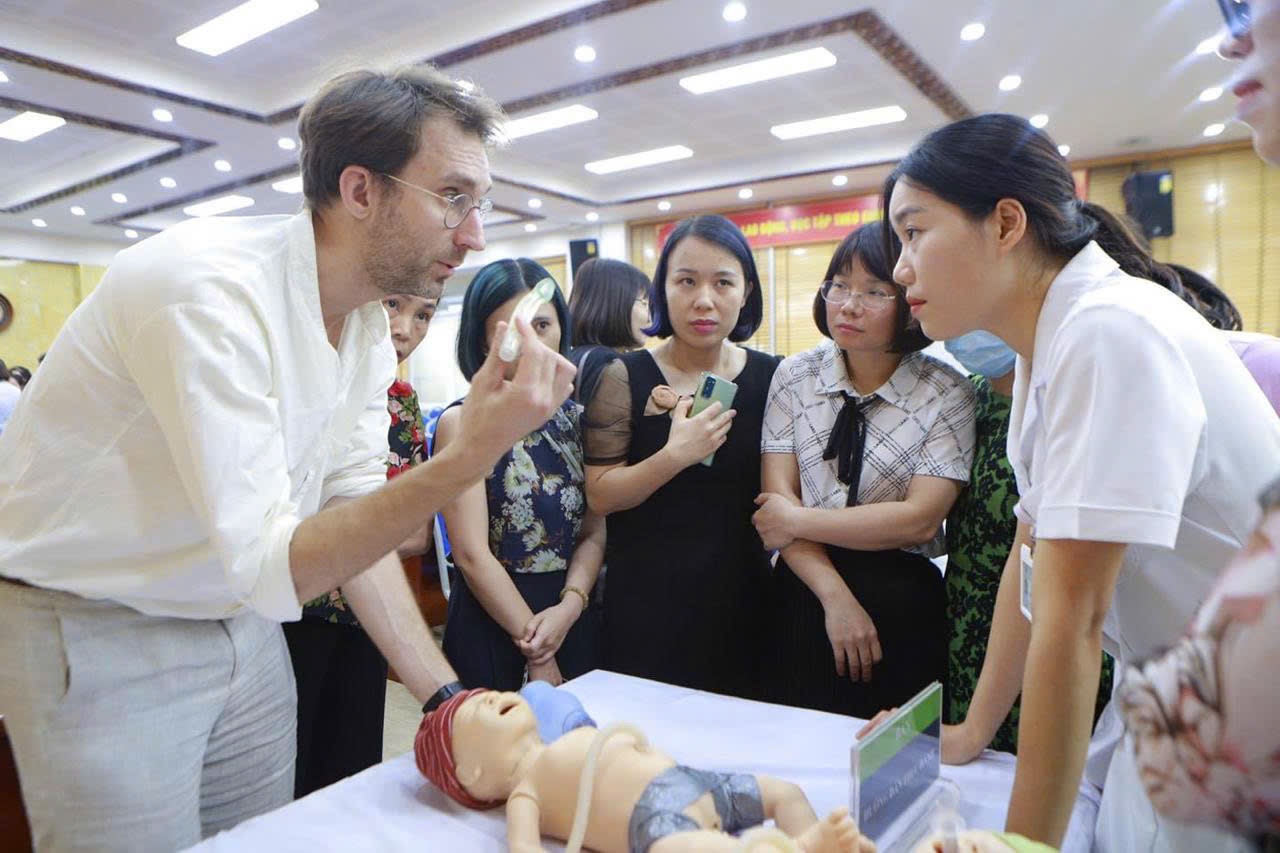 |
| Swedish medical experts participate in a medical training activity in Viet Nam. (Photo courtesy of the Embassy of Sweden in Viet Nam) |
Elisabeth participated in a pilot primary healthcare program in the former Yen Hung District of Quang Ninh Province. Together with her colleagues, she visited commune health stations and district hospitals, meeting healthcare workers, local residents, and local authorities. During these field visits, she witnessed patients arriving at hospitals by ox carts or tractors, while many others had no means of transportation at all. The cooperation program therefore focused on strengthening connections between commune health stations, district hospitals, and the newly established hospitals, while also supporting patient transportation.
What particularly impressed her was the dedication of commune-level healthcare workers. “They accomplished truly remarkable things in their communities, saving many lives despite extremely limited resources. They monitored disease outbreaks, pregnancies, and carried out many other healthcare duties. I was genuinely impressed by their professional knowledge and dedication!” she recalled.
Among her memories of healthcare cooperation, Elisabeth also vividly remembers the day the new facility of the children's hospital in Hanoi welcomed its first patients. She recalls Professor Nguyen Thu Nhan, a People's Physician, proudly welcoming patients alongside Vietnamese staff and Swedish experts. “It was an incredibly special day after so many years of preparation. I think we all felt proud to see our collective efforts finally become a reality,” she recounted.
Beyond their professional responsibilities, gatherings and conversations with colleagues also created lasting memories. Elisabeth recalls a period she describes as one when “there was nothing,” yet people still found opportunities to come together and organize celebrations. At the children's hospital, the newly installed loudspeaker system was frequently subjected to “technical tests” using cassette tapes of rock-and-roll music. When John Lennon passed away, his song Imagine was played continuously for an entire week.
After completing their assignments in Viet Nam, many Swedish experts maintained contact with their former colleagues. Elisabeth recalled that, for many years, Dr. Nguyen Ngoc Ham would bring a group of Vietnamese friends to Sweden's Jämtland region to go moose hunting with their former Swedish colleagues. According to Anders, those who once worked together in Viet Nam still meet, reminisce about the past, and stay connected through social media.
Some forms of professional cooperation have also continued. Anders noted that after bilateral aid activities under the Swedish International Development Cooperation Agency (Sida) came to an end, Swedish associations and groups continued collaborating with Uong Bi in areas including palliative care, diabetes, hypertension, and hospital management.
In 2025, Anders returned to the National Children's Hospital for the first time since 1992. During a tour guided by Professor Tran Minh Dien, the hospital's Director, he was astonished by the changes that had taken place over more than three decades: new buildings, a wider range of medical specialties, and a significantly larger workforce. “Development takes time, patience, and humility,” he reflected.
After leaving Viet Nam, Anders went on to spend another 15 years working in seven other countries, most of which were experiencing or had recently emerged from conflict. Drawing on those experiences, he holds Viet Nam's development achievements in high regard and particularly cherishes the friendly, hardworking Vietnamese people with whom he once worked.
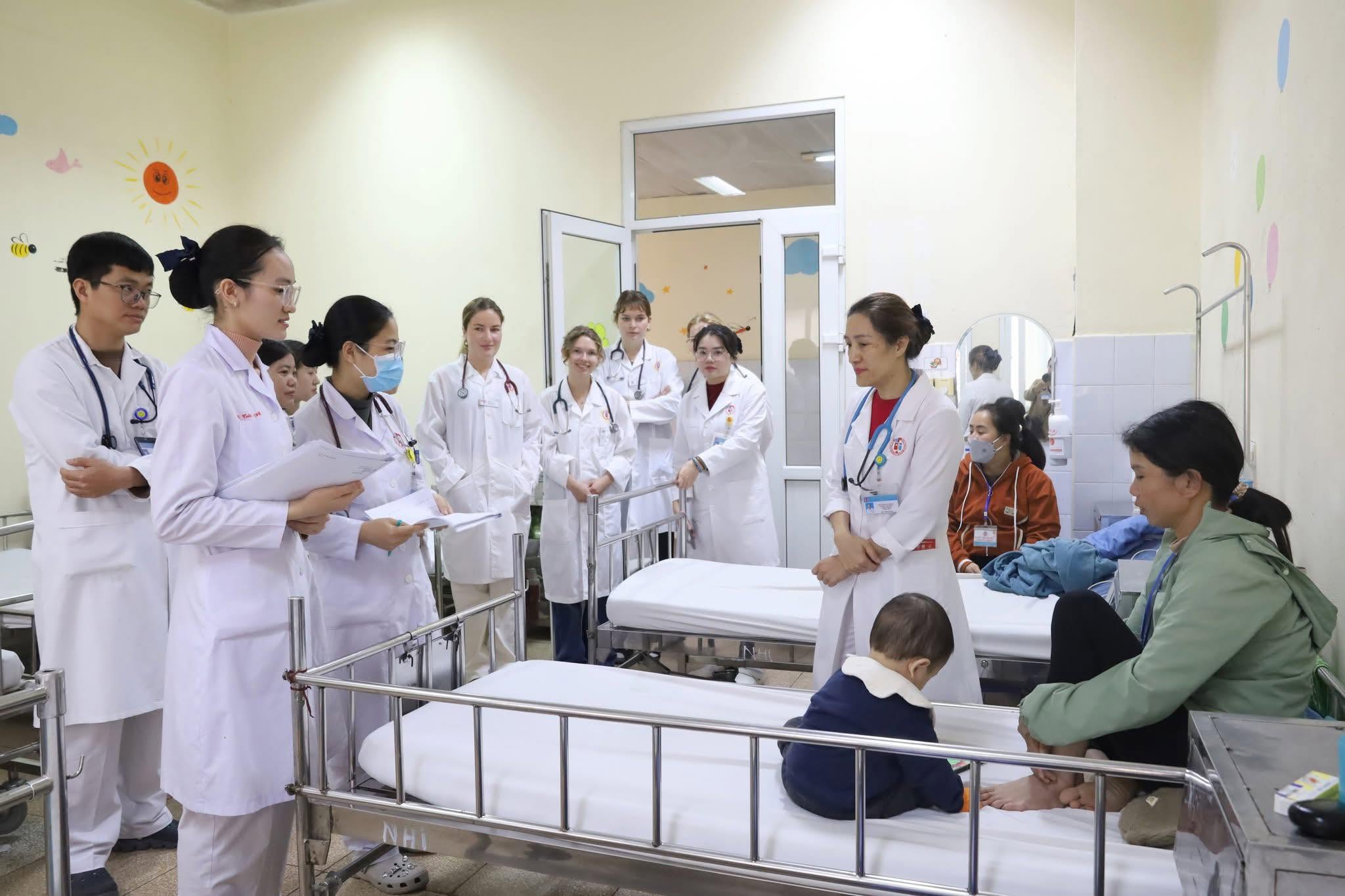 |
| Medical students from Uppsala University (Sweden) undertake internships at the Viet Nam-Sweden Uong Bi Hospital from January 26 to February 20, 2026. (Photo courtesy of the Embassy of Sweden in Viet Nam) |
For Elisabeth, a return visit to Uong Bi a few years ago also brought an unexpected encounter. While on holiday with her family, she stopped by the residential compound for foreign experts to revisit the house where she had once lived. At the time, the compound was home to several young Swedish doctors and midwives who were spending their holidays working at the hospital. She recalled that some of them were the children of experts who had lived and worked in Uong Bi many years earlier.
| 50 Years of Viet Nam-Sweden Healthcare Cooperation To commemorate 50 years of healthcare cooperation, the two countries will organize Sweden-Viet Nam Health Week 2026 from November 16 to 18 in Hanoi, Bac Ninh, and Ho Chi Minh City. The event will bring together representatives from the healthcare sectors, hospitals, research institutions, universities, and businesses of both countries, with discussions focusing on digital health, precision medicine, sustainable healthcare, hospital modernization, research cooperation, and healthcare workforce development. Healthcare cooperation between Viet Nam and Sweden began in the 1970s, with landmark projects including the Viet Nam-Sweden Uong Bi Hospital in Quang Ninh Province and the National Children's Hospital in Hanoi. Sweden also contributed to training healthcare professionals and developing essential medicines and primary healthcare programs. Today, bilateral cooperation continues to expand into medical research, technology, and healthcare innovation. According to Swedish Ambassador to Viet Nam Johan Ndisi, “The greatest legacy of 50 years of cooperation lies not only in the facilities we have built, but also in the knowledge, skills, and relationships that continue to be nurtured and developed. As Viet Nam's healthcare system continues to evolve, our task is to build on that foundation and identify practical solutions to improve access to quality healthcare services, thereby enhancing people's lives.” |
 Vietnamese Language Teachers’ Club Established in Sweden |
 Deputy Minister of Justice Nguyen Thanh Tu Elected President of Viet Nam-Sweden Friendship Association for 2026-2031 Term |


Most read


Related Stories
 Focus
Deputy Minister of Justice Nguyen Thanh Tu Elected President of Viet Nam-Sweden Friendship Association for 2026-2031 Term
 World
Vietnamese Culture and Cuisine Shine in Sweden
 Friendship
Swedish Director Bo Öhlén Promotes Vietnamese History and Culture
 Friendship
Late Swedish Prime Minister Olof Palme - A Great Friend of Vietnam
Popular article
 Friendship
Expanding Opportunities for Viet Nam-Saudi Arabia Cooperation
 Friendship
Italian Ambassador Highlights Role of Youth in Strengthening Viet Nam-Italy Ties
 Friendship
Viet Nam-Brazil: Turning Cooperation Commitments into Reality
 Friendship