
Directive No. 16: “New Impetus” Opens Up Development Opportunities for Lao Cai
| DNA Technology Brings Hope to Thousands of Martyrs’ Families Y Ty Autumn Festival: Journey into “Great Forest” |
On November 2, 2026, the Party Central Committee’s Secretariat issued Directive No. 16-CT/TW on strengthening and elevating people-to-people diplomacy. The directive calls for a shift from “participation” to “contribution and shaping”; from “exchanges, friendship and mobilization” to “connectivity and the alignment of interests”; from “simply mobilizing resources” to “connecting knowledge, technology, innovation and development resources”; and from “relying primarily on specialized personnel” to “promoting the role of the people as active participants and resource contributors, while encouraging the proactive involvement of social organizations, localities, businesses, citizens and overseas Vietnamese”.
For Lao Cai, translating these requirements into concrete action must build on existing achievements while taking into account the practical challenges arising from changes to its administrative boundaries, development space and organizational structure.
An urgent need for renewal
Since July 1, 2025, following the merger of Lao Cai and Yen Bai provinces, the newly established Lao Cai province has covered a natural area of more than 13,256 square kilometers and has a population of nearly 1.78 million, with 99 commune-level administrative units (89 communes and 10 wards) and 33 ethnic groups living together.
The expanded development space combines the strengths of border-gate economic activities and border logistics with the potential of raw material production areas, ecotourism and cultural identities stretching from Sa Pa and Bac Ha to Mu Cang Chai. Located along the Kunming-Lao Cai-Hanoi-Hai Phong-Quang Ninh economic corridor and sharing a border with China's Yunnan Province, Lao Cai is well positioned to expand cooperation, promote people-to-people exchanges and connect resources for development.
In recent years, under the leadership of the Provincial Party Committee and the Provincial People's Committee, the Lao Cai Union of Friendship Organizations, together with its member organizations, has actively carried out people-to-people diplomacy in three areas: peace and border friendship; mobilization of foreign non-governmental aid; and cultural and economic exchanges.
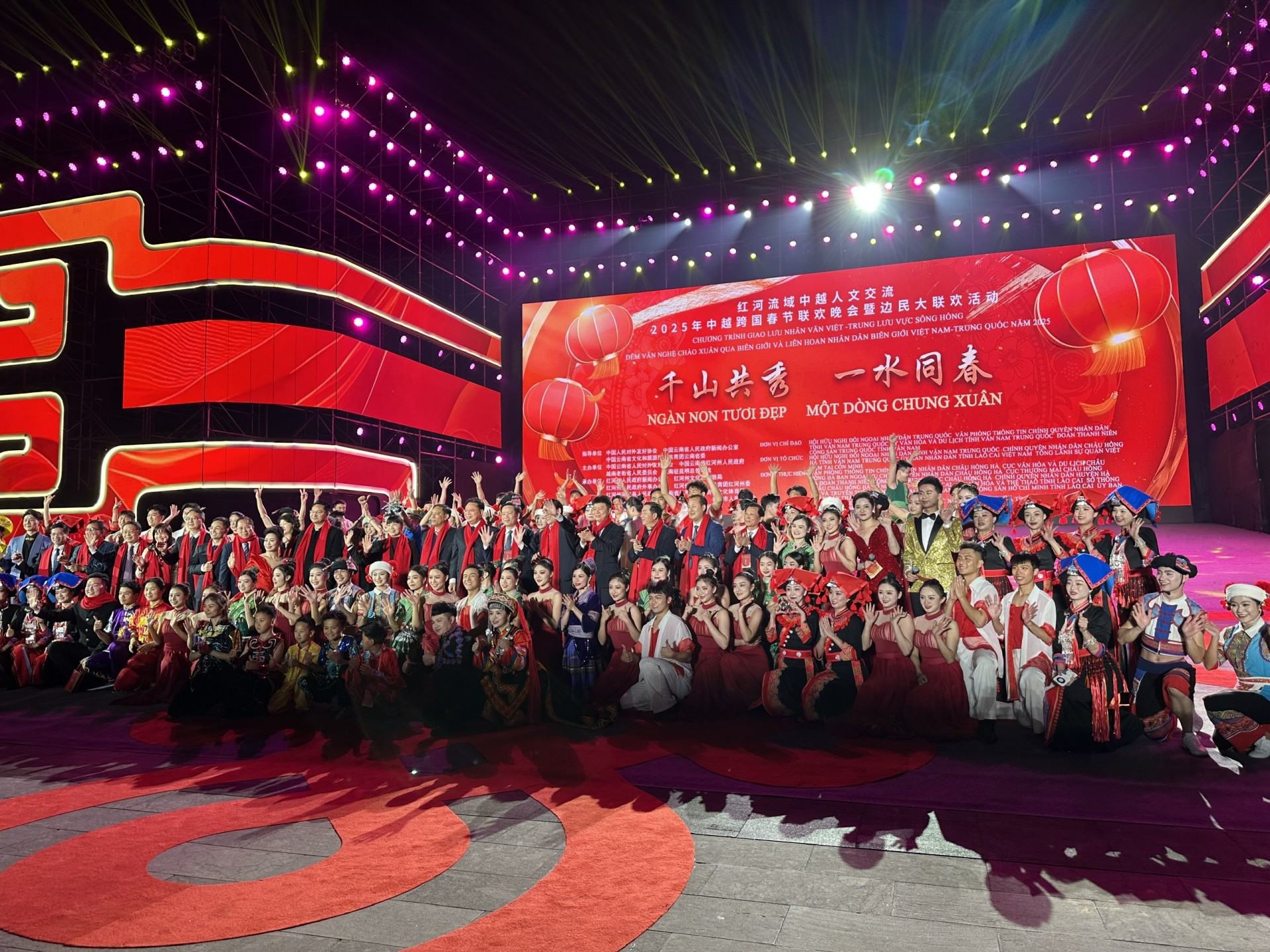 |
| The China-Viet Nam Red River Basin people-to-people exchange program, cross-border spring festival celebration and China-Viet Nam border people's festival took place in Hekou Town, Hekou County, Honghe Prefecture, Yunnan Province, China, in January 2025. (Photo: Lao Cai Union of Friendship Organizations) |
Along the Viet Nam-China border, the Provincial Union and the provincial Viet Nam-China Friendship Association, together with border guard forces and local authorities, have worked to promote the twinning model between residential communities on both sides of the border. Numerous pairs of “friendly villages” have been established, while Lao Cai's border guard stations have developed regular cooperative relations with border posts and companies of border guards in Yunnan Province, as well as their counterparts in localities across the border. These initiatives have helped maintain a peaceful and stable border while promoting trade through border gates.
The Provincial Union's network of member organizations has continued to expand, including the Viet Nam-China, Viet Nam-Laos and Viet Nam-France Friendship Associations, as well as chapters within provincial departments and sectors and in key localities and organizations, such as the Lao Cai Ward People's Committee, the provincial Women's Union and Viet Nam Apatite One Member Limited Liability Company. Exchanges among younger generations and cultural promotion have also received attention. Notably, the Provincial Union's team won first prize at the 2025 National Chinese-language Public Speaking Contest held in Da Nang.
In mobilizing international resources, the Provincial Union has played a connecting role between international friends and the practical needs of people in mountainous areas. During the 2023-2026 period, Lao Cai province received 133 foreign non-governmental aid programs and projects, with a total value of more than US$19 million. In 2025 alone, the Provincial Union coordinated the completion of dossiers submitted for approval for aid packages with total non-refundable commitments exceeding VND 537 billion.
During 2025-2026, more than 53 projects and aid packages, worth over VND 275 billion, from organizations such as Habitat for Humanity (HFHI), Save the Children (SCI), Samaritan's Purse, AeA, Hagar International, World Share and Gravity Water, have been implemented in particularly disadvantaged mountainous communes, including Si Ma Cai, Muong Khuong and Bat Xat. These initiatives have brought tangible benefits to local residents through the construction of permanent housing, safe motherhood healthcare facilities, clean water systems in schools and post-disaster recovery projects.
Nevertheless, when assessed against the requirements of Directive No. 16-CT/TW and the expanded geographical scale of the province, people-to-people diplomacy in Lao Cai still faces numerous challenges that need to be addressed.
First, there is an imbalance between the number of specialized personnel and the volume of work. The Provincial Union's standing office currently has only three full-time staff members, yet it must coordinate people-to-people diplomacy activities across a vast area comprising 99 communes and wards, process numerous foreign non-governmental project dossiers and maintain relations with partners.
The staff's capacities in international project management, foreign languages and digital communications remain uneven. Under the two-tier local government model, grassroots officials also lack skills in project planning, impact assessment and the application of digital technologies and artificial intelligence (AI) in external communications.
Furthermore, the approaches adopted by some agencies and localities remain passive and largely focused on handling individual tasks. Links between cultural exchanges and green economic development, digital transformation and the expansion of export markets for OCOP products have yet to be sufficiently strengthened. Border areas also face challenges relating to extreme natural disasters, non-traditional security, migration, cross-border labor and harmful information circulating in cyberspace.
These challenges require the Provincial Union to renew its operational approaches, make greater use of its network of member organizations and mobilize broader social forces to participate in people-to-people diplomacy.
Renewing operational approaches and leveraging local strengths
To implement Directive No. 16-CT/TW, the Provincial Union has identified six key areas of focus, guided by the principles of “clearly defined actors, clearly defined geographical areas and clearly defined outcomes”, while closely reflecting the specific characteristics of the province as a border locality following the merger.
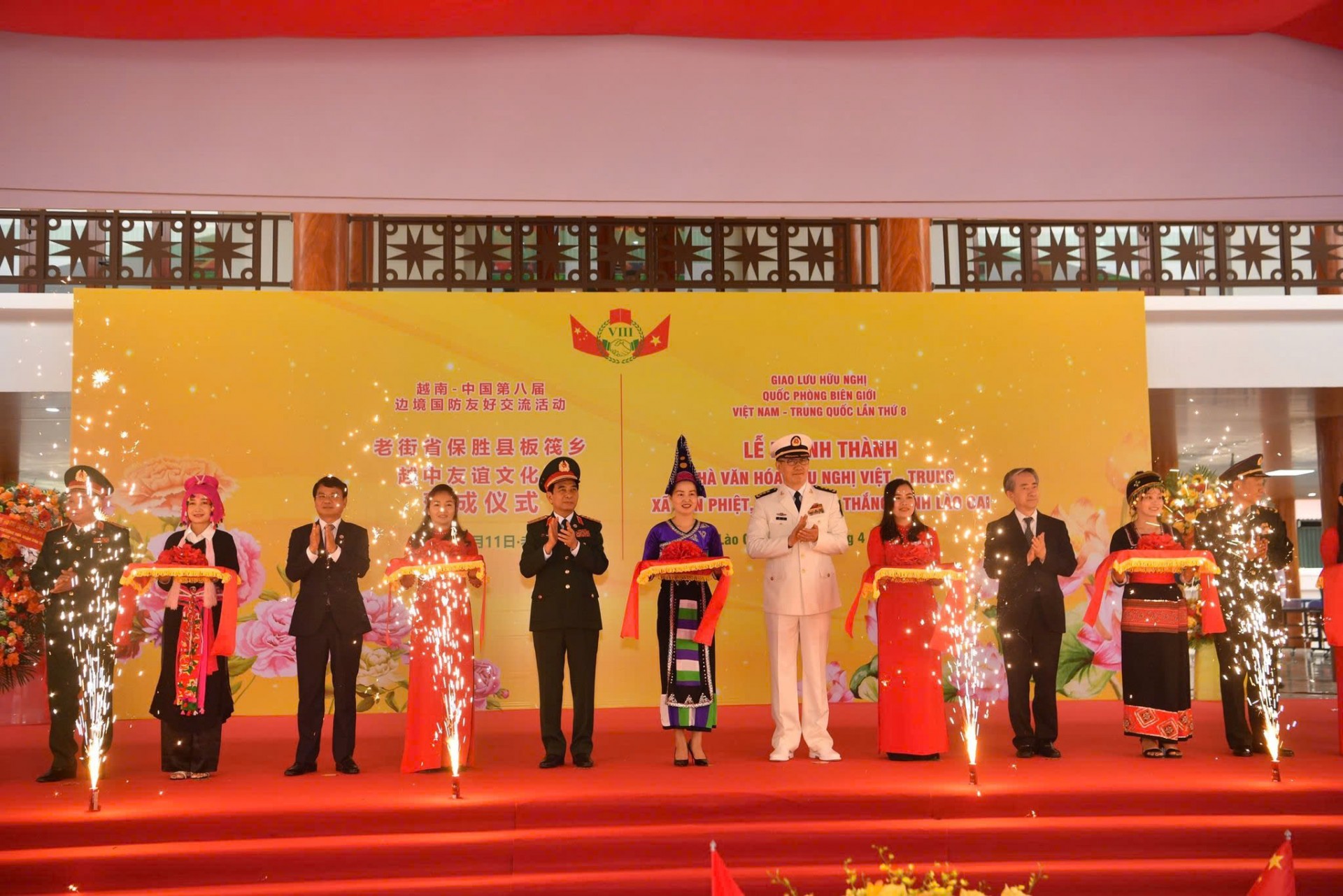 |
| The inauguration ceremony of the Viet Nam-China Friendship Cultural House in Ban Phiet Commune, Bao Thang District, Lao Cai Province (now part of Lao Cai Ward, Lao Cai Province), held as part of the 8th Viet Nam-China Border Defense Friendship Exchange in April 2024. (Photo: Lao Cai Union of Friendship Organizations) |
First, promote co-creation and the participation of social actors, in conjunction with the local economic and knowledge-based strengths. Rather than primarily organizing individual events itself, the Provincial Union will shift towards a stronger role in connecting and coordinating, enabling businesses, cooperatives, colleges, universities and communities to participate directly in international cooperation. Specifically, the Provincial Union will strengthen coordination with the Thai Nguyen University - Lao Cai Campus, Lao Cai College, Yen Bai Vocational College, business associations and enterprises engaged in the import and export of agricultural, forestry and aquatic products, medicinal herbs and OCOP products, while exploring appropriate forms of cooperation and co-financing. This approach will link exchanges with partners from Yunnan (China), France, Japan and the Republic of Korea (RoK) to value-chain connectivity, the transfer of processing technologies and the promotion of products such as cinnamon, Shan Tuyet tea and community-based tourism.
Second, leverage the strengths of “winning hearts and minds” diplomacy to build trust and foster friendly relations in border areas. Building on experience gained from the model of twinning villages and border guard stations between Lao Cai and Yunnan, the Provincial Union will strengthen coordination with the Viet Nam Fatherland Front Committee of the province, border guard forces and agencies responsible for ethnic affairs and religious affairs to expand dialogue and community exchange activities. Through cultural diplomacy, including the promotion of the cultural identities of 33 ethnic groups, Thai Xoe dance and highland culture, as well as exchanges among young people, women, religious communities and academic circles, people-to-people diplomacy will help enhance mutual understanding and foster lasting trust between people on both sides of the border. These activities will also create opportunities for dialogue and information exchange, helping to minimize disagreements within communities.
Third, take a proactive approach to directing, selecting and evaluating the effectiveness of foreign non-governmental organization (NGO) programs and projects. The Provincial Union will coordinate with the Department of Finance, the Department of Foreign Affairs and the authorities of all 99 communes and wards to review practical needs and advise on the issuance of a “Priority list for mobilizing aid based on Lao Cai province's development needs”. The list will focus on climate change adaptation, sustainable livelihood recovery following natural disasters, healthcare and education for ethnic minority children, and community digital transformation. At the same time, greater attention will be paid to monitoring implementation progress and assessing impacts after project completion, particularly their effectiveness in improving livelihoods and strengthening the self-reliance of beneficiaries.
Fourth, develop a “Digital partner map” and renew approaches to evaluating operational outcomes. The Provincial Union plans to develop a shared partner database organized by geographical area, field of cooperation, interaction history and priority level. Priority will be given to relations with Yunnan Province and neighboring localities, while connections with partners in France, Japan, the RoK and the United States, among others, will be expanded in areas such as the green economy, education and training, healthcare, humanitarian assistance and cultural preservation. Digitizing this data will help monitor and maintain partner relations, identify appropriate areas of cooperation and address the fragmentation of information among agencies. The Provincial Union will also study the application of evaluation criteria suited to the functions and responsibilities of its member organizations.
Fifth, proactively initiate forums and broaden cooperation among forces participating in people-to-people diplomacy. Rather than primarily sending delegations to events organized by partners, Lao Cai will gradually explore and propose initiatives to host people-to-people exchange forums along the Kunming-Lao Cai-Hanoi-Hai Phong-Quang Ninh economic corridor, as well as forums for young people and young entrepreneurs in border areas, in conjunction with activities marking Viet Nam's hosting of APEC 2027. The province will strengthen connections among local authorities, Lao Cai and former Yen Bai residents living overseas, Vietnamese representative missions abroad and reputable partners to support partner searches, mobilize resources from overseas Vietnamese and facilitate the introduction of Lao Cai's OCOP products into overseas distribution networks.
Sixth, renew digital communications, apply AI in connection with product promotion and proactively monitor public opinion. The Provincial Union plans to step up the application of AI in producing multilingual communications content in Chinese, English, French and other languages, while digitizing promotional materials on the culture and tourism of Sa Pa, Bac Ha and Mu Cang Chai in association with the province's key products. At the same time, it will coordinate with agencies responsible for ideological affairs, the police and relevant authorities to monitor and analyze cross-border information and public opinion, enabling the timely identification and handling of misinformation concerning ethnic groups, religion and border sovereignty. Lecturers, students, influencers and local residents will also be mobilized to promote Lao Cai's image across digital platforms.
To implement these priorities, the Provincial Union proposes that central-level authorities, the Provincial Party Committee and the Provincial People's Committee consider addressing difficulties relating to coordination mechanisms, human resources and resources.
Regarding coordination mechanisms, on November 7, 2026, the Standing Board of the Lao Cai Provincial Party Committee issued Regulation No. 59-QĐ/TU on the unified management of external relations activities in the province. On this basis, the Provincial Union proposes issuing an inter-agency coordination regulation involving the Viet Nam Fatherland Front Committee of the province, the Department of Foreign Affairs and the Provincial Union. Under the proposed arrangement, the Department of Foreign Affairs would be responsible for reviewing standards, legal matters and state protocol, while the Provincial Union would be granted greater autonomy in proposing and conducting preliminary negotiations, signing non-governmental cooperation agreements and people-to-people exchange arrangements that are not legally binding under international law, and serving as the direct focal point for assessing aid needs across all 99 communes and wards.
Regarding human resources, given that the Provincial Union has only three full-time staff members to cover the vast geographical area following the merger, it proposes considering additional personnel or the transfer or secondment of capable officials from provincial departments and agencies, alongside support from experts in project management and digital communications. At border communes and key communes and wards in terms of economic development and tourism, the appointment of officials to concurrently serve as focal points for people-to-people diplomacy should be considered, accompanied by training in foreign languages, project management and AI applications.
Regarding financing, the Provincial Union proposes that the province study a “seed funding” mechanism in the state budget and simplify approval procedures to ensure timely and flexible support for ad hoc people-to-people exchanges, aid mobilization and emergency humanitarian relief in border areas. It also proposes being allowed to apply a mechanism of regulated financial autonomy when receiving socialized funding from businesses to co-organize international forums. In addition, the Provincial Union proposes being included in provincial-level steering committees on external relations, external information and activities related to Viet Nam's hosting of APEC 2027, within the scope of its assigned functions and responsibilities.
Directive No. 16-CT/TW represents a “new impetus”, opening up unprecedented development opportunities for people-to-people diplomacy. With the resilience of a province at the nation's northernmost frontier, extensive experience in fostering border ties and a strong determination to remove bottlenecks in mindset, human resources and institutional mechanisms, people-to-people diplomacy in Lao Cai will undoubtedly undergo a major qualitative transformation. It will not only help safeguard a peaceful and friendly border but also effectively mobilize international knowledge and resources, enabling Lao Cai to achieve sustainable breakthroughs in the new era.

Most read


Related Stories
 Friendship
Viet Nam and Chile Explore New Avenues for Local Cooperation
 Friendship
Directive No. 16-CT/TW and Strategic Tasks for People-to-People Diplomacy
 Friendship
Viet Nam-Denmark: Building Bridges of Friendship
 Focus
Viet Nam and Denmark Strengthen Friendship Through People-to-People Exchanges
Recommended
 Friendship
New Disaster-Resilient Homes Handed Over to Residents in Gia Lai
Popular article
 Friendship
Red Journey in Yunnan (China): Seeking Lessons of Practical Value
 Friendship
Congratulatory Letter Marking the 76th Anniversary of the Traditional Day of the Viet Nam Union of Friendship Organizations
 Friendship
Three Years in the Land of Fairytales and Green Energy
 Friendship