
Directive No. 16-CT/TW and Strategic Tasks for People-to-People Diplomacy
| Viet Nam-Ukraine Friendship Association Sets New Priorities for People-to-People Ties Viet Nam-Thailand Friendship Association Visits Ban Dong Ho Chi Minh Museum |
The conference was attended by Vice Presidents of the Viet Nam Union of Friendship Organizations Nguyen Ngoc Hung, Dong Huy Cuong and Nguyen Thi Thu Giang; leaders of its departments and units; and officials and employees of the Union's standing agency. Representatives of the Viet Nam Union of Friendship Organizations in 29 provinces and cities participated online.
At the conference, President of the Viet Nam Union of Friendship Organizations Phan Anh Son presented five key areas: the necessity of issuing Directive No. 16-CT/TW; its new features compared with Directive No. 12-CT/TW; its objectives; its key tasks and solutions; and recommendations for the Viet Nam Union of Friendship Organizations system.
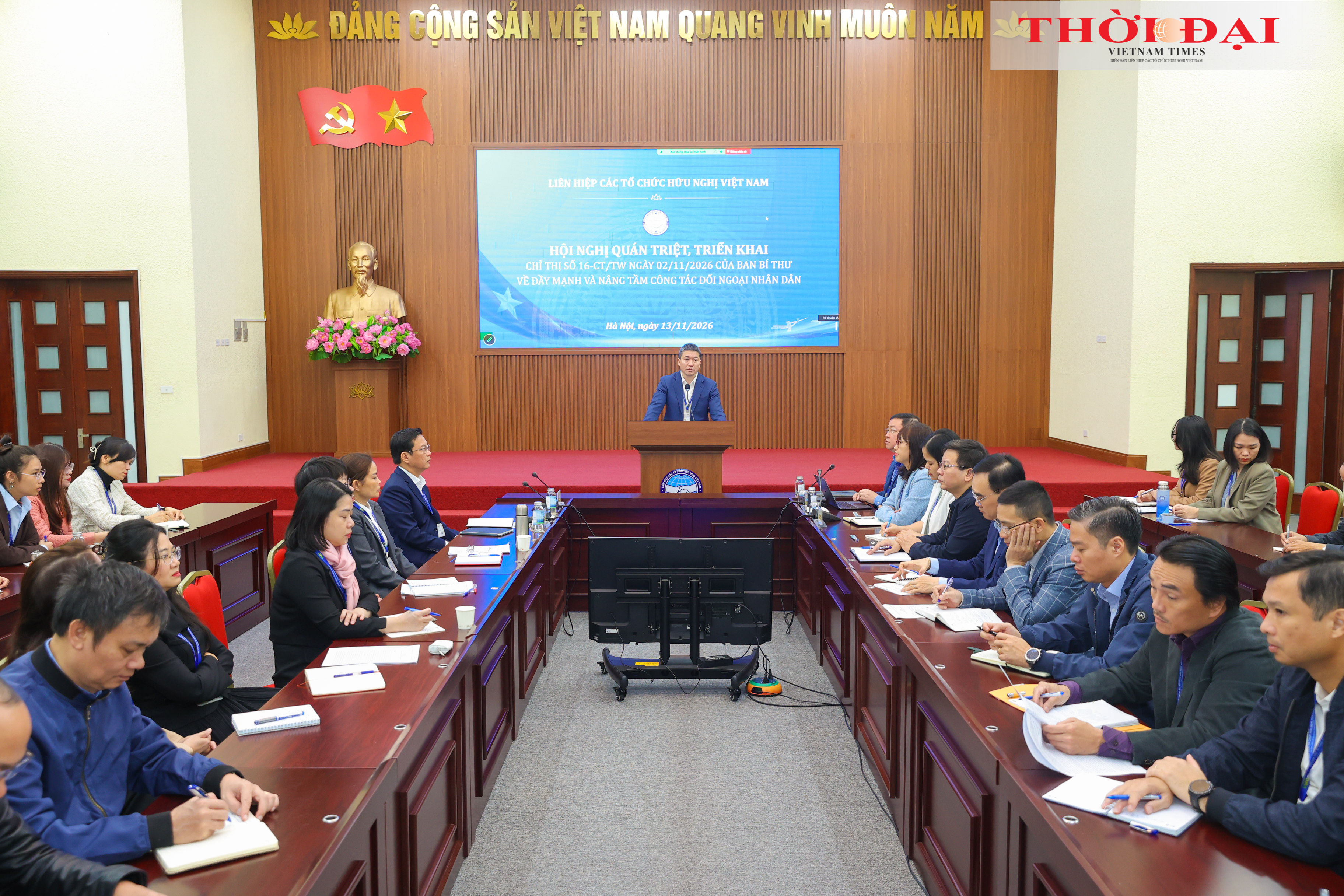 |
| The conference to disseminate and implement Directive No. 16-CT/TW, dated November 2, 2026, issued by the Party Central Committee’s Secretariat on strengthening and elevating people-to-people diplomacy, was organized by the Viet Nam Union of Friendship Organizations in Hanoi on November 13, 2026. (Photo: Dinh Hoa) |
New features of Directive No. 16-CT/TW
Explaining the need to issue Directive No. 16-CT/TW to replace Directive No. 12-CT/TW, dated January 5, 2022, President Phan Anh Son said the requirement stemmed from changes in both domestic and international circumstances. The 14th National Congress of the Communist Party of Viet Nam set out new development goals amid a rapidly changing and increasingly complex global situation, requiring substantial transformations in foreign affairs, including people-to-people diplomacy.
Reviewing nearly five years of implementing Directive No. 12-CT/TW, Phan Anh Son noted that, alongside the achievements, people-to-people diplomacy still faced several shortcomings. These included slow innovation in operational methods, a lack of breakthroughs and substantive progress in international outreach, fragmented resources, and insufficiently close coordination mechanisms.
According to Phan Anh Son, Directive No. 16 establishes the position, role and importance of people-to-people diplomacy; creates the mechanisms, institutional framework and conditions necessary for it to fulfill its tasks effectively; and sets orientations for the key objectives, areas and tasks that require focused attention in the coming period.
President Phan Anh Son highlighted several new features of the Directive. First, it elevates the standing of people-to-people diplomacy, identifying it as a key and regular task of the entire political system. Second, it broadens the range of actors involved in people-to-people diplomacy, emphasizing the roles of citizens, businesses, intellectuals, artists, Vietnamese people overseas and other social forces. People-to-people diplomacy must broadly mobilize the roles and resources of the people, rather than relying primarily on specialized personnel.
Third, it calls for a shift in thinking about people-to-people diplomacy: from “participation” to “contribution and creation”; from “exchanges, friendship and outreach” to “networking and aligning interests”; from “simply mobilizing resources” to “connecting knowledge, technology, innovation and development resources”; and from “relying primarily on specialized personnel” to “promoting the agency and resources of the people, along with the proactive participation of social organizations, localities, businesses, citizens and Vietnamese people overseas.”
Alongside its continued emphasis on foreign non-governmental organization affairs, the Viet Nam Union of Friendship Organizations system needs to expand its networks connecting overseas Vietnamese intellectuals and scientists, research institutes, universities and international friends. This will help connect international knowledge and experience to support localities in areas such as urban planning, healthcare, education and scientific research.
Fourth, the Directive affirms the leading role of the Viet Nam Union of Friendship Organizations in people-to-people diplomacy. This provides an important basis for the Union's system at both central and local levels to advise on and develop activity programs and carry out its assigned tasks. “The leading role places significant responsibilities on specialized personnel engaged in people-to-people diplomacy, requiring them to proactively innovate, take the lead and develop effective operational models,” Phan Anh Son emphasized.
Directive No. 16-CT/TW sets out two major objectives: to contribute to the effective implementation of the foreign policy set forth by the 14th National Congress of the Communist Party of Viet Nam and the country's development policies and strategies; and to strengthen and elevate people-to-people diplomacy.
Groups of tasks and solutions
In presenting the key tasks and solutions for implementing Directive No. 16-CT/TW, President Phan Anh Son focused on clarifying nine areas. These included studying and enhancing awareness of the strategic position and role of people-to-people diplomacy; upholding the principles of sincerity, trust and mutual respect in partnership relations; and thoroughly understanding and skillfully applying the traditional philosophy of Vietnamese diplomacy, as well as President Ho Chi Minh's diplomatic thought, methods and style.
Maintaining and expanding partnership networks and promoting soft power are essential to helping build a social foundation for safeguarding the Fatherland proactively, from an early stage and at a distance, while enhancing Viet Nam's standing on the international stage.
People-to-people diplomacy must renew its approach by linking meetings and exchanges with the country's development objectives and the interests of all parties. Building partnerships requires a long-term process of outreach and persuasion. People-to-people diplomacy must be closely aligned with national development tasks, strengthen connections with international resources, and promote cooperation in science, technology, innovation, education, healthcare, digital transformation, green transition and sustainable development.
Emphasizing the key requirements for effectively implementing Directive No. 16-CT/TW, President Phan Anh Son stated: “The crucial and decisive factor is reforming personnel work. This is the fundamental task underpinning the implementation of the proposed groups of tasks. Officials engaged in people-to-people diplomacy must demonstrate firm political resolve, possess professional expertise and extensive knowledge, and be proficient in foreign languages and technology.”
Phan Anh Son called on all agencies and units throughout the Union's system to continue studying and disseminating the Directive and develop action programs for its implementation, incorporating them into the action program for implementing the Resolution of the 7th National Congress of the Viet Nam Union of Friendship Organizations.
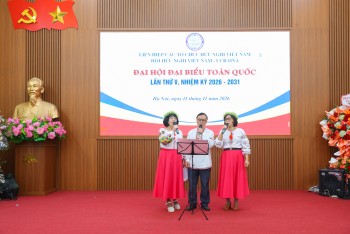 Viet Nam-Ukraine Friendship Association Sets New Priorities for People-to-People Ties |
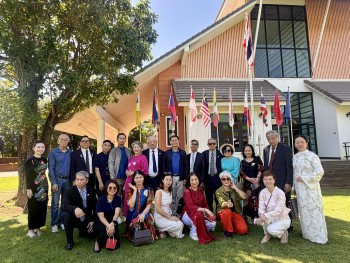 Viet Nam-Thailand Friendship Association Visits Ban Dong Ho Chi Minh Museum |

Most read


Related Stories
 Friendship
Viet Nam-Denmark: Building Bridges of Friendship
 Focus
Viet Nam and Denmark Strengthen Friendship Through People-to-People Exchanges
 Friendship
Viet Nam-Thailand Friendship Association Visits Ban Dong Ho Chi Minh Museum
 Friendship
Viet Nam-Ukraine Friendship Association Sets New Priorities for People-to-People Ties
Recommended
 Friendship
Three Years in the Land of Fairytales and Green Energy
Popular article
 Friendship
Children of Viet Nam to Provide 1,000 Scholarships to Students in Quang Ngai Province from 2026 to 2030
 Friendship
Vietnamese and RoK Youth Join Hands to Strengthen Environmental Protection
 Friendship
A Dream Still Haunted by the Past
 Friendship