
A Dream Still Haunted by the Past
| I Was Never Just Passing Through Viet Nam A Misfortune Turned into Happiness |
For my family, many painful memories of the past seem to have gradually faded into the background. We have been welcomed, found love and come to regard Viet Nam as our second home. Yet there is still one person in my family who has been unable to move on from a war that ended more than half a century ago: my uncle, a former American serviceman who fought in Viet Nam. While the younger generations of our family have found peace on this land, a part of his soul still seems to be torn apart by the past.
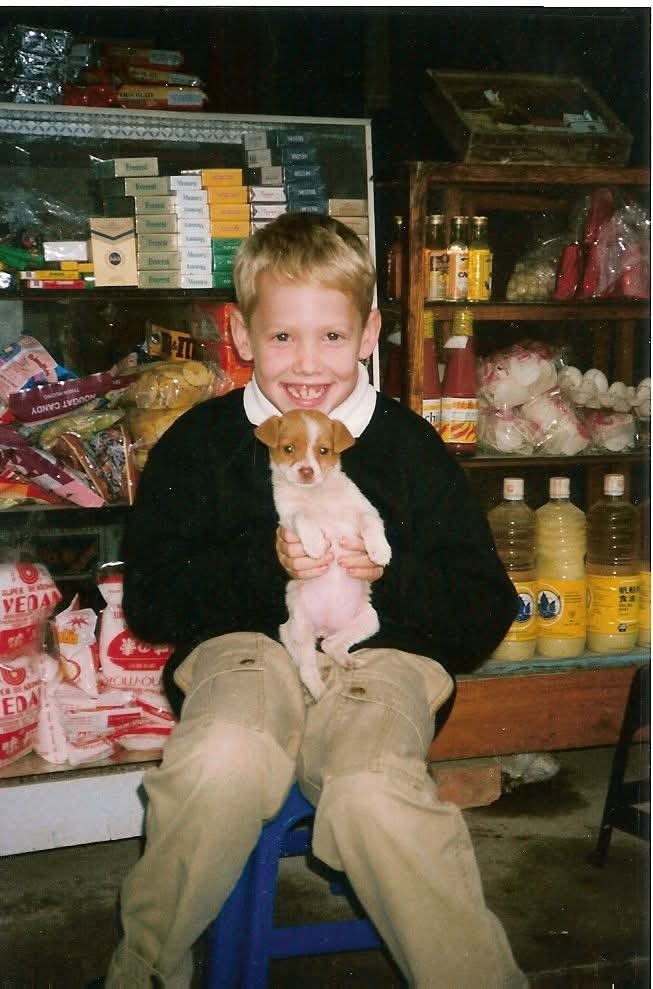 |
| My family moved to Viet Nam in 1995, when I was just eight years old. |
The nightmares have faded
Throughout my childhood, I rarely heard my uncle talk about Vietnam. After returning to the United States following the war, he built a career, became a successful businessman, started a family and enjoyed a comfortable life. Yet whenever a conversation happened to touch on the word “Viet Nam”, he would usually fall silent. Sometimes, unexpected sounds would startle him; on certain nights, he would lie awake for hours. I never asked what he had seen or experienced. His silence, sleepless nights and reluctance to ever return to Viet Nam led me to think that perhaps every soldier carries within them a part of “hell” from which they can never fully escape.
For that reason, before I came to Viet Nam, my image of the country as an eight-year-old boy was, to some extent, associated with war and the haunting memories that tormented my uncle. But the Viet Nam my family encountered in 1995 was entirely different. During our first years living in the Thanh Cong apartment complex in Hanoi, I remember neighbours who readily opened their doors to welcome an American family; simple meals where an extra pair of chopsticks could always be set at a moment's notice; and warm words of concern that quickly made a child far from home feel no longer like a stranger. No one asked which side my family had been on during the war. No one used the past of an earlier generation to create distance between us.
I grew up surrounded by that generosity and acceptance. I learned Vietnamese, made Vietnamese friends, studied and worked, and eventually built a career in education. I met a Vietnamese woman, and we married and had children who are growing up peacefully between two cultures. More than three decades ago, an American family arrived in Viet Nam carrying the lingering shadow of a war. More than three decades later, that same family has come to regard Viet Nam as its second home.
I have also spent a great deal of time reflecting on my uncle's silence. I cannot put into words what he has never spoken of, but I sense a lingering anguish beneath his reluctance to revisit the past. If the compassion of the Vietnamese people has helped my family move beyond the past, then the remorse that an American serviceman has carried for more than half a century has also made me think about the need for reflection and a quiet act of atonement for the suffering caused by war. Compassion does not mean forgetting the pain; nor can remorse make history disappear. But when one side is generous enough to open its doors and the other sincere enough to look back, people can begin to write a different chapter.
My family is a small part of that story. The nightmares of war have not been passed down to the generations that followed. My children have not grown up wondering which side their ancestors fought on. They are growing up in a home with an American father and a Vietnamese mother, surrounded by the love and cultures of both families. Yet when I think of my uncle, I realise that although we have found peace, there is still someone in our family who has not yet found peace within himself.
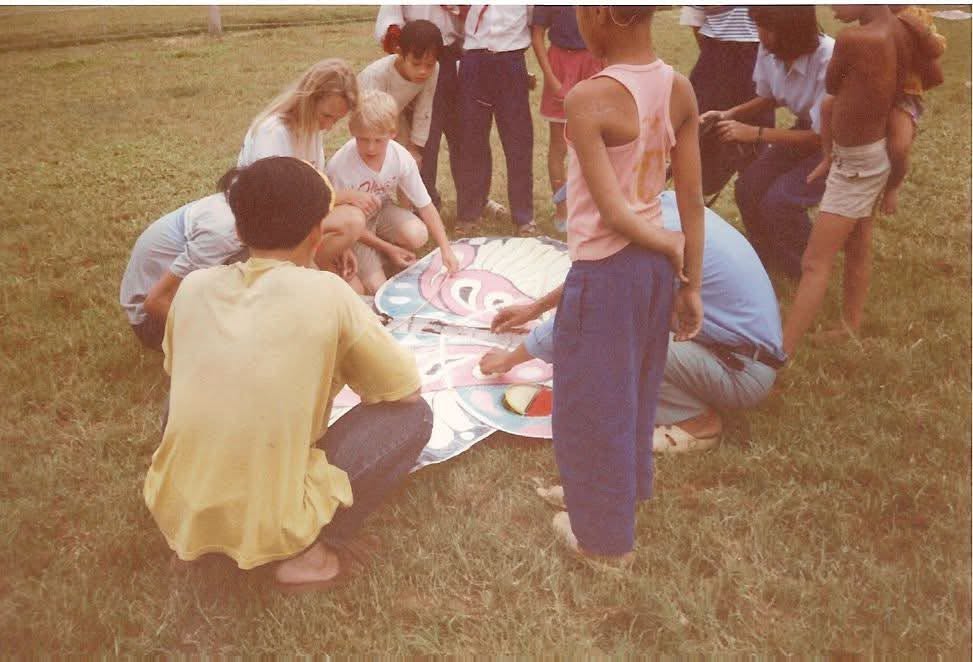 |
| In the 1990s, shortly after arriving in Vietnam, I would join the older children in the neighbourhood at the Red River's midstream sandbank to fly kites. |
So that the final dream may find peace
Over the past 30 years, I have invited my uncle to visit Viet Nam many times. I have told him about life here, the bustling streets, my Vietnamese wife and his grandchildren as they grow up. He listens, but rarely asks any follow-up questions. I once thought that the distance between my uncle and Viet Nam could not possibly be measured in the thousands of kilometres across the Pacific Ocean. The greatest distance lies between the present and a memory he has yet to move beyond.
I still hope that one day he will return. Not to revisit the old battlefields, nor to force himself to forget what happened. I simply want to bring him back to Viet Nam to see his grandchildren, who carry the love of both families and are growing up in peace. I want him to see a Viet Nam of schools, family meals, bustling streets and people who, despite having endured so much loss, have still chosen to open their hearts.
But if the dreams of American veterans like my uncle are ever to find peace, perhaps we must do more than that. I hope there will be more return visits to Viet Nam for American veterans, more meetings between people who once stood on opposite sides of the war and between their families, and more programmes that bring young people from both countries together to get to know one another and hear authentic stories about the post-war years. I also hope that Viet Nam and the United States will continue working together to address the consequences of war, search for the missing, support those who still suffer its lasting effects, and give people who lived through the conflict opportunities to confront their past in an atmosphere of understanding and compassion. The normalisation of relations between two countries may be marked by official documents, but the normalisation of friendship must be built through countless encounters between people.
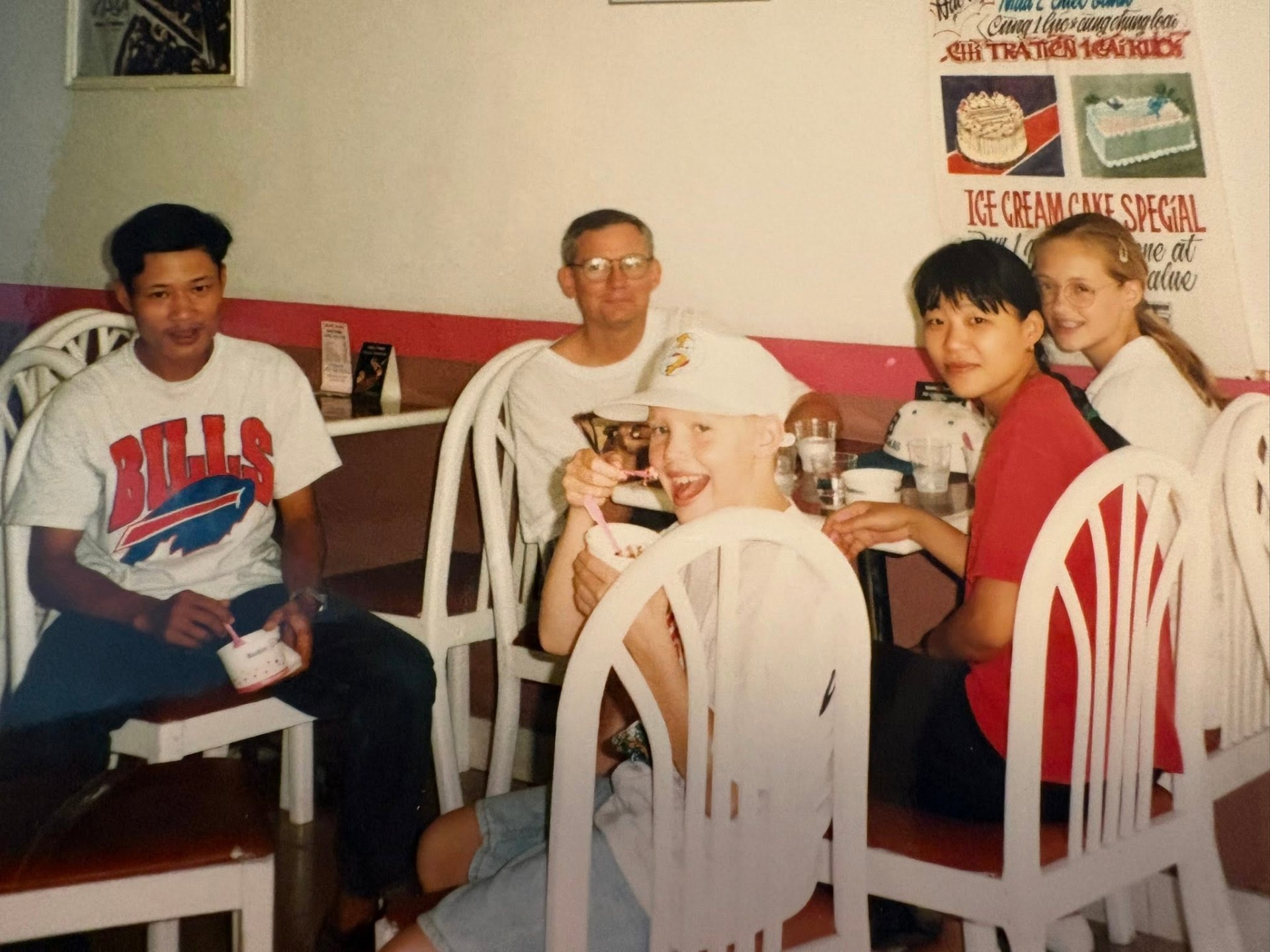 |
| This photograph was taken around 1996. At the time, our Vietnamese neighbours treated my family like their own. |
We must continue to show compassion, but that compassion must be met with a sincere willingness to reflect on the past. We must remember the war, not to nurture hatred, but to help those who caused suffering, those who endured it and generations to come understand the value of peace. When remorse is translated into responsibility, when compassion is sustained through cooperation, and when painful memories become a driving force bringing people closer together, friendship can truly take root in people's hearts.
I do not know whether the day my uncle returns to Vietnam will ever come. But if it does, I will not ask him about what happened more than half a century ago. I simply want to bring him to sit down at a family meal with my beautiful Vietnamese wife and his grandchildren, so that he can see for himself what peace and compassion have made possible.
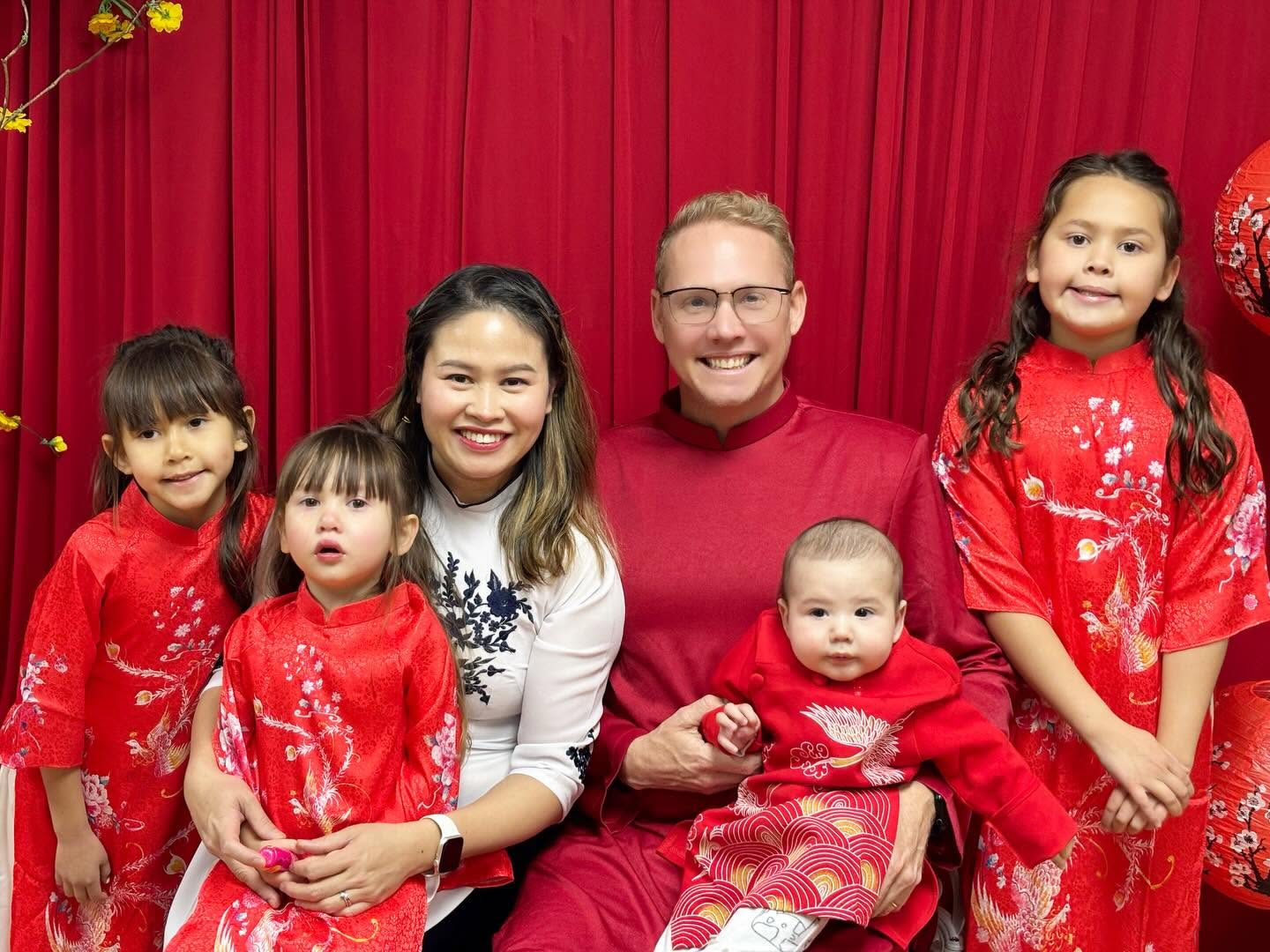 |
| I have a beautiful Vietnamese wife and lovely children. |
And if, one night, when he closes his eyes, Vietnam returns to his memory not only as a place of war, but also as a home, a family meal and the laughter of his grandchildren, perhaps that will be the moment when the war within the soldier finally comes to an end.
 Returning to Viet Nam Is Like Coming Home |
 I Chose to Stay Because There Is Still So Much I Don’t Know About Viet Nam |

Most read


Related Stories
 Expats in Vietnam
I Chose to Stay Because There Is Still So Much I Don’t Know About Viet Nam
 Expats in Vietnam
Returning to Viet Nam Is Like Coming Home
 Friendship
A Misfortune Turned into Happiness
 Friendship
I Was Never Just Passing Through Viet Nam
In topics
 Friendship
A Dream Still Haunted by the Past
Expats in Vietnam
I Chose to Stay Because There Is Still So Much I Don’t Know About Viet Nam
Expats in Vietnam
Returning to Viet Nam Is Like Coming Home
Friendship
A Misfortune Turned into Happiness
Popular article
 Friendship
International Friends Cycle Together for a Greener Hanoi
 Friendship
Placing People's Interests at Centre of Viet Nam-Thailand Friendship Cooperation
 Focus
Le Duy Truyen Elected President of Viet Nam-Chile Friendship and Cooperation Association
 Friendship