
I Chose to Stay Because There Is Still So Much I Don’t Know About Viet Nam
| Book Launch Of “Back To The Realm Of Memories” By Vietnamese And Bulgarian Authors Held in Hanoi 65 Years of the Agent Orange Disaster: Dialogue to Spur Action |
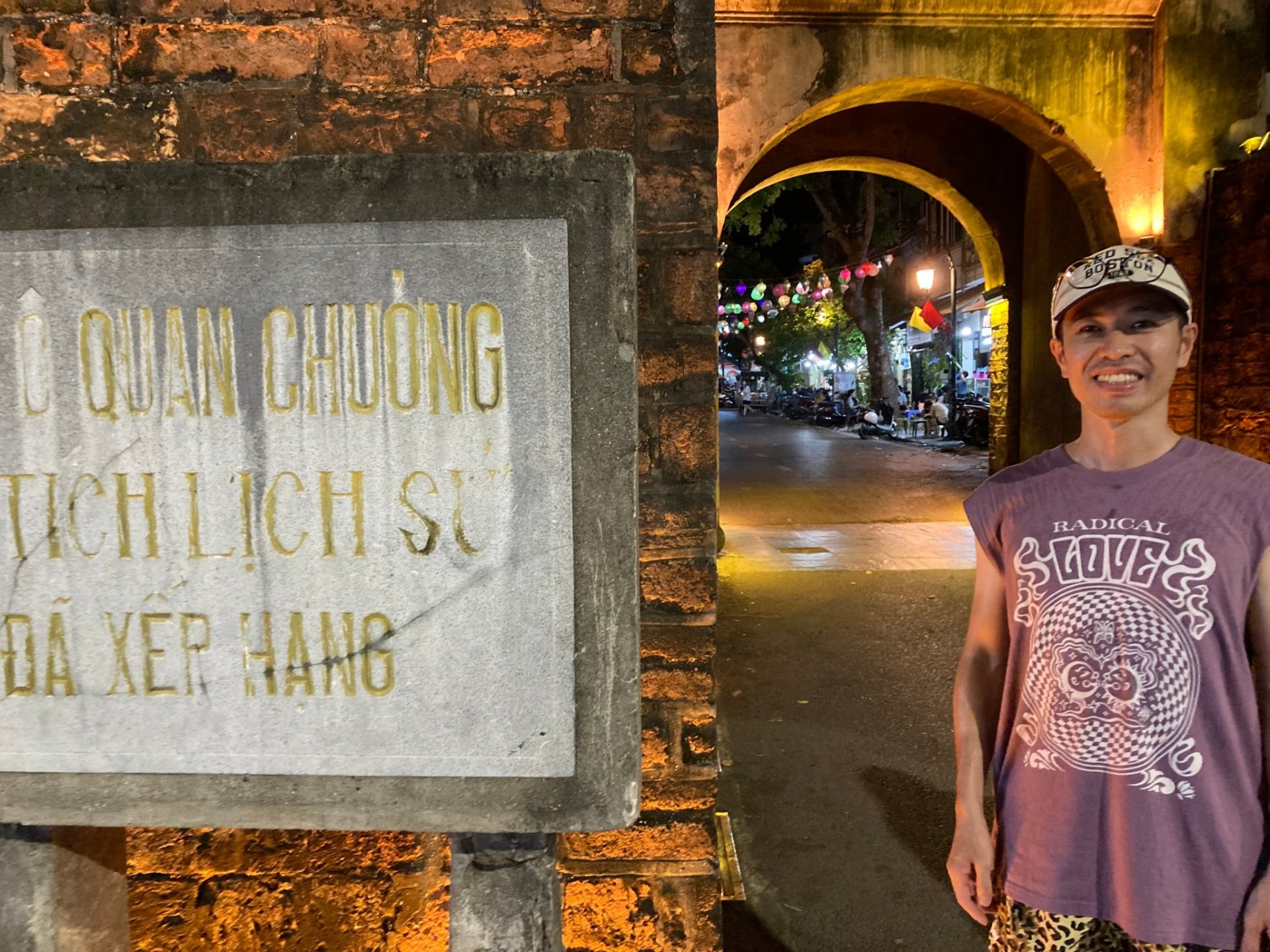 |
| Tamaru Hitoshi at O Quan Chuong Gate in Hanoi. (Photo: Supplied by the interviewee) |
One day in late August 2026, I was sitting in front of a tray of bun dau on Phan Huy Ich Street in Hanoi. In the small bowl before me was a dipping sauce whose colour and smell were completely unfamiliar to me: fermented shrimp paste.
My first reaction was, “Fermented shrimp paste? No way!” I suddenly thought of natto, Japan’s familiar fermented soybean dish. Many foreigners are also hesitant to try natto when they first see or smell it. Yet I like it. So perhaps fermented shrimp paste might be just like natto?
I tried dipping a piece of food into the sauce and quickly realised that my initial impression had been wrong. The smell was not nearly as strong as I had feared. The paste had a rich, savoury flavour, a slightly tingling heat on the tip of my tongue and a hint of sweetness from the tiny shrimp. On the tray were rice vermicelli, fried tofu from the Mo village style, boiled pork, green sticky rice patties and various accompaniments. I tried each item, sometimes dipping it into the shrimp paste and sometimes using fish sauce. Just as the thought, “I wish I had discovered this dish sooner,” crossed my mind, the plate in front of me was almost empty.
A Vietnamese person sitting next to me showed me how to prepare the shrimp paste: add sugar, squeeze in some calamansi juice, pour in hot oil and whisk until the mixture becomes frothy. I followed the instructions. The salty taste I had noticed earlier disappeared, and the flavour changed completely. Experiences like this have made me increasingly curious about how Vietnamese people eat and season their food.
Later, when I found myself sitting in front of another tray of bun dau, I no longer wondered, “Can I eat this?” Instead, I began paying attention to how people in Hanoi enjoyed the familiar dishes they had grown up with.
Meals after work
My name is Tamaru Hitoshi. I was born in 1989 and come from Kyoto. In October 2023, a Japanese company specialising in home cleaning services sent me to Hanoi to establish its operations in Viet Nam.
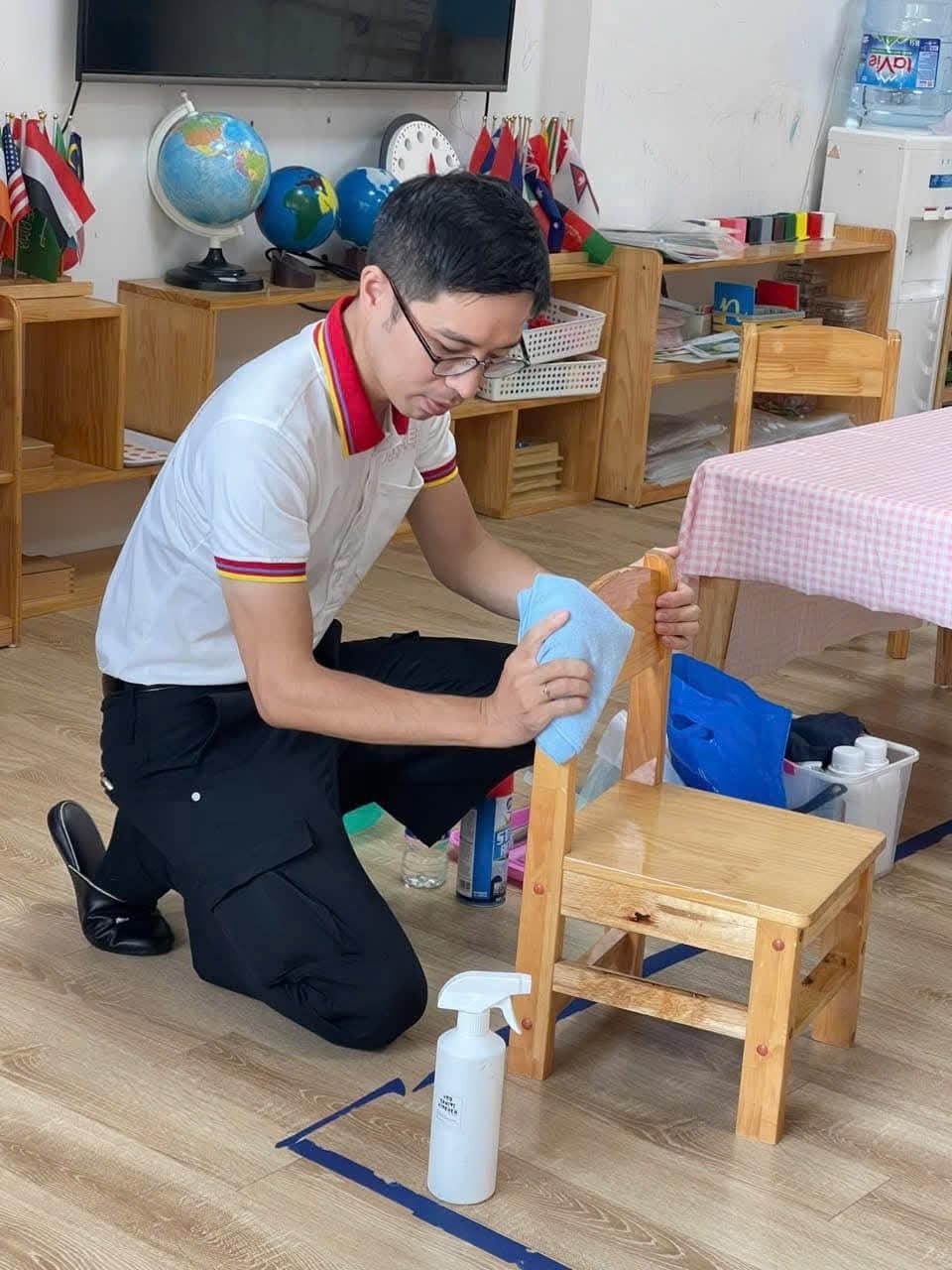 |
| While working in home cleaning services, Hitoshi continued to visit customers’ homes in person to carry out his work and listen to their feedback. (Photo: Supplied by the interviewee) |
The company provided professional cleaning services to tackle stubborn stains that ordinary cleaning methods could not remove. Although I held the position of director, I continued to visit customers’ homes in person to hear their feedback and gain a better understanding of the work on the ground. Sometimes, I even scrubbed toilets with my own hands.
The job took me to more than 140 Vietnamese households. What I had not expected was that, after I finished cleaning, the hosts at almost every home I visited would invite me to stay for a meal. Some even joked, “What do you think of my daughter?” At times, I was no longer sure who the customer was. I had arrived to provide a service, but once the work was done, I was treated like a guest visiting a friend’s home.
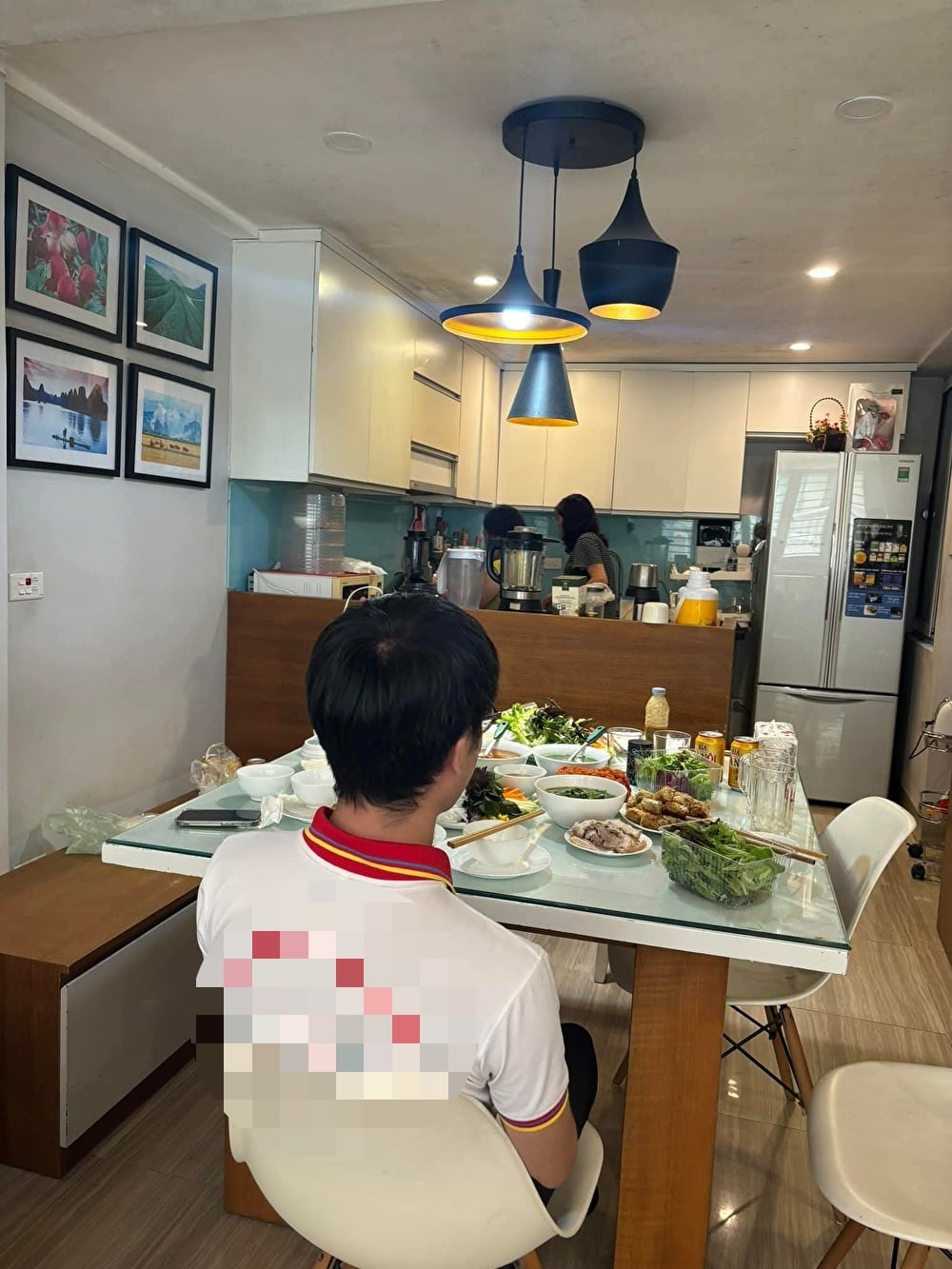 |
| After work, Hitoshi was often invited by his customers’ families to stay for a meal. (Photo: Supplied by the interviewee) |
There is one meal I still remember. The family that day was very fond of Japanese products, and almost all the electrical appliances in their home were made in Japan. The host smiled and said, “Today, we’ve cooked some delicious rice using a Japanese rice cooker. You must stay and eat with us!”
That was also the first time someone showed me how to make a dipping sauce with salt, pepper and lime. A plate of steamed chicken sat in the middle of the table. I tore off a piece, dipped it lightly into the sauce and ate it with plain white rice. I had worked quite hard that day and was covered in sweat. As I ate, a thought suddenly crossed my mind: “Vietnamese rice might just be the best in the world!”
At the time, my Vietnamese was very limited. I would go to customers’ homes and try to make everything spotlessly clean, but often I could not fully understand what everyone was saying. Once the work was done, a meal would be served. Perhaps that was why it felt like a reward.
I also used to get so caught up in work that I often skipped lunch. One Vietnamese colleague noticed this and said to me one day, “My mum made two lunch boxes, one for me and one for you. Let’s eat together!” I felt embarrassed and initially declined, but he continued bringing me lunch every day.
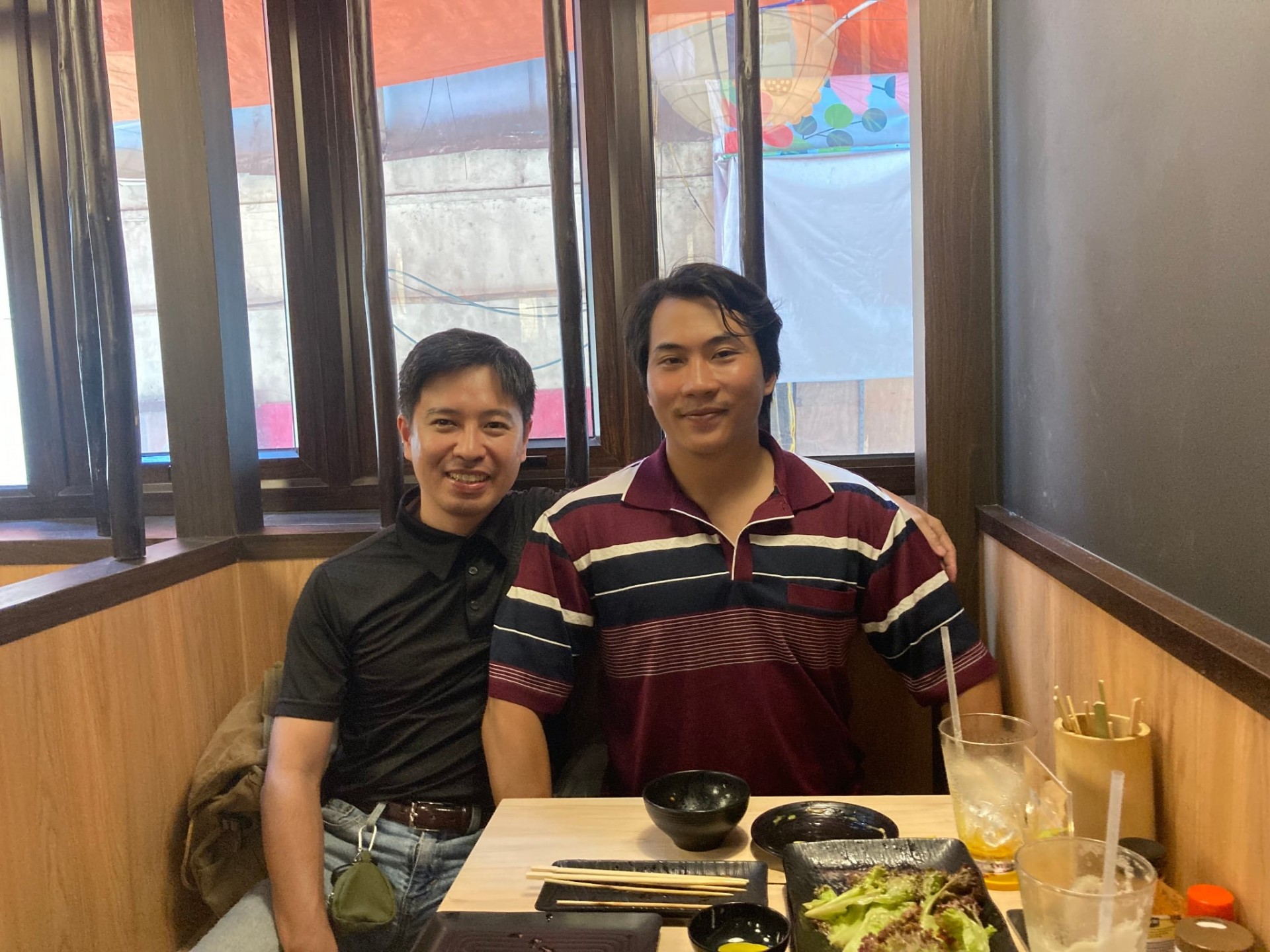 |
| Hitoshi with the friend who used to bring him lunch every day, during a birthday celebration at a Japanese restaurant to which Hitoshi had invited him. (Photo: Supplied by the interviewee) |
The contents of the lunch boxes varied from day to day. Sometimes there was chicken or tofu in tomato sauce; other times, pork seasoned with spices that tasted somewhat like curry. Later, I visited his home and met his mother. Looking at the kitchen, I suddenly thought, “Ah, so this is where the lunch boxes I’ve been eating all this time are made.”
From then on, whenever I received a lunch box, I thought more about the person who had taken the time to prepare it and reminded myself to appreciate the gesture and feel grateful. Being able to enjoy such delicious home-cooked meals every day was a source of happiness for me.
Beyond the meals, I also received help with many small things. Once, my motorbike broke down in the rain, and a Vietnamese person who happened to be passing by helped push it all the way back to my home. When I had just arrived in Hanoi and did not know how to choose rice, the security guard at my residence took me to the market and showed me which kind to buy.
Sometimes, I wondered: so many people have helped me. What can I do to give something back?
I chose to stay in Viet Nam
Around April 2025, I had to make a decision. Because of differences in direction with the company in Japan, I decided to resign. Around the same time, the home cleaning business that the company had launched in Viet Nam also came to an end.
At that point, I was torn between staying in Viet Nam and returning to Japan. During my time working here, I had gained experience in attracting customers and noticed that many Japanese businesses in Viet Nam faced similar difficulties. I thought I could use that experience to support them while helping bring quality Japanese services closer to Vietnamese people.
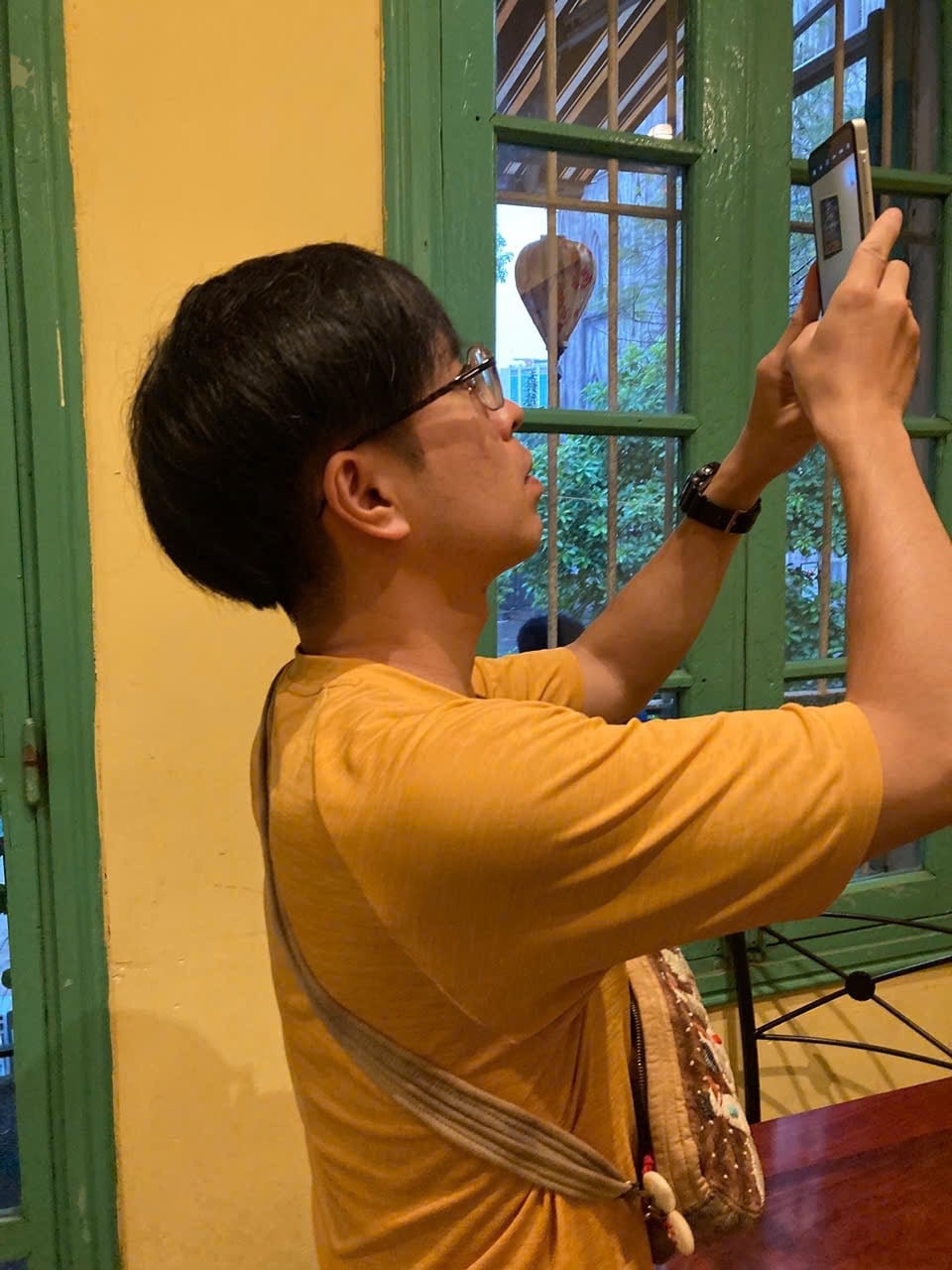 |
| Hitoshi filming as he explores Hanoi’s cuisine and everyday life. (Photo: Supplied by the interviewee) |
I decided to stay, start my own business and move into consulting, specialising in management and marketing for Japanese businesses in Viet Nam. I currently support several businesses operating in areas such as interior services and food and beverage services.
But work was only part of the reason behind my decision. I have always enjoyed engaging with different cultures. Whenever I enter a world I do not yet know, every new discovery brings me a kind of joy that is difficult to replace. If I returned to Japan, I would be going back to a familiar world. In Viet Nam, there is still so much I do not know. Perhaps, above all, I simply love the atmosphere of Hanoi.
Meeting the people who had once sat around the dining table with me was one of the things that gradually made Viet Nam feel like a “second home”.
Even on days when I do not film videos, I mostly eat Vietnamese food: a bowl of chicken pho costing around VND 35,000 at a place near my home, or a serving of sticky rice with mung bean paste and crispy fried shallots, known as xoi xeo, for around VND 15,000 in the morning. Only occasionally do I buy ingredients to make miso soup. Once, after going a long time without eating Japanese food, I was surprised to find myself thinking, “This is really salty!”
I began making videos about Vietnamese food and life more seriously around July 2026. Before that, I had been wondering for some time what I could do to give back for the kindness I had received here.
When I was still in Japan, my work took me to all 47 prefectures. Wherever I went, I would often look for famous restaurants or establishments that had been around for many years. I came to realise that eating at a long-established restaurant was also a way of experiencing local culture.
I love history, and Hanoi reminds me a little of Kyoto. Cities with long histories often have old restaurants, dishes and spaces that bear their own distinctive marks. Many of these places do very little advertising.
I want to draw on my own experiences to introduce not only the food but also the atmosphere, stories and distinctive character of each restaurant. If my sharing proves useful to viewers and helps more people discover a restaurant, I believe that would also be a way of giving back for the kindness I have received in Viet Nam.
There are still many places I want to visit. I would like to travel to the mountainous regions, share meals with ethnic minority communities and try dishes I have never encountered before. I also want to visit southern Viet Nam to discover how its flavours differ from those of the north.
Even with a familiar dish like pho, there is still so much I want to understand. When I first arrived in Viet Nam, I could barely tell the difference between pho served at different restaurants. Only after eating it more regularly did I gradually begin to notice subtle differences in the broth and the individual care each cook puts into preparing it.
Someone once asked me which dish I would miss most if I had to spend a long time away from Hanoi. I think it would be quay, especially a piece of the fried breadstick thoroughly dipped into a bowl of beef pho broth. A friend once told me, “Quay is part of Hanoi’s culture.” I still remember those words. There is no equivalent of this dish in Japan. And as for me, I have completely fallen in love with quay.
 Viet Nam Promotes Tourism in Hungary In Budapest, Hungary, the Embassy of Viet Nam in Hungary recently joined forces with relevant organisations to organise a tourism promotion event aimed at showcasing Viet Nam’s country, people, culture and attractive destinations to Hungarian friends. |
 Viet Nam Trade Office in Argentina Promotes Trade and Investment Cooperation with Western Argentine Provinces On October 7, 2026, during a working meeting with representatives of an Argentine consulting group and businesses, Ngo Manh Khoi, who is in charge of the Viet Nam Trade Office in Argentina, discussed opportunities to promote bilateral trade and investment, focusing on minerals, renewable energy, agricultural and food products, and the key products of western Argentina. |



Related Stories
 National
Viet Nam News Today (Oct. 20): Top Leader Arrives in Copenhagen, Beginning State Visit to Denmark
 Travel
Viet Nam Promotes Tourism in Hungary
 Expats in Vietnam
Returning to Viet Nam Is Like Coming Home
 Friendship
A Misfortune Turned into Happiness
In topics
 Expats in Vietnam
I Chose to Stay Because There Is Still So Much I Don’t Know About Viet Nam
Expats in Vietnam
Returning to Viet Nam Is Like Coming Home
Friendship
A Misfortune Turned into Happiness
 Friendship
I Was Never Just Passing Through Viet Nam
Popular article
 Expats in Vietnam
Football and Friendship Unite 20 International Teams in Hanoi
 Expats in Vietnam
Lao and Cambodian Students Celebrate Traditional New Year at Friendship School 80
 Expats in Vietnam
Lao and Cambodian Students Celebrate Traditional New Year Festivals in Vietnam
 Expats in Vietnam