
65 Years of the Agent Orange Disaster: Dialogue to Spur Action
| Vietnam News Today (Aug. 17): Vietnam, US Expand Cooperation to Tackle Agent Orange Impacts Strengthening Vietnam-US Cooperation to Ease Pain of Agent Orange |
The seminar was chaired by the Viet Nam Union of Friendship Organizations (VUFO) and jointly organized with the Viet Nam Association for Victims of Agent Orange/Dioxin (VAVA), the National Action Center for Overcoming Chemical and Environmental Consequences (NACCET), the Standing Office of the National Steering Committee for the Settlement of Postwar Unexploded Ordnance and Toxic Chemical Consequences in Viet Nam (Office 701), and the Viet Nam-US Society.
Participants included representatives of Vietnamese agencies and organizations, the US Embassy in Viet Nam, international organizations, foreign non-governmental organizations, experts, scientists, Agent Orange victims, and international friends, who attended both in person and online.
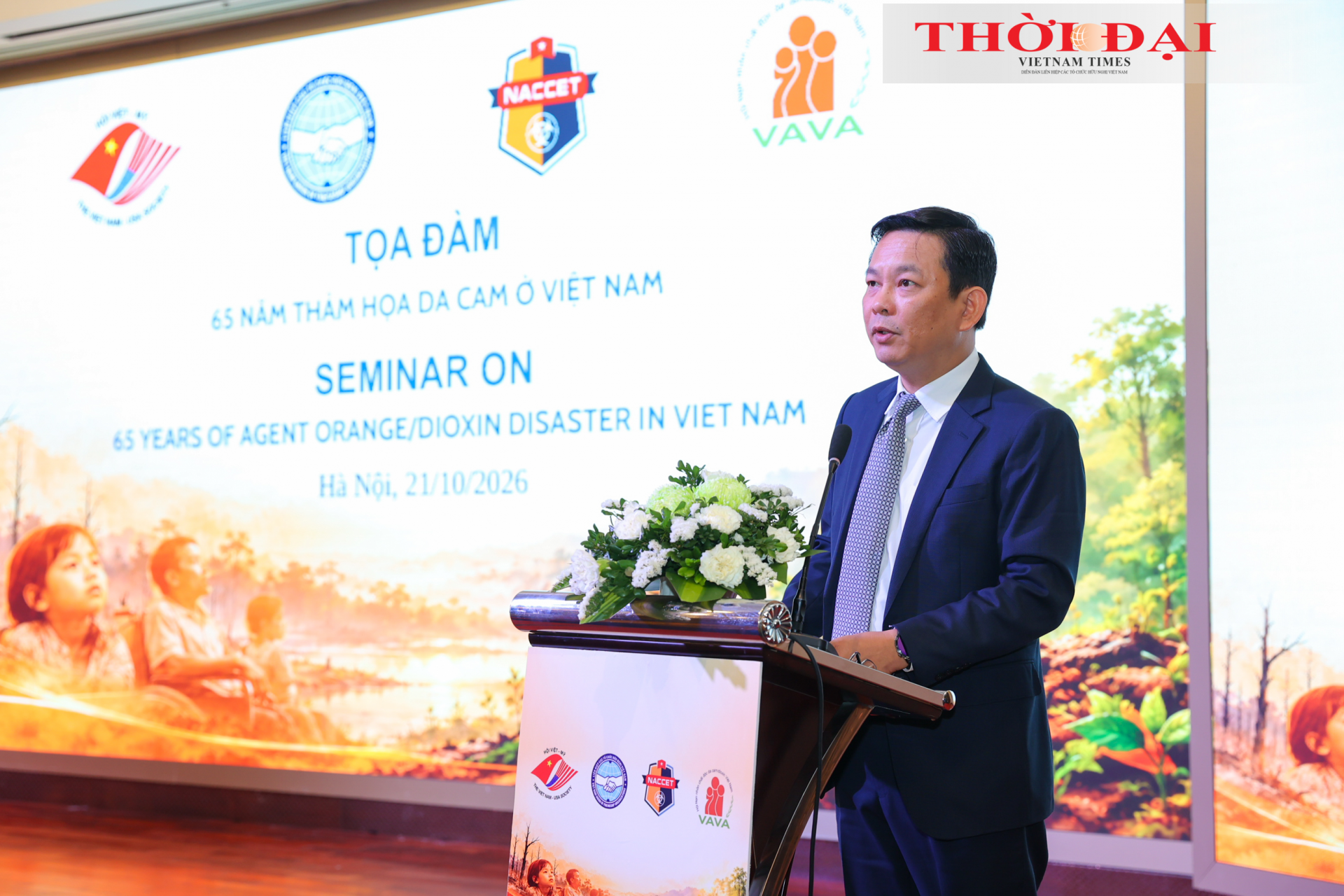 |
| Dong Huy Cuong, Vice President of the Viet Nam Union of Friendship Organizations, delivers the opening remarks at the roundtable. (Photo: Dinh Hoa) |
In his opening remarks, Dong Huy Cuong, Vice President of the Viet Nam Union of Friendship Organizations, emphasized that although the war had ended, its consequences continued to affect numerous families and regions across Viet Nam. Many victims require lifelong medical care, rehabilitation, and social assistance. Addressing the consequences of wartime chemical contamination is therefore both an urgent and a long-term undertaking.
Acknowledging the achievements of Viet Nam-US cooperation in dioxin remediation, assistance for persons with disabilities, and efforts to address the consequences of war, Dong Huy Cuong noted that these accomplishments demonstrated how unresolved issues from the past could become areas of substantive cooperation, delivering tangible benefits to people and helping strengthen mutual trust between the two countries.
He expressed his hope that the seminar would focus on discussing solutions to improve support for victims, remediate contaminated areas, mobilize resources, and promote the role of people-to-people diplomacy in addressing the consequences of war.
In his introductory remarks, Ambassador Bui The Giang, Vice President of the Viet Nam-US Society, highlighted three major legacies of war that Viet Nam continues to address: unexploded ordnance, the search for and identification of fallen soldiers' remains, and the consequences of Agent Orange/dioxin contamination for people and the environment.
According to Bui The Giang, these efforts require sustained commitment and long-term cooperation among all stakeholders. The Viet Nam-US Society called on the US Government, Congress, businesses, and people to continue working alongside Viet Nam. It also urged US chemical companies involved in producing the toxic chemicals used during the war to demonstrate their social responsibility through concrete programs supporting victims and remediating contaminated areas.
“That responsibility must be translated into concrete programs, dedicated resources, and measurable outcomes,” Ambassador Bui The Giang emphasized.
The lingering pain of Agent Orange
Providing an overview of the consequences of Agent Orange/dioxin, Colonel Nguyen Quoc Hung, NACCET's External Relations Assistant, reported that between 1961 and 1971, the US military sprayed approximately 80 million liters of herbicides and defoliants across southern Viet Nam, of which around 61% was Agent Orange. An estimated 4.8 million Vietnamese people were exposed, and more than 3 million became Agent Orange victims.
The consequences extend beyond the long-term needs of victims for healthcare, rehabilitation, and livelihood assistance. They also persist in dioxin-contaminated areas that require further remediation. At Bien Hoa Airbase alone, approximately 500,000 cubic meters of soil and sediment are contaminated. Viet Nam has achieved significant results in remediation efforts in Da Nang and A So, while continuing to carry out remediation activities in Bien Hoa and Phu Cat.
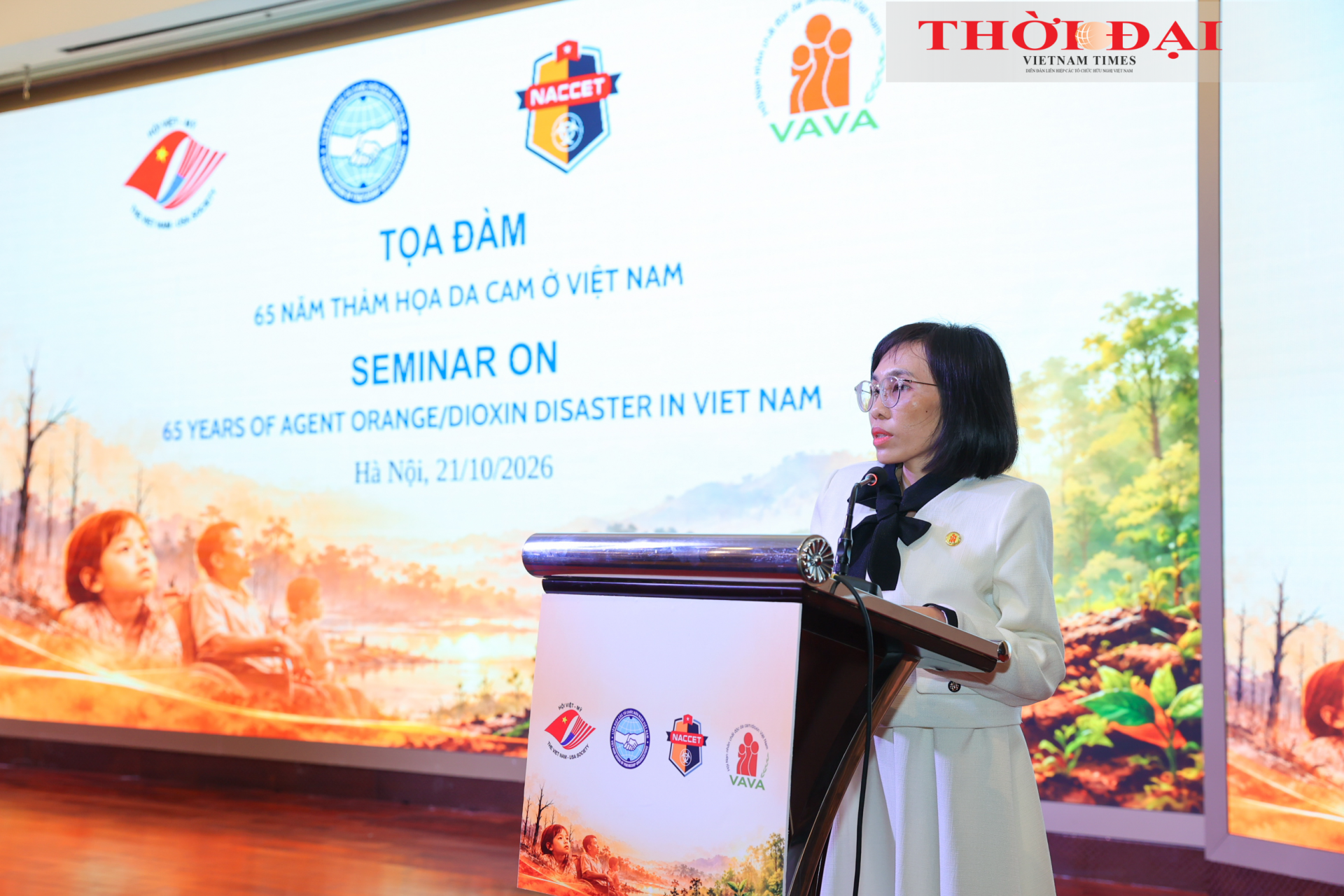 |
| Vuong Thi Quyen, an Agent Orange victim, speaks at the seminar. (Photo: Dinh Hoa) |
Vuong Thi Quyen, born in 1989 in Quang Tri Province, is a second-generation Agent Orange victim. Speaking at the seminar, she shared that her father was a war veteran who had fought on the southeastern battlefield of Viet Nam. From the age of nine, she endured considerable pain caused by a hunched back and spinal curvature.
“I once asked myself, ‘Why me?’ But then I chose to get back on my feet,” Quyen said.
She persevered with her education and, in 2014, received a scholarship to study in India, where she subsequently graduated with distinction with a master's degree in journalism. After returning to Viet Nam, she began teaching computer skills to people facing similar circumstances at the Viet Nam Social Protection Center for Agent Orange/Dioxin Victims.
Through this work, Quyen has been able to share the knowledge and skills she has acquired with other persons with disabilities. She hopes they can find suitable employment, earn an income, and gain greater independence in their daily lives.
At the seminar, Quyen called on younger generations to support Agent Orange victims through knowledge, technology, creativity, and people-to-people diplomacy activities. Drawing on her own experiences, she expressed her hope that those affected by the consequences of war would have greater opportunities to pursue education, find employment, and contribute to their communities.
The meeting that paved the way and the “three steps, three years” proposal
Recalling the early efforts to bring the Agent Orange issue into Viet Nam-US cooperation, Ton Nu Thi Ninh, former Deputy Chairwoman of the National Assembly's Committee for Foreign Affairs and former Head of the Viet Nam-US Track II Dialogue Group on Agent Orange/dioxin, recounted a meeting that took place in 2006.
“One beautiful sunny day, Charles came to see me at the National Assembly's Committee for Foreign Affairs as a representative of the Ford Foundation,” she recalled.
The person she was referring to was Dr. Charles Bailey, who was then Director of the Ford Foundation's Hanoi Office. The meeting took place ahead of US President George W. Bush's visit to Viet Nam for the 2006 APEC Economic Leaders' Meeting. Bailey came to discuss an initiative to establish a dialogue group bringing together prominent figures from both countries to advance efforts to address the consequences of Agent Orange/dioxin.
According to Ton Nu Thi Ninh, the initiative originated with the Ford Foundation, with Susan Berresford playing the leading role in its conception and Charles Bailey directly advancing the effort. She particularly valued the goodwill and proactive engagement of American friends who sought to bring a sensitive issue into the bilateral cooperation agenda.
At the time, Viet Nam and the US had normalized relations more than a decade earlier, but Agent Orange remained a difficult issue in bilateral relations. Differences in perceptions, scientific understanding, and questions of responsibility made it challenging to find common ground.
The Viet Nam-US Track II Dialogue Group on Agent Orange/dioxin was officially established in February 2007, bringing together scientists, social activists, and prominent figures from Viet Nam and the US. The group operated as a channel for people-to-people dialogue, without directly implementing projects or raising funds. Its members focused on raising awareness of the consequences of Agent Orange, proposing measures to assist affected people and remediate dioxin contamination, and encouraging greater attention from the American public and policymakers.
Ton Nu Thi Ninh described the group's establishment as a timely and flexible people-to-people diplomacy initiative that helped advance cooperation in addressing the consequences of war as Viet Nam-US relations developed.
“For many years, the legacy of Agent Orange was an issue that divided us. Now, it has become an issue that brings us closer together,” she said.
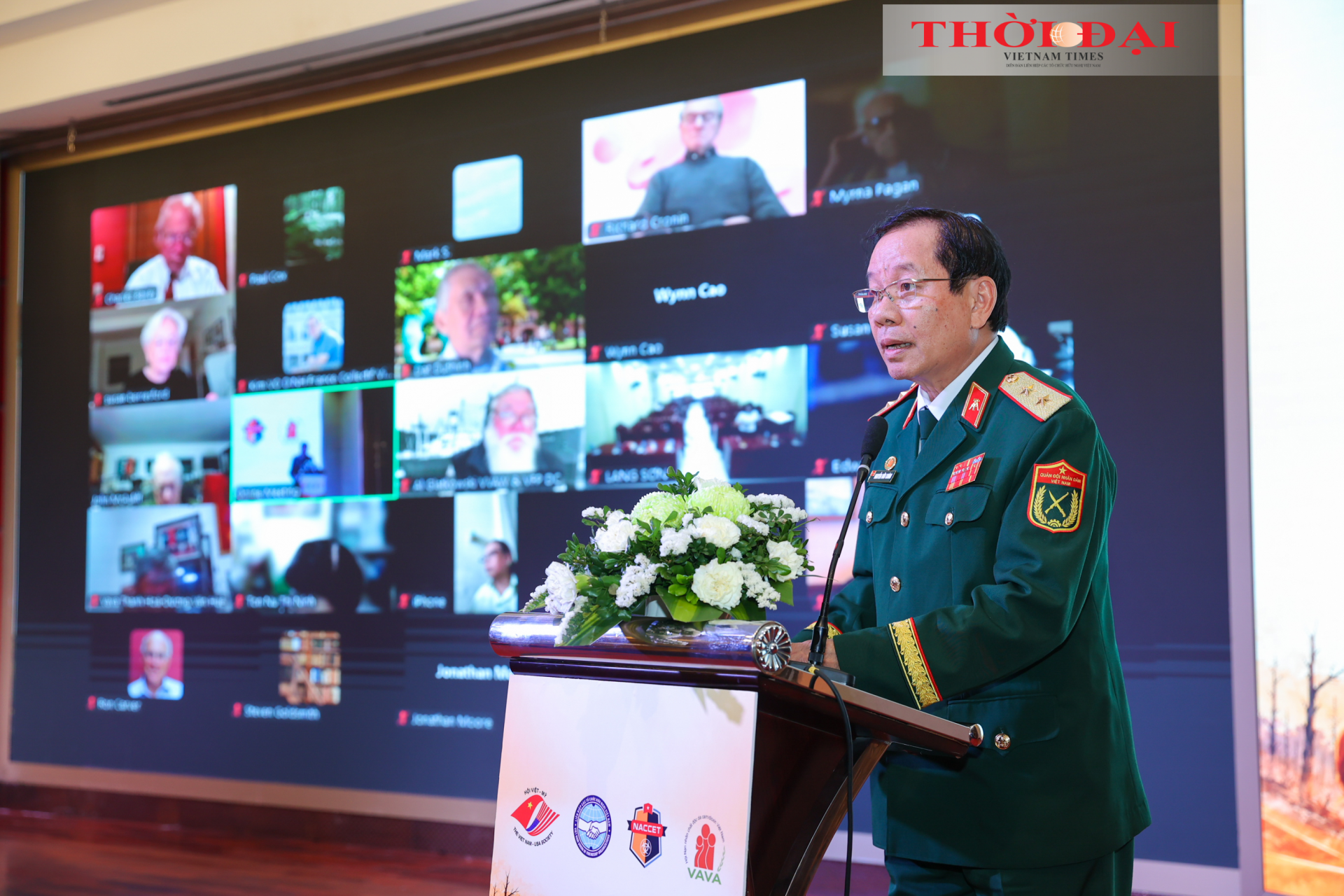 |
| Lieutenant General Nguyen Huu Chinh, President of the Viet Nam Association for Victims of Agent Orange/Dioxin (VAVA), speaks at the seminar. (Photo: Dinh Hoa) |
In the area of victim assistance, numerous programs have been implemented with the participation of organizations and individuals from Viet Nam and abroad. Speaking at the roundtable, Lieutenant General Nguyen Huu Chinh, President of VAVA, said that efforts to care for Agent Orange victims over the years had received support from the Viet Nam Fatherland Front, socio-political organizations, the business community, philanthropists, Vietnamese people at home and abroad, and international friends.
Since 2004, VAVA chapters nationwide have mobilized more than VND 5.1 trillion to provide care and assistance to victims. These resources have contributed to the construction and renovation of more than 15,000 houses, the creation of employment opportunities for over 53,000 victims, livelihood support for tens of thousands of families, and numerous other initiatives to provide care and improve living conditions.
Alongside domestic resource mobilization, VAVA has actively strengthened ties with international organizations and individuals. According to Lieutenant General Nguyen Huu Chinh, since 2024, VAVA's Central Committee has received and held working sessions with 150 international delegations, expanding its relationships with humanitarian organizations, veterans for peace, and numerous partners in the United States, Europe, Japan, and South Korea.
One example he highlighted was cooperation with South Korea's BOM Foundation. In August 2026, VAVA, the Korean International Association for Victims of Agent Orange (HOAVAVA), and the BOM Foundation signed a five-year memorandum of understanding on cooperation. The parties aim to mobilize resources from communities, businesses, and philanthropists to support victims' healthcare, rehabilitation, education, and livelihoods.
Despite the various sources of assistance available, the need for victim care remains substantial. In particular, families with members who have severe disabilities often face years of caregiving responsibilities, affecting the employment and income of other family members. Identifying families most in need, selecting appropriate forms of assistance, and sustaining support for a sufficiently long period remain challenges that must be addressed.
Nearly two decades after the establishment of the Viet Nam-US Track II Dialogue Group on Agent Orange/dioxin, Dr. Charles R. Bailey continues to put forward concrete proposals to help assistance programs reach more Agent Orange victims.
Participating in the seminar online, he recalled the Ford Foundation's role in advancing cooperation on Agent Orange two decades earlier, including supporting early dioxin remediation activities, piloting victim assistance initiatives, and helping establish the Viet Nam-US Track II Dialogue Group on Agent Orange/dioxin.
According to Bailey, the involvement of international non-governmental organizations, veterans, social activists, and American friends has helped advance bilateral cooperation. Nevertheless, the number of Agent Orange victims directly benefiting from US assistance programs remains limited.
Citing a 2024 evaluation study, he noted that over the six-year period examined, US-funded health and disability assistance programs had reached fewer than 20% of those identified by Viet Nam as Agent Orange victims. In other words, more than 80% of those receiving direct assistance through these programs were not Agent Orange victims.
In light of these findings, Bailey proposed that the United States provide clearer recognition of individuals officially recognized by Viet Nam as Agent Orange victims within its assistance programs. Such recognition, he argued, would not necessarily constitute an acknowledgment of legal responsibility, but would be important to victims and provide a basis for directing resources toward the intended beneficiaries.
Bailey suggested that the US could publicly state that its disability assistance programs in Viet Nam include individuals recognized by Viet Nam as Agent Orange victims, rather than continuing to use the existing formulation of providing assistance “regardless of cause.”
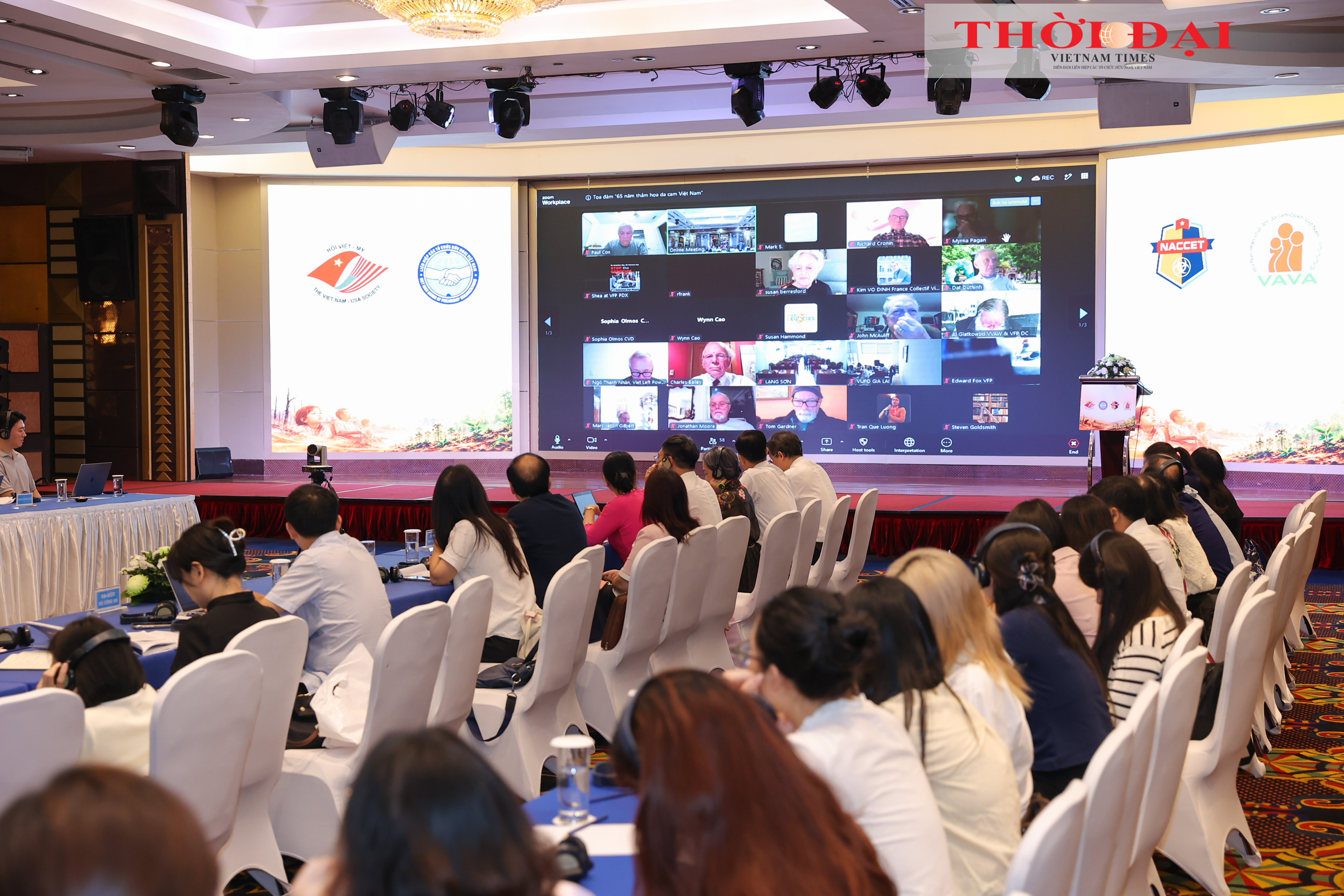 |
| Many international friends attended the seminar online. (Photo: Dinh Hoa) |
To translate his proposal into action, Bailey outlined three steps. First, VAVA and NACCET should be supported in updating their lists of households with members living with war-related disabilities who meet Viet Nam's criteria for Agent Orange and unexploded ordnance victims. Based on these lists, priority should be given to low-income households in areas heavily sprayed with toxic chemicals during the war, particularly those with severely disabled members requiring full-time care from family members.
According to Bailey, the US has recently allocated USD 71 million to new projects involving healthcare and disability assistance related to Agent Orange. He proposed allocating half of this funding to provide direct assistance to priority households, while investing the remaining half in strengthening the social assistance service system. This allocation represents Bailey's proposed approach to resource distribution.
The third step would be to sustain direct assistance to these families over three years through services tailored to each household's specific circumstances and needs. Such assistance could include home modifications to accommodate persons with disabilities, therapeutic services, vocational training, small business funding for family members capable of working, and other essential social services.
Bailey emphasized that assistance must take into account the circumstances of the entire family. A person with a severe disability may require full-time care, forcing a family member to reduce their working hours or leave employment altogether to provide care at home. Assistance programs should therefore help families develop greater income-generating capacity and achieve long-term independence.
“Direct assistance comes closest to compensating victims for their losses. It empowers victims and their families to become independent and self-reliant,” Bailey emphasized.
Dr. Nguyen Huu Huyen, Director General of the Department of International Cooperation under the Ministry of Justice, argued that efforts to address the consequences of Agent Orange/dioxin should be approached from the perspective of safeguarding human and citizens' rights. A victim may simultaneously require medical care, rehabilitation, social benefits, and livelihood assistance. If these needs are addressed through poorly coordinated mechanisms, affected individuals will be left to navigate multiple administrative procedures and government agencies on their own.
He called for stronger coordination across three areas: contamination remediation and exposure prevention; healthcare and rehabilitation; and social security and community support. The effectiveness of efforts to address the consequences of Agent Orange should be assessed not only through environmental remediation outcomes and the amount of funding mobilized, but also through tangible improvements in the lives of affected people.
Regarding contamination remediation, Dr. Le Ke Son, former Deputy Director General of the Viet Nam Environment Administration, called on the two countries to develop a clearer cooperation strategy and action plan, particularly for areas where dioxin contamination persists, such as Bien Hoa. He stressed the need to establish specific objectives, timelines, and measurable outcomes to prevent efforts to address the consequences of war from continuing indefinitely without a clearly defined endpoint.
Paul Cox, Agent Orange Program Coordinator of the US organization Veterans For Peace, drew attention to the risk of contamination in certain areas surrounding former military bases that have not yet been adequately surveyed. In his view, beyond the identified contamination hotspots where remediation is already underway, Viet Nam and the US should devote greater attention to investigating and assessing potentially affected areas to protect residents from the risk of continued exposure.
Discussions at the roundtable also highlighted the role of American friends, civil society organizations, and younger generations in sustaining attention to the consequences of war, mobilizing resources, and connecting practical assistance programs.
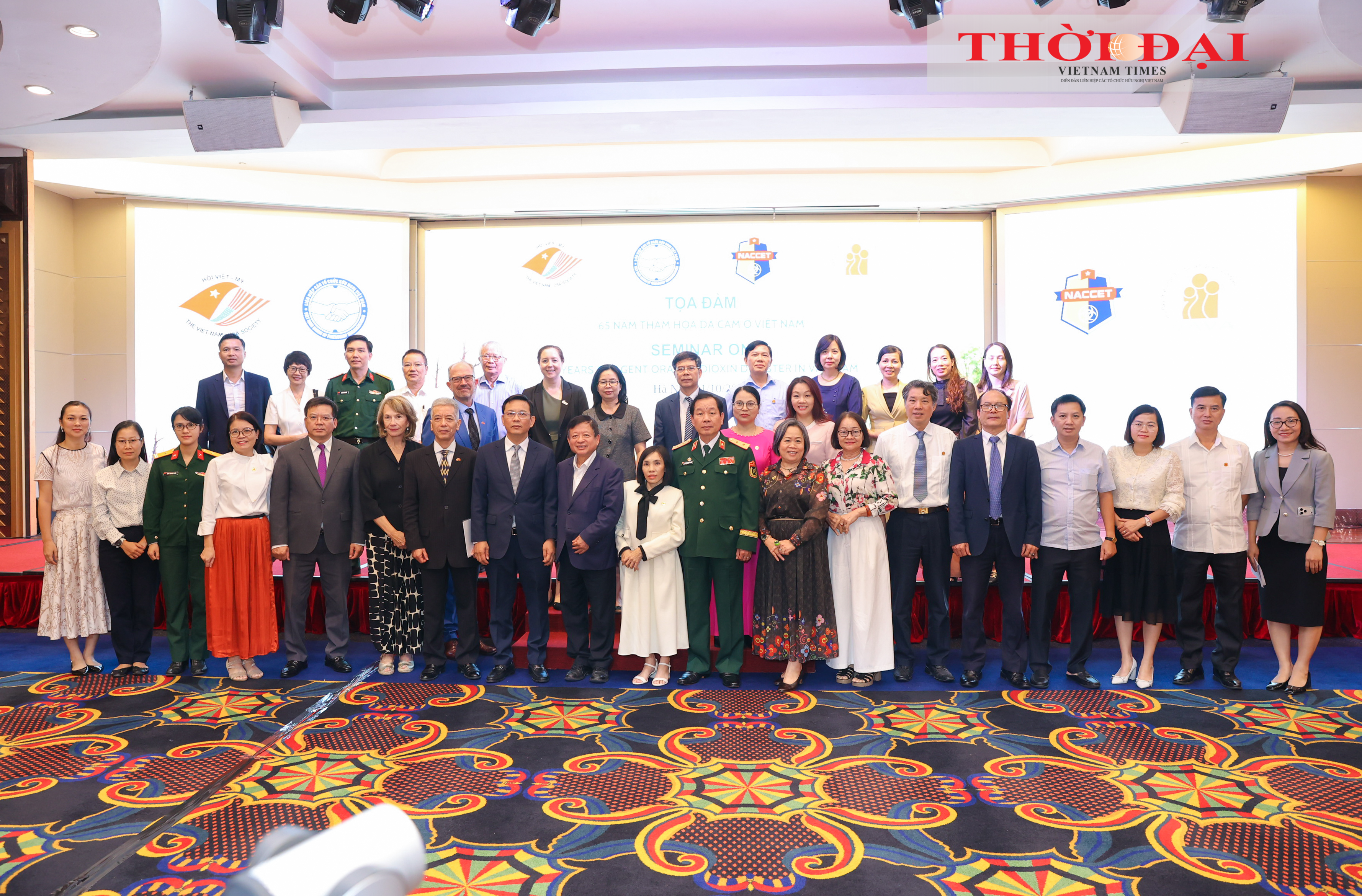 |
| Delegates pose for a commemorative photograph at the roundtable. (Photo: Dinh Hoa) |
The seminar adopted an Appeal on the 65th Anniversary of the Agent Orange/Dioxin Disaster in Viet Nam. The Viet Nam Union of Friendship Organizations, VAVA, NACCET, and the Viet Nam-US Society called on Vietnamese people at home and abroad, governments, international organizations, businesses, humanitarian foundations, scientists, social activists, and friends around the world to continue contributing to victim assistance, dioxin remediation, environmental restoration, and efforts to address the consequences of war.
The Appeal focused on three priorities: for Agent Orange victims; for the environment and future generations; and for responsibility and peace. In particular, the organizations expressed their hope that the US and relevant partners would continue making practical, long-term contributions commensurate with the needs of addressing the consequences of war.
“Remembering the past is not about perpetuating hatred, but about transforming understanding into responsibility, compassion into action, and international cooperation into tangible change,” the Appeal emphasized.
| Perspectives on responsibility for addressing the consequences of Agent Orange A core element of transitional justice is telling the truth. The United States has finally openly acknowledged the harmful effects of these chemicals on its own citizens and provided the necessary support services. However, the United States has yet to demonstrate the same openness in acknowledging the harm inflicted on the Vietnamese people and providing corresponding care and assistance. The United States has healthcare and disability assistance programs in Viet Nam, but it uses the phrase “regardless of cause,” even though we all know that Agent Orange is the reason behind this assistance. By being more forthright about why such assistance is provided, the United States could direct additional resources toward those who have clearly suffered harm from Agent Orange. One question repeatedly raised within the dialogue group was: “How much is enough?” If we want to move toward reconciliation, what needs to be done, and what would be realistic and feasible for the United States? The two countries need to begin discussing this issue now, as the sense of responsibility for addressing the consequences of war may diminish over the next decade. Susan Berresford, former President of the Ford Foundation It was doctor Le Cao Dai who introduced me to the first family affected by Agent Orange that I had the opportunity to meet. I want to emphasize that when Americans learn about the effects of Agent Orange in Viet Nam, they genuinely want to do something to help. About 20 years ago, Nancy, the wife of American veteran Bob Feldman, contacted me to coordinate with the Red Cross to provide direct assistance to people affected by Agent Orange in Viet Nam. They wanted to demonstrate that Americans cared and genuinely wished to help. Over the past 20 years, Bob's family, relatives, and friends have contributed more than USD 500,000. Through our cooperation with the Red Cross, we have provided assistance to more than 650 families across Viet Nam. Agent Orange affects entire families, not just those directly experiencing health problems. I hope to see more people-to-people cooperation initiatives of this kind, and I will continue advocating with members of the US Congress for the funding needed to address the Agent Orange issue. Susan Hammond, Founder and Executive Director of the War Legacies Project On September 21, I attended a Vietnamese cultural program at the Brooklyn Academy of Music in New York. On the subway ride after the event, I happened to meet more than a dozen members of the Vietnamese Students Association at Columbia University who had also attended the program. They were enthusiastic and full of energy. The encounter made me realize that a generational shift was taking place among young people in the Vietnamese community in the United States. I hope VAVA and the Viet Nam Union of Friendship Organizations will develop a program enabling young Vietnamese Americans to visit Viet Nam, witness firsthand the country's development since the war, and learn about the assistance still needed to address its lingering consequences. This is an opportune moment to engage these young people in efforts to address the consequences of war in their ancestral homeland. Ron Carver, American peace activist |
 Viet Nam-Japan Concert Raises Funds for Agent Orange Victims On October 9, in Hiroshima, Japan, Japanese residents and the Vietnamese community gathered for the “Love & Peace Concert 2026”, an event that brought traditional music together with activities supporting Agent Orange victims, spreading a message of peace and friendship between Viet Nam and Japan. |
 The Joy of Work for Agent Orange Victims Livelihood loans enable people affected by Agent Orange to engage in farming and animal husbandry, while scholarships and suitable working environments help others pursue their chosen professions. With jobs and incomes, they are also better able to manage their lives independently and provide for their families. |


Most read

ZTE Launches M8000 Intelligent Computing Micro-Module Data Center, New-Gen AIDC IT POD Solution for Global Deployment

Mountains and Seas Unite for a New Chapter: "Sojourn in Guizhou" International Promotion Conference Held in Macao


Related Stories
 Friendship
Viet Nam Union of Friendship Organizations Wins Seven Awards in Party Ideological Foundation Protection Contest
 Vietnamese Culture
The Joy of Work for Agent Orange Victims
 Economy
Viet Nam, US Seek Higher-Quality Economic Ties
 World
Viet Nam-Japan Concert Raises Funds for Agent Orange Victims
Popular article
 Friendship
Aris Alip: The Filipino Friend Who Helped Build the TYM Fund
 Friendship
Spreading Responsibility for Safeguarding Party’s Ideological Foundation from Viet Nam to International Community
 Friendship
DAFO Launches Activities to Promote Responsible Business Practices
 Friendship