
The Joy of Work for Agent Orange Victims
| Strengthening Vietnam-US Cooperation to Ease Pain of Agent Orange Viet Nam-Japan Concert Raises Funds for Agent Orange Victims |
Livelihoods Bring Greater Independence
“Exhausted… It hurts so much… But I’m happy because this is the fruit of my own labor!” That was the response of Tu Van Han (born in 1963, residing in Hamlet 8, Khanh Binh Commune, Ca Mau Province) when asked why he continued to work despite his declining health.
As the child of a person who participated in the resistance war, Tu Van Han has suffered from the effects of chemical toxins since birth, with both hands contracted and limited communication abilities. In his youth, he worked as a hired laborer and saved money to cover his living expenses. Today, despite his poor health, he still tries to take care of his daily needs on his own and relies on relatives as little as possible.
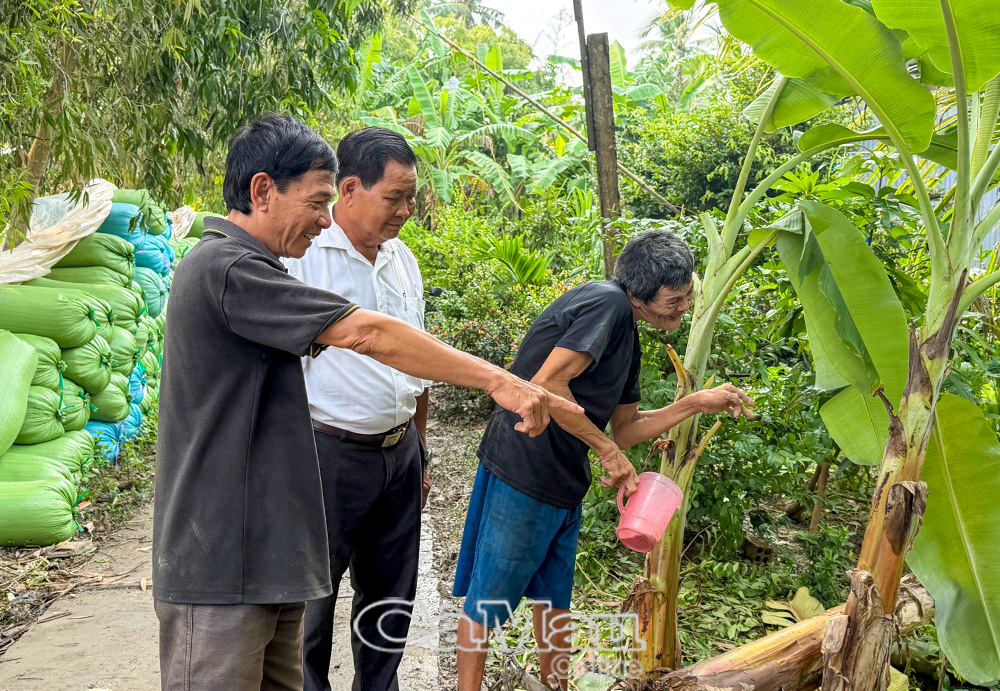 |
| Tu Van Han, together with his younger brother Tu Van Vinh and Nguyen Thanh Ut, Chairman of the Khanh Binh Commune Association of Agent Orange/Dioxin Victims (center), visits the family’s fish pond. (Photo: Ca Mau Newspaper) |
In 2025, through a livelihood loan program run by the Vietnam Association for Victims of Agent Orange/Dioxin, Han borrowed VND 10 million to raise chickens and ducks. After his first round of livestock farming, he made a profit of VND 3 million after deducting expenses. He continued by raising more fish, including dồ fish, catfish and snakehead fish, gradually diversifying his livelihood and generating additional income.
Tu Van Vinh, Han’s younger brother, said that although Han had difficulty walking and suffered body aches whenever the weather changed, he still took care of his livestock and carried out daily tasks himself. Han only asked his younger brother for help when he was ill, needed to buy medicine or needed to purchase feed for his fish.
In Dak Trung Hamlet, Nam Da Commune (Lam Dong Province), Ly Quoc Phu opened an aluminum and glass door manufacturing workshop using preferential loans from the Vietnam Bank for Social Policies.
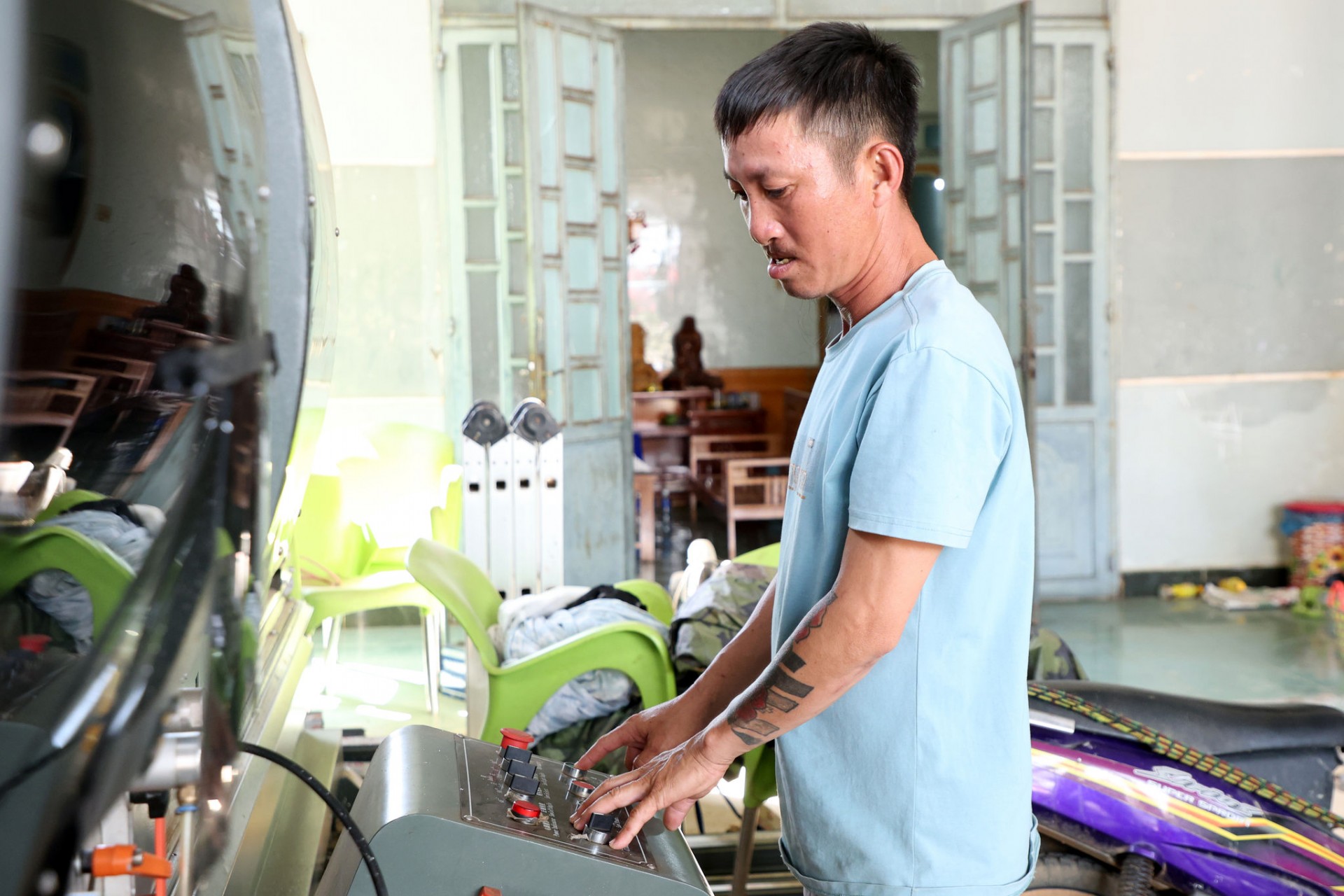 |
| Ly Quoc Phu received a loan from the Vietnam Bank for Social Policies to open an aluminum and glass door manufacturing workshop. (Photo: Lam Dong Newspaper) |
Phu was affected by chemical toxins through his father. With poor health that prevented him from doing strenuous work, he sought a business model suited to his abilities. Three years ago, he gained access to preferential loans and used the funds to invest in machinery and open an aluminum and glass door manufacturing workshop. After operating for some time, the business gradually stabilized and began generating income for his family.
“My current job suits my health, provides additional income, helps me support my family’s living expenses and ensures that my children can attend school regularly,” Phu said.
Working in Their Chosen Professions
At the age of 25, Le Tan Dat, who resides in Nhi Quy Commune, Dong Thap Province, takes on multiple responsibilities at MCI Vietnam Technology Academy. He participates in research and the development of training programs in data analytics and data science; provides digital transformation consulting and training for businesses; and is also responsible for recruitment and mentoring trainees and interns.
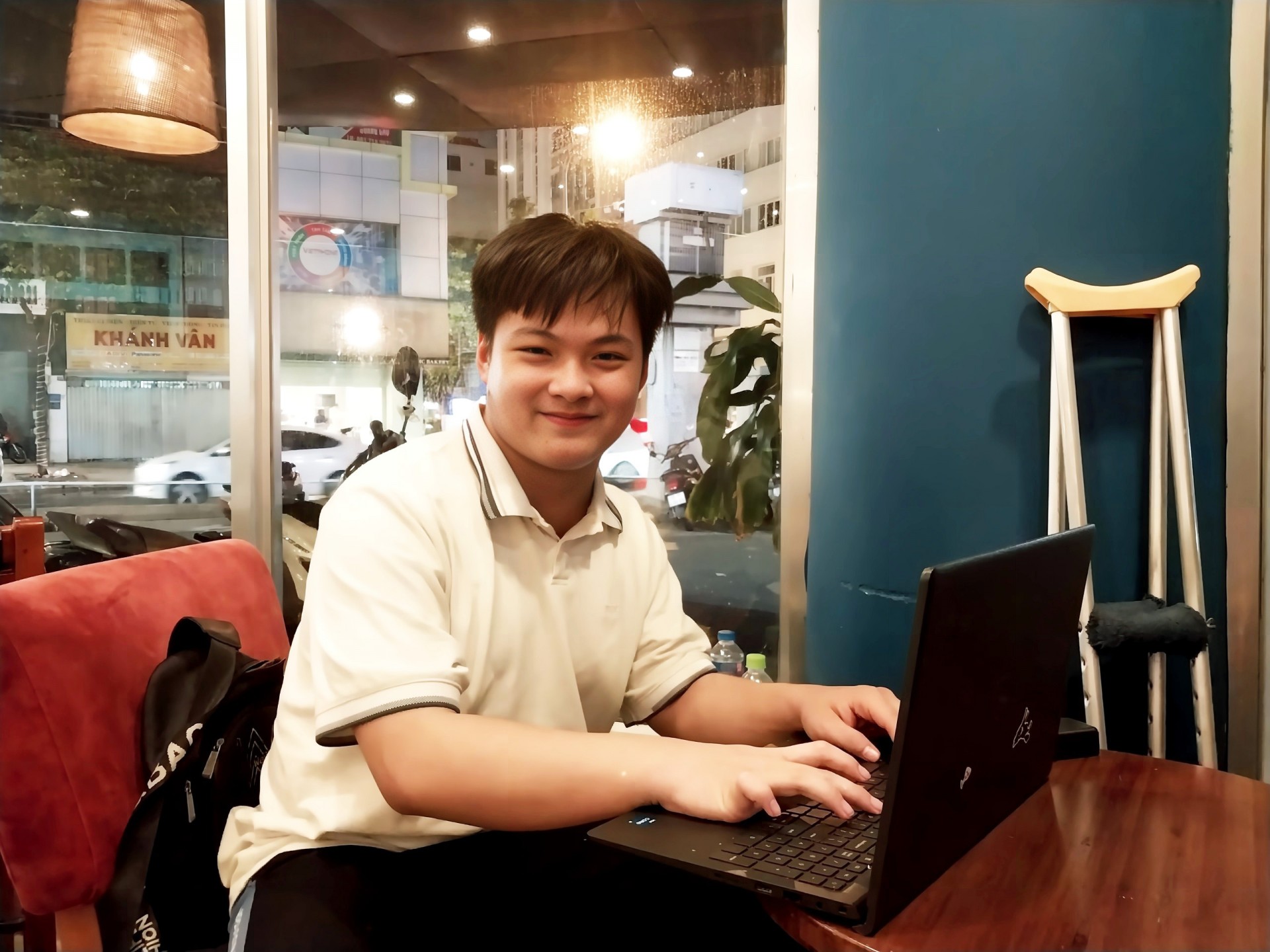 |
| Le Tan Dat takes on multiple responsibilities at MCI Vietnam Technology Academy. (Photo: Orange Agent Electronic Magazine) |
Dong Thap is one of the localities that was sprayed with chemical toxins during the war. As of August 2026, the province had more than 17,000 Agent Orange victims. Le Tan Dat is among those who have suffered from the effects of these chemicals since birth.
Dat’s parents both worked as garment workers. His father, Le Van Ga, recalled that Dat was born prematurely and had to be placed in an incubator. According to his father, Dat suffered from the effects of chemical toxins from birth, with muscle atrophy in his legs that left him unable to walk. When he was over one year old, he was still unable to stand or walk like other children his age. During his early years, Dat relied on a wooden chair to move around.
Despite their financial difficulties, his family took him to receive treatment at various facilities. Before he started primary school, he underwent surgery at Children's Hospital 1 in Ho Chi Minh City and began learning to stand and walk. At the age of nine, Dat underwent another operation to reconnect the tendons in both legs. After treatment and rehabilitation exercises, he gradually became able to walk with crutches.
Throughout his school years, his mother regularly took him to and from school. After completing Grade 12, he passed the entrance examination for Ho Chi Minh City University of Industry and Trade, where he studied information technology.
During his university years, traveling between the dormitory and lecture halls remained a challenge for Dat. He received support from lecturers and classmates, while the former Tien Giang Provincial Study Promotion Association mobilized donors to provide him with a wheelchair, making it easier for him to get around.
Dat also received a VietSeeds scholarship, which helped ease his family’s financial burden of paying for his education. Outside class hours, he worked part-time to gain professional experience. While still a student, Dat began working at MCI Vietnam Technology Academy, participating in research and the development of training content. He once expressed his wish to continue working at MCI after graduation, as the institution had helped him grow professionally.
After completing his university studies, Dat continued working at MCI, taking on additional responsibilities in recruitment and training. Le Van Tiep, the Academy’s General Director, praised Dat for his seriousness, patience and dedication, particularly when directly mentoring trainees and interns.
The Academy also allows Dat to work from home when there are no important meetings requiring his physical attendance in Ho Chi Minh City or Hanoi. This arrangement helps reduce his difficulties with transportation, enabling him to continue his research, participate in training and develop his career in the field he has chosen.
 Strengthening Vietnam-US Cooperation to Ease Pain of Agent Orange The working visit by a delegation from the Ho Chi Minh City Association for Victims of Agent Orange/Dioxin (VAVA) provided an opportunity to directly inform friends in the United States about the long-term consequences of Agent Orange in Vietnam. |
 Viet Nam-Japan Concert Raises Funds for Agent Orange Victims On October 9, in Hiroshima, Japan, Japanese residents and the Vietnamese community gathered for the “Love & Peace Concert 2026”, an event that brought traditional music together with activities supporting Agent Orange victims, spreading a message of peace and friendship between Viet Nam and Japan. |




Related Stories
 World
Viet Nam-Japan Concert Raises Funds for Agent Orange Victims
 Viets Home
Strengthening Vietnam-US Cooperation to Ease Pain of Agent Orange
 Viets Home
Ho Chi Minh City Holds Walk for Agent Orange/Dioxin Victims
 Friendship
Journalist Nakamura Goro: A Lifetime Spent Telling Vietnam's Untold Stories
Recommended
 Viets Home
Italian Ambassador to Viet Nam: Culture Brings Peoples of Two Countries Closer Together
Popular article
 Expats in Vietnam
Football and Friendship Unite 20 International Teams in Hanoi
 Viets Home
Over 2,300 Hai Phong Students Gain Access to STEAM Learning Spaces and Psychological Counseling
 Viets Home
260 Households in Lai Chau Receive Emergency Aid Following Floods and Landslides
 Viets Home