
Si La People of Muong Nhe Preserve Filial Piety Through New Rice Festival
| Vinh Long to host fourth Vietnam Rice Festival next month Several Records to be Broken at International Festival of Vietnam Rice Industry |
The first rice of the season offered to ancestors
The first fragrant grains of the harvest have never been brought straight to the Si La people's everyday meals. For the residents of Nam Sin Village, Muong Nhe Commune, the first new rice must first be offered with reverence to their ancestors, grandparents and generations of departed family members.
Passed down through dozens of generations, this custom serves as a profound reminder of one's roots whenever the harvest season arrives. The New Rice Festival, known in the Si La language as “Ồ à xị”, usually takes place around September according to the Gregorian calendar. It is one of the most sacred agricultural rituals of the year, embodying prayers for good health, abundant harvests and a peaceful life.
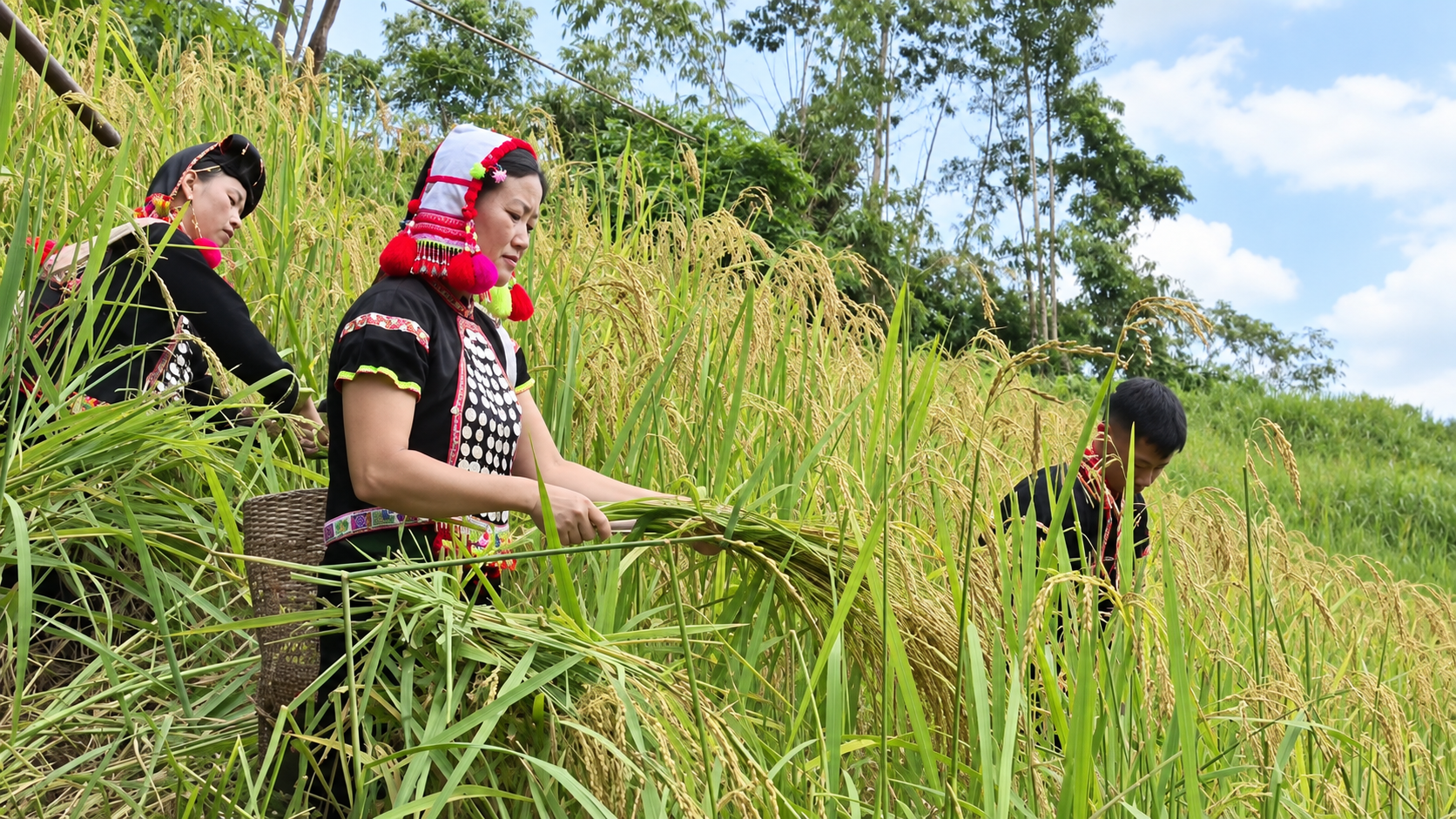 |
| When the first rice ears turn golden on the mountainsides, the Si La people harvest them to prepare for the New Rice Festival. (Photo: Duy Linh) |
As an elderly member of the community with an extensive understanding of its customs and traditions, Ly Cha Che shared the core meaning of the festival: “When we harvest new rice, we must remember our grandparents and parents, who taught us how to cultivate rice and work in the fields. We invite our ancestors first; only then can the descendants eat. What matters most is sincerity, and that family members must know how to love, care for and support one another.”
The spirit of sharing through upland rice
What makes the New Rice Festival in Nam Sin particularly meaningful from a humanitarian perspective is its spirit of sharing and mutual support. Two to three days before the ceremony, families whose upland rice fields ripen early often take the initiative to share their new rice with households that have yet to harvest their crops. This ensures that every family has new rice in time to offer to their ancestors. The grains thus carry not only the fruits of the harvest but also the warmth of human kindness.
The offering tray presented to the ancestors is neither elaborate nor ostentatious, but everything must be carefully prepared and kept clean. In addition to new rice, the offerings include sweet potatoes, melons, millet flowers and traditional dishes imbued with the distinctive flavours of the mountains and forests. Ginger and chives are indispensable seasonings, lending a distinctive character to the Si La people's spiritual cuisine. Descendants must never eat any of the produce prepared for the ancestral offerings beforehand.
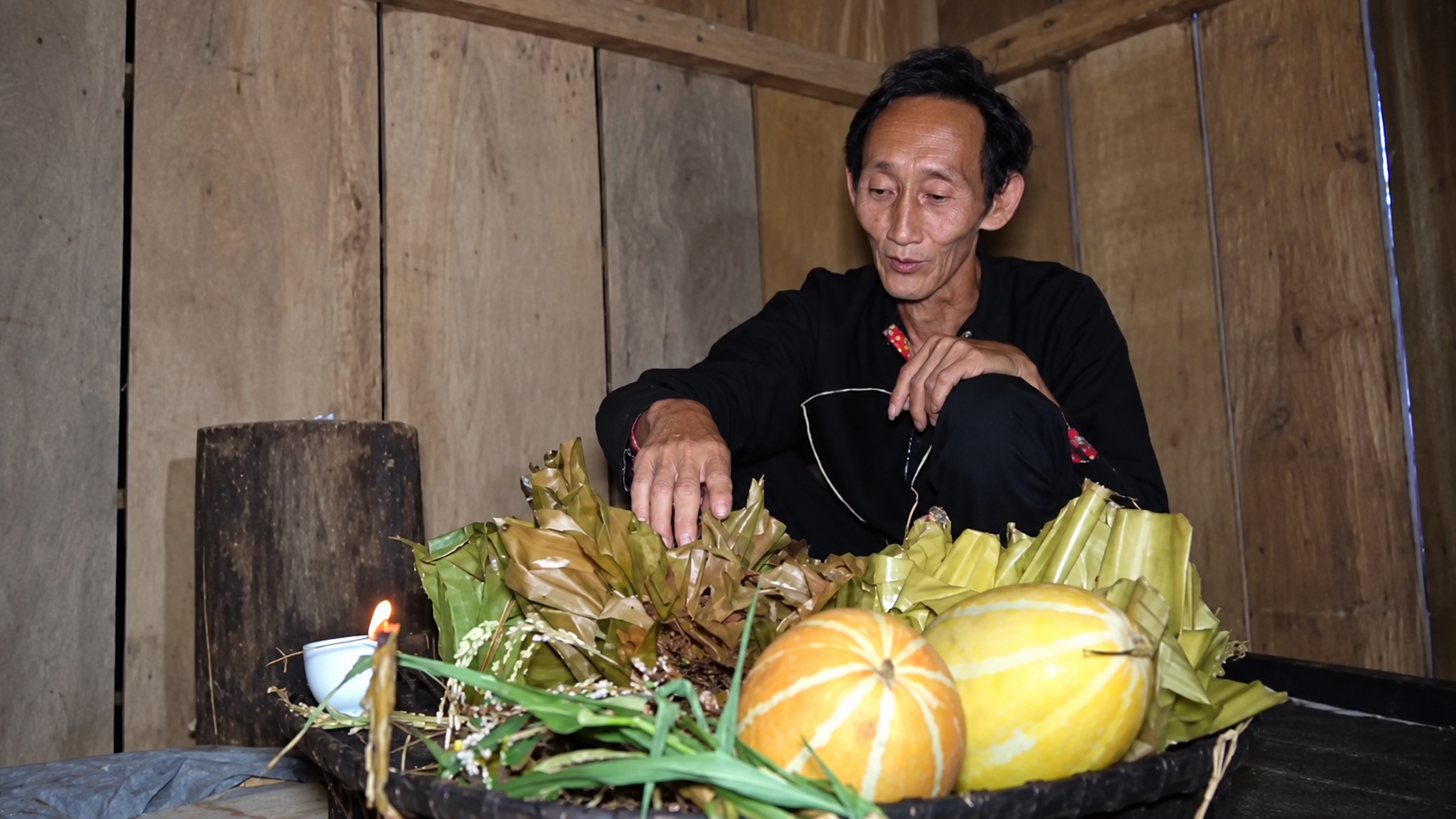 |
| The finest produce, cultivated and prepared by the Si La people themselves, is placed on the ancestral offering tray. (Photo: Duy Linh) |
On the festival day, life in the small village seems to slow down as every family member puts aside their work in the fields. Some clean the house, while others prepare the ancestral worship space. Through these seemingly simple tasks, younger generations have the opportunity to observe, participate and learn the valuable cultural heritage passed down by their forebears.
Hu Cha Kho, a long-time resident of Nam Sin Village, shared his thoughts: “When the New Rice Festival comes, everyone joins in preparing for the family and clan ceremonies. The elders carry out the preparations and explain to the younger generations why things must be done this way. I hope the children will understand the meaning of the festival so that, when they grow up, they will still remember it and know how to preserve this tradition.”
Keeping the “flame” of tradition alive amid modern life
The ritual usually takes place at dusk, as the last rays of sunlight fade over the mountain slopes. At the eldest son's home, brothers and other members of the extended family gather, bringing offerings to present at the shared ancestral altar. A representative recites prayers, inviting the ancestors to return and partake of the new rice, reporting on the family's work and harvest over the past year, and praying for flourishing crops, healthy livestock and peace and prosperity throughout the village.
The Si La people's sense of community solidarity is also reflected in their deeply humane response to unexpected misfortunes. According to village custom, if a family member passes away on the day scheduled for the festival, the entire village voluntarily postpones the celebrations to offer condolences and help the bereaved family. Thus, the joy of a new harvest is always accompanied by a sense of responsibility and solidarity in times of hardship.
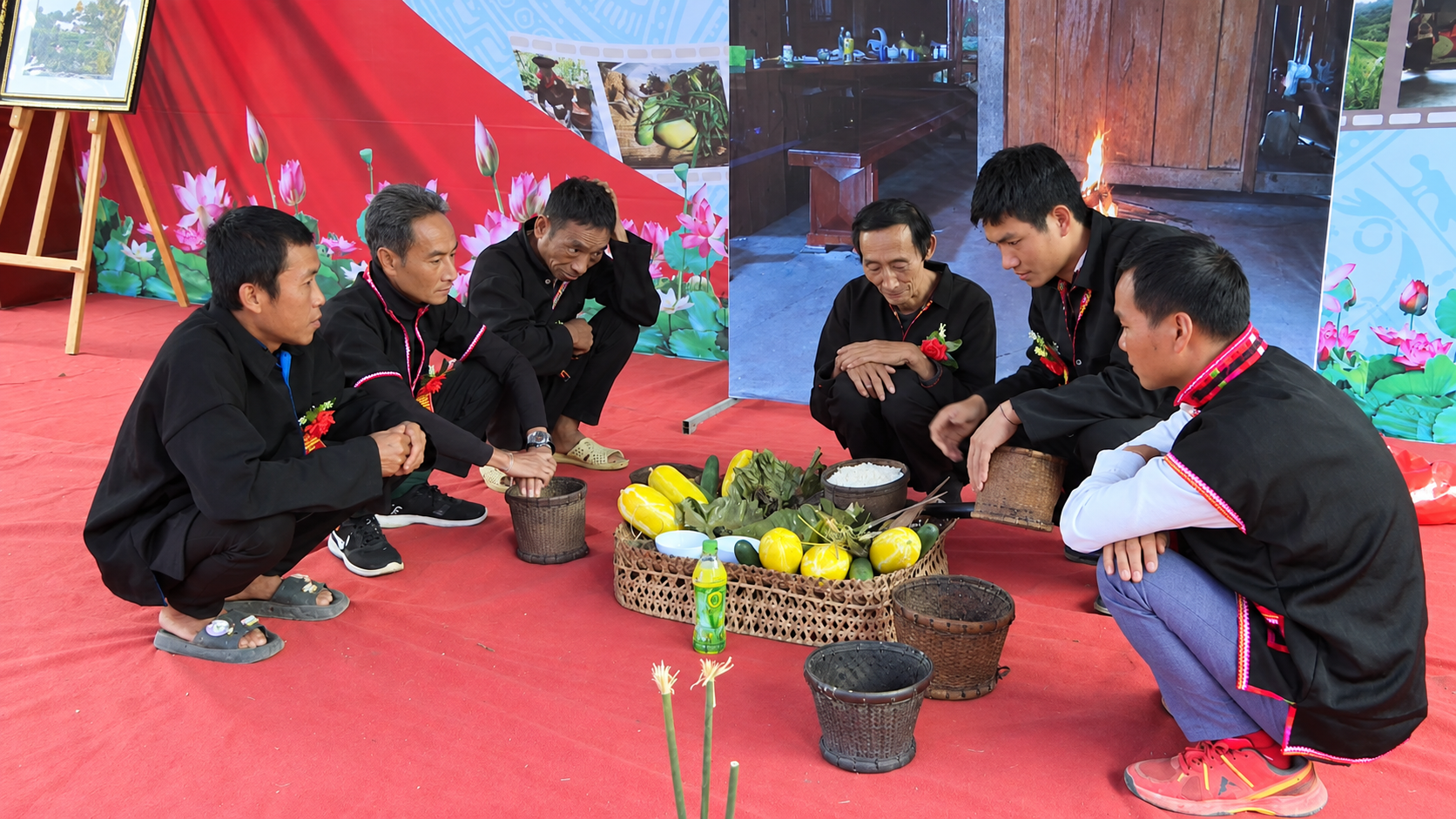 |
| The Si La people's New Rice Festival was recognised as a national intangible cultural heritage in 2025. (Photo: Duy Linh) |
However, amid the pace of modern life, the transmission of indigenous cultural traditions faces considerable challenges. According to a report by the People's Committee of Muong Nhe Commune, some younger members of the Si La community have yet to gain a thorough understanding of the origins, significance and practices of the ritual. Most bearers of traditional knowledge are elderly, while younger generations have had limited opportunities to fully acquire this heritage.
Reflecting on the challenges of preserving the community's heritage, Nguyen Van Uy, Chairman of the People's Committee of Muong Nhe Commune, emphasised: “The local authorities have consistently identified the community itself as the key stakeholder determining the survival of its heritage. We aim to create every possible condition for those knowledgeable about traditional customs to pass them on directly to younger generations, while maintaining the core rituals within individual families and clans. Preservation is not simply about retaining outward forms; it must also help people understand, take pride in and actively practise their own culture.”
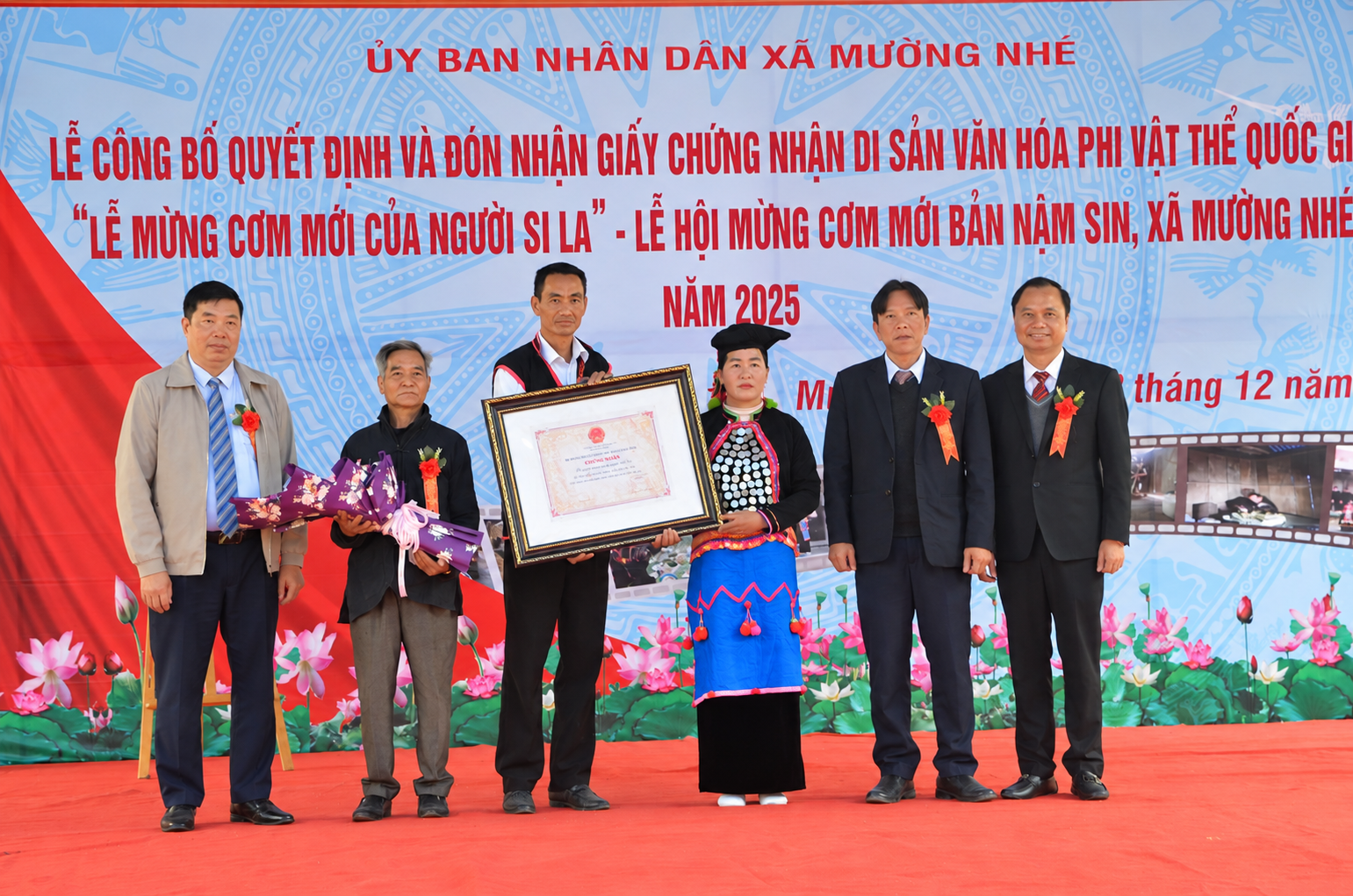 |
| dienbientv.vn In 2025, the Si La people and the authorities of Muong Nhe Commune celebrated the recognition of the New Rice Festival as a national intangible cultural heritage. (Photo: Duy Linh) |
The harvest season will eventually come to an end, and the people of Nam Sin will once again turn their attention to the next crops. Yet with each New Rice Festival, the flame of gratitude to their ancestors and the enduring solidarity among borderland villages continues to burn brightly, passed down from one generation to the next like the resilient vitality of rice plants growing on rocky mountain slopes.
 Admire The Mesmerizing Don Village In The Ripening Rice Season |
 Admire The Mesmerizing Ripening Kon Tu Rang Terraced Fields In Kon Tum |
Most read

Ambassador Jennifer Wicks: People-to-People Exchanges Bring Viet Nam and the United States Closer Together

Karlovy Vary Region (Czech Republic) Considers Proposal to Teach Vietnamese in Schools


Related Stories
 Vietnamese Culture
Mountain Flavours and Forest Aromas on the Dining Tables of Thai People in Muong Luan
 Vietnamese Culture
Young People in Sin Thau Carry Forward Ha Nhi Cultural Heritage
 Vietnamese Culture
Keeping Village Spirit Alive in Muong Luan Commune: Thai People's Aspiration for Cultural Continuity
 Travel
Viet Nam Cultural Digital Map Officially Launched
Popular article
 Vietnamese Culture
Where Ban Blossoms and Love Stories Bloom
 Vietnamese Culture
Young Vietnamese People Bridge Vietnamese-Japanese Cultures Through Music
 Vietnamese Culture
Documentary on Ho Chi Minh’s Diplomacy Screened in Qatar
 Vietnamese Culture