Viet Nam, Azerbaijan look to expand economic ties, strategic cooperation
The official visit to Viet Nam by Azerbaijani President Ilham Aliyev from November 19 to 21 will provide fresh impetus for strengthening cooperation across a wide range of areas, from politics, diplomacy, economy, trade and investment to energy, education, science and technology, and people-to-people exchanges, said Ambassador to Russia and Azerbaijan Dang Minh Khoi.
In an interview with the Viet Nam News Agency (VNA) ahead of the trip, the ambassador described the visit as a new milestone in the history of traditional friendship between the two countries, reflecting Azerbaijan’s high regard for Viet Nam and bilateral relations.
Viet Nam and Azerbaijan share a longstanding friendship nurtured by generations of leaders and people. Historical milestones, including President Ho Chi Minh’s visit to Azerbaijan in 1959 and Azerbaijani national leader Heydar Aliyev’s visit to Viet Nam in 1983, laid a solid foundation for bilateral ties.
A new chapter opened with General Secretary of the Communist Party of Viet Nam Central Committee To Lam’s state visit to Azerbaijan in May 2025 and the elevation of bilateral relations to a Strategic Partnership. Since then, cooperation has made notable progress. Political trust has been strengthened through regular high-level exchanges, with the recent visit by Vice President Vo Thi Anh Xuan reaffirming the importance both sides attach to bilateral relations, cited VNA.
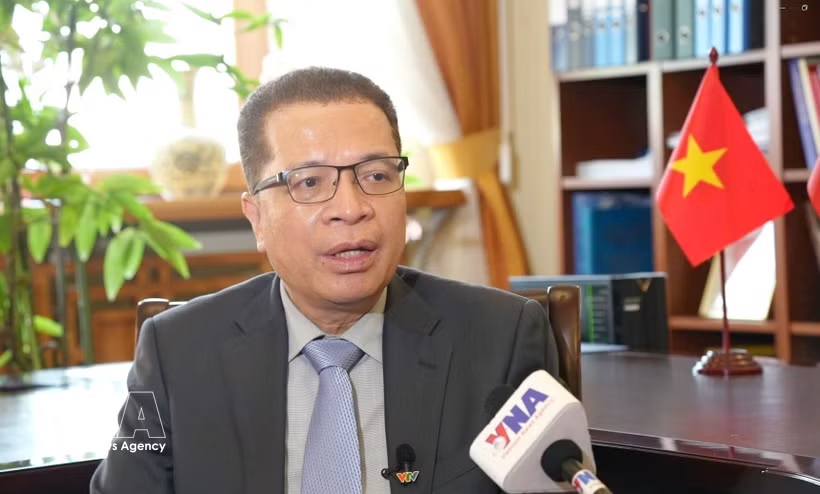 |
| Vietnamese Ambassador to Russia and Azerbaijan Dang Minh Khoi speaks to the Viet Nam News Agency. (Photo: VNA) |
Economic, trade and investment cooperation has become more substantive, with several businesses implementing projects in each other's territories. Defense and security cooperation has also expanded in the defense industry, research, production and trade. Collaboration in oil and gas, energy, transport and logistics has been stepped up, alongside new developments in cultural cooperation and people-to-people exchanges.
Against this backdrop, Khoi noted President Aliyev’s visit will provide an opportunity for the two countries’ senior leaders to consolidate political trust, discuss orientations for bilateral relations and identify concrete measures to implement the Strategic Partnership framework.
The Party, State, and people of Viet Nam consistently attach great importance to their relationship with Azerbaijan - a partner that holds a significant geostrategic position in the Caucasus region and serves as a bridge between Europe and Asia, he said.
Viet Nam wishes to work with Azerbaijan to capitalise on their complementary strengths and expand connectivity between Southeast Asia and the Caucasus, Central Asia and neighbouring regions, he added.
The ambassador expected the visit to create concrete cooperation opportunities, bringing practical benefits to the people and businesses of both countries, while ushering bilateral relations into a new phase commensurate with the stature of the Strategic Partnership.
He noted that the two countries have favourable conditions for more comprehensive and substantive cooperation, thanks to their traditional friendship, political trust and complementary economic strengths. However, economic, trade and investment ties remain modest compared with their potential and aspirations, presenting considerable room for development.
Energy cooperation remains one of the most promising areas. Azerbaijan has considerable strengths and long-standing experience in oil and gas exploration and processing. Meanwhile, Viet Nam seeks to develop its energy sector, ensure energy security and promote the energy transition.
The two sides could expand cooperation between the Viet Nam National Industry-Energy Group (Petrovietnam) and the State Oil Company of the Republic of Azerbaijan (SOCAR) in crude oil supply, exploration, extraction, oil and gas processing, petrochemicals and technical services. They should also explore opportunities in renewable and new energy fields, he added.
The ambassador held that trade and investment should also serve as key drivers of the Strategic Partnership. Viet Nam boasts strengths in agricultural and aquatic products, consumer goods, processed industrial products and electronics, while Azerbaijan is well positioned to connect Vietnamese goods with markets in the South Caucasus, Central Asia and Europe.
Conversely, Viet Nam could serve as a gateway for Azerbaijani goods and businesses to access the ASEAN market. Both countries should step up trade promotion, organise business forums, fairs and exhibitions, and encourage direct connections between their business communities.
Transport and logistics cooperation is another important area for expanding economic connectivity. Azerbaijan plays a role in transport corridors linking Asia and Europe, while Viet Nam occupies a strategic position in Southeast Asia, with an increasingly developed seaport system and international trade network. The two sides could explore transport links, logistics arrangements and supply chain cooperation to facilitate trade.
The ambassador also highlighted the potential for cooperation in science and technology, innovation, digital transformation, hi-tech agriculture, education and training, describing these as areas capable of generating added value and long-term benefits.
Strengthening cultural, tourism and people-to-people exchanges is equally important. Student, scholar and expert exchanges, alongside cultural, artistic and tourism activities, will help promote mutual understanding and provide a solid social foundation for the sustainable development of bilateral ties.
To realise these opportunities, Khoi said both sides should maintain delegation exchanges, particularly at the high level, and make effective use of bilateral mechanisms, especially the Intergovernmental Committee for Economic, Trade, Scientific and Technical Cooperation.
They should also improve the legal framework and address obstacles to economic cooperation. More importantly, efforts should shift from discussing potential to implementing specific programmes and projects with clearly defined priorities, partners and roadmaps. Ministries, localities and businesses should take a more proactive role in identifying opportunities and connecting markets.
At the multilateral level, Viet Nam wishes to strengthen coordination, consultation and mutual support at international organizations and regional forums, based on respect for international law, the UN Charter and fundamental principles of international relations, he stressed.
The ambassador expressed confidence that backed by traditional friendship, political trust and the determination of both countries’ senior leaders, the Viet Nam-Azerbaijan Strategic Partnership would make great strides.
President Aliyev’s visit, he said, would help translate the two sides’ strategic vision into concrete action, generate fresh momentum and broaden cooperation for the benefit of their people, while contributing to peace, stability and development in their respective regions and around the world.
Viet Nam strengthens cultural exchanges, reinforces ASEAN solidarity in New Zealand
The Vietnamese Embassy in New Zealand actively participated in organizing the ASEAN Family Day 2026 in the capital of Wellington, helping promote cultural exchanges, strengthen ties among ASEAN diplomatic missions, and spread the spirit of regional solidarity and cooperation.
The event also served as an activity welcoming the 49th ASEAN Summit. Vietnamese Ambassador to New Zealand Phan Minh Giang emphasized that through the festival, the Embassy aims to affirm that Viet Nam is always an active and responsible member, ready to work alongside other ASEAN member states in consolidating solidarity and solidly building the ASEAN Community.
The event also helped promote the image of a renewing, dynamic, and deeply integrated Viet Nam with a growing standing in New Zealand, the region, and internationally, VOV reported.
 |
| Vietnamese students in Wellington assist the event. (Photo: VNA) |
As one of the diplomatic missions that actively participated from conceptualization and preparation to program implementation, the Vietnamese Embassy coordinated with six other ASEAN diplomatic missions, including Indonesia, Malaysia, Philippines, Thailand, Singapore, and Timor-Leste, to organize the festival at the Te Kupenga o Rongomai Sports Complex in Lower Hutt, within the Wellington metropolitan region.
The event drew large numbers of diplomatic staff and their family members. In a joyful and friendly atmosphere, sports exchange activities such as futsal, volleyball, basketball, and team folk games created a bonding space that brought many exciting experiences to families.
A highlight of the festival was the food booths prepared by each Embassy and High Commission. Traditional dishes carrying the distinct flavors of each country both promoted culinary cultures and enriched exchange activities, while enhancing mutual understanding among communities.
The ASEAN Family Day 2026 created an opportunity for diplomatic staff and families of participating countries to interact and strengthen friendship, while helping project the image of a united ASEAN Community, characterized by unity in diversity and rich identity in New Zealand.
The event concluded in a warm and friendly atmosphere, further affirming the spirit of solidarity, peace, dialogue, and cooperative development that ASEAN has perseveringly cultivated over nearly 60 years.
Northern Viet Nam braces for cold front as heavy rain threatens central regions
Northern Viet Nam will see temperatures rise above 30 degrees Celsius before a cold front arrives around November 18, bringing cooler weather and thunderstorms, while central provinces face the possibility of heavy to very heavy rainfall.
Northern Viet Nam to warm up before new cold front
According to the National Center for Hydro-Meteorological Forecasting (NCHMF), weather conditions across Viet Nam are expected to fluctuate considerably during the 10-day period from the night of November 14 to November 24.
In northern Viet Nam, isolated showers and thunderstorms are forecast, with sunshine during the day and chilly conditions at night and in the early morning.
Temperatures are expected to continue rising between November 15 and 17, with daytime highs exceeding 30 degrees Celsius in some areas.
However, a new cold air mass is forecast to reach the region around November 18, bringing scattered showers and thunderstorms, with localized moderate to heavy rainfall.
From November 18-19, temperatures across the north are expected to fall, with cold conditions developing in some mountainous areas.
Meteorologists said the incoming cold front would be weaker than the one recorded on November 9, meaning prolonged strong winds and sharp temperature drops are unlikely, cited VNN.
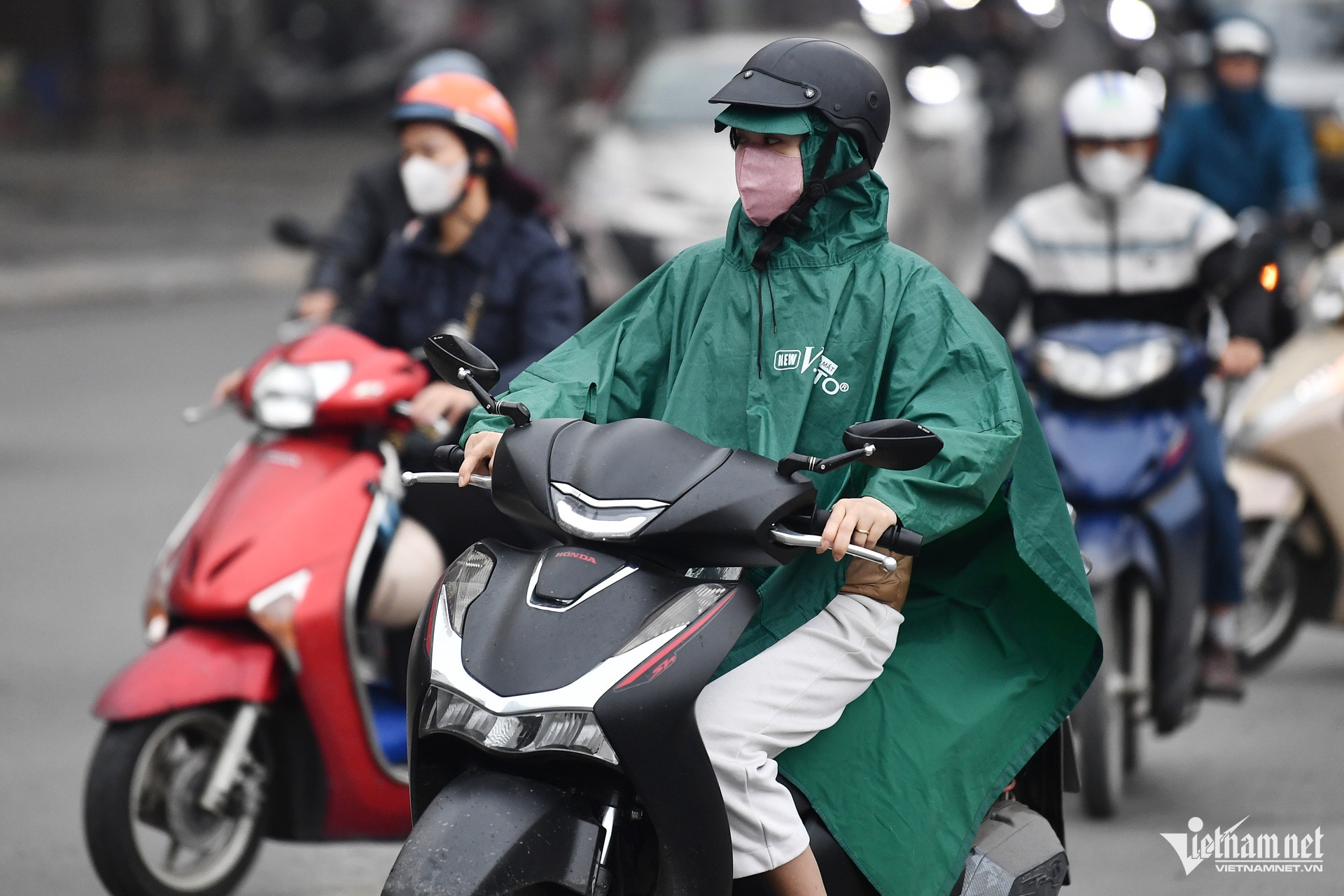 |
| Northern Viet Nam is expected to experience a new cold front, bringing thunderstorms and cooler conditions, with cold weather in some areas. Photo: Hoang Minh |
Daytime temperatures are forecast to range between 21 and 25 degrees Celsius, while nighttime and early morning readings could fall to 15-20 degrees.
In Hanoi, temperatures could reach 32 degrees Celsius on November 17 before gradually declining as the cold air strengthens from November 18.
By November 20, the capital's temperatures are expected to range from approximately 19 to 21 degrees Celsius.
Daytime temperatures may recover slightly in the following days, although nights and early mornings are expected to remain chilly.
Meteorologists also noted that significant differences between daytime and nighttime temperatures could make weather changes particularly noticeable.
In central Viet Nam, isolated showers and thunderstorms are expected over the coming days.
From Thanh Hoa to Ha Tinh, scattered showers and thunderstorms are forecast around November 18-19, with localized heavy rainfall.
From November 19, areas stretching from Quang Tri to Da Nang, along with eastern parts of provinces from Quang Ngai to Dak Lak and Khanh Hoa, could also experience scattered thunderstorms and locally heavy rain.
In southern Viet Nam, scattered showers and thunderstorms are expected during the afternoon and evening.
Further rainfall is forecast around November 19-20, with some areas potentially experiencing heavy downpours.
The meteorological agency warned that thunderstorms could be accompanied by tornadoes, lightning, hail and strong gusts.
Temperatures across Viet Nam forecast to remain above average
Looking further ahead, the national meteorological agency expects average temperatures across Viet Nam to remain generally 1-2 degrees Celsius above the long-term average through approximately December 10, 2026, with some locations recording even greater differences.
Regarding rainfall, total precipitation in the northern midland and mountainous regions is forecast to be 5-20% above the long-term average for the same period.
Most other areas are expected to receive 5-20% less rainfall than usual.
Notably, parts of the south-central coastal region and the Central Highlands could see rainfall totals 20-40% below their long-term averages.
Tropical storm and tropical depression activity over the East Sea is expected to remain below average during the forecast period, with a relatively low likelihood of systems affecting Viet Nam's mainland.
Historically, the East Sea records an average of approximately 1.3 storms or tropical depressions during the corresponding period, of which about 0.7 make landfall in Viet Nam.
Nevertheless, widespread rainfall remains possible across the country, with moderate to heavy rain expected to concentrate mainly in central Viet Nam.
Cold air outbreaks affecting northern and central Viet Nam are likely to be relatively strong during the first one to two weeks of the forecast period before weakening to below-average intensity.
Meteorologists warned that cold air interacting with upper-level wind convergence, a westerly trough at an altitude of around 5,000 meters, easterly wind disturbances and a southern equatorial trough could trigger widespread rainfall.
Such conditions may also increase the risk of tornadoes, lightning, hail and strong gusts.
As climate change contributes to increasingly complex and extreme weather patterns, the meteorological agency urged local authorities and residents to regularly monitor weather forecasts and warnings issued one to three days in advance.
Timely updates will help communities adjust production plans, prepare appropriate responses and protect lives and property.
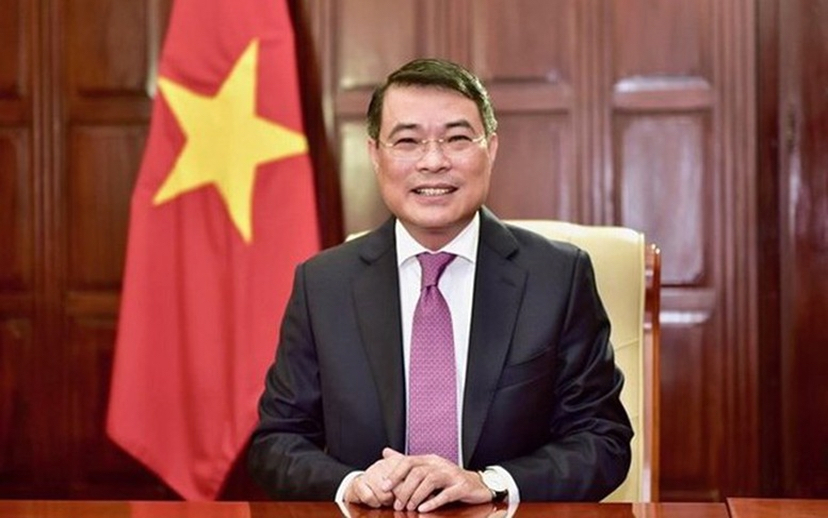 Viet Nam News Today (Nov. 12): PM Le Minh Hung to Attend 49th ASEAN Summit in The Philippines |
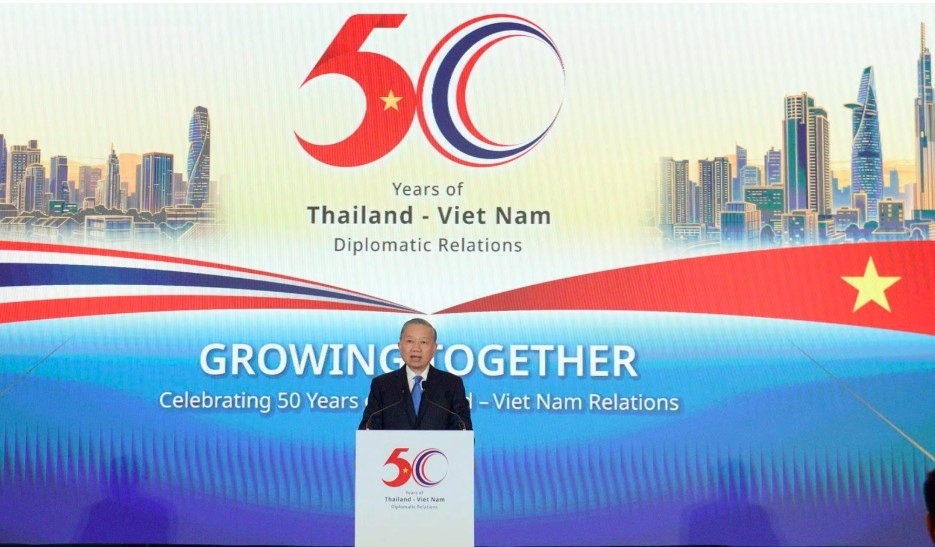 Viet Nam News Today (Nov. 13): Viet Nam, Thailand Strengthen Supply Chain Links to Mark 50 Years of Ties |