| Viet Nam News Today (Nov. 7) notable headlines Viet Nam-Laos strategic cohesion promoted through theoretical exchanges Viet Nam, US stress post-war recovery as priority in bilateral defense ties Ho Chi Minh City seeks to strengthen cooperation with Russian localities Viet Nam emerges as Southeast Asia’s fastest-growing digital economy: e-Conomy SEA 2026 report Da Nang among world's top 10 Christmas and New Year holiday destinations Japanese media hails cooperation prospects ahead of top Vietnamese leader's visit Vietnamese enterprises seen as driving force for economic growth Hanoi tourism hits record 30 million arrivals in ten months Lamdong Trail 2026 kicks off in Da Lat with over 5,600 runners |
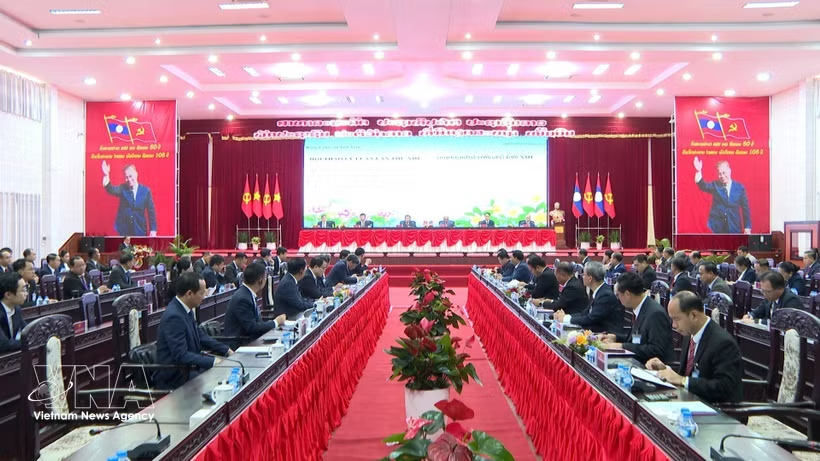 |
| The 13th theoretical seminar between the Communist Party of Viet Nam (CPV) and the Lao People’s Revolutionary Party (LPRP) is held in Oudomxay province, northern Laos, on November 6. (Photo: VNA) |
Viet Nam-Laos strategic cohesion promoted through theoretical exchanges
The 13th theoretical seminar between the Communist Party of Viet Nam (CPV) and the Lao People’s Revolutionary Party (LPRP) was held in Oudomxay province, northern Laos, on November 6.
The event was to implement the cooperation agreement between the CPV and the LPRP on theoretical research and practical review.
The Vietnamese delegation was led by Prof. Dr. Nguyen Xuan Thang, Chairman of the Central Council for Theoretical Studies, while the Lao side was headed by Prof. Dr. Kikeo Khaykhamphithoun, Politburo member, President of the Lao Front for National Construction Central Committee, and Chairman of the Theoretical Council of the LPRP.
The seminar served as an important forum for the two Parties to exchange views and share theoretical and practical insights into socio-economic development and the strengthening of strategic integration and connectivity. It also helped consolidate the political foundation, enhance mutual trust and deepen the special solidarity between Viet Nam and Laos.
Thang underscored the significance of “strategic cohesion” in Viet Nam-Laos relations, describing it as an important requirement for the two countries to adapt to changes of the times and effectively implement each side’s strategic decisions.
He said the two countries should continue to strengthen strategic trust, turn their special solidarity into a driving force for development, and translate it into long-term cooperation programmes, plans and projects that deliver tangible benefits to their peoples.
The official highlighted five pillars of strategic cohesion: alignment in development vision, goals and aspirations; institutions, policies and coordination mechanisms; development space and infrastructure; trade, investment, markets and supply chains; and science and technology and human resources.
These pillars are closely interrelated and mutually reinforcing, forming an integrated whole linking the two economies. Under this framework, a shared vision guides policymaking, institutions help mobilise resources, infrastructure expands development space, while businesses play a pioneering role in connecting markets, transferring technology and driving growth.
Drawing on Vietnam’s development experience, Thang proposed major institutional breakthrough areas for delegates from the two countries to focus their discussions on. These include strengthening strategic coordination in policymaking and development planning; ensuring consistency and compatibility among regulations, procedures and standards; reforming mechanisms for resource mobilisation, investment coordination and the use of strategic infrastructure; improving institutions to expand opportunities for businesses and people to participate and share benefits; and enhancing implementation accountability and the capacity to adjust policies to ensure cooperation commitments are effectively carried out in line with practical requirements, cited VNA.
He also stressed the need to closely combine economic development with national defence and security, while safeguarding independence and self-reliance; focus on developing high-quality human resources; enhance national governance capacity; and ensure social welfare.
These issues are of practical significance and should be discussed, studied and applied by both sides in ways suited to each country’s conditions and characteristics, thereby contributing to rapid and sustainable development in the new period, he said.
For his part, Kikeo Khaykhamphithoun spoke highly of the two Parties’ choice of this year’s seminar theme, describing it as a practical topic that meets development requirements in the new context and reflects Vietnamese and Lao leaders’ policy of promoting the implementation of strategic cohesion.
Delegates noted that theoretical exchanges, sharing of practical experience and reference to appropriate approaches are of practical significance to the formulation and implementation of development policies by each Party and country amid complex international and regional developments.
Presentations at the seminar focused on key issues, including the Party’s leadership in integration and strategic connectivity for socio-economic development; institutional and legal system improvements to remove bottlenecks and unlock development resources; proactive international integration and enhancement of each country’s position in the regional and global development landscape; promotion of science and technology, innovation and digital transformation; stronger trade and investment cooperation in a fair and balanced manner; and the development of new-generation special economic zones on a par with regional and global standards.
They also discussed solutions for developing infrastructure, human resources and innovation ecosystems to generate fresh momentum for rapid and sustainable growth.
Promoting integration and strategic connectivity between the Vietnamese and Lao economies was a particular focus of the seminar. The two sides said that amid increasingly deep regional economic integration, they need to strengthen connectivity in transport, energy, trade, investment, logistics and supply chains, while making full use of their geo-economic advantages, strategic positions and close ties.
Effective implementation of cooperation agreements and key connectivity projects would not only create fresh development momentum for each country but also enhance the linkages and complementarity between the two economies, facilitating the flow of goods and services and people-to-people exchanges.
The delegates stressed the need to maintain and promote the annual theoretical seminar mechanism, viewing it as a special cooperation channel of strategic significance to relations between the two Parties. They said the mechanism helps consolidate their ideological and political foundations, strengthen trust and build a shared understanding, providing a basis for the two sides to jointly study and seek solutions to emerging issues in the development process.
Viet Nam, US stress post-war recovery as priority in bilateral defense ties
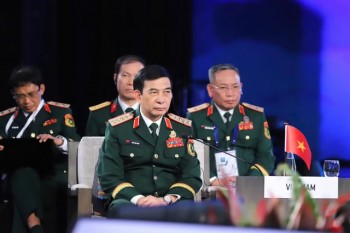
Senior Lieutenant General Nguyen Truong Thang, member of the Party Central Committee, standing member of the Central Military Commission, and Deputy Minister of National Defense, on November 5 co-chaired the 14th Viet Nam-US Defense Policy Dialogue alongside John Noh, Assistant Secretary of the US Department of War.
During the dialogue, both sides acknowledged progress in bilateral defense cooperation and agreed to continue deepening the Comprehensive Strategic Partnership.
General Thang emphasized that over recent times, the Viet Nam-US Comprehensive Strategic Partnership for Peace, Cooperation, and Sustainable Development has continued to develop positively and deepen substantively across multiple domains, including defense cooperation. Bilateral defense cooperation has been actively and effectively implemented across various fields, encompassing: delegation exchanges and contacts at all levels, particularly high-level; maintaining dialogue and consultation mechanisms; post-war recovery; searching for information on Vietnamese and US service members killed, missing in action, or unaccounted for during the war; defense industry; cooperation between service and combat branches; military medicine; cyber security; humanitarian assistance and disaster relief; border management; immigration control; combating transnational and cross-border crimes; United Nations peacekeeping operations; and mutual consultation and support at regional and international multilateral forums, notably the ASEAN Defense Ministers' Meeting-Plus (ADMM+).
Post-war recovery continues to be a bright spot in Viet Nam-US relations, with strong commitments from senior leaders of both countries, who consider this a priority in bilateral ties. The signing on September 23, 2026, in Hanoi of the Project Agreement for the Limited Scope of the Bien Hoa Air Base Dioxin Remediation Project and the Support for Improving Quality of Life of Persons with Disabilities in Heavily Agent Orange-Sprayed Provinces between Viet Nam and the US serves as the basis for the US to expand disability support in heavily Agent Orange-sprayed localities, while actualizing the committed US$130 million funding for the Bien Hoa dioxin remediation project to complete the project before 2031, providing a safe living environment for local residents.
On this occasion, General Thang expressed gratitude for the effective support and assistance of the US Department of War, reflecting a strong US commitment to war legacy remediation in Viet Nam.”
Assistant Secretary John Noh appreciated the positive development of the “Viet Nam-US Comprehensive Strategic Partnership for Peace, Cooperation, and Sustainable Development” in recent times, including defense cooperation; and reaffirmed continued US support for an independent, self-reliant, and prosperous Viet Nam, as well as its “Four No's” defense policy.
Regarding war legacy remediation, John Noh expressed thanks to the Government and people of Viet Nam for their efforts over more than four decades in searching for US service members missing in action (MIA) in Viet Nam. The goodwill and close cooperation of both sides in this field have created a solid foundation and a model, contributing to “closing the past and opening a peaceful, cooperative, and developing future” between the two nations.
Looking ahead, both sides will continue coordinating to realize agreed-upon cooperation contents, focusing on: delegation exchanges at all levels, especially high-level delegations; dialogue and consultation mechanisms; war legacy remediation; education and training; UN peacekeeping operations; cooperation among service and combat branches; search and rescue; cyber security; defense industry; military medicine; humanitarian assistance and disaster relief; and continued mutual consultation and support within multilateral defense-security cooperation mechanisms and forums.
General Thang expressed the desire for the US to continue supporting Viet Nam in enhancing its capacity for unexploded ordnance (UXO) and post-war chemical toxic waste remediation; to consider supporting the Viet Nam National Mine Action Center (VNMAC) in deploying land release projects for UXO-contaminated areas in accordance with International Mine Action Standards (IMAS) in several areas of Quang Ngai province, toward Viet Nam's national target of essentially clearing all land contaminated with unexploded ordnance and explosives by 2045; to effectively implement signed agreements concerning the Bien Hoa Air Base dioxin remediation project and the project supporting the quality of life of persons with disabilities in heavily Agent Orange-sprayed provinces; and expressed the wish for the US to enhance the sharing of information, documents, and memorabilia concerning Vietnamese soldiers who died, went missing, or are unaccounted for in the war, and to assist in upgrading DNA identification capabilities for wartime remains, contributing to accelerating the 500-day-and-night campaign to intensify the search, recovery, and identification of martyrs' remains launched by the Vietnamese Government. Viet Nam commits to continuing to create the most favorable conditions for MIA operations.
Supporting and appreciating the outcomes of defense cooperation, Assistant Secretary John Noh concurrently affirmed the goodwill and desire of the US to promote peaceful and constructive cooperation with Viet Nam. Regarding war legacy remediation, John Noh expressed the desire for both sides to actively share information and strengthen connectivity. The sharing of archival documents, collaborative research, and the promotion of technology application hold great significance and will remain priorities for both sides in the coming period, according to VOV.
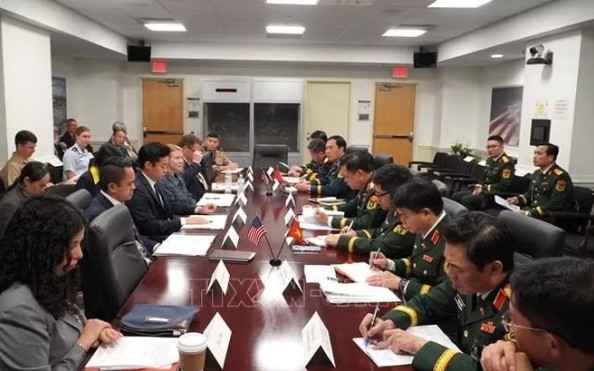 |
| At the 14th Viet Nam-US Defense Policy Dialogue (Photo: VNA) |
At the dialogue, the two sides also exchanged views on the regional and international situation and issues of mutual concern. Concluding the dialogue, the two heads of delegation signed the minutes of the 14th Viet Nam-US Defense Policy Dialogue.
Earlier, Senior Lieutenant General Nguyen Truong Thang met with Hung Cao, Acting US Secretary of the Navy. General Thang noted with pleasure the positive development of the “Viet Nam-US Comprehensive Strategic Partnership for Peace, Cooperation, and Sustainable Development” over recent times. In this context, bilateral defense cooperation has continued to expand across multiple fields, prominently featuring high-level delegation exchanges; maritime security; service-to-service cooperation; dialogue and consultation; war legacy remediation; and the search, recovery, and identification of Vietnamese and US service members' remains from the war.
Recalling his fond impressions during his recent visit to Viet Nam, Acting US Secretary of the Navy Hung Cao appreciated the positive development of Viet Nam-US relations, in which defense cooperation continues to play an important role for the peace and prosperity of both countries, as well as for security, cooperation, and development in the region. He also showed his wish to further expand bilateral cooperation in post-war recovery, maritime security, capacity building, humanitarian assistance, and disaster response.
Emphasizing that war legacy remediation is a priority area valued by both countries, General Thang desired continued US support for Viet Nam in expanding the scope of the disability support project in heavily Agent Orange-sprayed provinces; actualizing commitments to the Bien Hoa Air Base dioxin remediation project to complete it before 2031, providing a safe living environment for local residents; and expressed Viet Nam's desire to cooperate with the US to achieve the national target of essentially clearing all land contaminated with mines and explosive ordnances by 2045. General Thang requested that both sides continue close cooperation in searching for, recovering, and identifying wartime service members' remains from both the US and Viet Nam.
On the same day, Senior Lieutenant General Nguyen Truong Thang held discussions with Tim Rieser, assistant to former Senator Patrick Leahy. Thang expressed sincere thanks to Tim Rieser and former Senator Patrick Leahy for dedicating immense efforts to Viet Nam.
Through Tim Rieser, General Thang conveyed regards on health from General Phan Van Giang, Deputy Prime Minister and Minister of National Defense, to former Senator Patrick Leahy, while hoping he will continue supporting and promoting cooperative initiatives to further deepen Viet Nam-US relations.
General Thang affirmed that for Viet Nam, war legacy remediation is an area receiving attention from the State, Government, Army, and people of Viet Nam; effective bilateral cooperation will contribute to healing war wounds, strengthening trust, and opening doors for future cooperation. From matters once belonging to the past, the two countries are jointly creating values for the present and the future. According to the Vietnamese Deputy Minister of National Defense, the significance of this journey lies in how those who once stood on opposing sides can together soothe war wounds, making memories no longer a barrier, but a foundation for peace and cooperation.
Sharing about the “500-Day-and-Night Campaign to Intensify the Search, Recovery, and Identification of Martyrs' Remains” currently underway in Viet Nam, General Thang stated that the campaign steps up sampling, DNA profiling, genetic database building, and demining in key areas to find those who sacrificed, restore identities to unidentified graves, and clear lands still bearing wartime vestiges. In this endeavor, international cooperation holds practical significance. The US side has demonstrated readiness to support Viet Nam with information, documentation, memorabilia, and technology, including genetic testing technology, to serve the 500-Day-and-Night Campaign.
Tim Rieser appreciated and expressed joy at the development of Viet Nam-US relations in recent years, particularly the fact that the two countries have overcome differences and war pains to cooperate for a better future, recently upgrading ties to a Comprehensive Strategic Partnership. He shared that he holds a special personal attachment to Viet Nam, always doing his utmost to contribute to bilateral relations, especially maintaining and intensifying activities related to war legacy remediation such as demining, dioxin cleanup, and disability support in Viet Nam.
Tim Rieser hailed Viet Nam's contributions to regional and global peace and stability; and expressed his desire to continue supporting Viet Nam in post-war recovery. He opined that the way Viet Nam and the US together resolve the legacies of the past provides a model for international relations: dialoguing to bridge differences, cooperating to address legacies, and jointly looking toward the future.
He also hoped that in the coming time, war legacy remediation will continue serving as a foundation to propel Viet Nam-US relations to develop further, helping both countries achieve common goals of peace and prosperity.
Ho Chi Minh City seeks to strengthen cooperation with Russian localities
The Ho Chi Minh City Union of Friendship Organisations (HUFO) held a gathering on November 6 to mark the 109th anniversary of the Russian October Revolution (November 7, 1917–2026), highlighting the friendship between the people of Ho Chi Minh City and the Russian Federation.
Speaking at the event, Nguyen Truong Nhat Phuong, Vice Chairwoman of the Ho Chi Minh City People's Council and President of the city's Viet Nam-Russia Friendship Association, highlighted the historical significance of the October Revolution and its profound influence on Viet Nam's revolutionary cause.
She said the revolution also laid the foundation for the longstanding friendship between the two peoples. Despite ups and downs of history, the traditional Viet Nam-Russia friendship has been strengthened and nurtured by generations, with bilateral ties elevated to a Comprehensive Strategic Partnership.
Given its role as the country's economic locomotive and growth hub, as well as a special-class city, Ho Chi Minh City has considerable potential and room to expand cooperation with Russian localities, she noted.
The city stands ready to translate the major orientations outlined in the 2026 Joint Statement on strengthening the Viet Nam-Russia Comprehensive Strategic Partnership into concrete cooperation initiatives across various fields, serving the development needs of both Ho Chi Minh City and Russian localities, she added.
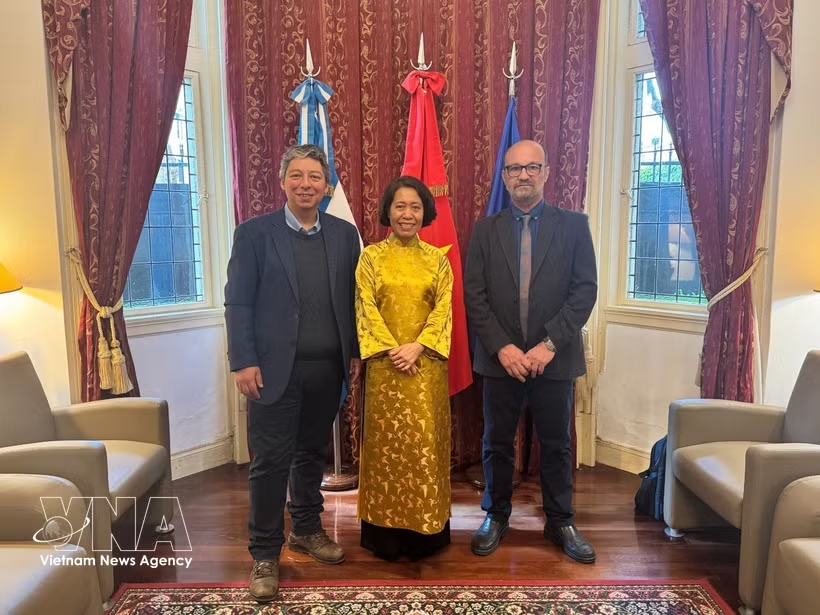
For her part, Russian Consul General in Ho Chi Minh City Maria Georgievna Mizonova thanked HUFO for organising the meaningful gathering, describing the October Revolution as a turning point in the 20th-century history that ushered in a new era in the development of humanity and promoted ideals of social justice, solidarity, unity, care for future generations and aspirations for a better future, reported VNA.
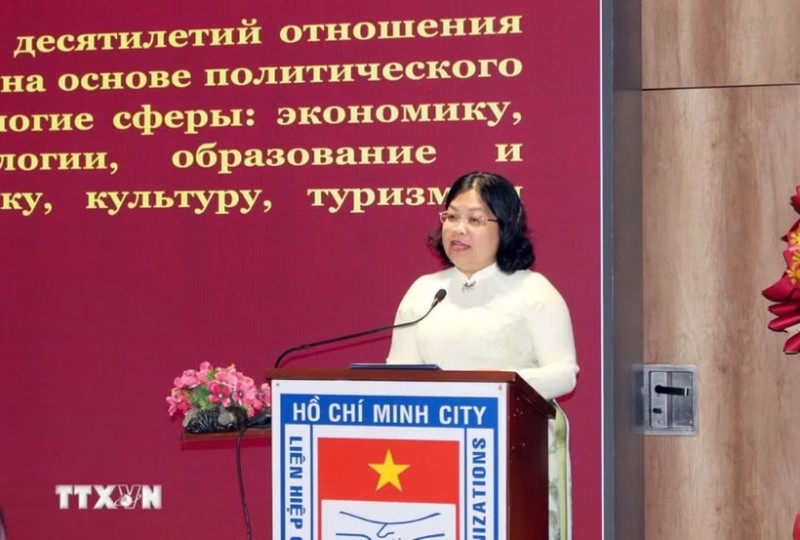 |
| Nguyen Truong Nhat Phuong, Vice Chairwoman of the Ho Chi Minh City People's Council and President of the city's Viet Nam-Russia Friendship Association, speaks at the gathering. (Photo: VNA) |
She said the principles of the October Revolution have become a firm foundation for the traditional friendship and Comprehensive Strategic Partnership between Russia and Viet Nam, with bilateral ties growing increasingly strong.
Ho Chi Minh City is one of the key hubs for cooperation between the two countries, she noted.
The diplomat also highlighted the sizeable Russian-speaking community living and working in southern Viet Nam and Ho Chi Minh City, as well as several successful joint projects.
The Russian Consulate General remains ready to engage in dialogue and support initiatives to bring the two countries and their localities closer together, she affirmed.
Viet Nam emerges as Southeast Asia’s fastest-growing digital economy: e-Conomy SEA 2026 report
Viet Nam's gross merchandise value (GMV) is projected to climb 20 per cent on-year to US$49 billion in 2026, according to the annual e-Conomy SEA 2026 report released by Google, Temasek, and Bain & Company on Thursday.
The momentum is powered by double-digit expansion across all four core sectors, led by e-commerce and online travel, alongside rapid growth in digital financial services, particularly digital lending and payments.
E-commerce remains the primary engine of Viet Nam's digital economy, accounting for two-thirds of the overall digital economy, growing 22 per cent on year to reach US$32 billion in 2026 and tracking towards US$61 billion by 2030, cited VGP.
Online travel sustains momentum with Viet Nam's online travel sector recorded 15 per cent on year growth to reach US$5 billion in GMV, matching Malaysia for the fastest expansion in South East Asia.
This double-digit expansion extends across the wider digital ecosystem, demonstrated by growth enablers in online media (up 17 per cent on year to US$7 billion in GMV in 2026). Complementing these drivers, mobility and food climbed 17 per cent on year to US$6 billion GMV, as electric vehicle players intensify competition in this sector.
Viet Nam stands out as Southeast Asia's most highly engaged AI market. As Generative AI transitions from early adopters to mainstream workforce integration, the nation now counts 45 million GenAI users, representing 65 per cent of the working population, generating 31 billion annual AI queries.
Managing director of Google Viet Nam Marc Woo said, the nation's digital economy continues to demonstrate strong growth, driven by active user uptake and proactive national AI policies.
Reaching US$49 billion in GMV while leading the region in daily, local-language AI engagement proves that Vietnamese consumers are exceptionally forward-looking, he noted.
Da Nang among world's top 10 Christmas and New Year holiday destinations
Da Nang has been ranked fourth on Lonely Planet's list of the 10 best places to visit between Christmas and New Year's Eve, becoming the only Asian destination featured in the selection.
According to the Da Nang Tourism Promotion Centre, the international travel guide recently published its list titled “10 Best Places to Travel Between Christmas and New Year's Eve”, recommending destinations for travellers seeking relaxation and new experiences during the year-end holiday period.
The list includes French Polynesia, Montreux in Switzerland, Cleveland, Leadville, Newport Beach, Dollywood and Pigeon Forge in the United States, Salzburg in Austria, Victoria in Canada, Dunedin in New Zealand.
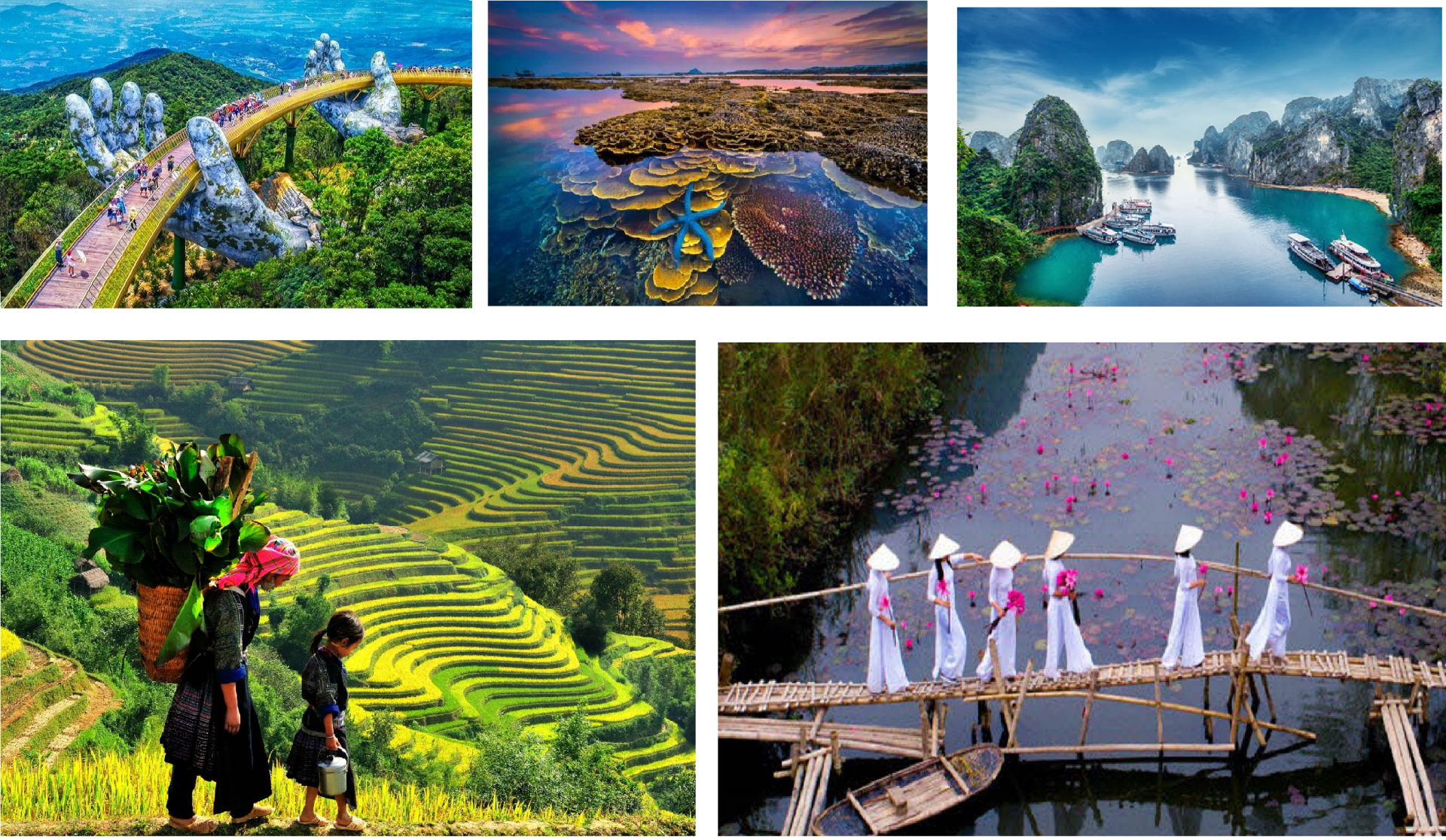
Ranked fourth, Da Nang stands out for its urban beaches, mountainous landscapes, local cuisine and convenient access to UNESCO World Heritage sites in central Viet Nam.
Lonely Planet describes Da Nang as a coastal city blessed with mountains, a long beach, fresh seafood and a relaxed atmosphere. Located roughly halfway between Hanoi and Ho Chi Minh City, it offers an appealing combination of seaside relaxation and cultural exploration.
Among the recommended attractions is Sun World Ba Na Hills, known for its European-inspired architecture and entertainment facilities. Visitors can also explore Son Tra Peninsula, home to Linh Ung Pagoda and its 67-metre-tall Lady Buddha statue, cited VOV.
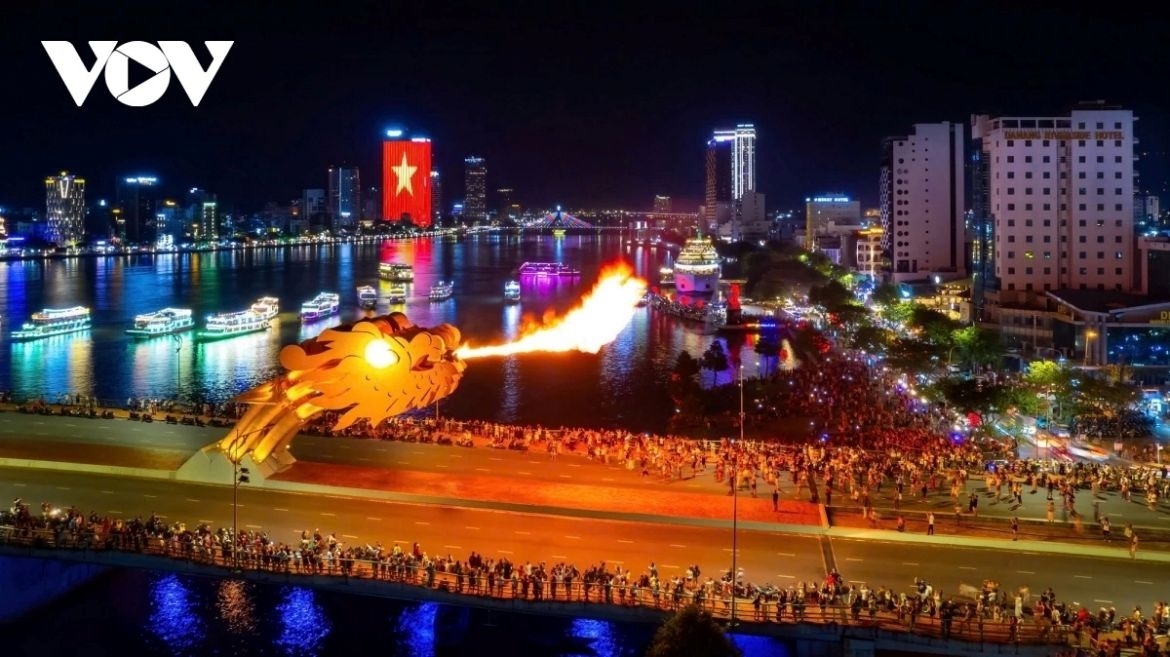 |
| Da Nang's Dragon Bridge, one of the city's popular attractions, draw large numbers of international tourists. |
The city boasts nearly 10km of urban coastline, including My Khe Beach, where visitors can enjoy seaside cafes, restaurants and recreational activities.
The central city also provides convenient access to three UNESCO World Heritage sites in central Viet Nam, namely Hoi An Ancient Town, My Son Sanctuary and the Complex of Hue Monuments.
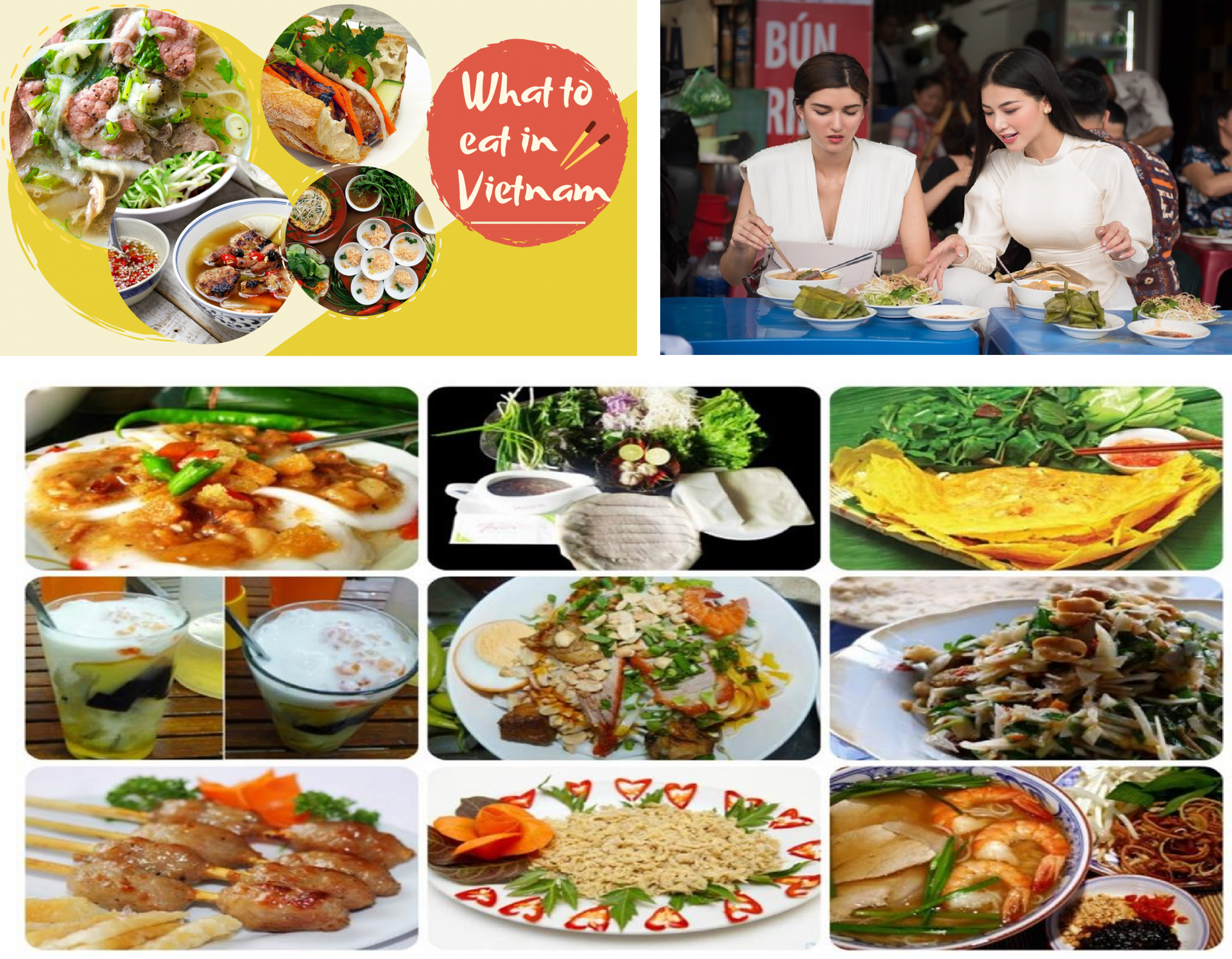
Local cuisine is another highlight. Lonely Planet recommends Mi Quang, a regional noodle dish served with shrimp, pork and quail eggs.
Other suggested dining spots include Banh Xeo Ba Duong, known for its crispy pancakes filled with shrimp and pork, and Be Man Seafood Restaurant, which serves fresh seafood near the beach.
For accommodation, the travel guide highlights Novotel Danang Premier Han River, a 37-storey hotel offering panoramic views of the Han River and the city's bridges, and InterContinental Danang Sun Peninsula Resort, which features a private beach surrounded by forested hills on Son Tra Peninsula.
The latest recognition follows Da Nang's inclusion in Lonely Planet's Best in Travel 2027, featuring 50 destinations and travel experiences worldwide.
Meanwhile, Skyscanner ranked Da Nang seventh on its Trending Destinations 2027 list for the UK market, recording a 68% year-on-year increase in return-flight searches. The city was the only destination from Viet Nam and Southeast Asia featured in the ranking.
Travel platform Priceline also included Da Nang among its 10 recommended destinations for 2027, highlighting attractions such as the Golden Bridge, My Khe Beach and the Marble Mountains.
To attract visitors during the year-end holiday season, Da Nang is preparing a series of cultural, culinary and entertainment activities, including the Hoi An International Lantern Festival, Christmas celebrations and festive markets.
The Da Nang New Year Festival 2027 is set to take place from December 30, 2026, to January 3, 2027, at Bach Dang pedestrian street, areas around Dragon Bridge, Hoi An, Tam Ky and other locations.
The event will feature food stalls, festive decorations, photo opportunities, a wishing space, the “Light Up the Han River” running event and artistic performances.
A highlight will be the countdown programme, expecting to bringing residents and visitors together to welcome the new year.
The city is also expanding its international air connections in the final months of 2026 to facilitate travel and attract more overseas visitors.
With its combination of natural landscapes, cultural heritage, local cuisine, resort facilities and festive events, the city is poised to bolster its attractiveness as a destination for the Christmas 2026 and New Year 2027 holidays.