
Viet Nam News Today (Nov. 2): Vietnam’s Trade Surpasses US$1 Trillion as Domestic Value-added Challenge Persists
| Viet Nam News Today (Nov. 2) notable headlines US Coast Guard cutter visits Ho Chi Minh City Mexican media shows interest in Vietnam’s development path Strengthening Viet Nam–RoK Friendship through a cultural and arts exchange program in Ninh Binh Vietnam’s trade surpasses US$1 trillion as domestic value-added challenge persists Northern Viet Nam braces for cooler weather as warmer winter forecast Vietnamese doctors provide free health care to Cambodian residents Viet Nam to expand exports across APEC markets amid tighter trade rules Hanoi Autumn delicacies capture the timeless charm of the capital VCCI honors 100 Vietnamese businesses for integrity and reputation |
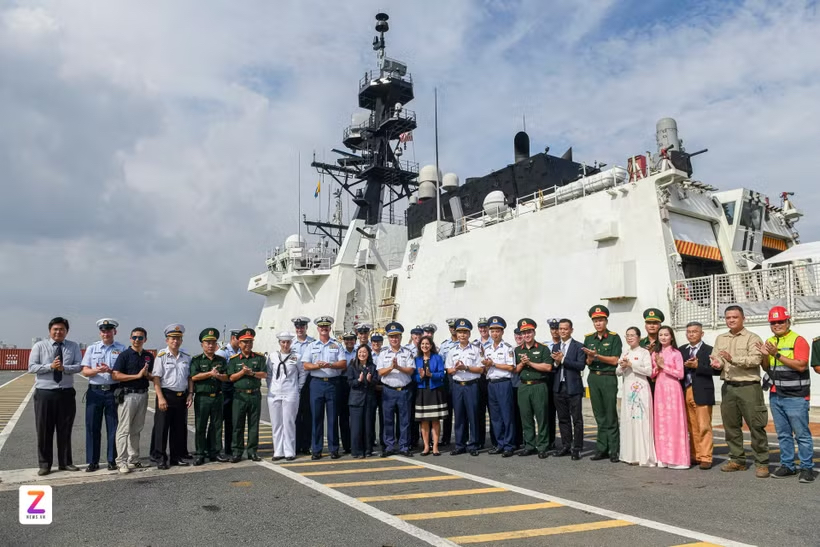 |
| US Coast Guard cutter USCGC Bertholf (WMSL-750) docks at Saigon Gateway Port in Ho Chi Minh City on November 1 (Photo: znews.vn) |
US Coast Guard cutter visits Ho Chi Minh City
US Coast Guard cutter USCGC Bertholf (WMSL-750) docked at Saigon Gateway Port in Ho Chi Minh City on November 1, beginning a five-day visit to the southern metropolis aimed at strengthening ties with the Viet Nam Coast Guard and the country’s maritime law enforcement agencies.
Attending the welcoming ceremony were Colonel Nguyen Duc Hieu, Deputy Commander for Legal Affairs of the Coast Guard Region 3 Command; and representatives of the Ho Chi Minh City People’s Committee, Military Region 7 Command, Naval Region 2, Ho Chi Minh City Border Guard Command and several functional units under the Ministry of National Defense.
US Ambassador to Viet Nam Jennifer Wicks, Acting US Consul General in Ho Chi Minh City Arati Shroff, and representatives of the US Defense Attaché Office in Viet Nam also attended the ceremony.
Hieu called the visit a meaningful and practical activity that would help strengthen friendship, mutual understanding and trust between the maritime law enforcement forces of the two countries.
It also demonstrates both sides’ commitment to further deepening bilateral cooperation in an increasingly substantive, practical and effective manner, he added.
For her part, Wicks said USCGC Bertholf is the first US military vessel to visit Ho Chi Minh City in more than 20 years. The visit also reflects the multifaceted partnership between the US and Viet Nam, spanning economy, trade, health care, education, and defense and security.
The US supports a strong, prosperous, independent and resilient Viet Nam, she said, noting this benefits the US and advances the two countries’ shared goal of a free and open Indo-Pacific region.
Capt. Andrew Pate, commanding officer of Bertholf, said the vessel’s presence in Ho Chi Minh City demonstrates the US’ long-term commitment to its partnership with Viet Nam.
He said the two countries share interests in freedom of navigation and overflight, as well as lawful trade in accordance with international law.
The US and Viet Nam work closely together to combat illegal, unreported and unregulated (IUU) fishing, helping Viet Nam strengthen its capacity to safeguard its maritime sovereignty and protect its sovereign rights, Pate stressed.
The crew looks forward to exploring Ho Chi Minh City and its vibrant culture, as well as taking part in professional exchanges with the Viet Nam Coast Guard, he continued.
While in Ho Chi Minh City, the commanding officer and crew of USCGC Bertholf will pay courtesy calls on the city’s leaders and the Coast Guard Region 3 Command, take part in diplomatic engagement activities and professional exchanges on maritime operations, and participate in friendly sports competitions with officers and personnel of Coast Guard Region 3, cited VNA.
According to the US Consul General in Ho Chi Minh City, USCGC Bertholf is on a multi-month deployment to the Indo-Pacific region.
The cutter’s presence in Southeast Asia helps uphold international maritime rules, promote multilateral partnerships and enhance maritime domain awareness along key waterways.
The most recent goodwill visit to Ho Chi Minh City by a US Navy vessel took place in July 2006.
Mexican media shows interest in Vietnam’s development path
The Vietnamese Embassy in Mexico held a meeting on October 31 between Ambassador Nguyen Van Hai and representatives of local press and media agencies to highlight Vietnam’s major achievements after 40 years of Doi Moi (Renewal), outline the country’s development orientations in a new era and discuss international issues and bilateral relations.
Under the theme “Vietnam in a new era of development”, Hai reviewed the country’s history, cultural traditions and major milestones in its process of national construction, defence and development. He stressed that after four decades of Doi Moi (1986–2026), Viet Nam has made remarkable progress, transforming itself from a war-ravaged and impoverished country into a dynamic economy deeply integrated into regional and global markets.
In 2025, Vietnam’s GDP reached approximately 514.7 billion USD, ranking 32nd worldwide, while its total import-export turnover stood at 930 billion USD, placing it 15th globally. The country attracted more than 38 billion USD in foreign direct investment (FDI). Meanwhile, multidimensional poverty fell below 1%, the Human Development Index (HDI) reached 0.766 and health insurance coverage exceeded 90% of the population, reflecting closer links between economic growth and social progress and equity.
Regarding strategic goals, the diplomat shared that Viet Nam aims to become a developing country with modern industry and upper-middle income by 2030, and a developed, high-income nation by 2045. To achieve these targets, the country is shifting its growth model, with science and technology, innovation and digital transformation serving as key drivers. Priority areas include the digital, green and circular economies, semiconductor industries and artificial intelligence, alongside institutional reform, high-quality human resources development and synchronised infrastructure.
At the meeting, Hai also introduced the English-Spanish bilingual book “The Aspiration for a Strong and Prosperous Viet Nam in the New Era”, which brings together selected articles and speeches by General Secretary of the Communist Party of Viet Nam Central Committee and President To Lam, and provides international readers with insights into the Party’s vision and strategic orientations.
During the question-and-answer session, Mexican journalists raised questions about the factors behind Vietnam’s development success and its ability to sustain rapid, inclusive and sustainable growth amid population ageing. They showed particular interest in social welfare policies, access to education and healthcare, including free tuition at public schools and free periodic health check-ups or screening from 2026, according to VNA.
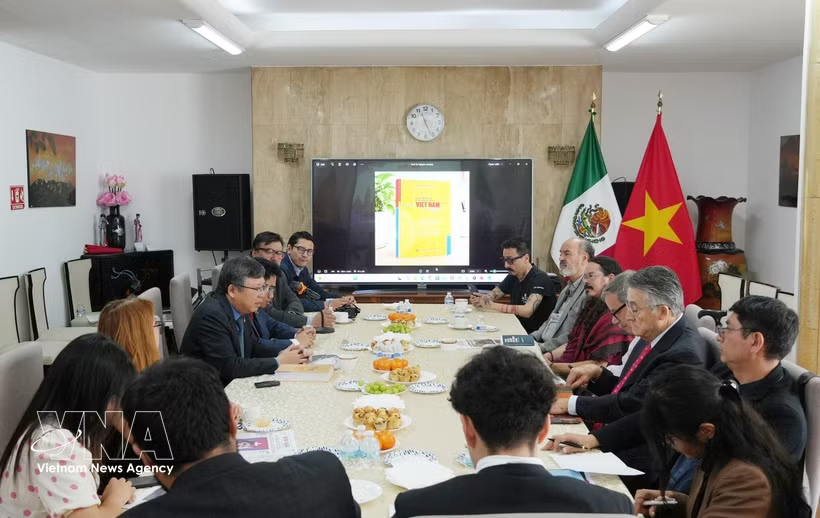 |
| An overview of the meeting between Vietnamese Ambassador Nguyen Van Hai and representatives of Mexican press and media agencies. (Photo: VNA) |
Other topics included the new growth model’s links with FDI attraction, priority economic sectors, the role of mass organisations in policymaking and the leadership of the Communist Party of Viet Nam. Journalists also discussed Vietnam’s experience in the struggle for national independence, its role amid current geopolitical tensions and its contributions to international solidarity and cooperation.
Regarding the bilateral ties, Mexican media representatives sought information on measures to expand Viet Nam-Mexico cooperation, particularly in trade, investment and people-to-people exchanges.
The meeting provided Mexican media with official information and a deeper understanding of Vietnam’s development achievements, policies and experience, while highlighting the country’s pursuit of a development path of independence, self-reliance, equity and sustainability.
Strengthening Viet Nam–RoK Friendship through a cultural and arts exchange program in Ninh Binh
The Ninh Binh Department of Culture and Sports, in coordination with Jeju City of the Republic of Korea (RoK) and the province’s relevant departments and agencies, organised a cultural and arts performance program featuring Ninh Binh (Viet Nam) and Jeju (RoK) at Pham Thi Tran Theatre on the evening of October 31.
This meaningful event aimed to strengthen exchanges and promote the distinctive cultural values of the two localities, thereby helping to foster friendship and promote cooperative relations between Viet Nam and the RoK.
Viet Nam and the RoK enjoy increasingly close relations of friendship and comprehensive cooperation across various fields. In the process of fostering these positive relations, cultural exchanges have always played an important role in enhancing mutual understanding and bonds between the peoples of the two countries, while spreading traditional values and opening up opportunities for future cooperation.
In this spirit, the friendly cooperative relationship between Ninh Binh Province (Viet Nam) and Jeju City (RoK) has been nurtured through practical cooperation activities.
Building on these positive achievements in cooperation, the arts performance by the Gosan Fishers’ Association from Hangyeong Town, Jeju City, provided an opportunity to introduce “Jeju Haenyeo Culture” to Ninh Binh Province. This culture has been recognised by UNESCO as an Intangible Cultural Heritage of Humanity, reported NDO.
 |
| An overview of the program. (Photo: YEN TRINH) |
The program thus provided an opportunity to appreciate the cultural beauty of each locality and further strengthen the friendship between Viet Nam and the RoK.
Through the program, audiences had the opportunity to learn about the lives, work and traditional cultural values of the Haenyeo community, the women of Jeju renowned for their resilience, perseverance and love of the sea. This is not only a unique cultural feature that defines Jeju’s identity, but also reflects the harmonious bond between people and nature.
The program was carefully staged, featuring a range of distinctive artistic performances that harmoniously combined the cultural identities of the two localities and the two countries. Ninh Binh presented emotionally evocative melodies through performances including “My Homeland, Viet Nam” and “Song of Ho Chi Minh”.
Meanwhile, artists from Jeju introduced audiences to unique traditional cultural features through performances including “Arirang”, a Korean folk song; “Echoes of Prayers”, featuring a prayer dance and a Haenyeo ritual for peace and good fortune; “The Breath of Life”, featuring Haenyeo songs and dances, an anchovy fishing song and a winnowing dance; and the Mulheobeok water-jar dance.
Each performance told a cultural story, offering audiences rich artistic experiences and helping them gain a deeper understanding of the customs, practices, spiritual life and identity of the people of the two localities.
Vietnam’s trade surpasses US$1 trillion as domestic value-added challenge persists
Vietnam’s merchandise trade surpassed US$1 trillion in the first 10 months of 2026, marking a major milestone in the country’s global economic integration, but its heavy reliance on foreign-invested manufacturers highlights the need to capture more value domestically.
Total import and export turnover reached an estimated US$1,010.6 billion from January to October, up 32.3% year on year, according to the Ministry of Industry and Trade. Exports amounted to approximately US$499 billion, an increase of 27.4%. In October alone, two-way trade reached US$122.2 billion, up 47.6% from a year earlier.
The expansion reflects Vietnam’s growing role in global manufacturing and supply chains. Export growth was recorded in both domestic and foreign-invested enterprises, while processed and manufactured industrial products accounted for 87.4% of total export turnover. Major markets, including China, the United States, the European Union, the Republic of Korea and ASEAN, continued to post positive growth.
However, the headline figures mask structural weaknesses in the domestic economy, particularly the limited contribution of Vietnamese-owned businesses to high-value manufacturing exports.
Foreign-invested firms dominate exports
Economist Le Quoc Phuong agreed that Vietnam’s trade performance demonstrated the depth of its integration into the global economy and its growing importance as a production and supply-chain hub for international companies.
Yet he warned that the scale of exports should not be confused with the value retained by the domestic economy. Foreign-invested enterprises account for around 80% of Vietnam’s total exports, while domestic businesses contribute approximately 20%, according to official figures for the first eight months of 2026.
Vietnamese-owned companies remain more prominent in sectors such as agriculture, forestry, fisheries and wooden products, while many high-value industrial exports are dominated by foreign-invested manufacturers. This limits the extent to which local businesses participate in advanced production, technology development and higher-value stages of global supply chains.
The trade balance also warrants attention. Viet Nam recorded an estimated trade surplus of US$6.8 billion in October, narrowing its cumulative trade deficit for the first 10 months to around US$12.7 billion. The figures underline the importance of examining imports alongside exports, particularly as manufacturers depend on imported machinery, components and production materials, cited VOV.
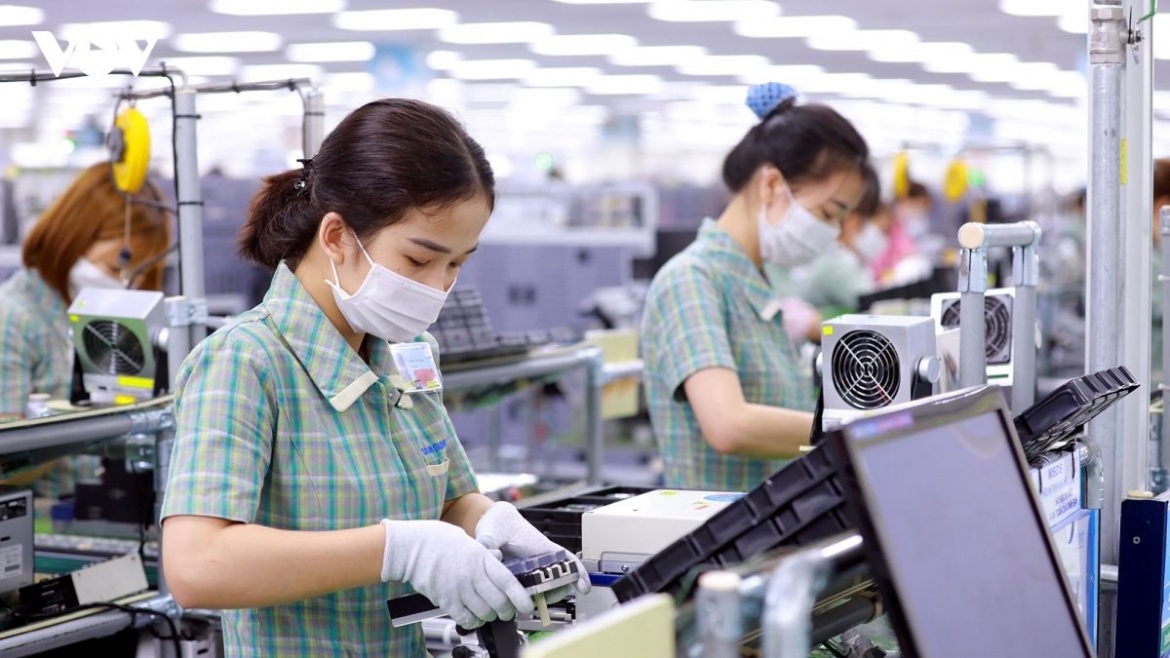 |
| Vietnam’s exports remain heavily reliant on foreign-invested enterprises |
Strategy targets greater domestic participation
The Ministry of Industry and Trade is drafting a new strategy for merchandise imports and exports through 2030, with a vision to 2045. The draft targets average annual export growth of 15–16% and import growth of 12–13% during 2026–2030.
A central objective is to increase the contribution of domestic enterprises to national exports from around 20% to 28–30% by 2030, rising to 38–40% by 2045. The strategy also seeks to raise the share of processed and refined products in total exports to 89–90% by 2030 and more than 92% by 2045.
The draft sets out three export scenarios for 2030. Under the medium-growth scenario, exports would reach US$953.7 billion; the high-growth scenario puts the figure at US$1,041.1 billion, while the low-growth scenario projects US$765 billion.
Phuong said the key challenge was not simply to increase export turnover but to raise domestic value added, strengthen industrial autonomy and move Vietnamese companies beyond contract manufacturing and assembly into higher-value activities, including component production, design and manufacturing.
For Viet Nam, the next stage of trade development will therefore depend not only on how much the country sells overseas, but also on how much technology, expertise and economic value its domestic businesses can contribute to those exports.
Northern Viet Nam braces for cooler weather as warmer winter forecast
Northern Viet Nam is forecast to see showers and thunderstorms as cold air moves in at the start of November, while meteorologists expect the winter of 2026–2027 to be warmer than average, with fewer days of severe cold.
The National Center for Hydro-Meteorological Forecasting said northern areas would remain sunny on November 1, with daytime temperatures reaching 30–34°C in many places. Showers and thunderstorms are expected in some areas overnight and on November 2 as a cold air mass begins to affect the region.
Two successive cold air surges are forecast in early November. The first, expected around November 2–3, is likely to bring a modest drop in temperatures. A stronger surge is forecast for November 5–7, when daytime temperatures in the north could fall to around 27–30°C, with lower readings in mountainous areas, VOV reported.
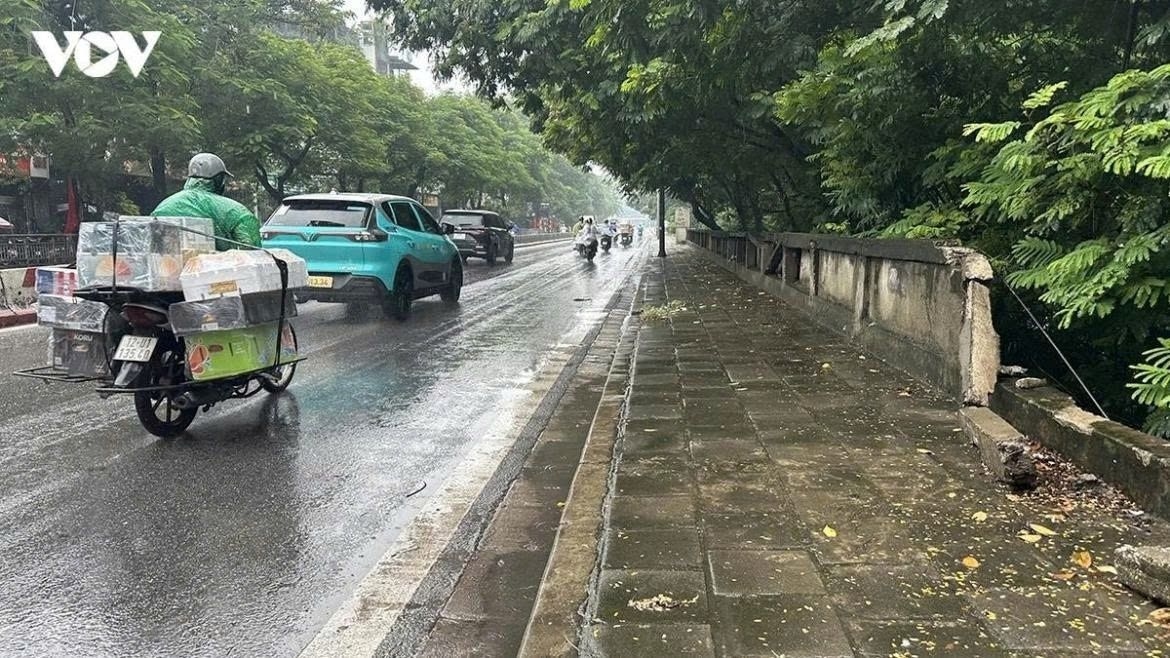 |
| Two air masses accompanied by rain in early November will ease the hot conditions in the northern region. |
The incoming cold air is expected to bring cooler conditions rather than a prolonged spell of cold weather. However, thunderstorms may produce lightning, strong gusts and, in some locations, heavy rain.
El Niño raises prospect of a warmer winter
The National Center for Hydro-Meteorological Forecasting expects El Niño to stay very strong from November 2026 to January 2027, with a probability of 96%. The phenomenon is forecast to weaken gradually thereafter but could continue into the first half of 2027.
Average temperatures nationwide in November are forecast to be 1–2°C above the long-term average. In December 2026 and January 2027, temperatures are set to remain 0.5–1.5°C above average, although the Central Highlands and southern Viet Nam could see larger deviations.
In northern and north-central regions, cold air activity is expected to be weaker than average. Periods of severe and damaging cold may arrive later than usual, and the number of days with these conditions is forecast to be below the long-term average.
However, a warmer seasonal average does not rule out sharp, short-lived cold spells. Mountainous areas in the north may still experience significant temperature drops when stronger cold air masses arrive.



Related Stories
 National
Viet Nam News Today (Oct. 31): Viet Nam, Argentina See Ample Potential to Elevate Bilateral Ties
 Economy
Connecting International Resources to Promote Green Development and Climate Change Adaptation
 National
Viet Nam News Today (Oct. 30): General Phan Van Giang Attends 20th ASEAN Defense Ministers’ Meeting in Cebu
 National
Viet Nam News Today (Oct. 29): Prime Minister Le Minh Hung Seeks WEF Support for Innovation, Sustainable Growth
In topics
 National
Viet Nam News Today (Nov. 2): Vietnam’s Trade Surpasses US$1 Trillion as Domestic Value-added Challenge Persists
National
Viet Nam News Today (Oct. 30): General Phan Van Giang Attends 20th ASEAN Defense Ministers’ Meeting in Cebu
National
Viet Nam News Today (Oct. 29): Prime Minister Le Minh Hung Seeks WEF Support for Innovation, Sustainable Growth
 National
Viet Nam News Today (Oct. 28): Vietnam, ASEAN Seek to be Repositioned in Global Value Chains
Popular article
 National
10 More Martyrs' Remains Found at Le Thi Rieng Park
National
Viet Nam News Today (Oct. 28): Vietnam, ASEAN Seek to be Repositioned in Global Value Chains
 National
Hanoi Receives Approximately VND 74 Billion for “For the Poor” Fund in 2026
 National