
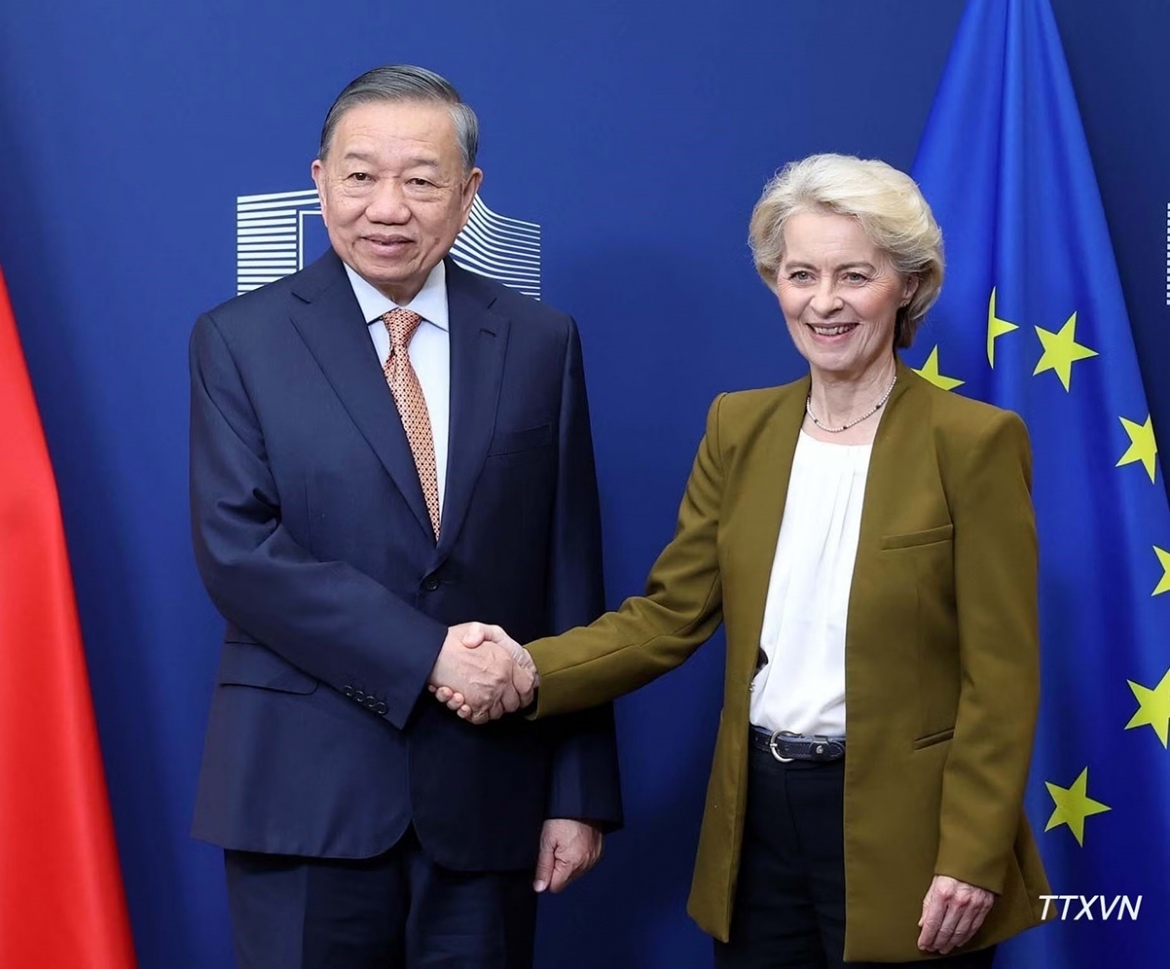
 Viet Nam News Today (Oct. 23): Vietnam Values EU as Priority Partner, Seeks Deeper Strategic Ties |
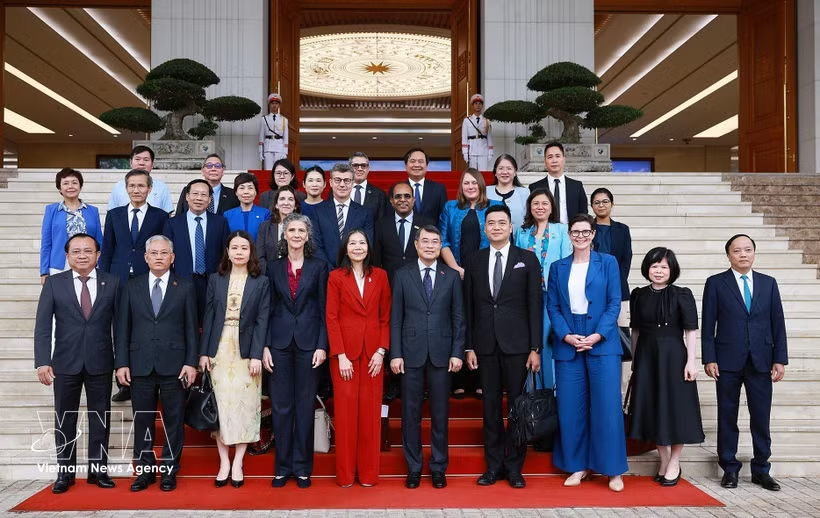 Viet Nam News Today (Oct. 24): European Media Highlights Substantive Progress in Vietnam-EU Relations |
Viet Nam News Today (Oct. 28): Vietnam, ASEAN Seek to be Repositioned in Global Value Chains
Viet Nam News Today (Oct. 28): Vietnam, ASEAN seek to be repositioned in global value chains ; Roundtable seeks to boost high-tech investment ties between Vietnam and China; EFTA expects trade and investment with Vietnam to grow; 2026 Viet Nam Heart Festival in Osaka: Bringing communities together and promoting Vietnamese culture.
| Viet Nam News Today (Oct. 25): Viet Nam, Mozambique Seek Stronger Agricultural Ties Viet Nam News Today (Oct. 27): Vietnamese, Polish PMs Seek ways to Boost All-round Cooperation |
| Viet Nam News Today (Oct. 28) notable headlines Vietnam, ASEAN seek to be repositioned in global value chains Roundtable seeks to boost high-tech investment ties between Vietnam and China EFTA expects trade and investment with Vietnam to grow 2026 Viet Nam Heart Festival in Osaka: Bringing communities together and promoting Vietnamese culture Vietnam airports serve over 110 million passengers in ten months as fleet expands Ho Chi Minh City promotes future technology cooperation with India ASCO to invest US$20mln in aircraft components factory in Da Nang Vietnam ready to share fisheries expertise with Timor-Leste Top leader urges concrete action to advance Vietnam – Poland strategic partnership |
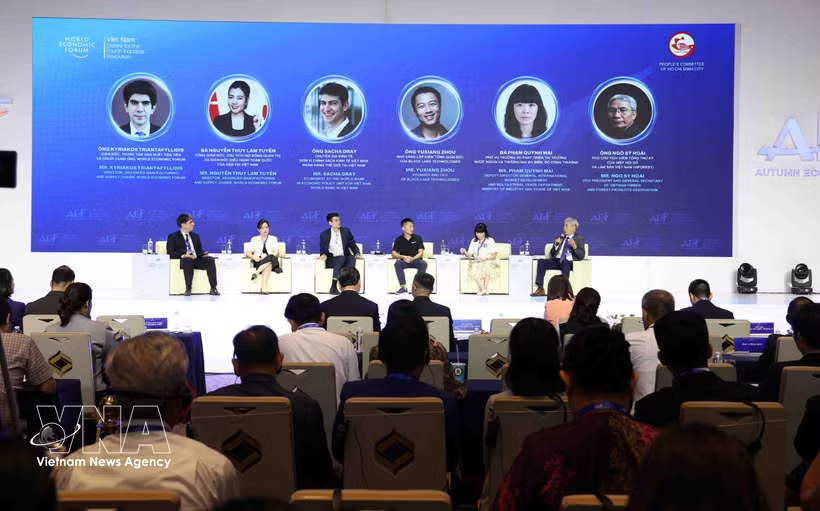 |
| A thematic session entitled “Repositioning Vietnam and ASEAN in Global Value Chains” within the framework of the Autumn Economic Forum 2026. (Photo: VNA) |
Vietnam, ASEAN seek to be repositioned in global value chains
A thematic session entitled “Repositioning Vietnam and ASEAN in Global Value Chains” was held on October 27 as part of the Autumn Economic Forum 2026, organized by the Ho Chi Minh City People’s Committee in co-branding with the World Economic Forum.
Participants discussed challenges and solutions to strengthen the region and Vietnam’s resilience and future readiness.
ASEAN’s potential and challenges
Nguyen Thuy Lam Tuyen, General Director, Board Chairwoman and Country Holding Officer of ABB Vietnam, said ASEAN is becoming increasingly attractive thanks to its market of more than 680 million people, rapid urbanization and growing demand for electrification and digital infrastructure.
The region’s manufacturing investment, digital transformation and automation, together with its young workforce and engineering talent, are further strengthening its competitiveness. In addition, ASEAN has one of the world’s most extensive networks of regional economic partnership agreements. ASEAN connectivity goes beyond links among its 11 member states to form an integrated production base. Each country has its own identity and strengths, which together enhance the region’s overall appeal and competitiveness.
Sacha Dray, an economist at the World Bank in Economic Policy Unit for Vietnam, noted that ASEAN has a combined economic value of around 4 trillion USD and is expected to become the world’s fifth-largest economic bloc in 2027. The region attracts more than 15% of global foreign direct investment (FDI) annually, supported by trade openness, a workforce of over 370 million and extensive free trade agreements, cited VNA.
However, intra-regional trade accounts for only 22% of ASEAN’s annual exports of 2 trillion USD, compared with around 60% of goods produced and consumed within the European Union. This leaves ASEAN more exposed to external demand and limits the benefits of deeper regional integration, Dray said. Despite being well integrated into global value chains, the bloc still has considerable room to develop supply chains within the region.
Strengthening regional cooperation
Participants stressed the need to leverage each member’s strengths and build complementary links across global value chains.
Tuyen proposed establishing regional capability corridors based on specialisation, diversification and connectivity, alongside greater sharing of skills and technology. ASEAN should move beyond participating in global supply chains to helping shape them, with engineering and innovation serving as key drivers.
Pham Quynh Mai, Deputy Director of the Ministry of Industry and Trade’s Department of Foreign Market Development and Multilateral Trade Policy, called for cross-border industrial clusters connecting major corporations, small- and medium-sized enterprises (SMEs), universities and research centers, particularly in electronics, semiconductors, automobiles and clean energy. Such clusters could attract investment, facilitate technology transfer, strengthen supply chains and promote balanced, sustainable development.
Dray said ASEAN should focus on helping companies become more capable suppliers and meet evolving environmental, social and governance (ESG) requirements. He cited World Bank support for LG’s 200-million-USD project in Hai Phong to ensure that its third factory in Vietnam uses 100% renewable energy, and help local firms upgrade to become first- and second-tier suppliers.
He also urged greater cross-border investment, trade promotion within ASEAN, support for SMEs and the removal of non-tariff barriers through trade facilitation, single-window mechanisms, and harmonised standards.
Participants agreed that Vietnam and other ASEAN members have the potential to move up global value chains. Achieving this will require deeper regional cooperation, stronger technological capabilities and better use of each member’s comparative advantages.
Roundtable seeks to boost high-tech investment ties between Vietnam and China
The Embassy of Vietnam in China, in coordination with the China Overseas Industrial Development Association (COIDA), organized a roundtable on economic, trade, and investment cooperation on October 27, aimed at strengthening business linkages and promoting partnership in high-tech, energy, and industrial development.
Vietnamese Ambassador to China Pham Thanh Binh and COIDA President He Zhenwei attended the event alongside over 100 in-person participants and nearly 20 Vietnamese delegates joining online. Attendees also included representatives from businesses in artificial intelligence (AI), computing power, cloud computing, banking, finance, industrial zone development, energy, and healthcare.
In his opening remarks, Ambassador Pham Thanh Binh emphasized that the Vietnam-China Comprehensive Strategic Cooperative Partnership continues to grow, establishing a solid foundation for economic, trade, and investment cooperation.
According to Vietnam Customs statistics, bilateral trade reached approximately US$256.5 billion in 2025, up nearly 25% year-on-year. In the January-September period of 2026 alone, trade turnover exceeded US$253 billion, indicating substantial potential and space for economic cooperation.
Ambassador Pham Thanh Binh noted that Vietnam is entering a new development era, identifying science, technology, innovation, and digital transformation as key growth engines. Simultaneously, the country is shifting its foreign investment attraction focus from quantity to quality, efficiency, technology, and added value.
The country is continuously refining its institutional framework, removing legal bottlenecks, and building a transparent, stable, and favorable investment environment in line with Resolution No. 10 dated June 8, 2026, and Resolution No. 66 dated April 30, 2025, of the Politburo.
The Ambassador welcomed Chinese enterprises expanding investment in Vietnam, particularly in digital technology, AI, semiconductors, smart manufacturing, new energy, green industry, and modern industrial parks. He encouraged stronger linkages with Vietnamese enterprises, technology transfer, human resource training, and technology application in production, logistics, and trade, according to VOV.
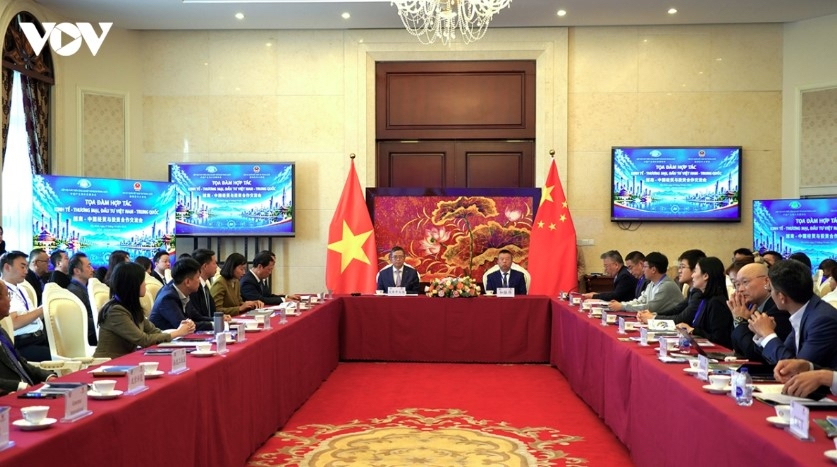 |
| Overview of the roundtable. |
Speaking at the event, COIDA President He Zhenwei praised bilateral economic results, highlighting cooperation potential in the digital economy, green energy, and smart manufacturing. He proposed establishing a regular liaison mechanism between COIDA and the Embassy of Vietnam in China, pledging support to advance specific cooperative projects between enterprises of both nations.
During the event, delegates focused on three main discussion panels. On the digital economy, AI, and finance, representatives from Shenzhen Hexun Huagu (Jiguang), FPT, Bubi, and VietinBank shared potential cooperation in digital transformation, AI applications, information technology, and cross-border financial services.
On industrial park investment and smart technology application, representatives from ZHHT (AIPARK), Green I-Park, Hanwang, and SHINEC presented technology solutions and infrastructure development projects to build and operate green, smart, and modern industrial parks. On investment connectivity, digital infrastructure, and services, representatives from Beijing Nuojun'an, Minh Hung - SIKICO, Hong Kong Aohua, and Wuhan Zhongbu discussed cooperation opportunities in industrial infrastructure, information technology, healthcare, and investment support services.
The roundtable serves as a practical activity in realizing economic diplomacy by the Embassy of Vietnam in China, contributing to concrete action on high-level agreements between both nations and forging bilateral economic, trade, and investment ties toward substantive, effective, and sustainable development.
EFTA expects trade and investment with Vietnam to grow
According to UK-based Trade Finance Global, the four member states of the European Free Trade Association (EFTA), namely Iceland, Liechtenstein, Norway and Switzerland, believe that a free trade agreement (FTA) with Vietnam will expand market access opportunities, reduce trade costs and provide a more stable and transparent framework for business and investment.
Regarding market access and trade benefits, the EFTA countries expect the agreement to gradually eliminate tariffs on almost all goods exported by the four countries to Vietnam, either upon its entry into force or within a maximum period of 16 years.
Asdis Olafsdottir, Head of Communications at the EFTA Secretariat, said the agreement will open up new opportunities across a range of sectors, from seafood and machinery to watches and chocolate.
According to the Norwegian Government, around 50% of Norwegian goods exports will be exempt from tariffs upon entering Vietnam, with the proportion expected to exceed 98% within seven years. In return, Vietnamese exports to EFTA countries will also benefit from tariff exemptions or reductions.
On facilitating business operations, EFTA representatives said lower trade costs, simplified customs procedures and greater transparency will particularly benefit small and medium-sized enterprises (SMEs), which are considered the backbone of the member states’ economies.
The agreement covers goods, services, investment, intellectual property, sustainable development and other areas, thereby providing a predictable framework for trade and investment activities, cited VNA.
 |
| The EFTA–Vietnam Free Trade Agreement is expected to open up significant business opportunities for Vietnamese enterprises. (Photo: baochinhphu.vn) |
Bilateral trade with Vietnam has increased fivefold compared with a decade ago. EFTA exports to Vietnam, particularly electrical machinery and fish, have also recorded significant growth. Vietnam is the sixth ASEAN member state to sign an FTA with EFTA.
The agreement comes as Vietnam seeks to diversify its trading partners and supply chains amid global trade tensions and uncertainty. Meanwhile, the European Union (EU) upgraded its relations with Vietnam to a comprehensive strategic partnership in January 2026 and is seeking to strengthen access to Vietnam’s critical mineral resources.
2026 Viet Nam Heart Festival in Osaka: Bringing communities together and promoting Vietnamese culture
The 2026 Viet Nam Heart Festival, themed “An Era of Rising”, took place at Oizumi Ryokuchi Park in Sakai, Osaka Prefecture, Japan, on October 24 and 25.
The event attracted large numbers of Vietnamese people living in Japan, along with Japanese residents and international visitors.
The festival was organized by the Global Viet Nam–Japan Cultural Promotion Organization (VJCP), under the auspices of the Consulate General of Viet Nam in Osaka, the Osaka Prefectural Government, and the Sakai City Government. Although Typhoon Champi brought occasional rain, the activities went ahead with strong participation from residents and visitors alike.
Following the introduction of delegates and a report on the journey of community-building, a solemn flag-raising ceremony was held for both countries. One of the highlights was singer Anh Tu joining 34 overseas Vietnamese, representing Viet Nam's 34 provinces and cities following the administrative merger, in singing the Vietnamese national anthem.
At the festival, the organizing committee launched a campaign encouraging Vietnamese communities worldwide to celebrate Viet Nam Culture Day on November 24. Under the direction of Huy Lio, the festival's chief director and strategic adviser to the Global Viet Nam–Japan Cultural Promotion Organization, delegates and artists took part in a ceremony in which they placed their hands on a bronze drum symbol.
With the message “Every Vietnamese living abroad is a cultural ambassador”, the organizers called on everyone to celebrate Viet Nam Culture Day on November 24 by introducing, promoting, and sharing Vietnamese culture
The organizers also presented a promotional video showcasing Phu Tho, the ancestral homeland of the Vietnamese people, and opened the exhibition entitled “Viet Nam – An Era of Rising”. A 2.5-metre-high wooden map was the exhibition's centerpiece, marking the 2025 reorganization of provincial-level administrative units, NDO reported.
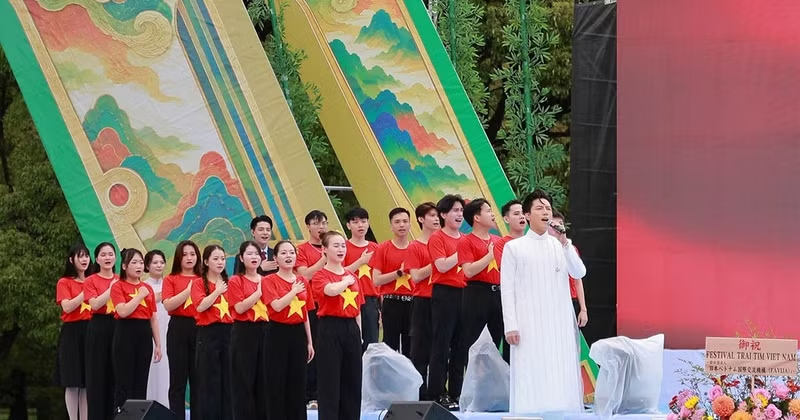 |
| Singer Anh Tu joins 34 overseas Vietnamese in singing the Vietnamese National Anthem. (Photo: Organizing Committee) |
Over the two days, audiences enjoyed performances by the Japanese drum group TRAinnovation, Mayumi, Viet Nam Kun, the Sao Mai dance troupe, and the VJCP Art Center, among others.
The program also featured artists Anh Tu, Trinh Thang Binh, LyLy, Cao Phu Quy, Swhite, Shinobi Swag, HawkX, and NINE-X Band. They brought Vietnamese music to the Vietnamese community in Japan while engaging with international audiences.
Alongside activities promoting cultural exchange, community connections and trade and investment cooperation between Viet Nam and Japan, the organizers announced and presented the inaugural “Viet Nam Heart Star” awards this year. The awards went to four overseas Vietnamese living, studying, and working in Japan who have actively promoted Vietnamese culture and the country's people and image. Their contributions help foster a positive image of the Vietnamese community as compassionate, responsible, well-integrated, and law-abiding, with a commitment to contributing to their host society.
According to Do Hai Khoi, head of the organizing committee, the festival's success was made possible not only through the support of relevant agencies, organizations, and sponsors but also through the substantial contributions of volunteers. These included young Vietnamese people living, studying, and working in Japan who helped run activities throughout the event.
The 2026 Viet Nam Heart Festival was more than an opportunity to enjoy artistic performances; it also created a space for cultural exchange and strengthened connections among the Vietnamese community in Japan. Through music and cultural activities, the event helped spread love for the homeland, preserve national identity, and deepen ties among Vietnamese people living abroad.
Vietnam airports serve over 110 million passengers in ten months as fleet expands
Vietnam’s aviation market maintained its growth momentum during the ten-month period of 2026, with passenger traffic through airports exceeding 110 million, up over 10% year-on-year, according to the Civil Aviation Authority of Vietnam (CAAV).
International passengers reached nearly 43 million, up more than 11%, while domestic travelers totaled nearly 68 million, representing an increase of over 9%. Air cargo throughput also maintained growth, reaching 1.6 million tonnes, up more than 9% compared to the same period in 2025.
In October alone, airports across the country served over 10 million passengers, up more than 11% year-on-year, with international traffic accounting for over 4 million passengers. Cargo volume surpassing 172,000 tonnes, up more than 3%, according to VOV.
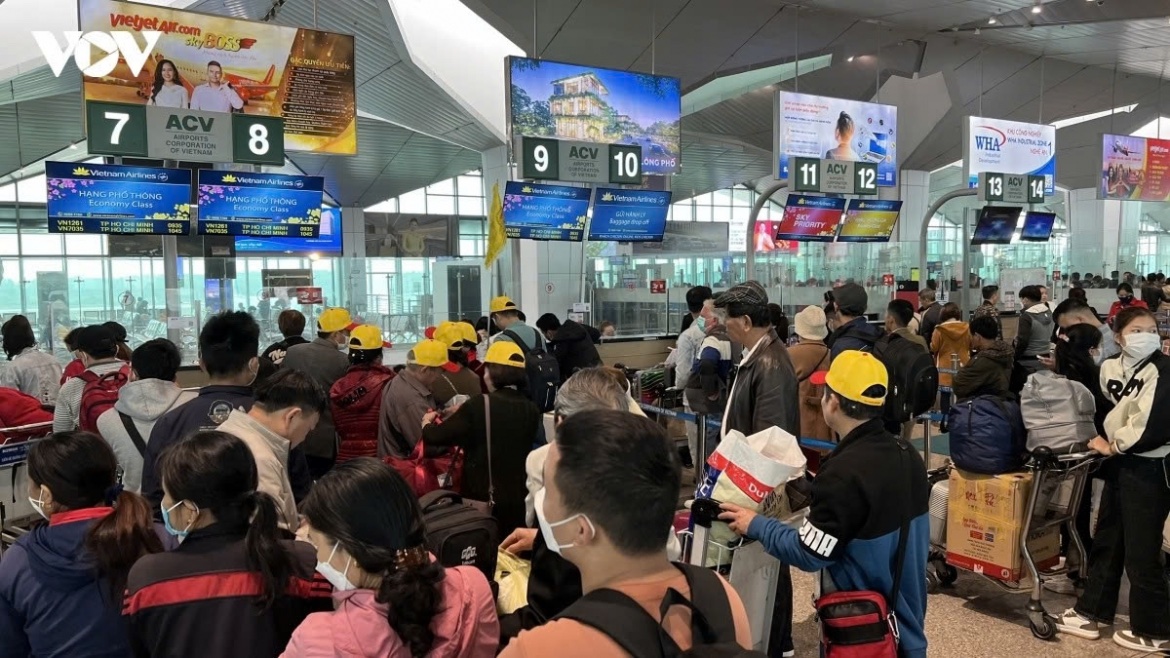 |
| Airports handle over 110 million passengers in the January-October period of 2026. |
Vietnamese carriers transported over 50 million passengers during the reviewed period, up more than 7% year-on-year. This total included over 16 million international passengers and nearly 34 million domestic passengers. Cargo transport by domestic airlines reached nearly 388,000 tonnes.
Alongside market growth, the nation's commercial fleet expanded. As of October 15, 2026, 261 aircraft were registered under Vietnamese nationality, an increase of 26 planes compared to 2025.
Vietjet and Vietnam Airlines operate the majority of the national fleet, holding a combined 201 aircraft. Vietjet leads with 107 aircraft, while flag carrier Vietnam Airlines operates 94 aircraft.

Most read


Related Stories
 National
Viet Nam News Today (Oct. 27): Vietnamese, Polish PMs Seek ways to Boost All-round Cooperation
Viet Nam News Today (Oct. 27): Vietnamese, Polish PMs seek ways to boost all-round cooperation ; Great solidarity festival to strengthen cohesion among Vietnamese communities in Europe; Viet Nam, ASEAN partners push for stronger cooperation on green transition; Viet Nam opens Autumn Economic Forum 2026 with global growth agenda.
October 27, 2026 | 08:41
 National
Viet Nam News Today (Oct. 25): Viet Nam, Mozambique Seek Stronger Agricultural Ties
Viet Nam News Today (Oct. 25): General Secretary and President To Lam wraps up official visit to EU, Belgium; Polish Prime Minister begins three-day official visit to Viet Nam; Viet Nam, Mozambique seek stronger agricultural ties; Lao, Vietnamese firms sign US$30 million real estate and smart farm deals.
October 25, 2026 | 08:00
 National
Viet Nam News Today (Oct. 24): European Media Highlights Substantive Progress in Vietnam-EU Relations
Viet Nam News Today (Oct. 24): European media highlights substantive progress in Vietnam-EU relations; Vietnam to make more active, responsible contributions to UN efforts; Japan helps Viet Nam strengthen maritime law enforcement capacity; Vietnam successfully researches new-generation Japanese encephalitis vaccine.
October 24, 2026 | 09:00
 National
Viet Nam News Today (Oct. 23): Vietnam Values EU as Priority Partner, Seeks Deeper Strategic Ties
Viet Nam News Today (Oct. 23): Vietnam values EU as priority partner, seeks deeper strategic ties; Vietnam–Denmark ties gain fresh momentum with comprehensive strategic partnership; Vietnam and Belgium look to broaden strategic partnership; UK Royal Navy’s patrol vessel pays second visit to Ho Chi Minh City.
October 23, 2026 | 08:38
In topics
 National
Viet Nam News Today (Oct. 28): Vietnam, ASEAN Seek to be Repositioned in Global Value Chains
Viet Nam News Today (Oct. 28): Vietnam, ASEAN seek to be repositioned in global value chains ; Roundtable seeks to boost high-tech investment ties between Vietnam and China; EFTA expects trade and investment with Vietnam to grow; 2026 Viet Nam Heart Festival in Osaka: Bringing communities together and promoting Vietnamese culture.
October 28, 2026 | 14:23
National
Viet Nam News Today (Oct. 27): Vietnamese, Polish PMs Seek ways to Boost All-round Cooperation
Viet Nam News Today (Oct. 27): Vietnamese, Polish PMs seek ways to boost all-round cooperation ; Great solidarity festival to strengthen cohesion among Vietnamese communities in Europe; Viet Nam, ASEAN partners push for stronger cooperation on green transition; Viet Nam opens Autumn Economic Forum 2026 with global growth agenda.
October 27, 2026 | 08:41
National
Viet Nam News Today (Oct. 25): Viet Nam, Mozambique Seek Stronger Agricultural Ties
Viet Nam News Today (Oct. 25): General Secretary and President To Lam wraps up official visit to EU, Belgium; Polish Prime Minister begins three-day official visit to Viet Nam; Viet Nam, Mozambique seek stronger agricultural ties; Lao, Vietnamese firms sign US$30 million real estate and smart farm deals.
October 25, 2026 | 08:00
National
Viet Nam News Today (Oct. 24): European Media Highlights Substantive Progress in Vietnam-EU Relations
Viet Nam News Today (Oct. 24): European media highlights substantive progress in Vietnam-EU relations; Vietnam to make more active, responsible contributions to UN efforts; Japan helps Viet Nam strengthen maritime law enforcement capacity; Vietnam successfully researches new-generation Japanese encephalitis vaccine.
October 24, 2026 | 09:00
Recommended
 National
10 More Martyrs' Remains Found at Le Thi Rieng Park
On October 24, search and recovery teams at Le Thi Rieng Park (Ho Chi Minh City) discovered the remains of 10 more martyrs, bringing the total number found since June 23 to 832. The search operation is currently being expanded within Zone B.
October 28, 2026 | 14:29
Popular article
 National
Hanoi Receives Approximately VND 74 Billion for “For the Poor” Fund in 2026
As of 5 p.m. on October 26, 2026, Hanoi had received approximately VND 74 billion from organizations, businesses and individual benefactors, reflecting the community’s strong support for poverty reduction efforts.
October 27, 2026 | 16:01
 National
Key Results of 500-Day Campaign to Search For, Recover and Identify Fallen Soldiers’ Remains
As of October 13, 2026, the 500-Day Campaign to search for, recover and identify the remains of fallen soldiers had recovered 3,611 sets of remains, achieving 51.59% of its target.
October 27, 2026 | 09:03
 National
Vietnam, Poland Issue Joint Statement on Establishment of Strategic Partnership
Vietnam and Poland on October 26 issued a joint statement on the establishment of a strategic partnership.
October 27, 2026 | 08:00
 National
Proactively Identifying Development Needs to Expand Cooperation with Foreign NGOs
Shifting from waiting for aid to proactively specifying development needs, and from support for individual projects to long-term cooperation, is essential to mobilizing international resources more effectively to achieve sustainable development goals.
October 26, 2026 | 14:17