
Lighting Way: Bringing Peace of Mind to A Tuc Highland Village
| Bringing Election Information to Every Village, Parish, and Border Area Spreading the Peace Message of Vietnam Friendship Village to International Friends |
A new light amid the mountains
At around 6 p.m. on a day in September 2024, cheers rang out from a group of young people in the courtyard of A Tuc Village’s community centre as the first electric lights were switched on. That day, instead of having to finish early as usual, their volleyball game continued until 9 p.m. For the first time, electric lights dispelled the darkness along the border, allowing young people to enjoy themselves and chat freely without being hindered by the night.
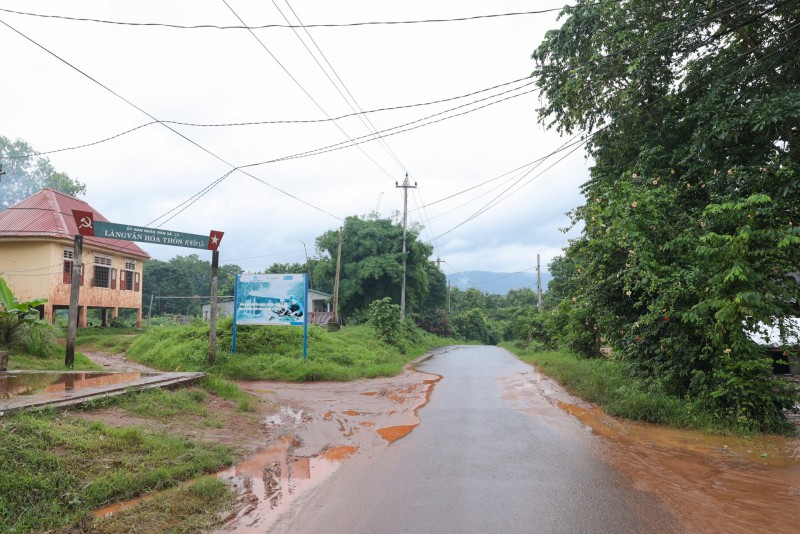 |
| The road through A Tuc Village is illuminated by more than 3km of power lines and 75 light bulbs. (Photo: Dinh Hoa) |
This is the moving story shared by Ho Thi Sor, 33, a resident of A Tuc Village, when we visited the local lighting project 18 months after it began operating. Sor happily added: “Since the lights were installed along the roads, it has become much easier for the elderly and children to get around. In the past, once it got dark, no one dared to go outside because it was dangerous. If there was an urgent matter, we had to feel our way step by step by the light of an oil lamp. Now that we have electric lights, people can visit one another, socialise and strengthen neighbourly bonds more easily.”
Sharing the same view, Ho Van Cuong said that in this mountainous and forested area, the greatest fears at night were snakes and other reptiles crawling into homes, or sudden floods arriving during the rainy season without people being aware of them. Since the electric lights were installed, those concerns have been eased. The lives of local residents have entered a new chapter, bringing joy and excitement to the entire village.
A pillar of peace and security along the border
Beyond making daily life more convenient, the lighting project also serves as a “shield” protecting peace and security in the village. As head of A Tuc Village’s Security and Public Order Team, Ho Van Phan stressed that previously, many wrongdoers from both inside and outside the area had taken advantage of the rugged mountainous terrain and darkness to steal property, gather to use drugs and cause serious disruptions to public security and order.
“Since the street lighting system was installed, incidents involving violations of public security and order have decreased by 20% to 30%. The neighbourhood has become more peaceful, while the risks of social ills have gradually been eliminated,” Phan affirmed.
The A Tuc Village lighting project is part of a series of activities under the “Resilience First” project. The project is funded by the Irish Government’s International Development Support Programme through the Embassy of Ireland in Ha Noi and implemented by Plan International Viet Nam in coordination with local partners. This partnership has not only brought electric light to the highlands, but has also sown greater confidence, brought peace and security to local people’s lives, and opened up a brighter future for the community.
The project was completed in 2024. After 18 months of operation, the 2-km lighting line, equipped with 75 light bulbs, remains stable and safe, and is regularly used through an automatic timer system. To date, the system has continued to operate reliably during the rainy and stormy season, helping ensure safety and better serving residents’ travel needs.
Community ownership
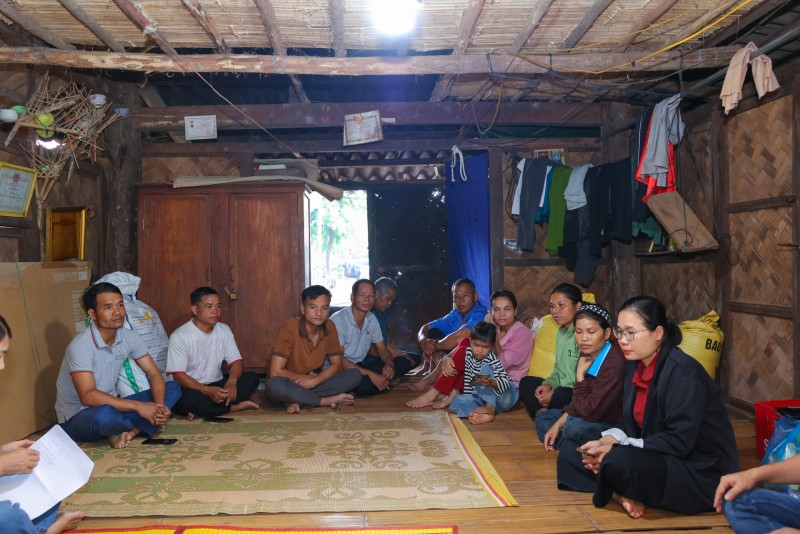 |
| A community group is responsible for inspecting and operating the lighting system in A Tuc Village. (Photo: Dinh Hoa) |
Recognising the practical benefits of the lighting project, residents of A Tuc Village (Lia Commune) have taken the initiative to maintain the system with the highest sense of responsibility. Local residents elected a dedicated community group to inspect and operate the system and collect contributions. Every week, the group regularly checks the power lines to detect and promptly repair any problems. While mobilising residents to contribute towards electricity costs was difficult in the past, each household now voluntarily contributes VND 10,000 per month, with some households even paying for the entire year at once. The fund raises approximately VND 1.3 million per month, which is just enough to cover electricity costs for daily use as well as maintenance expenses. Thanks to this close attention, the project has never suffered any major damage; when two light bulbs recently burned out, the community promptly used funds from the village budget to replace them.
According to Le Phong, Project Management Officer at Plan International Viet Nam in Quang Tri, the lighting project was established in 2024 in the former A Xoc Lia Village (now A Tuc Village following the commune merger). It is a component of the “Community-based micro-infrastructure” model, under which local residents have full ownership of the process, from planning, surveying and preparing cost estimates to supporting construction, supervision and maintenance. The project received approximately VND 100 million in funding, with more than 3km of power lines and all necessary installation equipment, directly benefiting more than 140 households. The project’s greatest value lies not only in the 75 lights that now illuminate the village, but also in the fact that the community has jointly contributed to, managed and maintained a shared asset for long-term collective benefit.
A representative of the Lia Commune People’s Committee said the project not only brings light to remote villages deep in the Truong Son mountain range, but also makes an important contribution to ensuring security and national defence in the border area. At the same time, the project has created momentum for socio-economic development, gradually narrowing the gap between remote and isolated areas and the central areas.
 Spreading the Peace Message of Vietnam Friendship Village to International Friends Spreading the Peace Message of Vietnam Friendship Village to International Friends The Vietnam Friendship Village (the Village) must prioritize building a team of staff and teachers who are not only medical and educational experts but also possess profound patience and empathy for those under their care. |
 Vietnam Fatherland Front Launches “Month for Listening to the People” and “Digital Villages” Vietnam Fatherland Front Launches “Month for Listening to the People” and “Digital Villages” Following the 11th National Congress of the Vietnam Fatherland Front (VFF), VFF leaders announced that they will review all emulation movements, boldly terminate activities deemed merely formalistic, and simultaneously introduce new models such as the “Month for Listening to the People,” “Digital Front,” and “Digital Villages” to strengthen direct engagement with citizens and improve the effectiveness of supervision and social criticism. |


Most read


Related Stories
 Viets Home
Healthy Body, Strong Mind
 Viets Home
Career Guidance Through Familiar Everyday Activities
 Viets Home
Sports Bring Students, Families and Schools Together
 Viets Home
Learning to Be Parents
Recommended
 Viets Home
UAE Culture Comes Alive in Hanoi
 Viets Home
WVI and Dien Bien Chart Next Chapter in Support for Children
 Viets Home
Tuyen Quang: New Space for Reading, Experiential Learning and Career Guidance for Kim Xuyen Students
 Viets Home
Finding Confidence in Learning English
Popular article
 Viets Home
Dien Bien Buries Remains of 10 Fallen Soldiers at Tong Khao Martyrs' Cemetery
 Viets Home
My New Home: An Invitation to Visit
 Viets Home
Foreigners Tell Vietnam’s Stories in Vietnamese
 Viets Home