
Where Ban Blossoms and Love Stories Bloom
| Sour Cherry Blooms in Da Lat in Chilly Weather Cherry Blossoms in Full Bloom, Attracting Visitors to Mang Den |
In Muong Lo, a region rich in Thai cultural identity, Tham Le Cave was once a romantic meeting place for young men and women each spring. According to an explanation passed down through the community, the name Tham Le is associated with discreet, flirtatious glances exchanged between lovers. The cave gatherings usually took place in the second and third lunar months, when ban flowers bloomed white across the mountains and forests.
Before the festivities, a shaman performed rituals to seek permission from the mountain and cave spirits, praying that young men and women would find their loved ones, the fields and crops of the villages would flourish, and the community would enjoy a prosperous and fulfilling life. Following the ceremony, young people dressed in traditional costumes flocked to the gathering, exchanging ban blossoms, singing khap folk songs, and playing khèn and pí flutes amid the cave's enchanting rock formations. The cave witnessed countless encounters, promises of love and even romances that ended unfinished but remained unforgettable.
According to elderly residents, the cave contains numerous winding passages, some wide and others narrow, with stalactites in countless shapes and depths that are difficult to determine. Legend has it that some people ventured deep inside carrying roasted green rice but spent a long time exploring without ever reaching the end of the cave. Such stories have further deepened the mystery surrounding Tham Le in the minds of local people.
As time passed, the lively spring gatherings gradually disappeared. Among those who still remember the customs vividly is Artisan Dieu Thi Xieng, from Deu 2 Hamlet, Nghia Lo Ward, who remains deeply attached to stories of the Love Cave. Now nearly 80 years old, she recalls her youth, when young men and women from nearby villages would make their way to Tham Le each spring. To her, those were innocent and carefree days when people grew close through songs, laughter and customs that the community had preserved for generations.
Xieng recalls that everyone usually carried torches to light their way into the cave. The flickering flames illuminated the rock ceilings and the fascinating formations of stalactites hanging overhead. Water dripping from above fell in crystal-clear droplets, sometimes landing unexpectedly on their necks and shoulders, bringing a refreshing chill in the cool cave interior. The passages alternated between wide and narrow, with winding sections where visitors had to feel their way forward step by step. Their voices echoed through the stillness.
For the young men and women of the villages, exploring the cave was not only an enjoyable experience but also an opportunity to spend time together, talk and express their feelings. After emerging from the cave, groups of young people would sit and rest on the grassy ground, sharing stories, singing back and forth, and exchanging affectionate glances. Xieng herself once experienced a beautiful romance during one of these gatherings. Although the relationship did not lead to marriage, she has treasured it as a precious memory of her youth.
As she recalls the past, Xieng's voice seems to slow. What she remembers is not simply someone she once loved, but an entire cultural space that nurtured the first stirrings of romance. In those days, young men and women met at spring gatherings and got to know one another through songs, their conduct and an affinity of spirit. Such festivities provided opportunities to make friends and find life partners while strengthening bonds between villages.
Xieng also remembers sitting together after exploring the cave, when the story of Lady Ban and Khun would be brought up again. This legend has become a familiar part of the Thai people's spiritual life, associated with the white blossoms of the ban flower and the aspirations for love cherished by generations.
The story goes that, long ago, a beautiful young woman named Ban fell in love with Khun, a strong young man who was skilled at hunting, farming and playing the khèn flute. However, Ban's parents, tempted by wealth and status, forced her to marry another man.
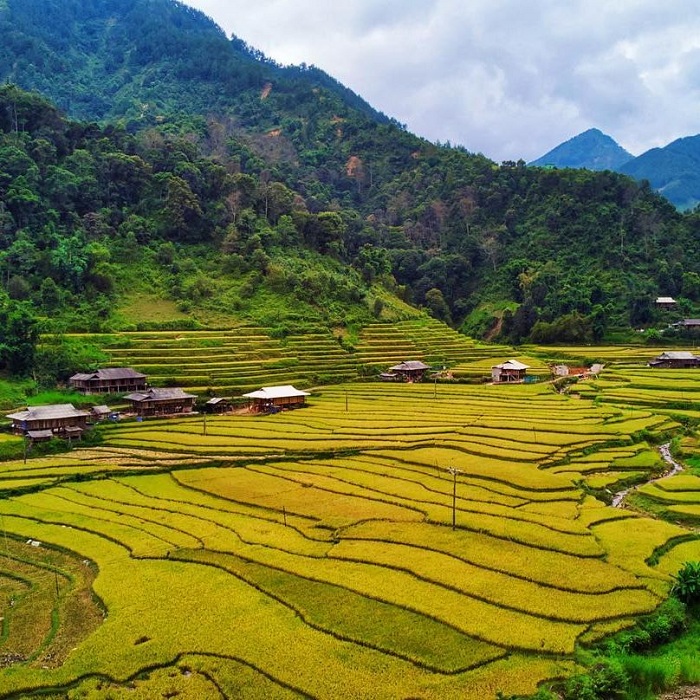 |
| The golden rice harvest season in Muong Lo. |
Unable to change her family's decision, Ban left home in search of her beloved. She crossed forests and mountains, calling Khun's name as she went, until she became exhausted and collapsed. From the place where she fell, a flower with pure white blossoms grew, and people came to call it the ban flower.
When Khun returned, he followed the traces of his beloved but could not find her. He continued wandering through forests and villages before finally collapsing beside Tham Le Mountain.
According to the legend, he transformed into a bird known as the Khun bird, whose solitary song can be heard each flowering season. The unfinished love story of Ban and Khun has been passed down through generations. Thus, the ban flower is beautiful not only for its pristine white petals but also because it evokes faithful love, the pain of a romance thwarted by others, and the longing to live alongside the person one loves.
Artisan Dieu Thi Xieng believes that the spring gatherings at Tham Le Cave, cave excursions and customs of admiring the flowers and listening to birdsong may have long been associated with these folk tales. Although the direct origins of these customs cannot yet be confirmed, the interplay between legend, natural scenery and community life has given Tham Le its distinctive character.
The story of Lady Ban and Khun is also associated by local people with a familiar dish of the Thai communities in the Northwest: vầu bamboo shoots cooked or prepared with ban flowers. Vầu bamboo shoots have a slightly bitter taste, while ban flowers add a delicate sourness and gentle fragrance. When combined, these seemingly contrasting flavours blend together to create a dish that embodies the distinctive character of the mountains and forests.
In folk interpretations, vầu bamboo shoots represent bitterness and hardship, while the ban flower symbolises the pure beauty of a young woman. The combination of these two ingredients therefore evokes the ancient love story, in which sweetness is always accompanied by loss and bitterness.
Through an ordinary dish, memories of the legend and traditional customs are preserved in everyday life. This is also a distinctive feature of folk culture: stories do not exist solely in oral accounts but are also reflected in cuisine, customs and the ways people perceive the natural world around them.
Today, changing lifestyles have transformed the ways young people socialise and form relationships. Romantic encounters inside the cave, the sound of khèn flutes calling out to potential lovers during the ban flower season, and courtship songs beneath the rocky ceilings now largely survive in the memories of older generations.
What weighs heavily on Artisan Dieu Thi Xieng's mind is the possibility that, as those who once took part in the gatherings grow older and gradually pass away, many details of the rituals, songs and customs may also disappear. For this reason, at the beginning of each year, she sits by the family hearth and tells her children and grandchildren about Tham Le Cave, the festivities she attended in her youth, and the story of Lady Ban and Khun.
For Xieng, recounting these old stories is also a way of helping younger generations understand their roots. These customs were not merely associated with romantic love; they also reflected how the Thai people organised community life, interacted with nature and expressed their hopes for good harvests and happiness.
The concerns of this elderly artisan highlight the need to preserve Tham Le Cave's heritage. This requires collecting and documenting folk tales, courtship songs, rituals and the memories of those who once attended the gatherings.
Researchers, artisans and local authorities could work together to conduct surveys and assess the site's heritage value, thereby considering appropriate preservation measures. If cave safety requirements, landscape protection and community consensus can be ensured, the possibility of researching and reviving the traditional Tham Le cave gatherings could be explored.
However, the most important goal should not simply be to recreate a festival to attract tourists, but to preserve the cultural significance and humanistic spirit inherent in the custom. After all, a heritage site truly remains alive only when the community continues to remember it, tell its stories, take pride in it and pass it on to future generations.
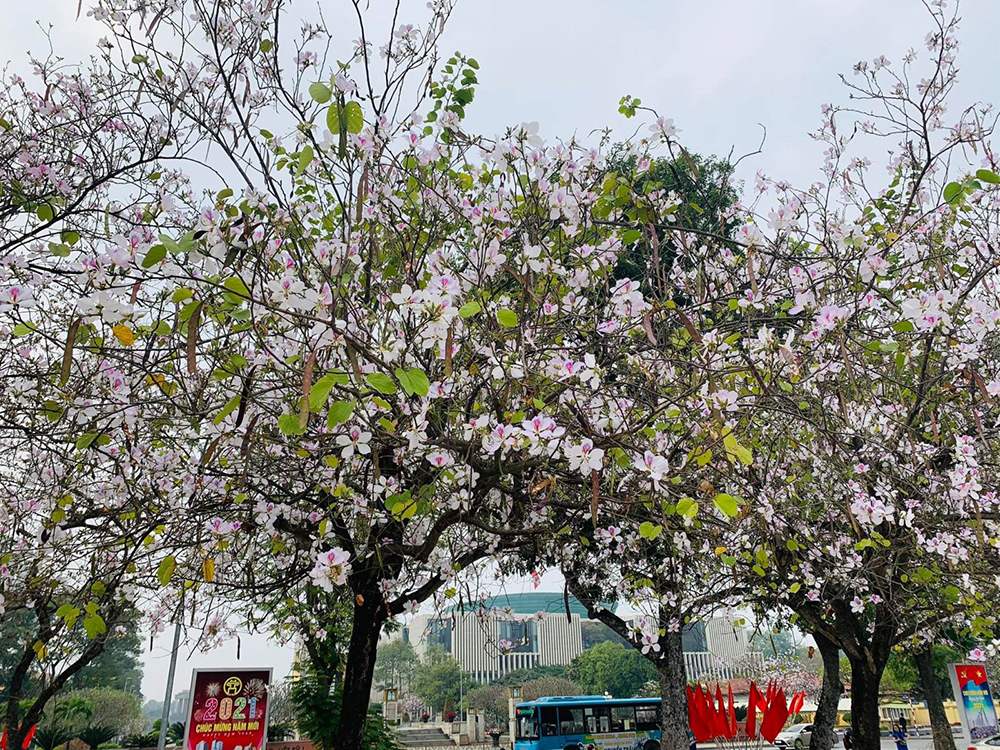 |
| Each spring, ban flowers bloom white once again across the forests of the Northwest. |
Each spring, ban flowers bloom white once again across the forests of the Northwest. Their delicate petals continue to unfold against the vast natural landscape, evoking love stories that have become part of the community's collective memory. The romantic encounters inside the cave may no longer take place as they once did, but the sounds of khèn flutes, traditional songs and stories from the past continue to be preserved.
In Artisan Dieu Thi Xieng's recollections, Tham Le Cave comes alive not only through its fascinating stalactites and winding, seemingly endless passages, but also through the laughter of young people, exchanged glances of affection and songs that once captivated those who heard them.
Preserving Tham Le Cave, therefore, means more than protecting a geographical landmark or reviving a festival. It also means safeguarding part of the cultural memory of the Thai people in Muong Lo, ensuring that the beautiful values passed down by their ancestors continue to be handed on, like the white ban blossoms that quietly return each spring amid the vast forests of the Northwest.
 Cherry Blossoms in Ha Giang: A One of A Kind Natural Wonder |
 Top Sites to Enjoy Gorgeous White Plum Blossoms in Moc Chau |
Most read


Related Stories
 Handbook
Cooking smoked buffalo: a must-try dish of the Thai ethnic group
Popular article
 Expats in Vietnam
Under Her Gaze: Three Encounters with Da Nang’s Iconic Lady Buddha
 Vietnamese Culture
Young Vietnamese People Bridge Vietnamese-Japanese Cultures Through Music
 Vietnamese Culture
Documentary on Ho Chi Minh’s Diplomacy Screened in Qatar
 Expats in Vietnam