
Following the Needle, Tracing the Memories of the Dao People in Muong Cha
| Unique Traditional Costumes of Red Dao People Young People in Sin Thau Carry Forward Ha Nhi Cultural Heritage |
The rhythm of the fabric and a mother's hands
I met Chao Pham Sinh sitting on the porch of her stilt house just as the sunlight touched the mountain peaks. Her hands, belonging to a Dao woman now over 60, moved deftly as she drove a sharp needle through the thick indigo fabric. Without sketches or measuring tapes, red and yellow threads took shape, forming precise, evenly spaced patterns.
“Our Dao women's clothes are not simply meant to look beautiful, you know. They are our written words, our family genealogy, and everything we hold inside,” Sinh said, looking up with a gentle smile that seemed to dispel the mist lingering in her eyes.
Looking at the traditional long dress taking shape on her lap, I began to understand why completing a full traditional outfit requires the women of Huoi Sau to devote months, sometimes even years, to patient work. Against the dark indigo background, vibrant red takes centre stage, delicately accented with shades of green, bright yellow and pure white. These are the colours of forest flowers and the warmth of winter fires, but above all, they symbolise the powerful will to live in this remote mountainous region.
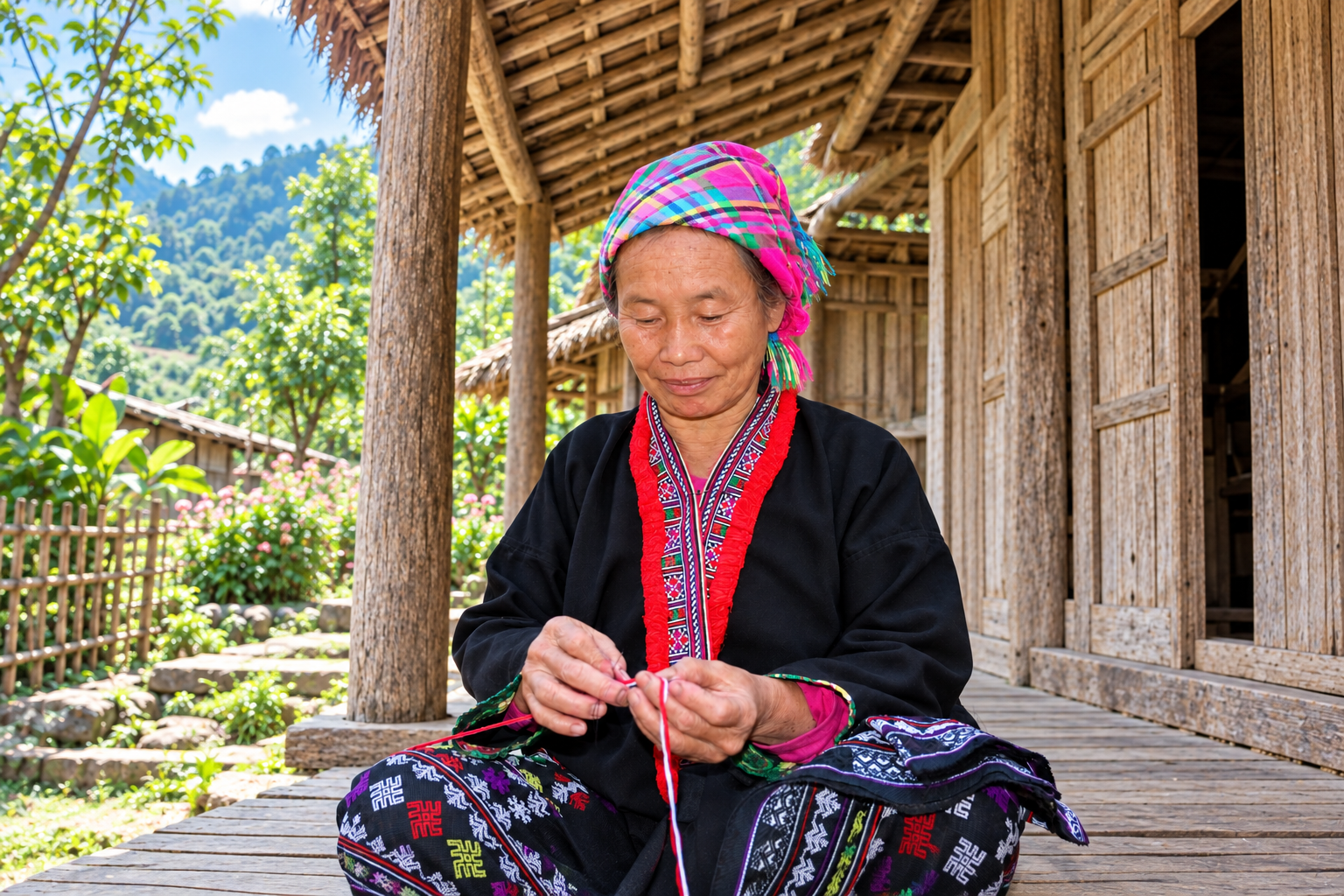 |
| Sinh continues to devote herself to preserving traditional Dao embroidery, stitch by stitch. (Photo: Duy Linh) |
Sinh showed me the intricate motifs embroidered on the reverse side of the fabric - a distinctive feature that makes Red Dao embroidery particularly painstaking. Not a single loose thread or uneven stitch can be found. Diamond shapes, zigzag patterns, stepped motifs and stylised tiger footprints follow one another along the dress, chest panels and trouser hems.
“I started learning embroidery when I was nine or ten,” Sinh recalled, her hands never pausing. “My mother taught me the basic running stitch first, then the closely spaced stitches. If I made a mistake in a single line, I had to undo it and start again. There was no room for carelessness. If a Dao girl didn't know how to embroider her own wedding clothes, people would laugh at her when she got married.”
From coming-of-age rituals to everyday life
In Huoi Sau, traditional clothing serves purposes far beyond everyday dress. It also bears witness to some of the most sacred milestones in a person's life.
Just last week, the small hamlet echoed with the sounds of gongs at the wedding of a young woman named Phan Mui Khe. Amid the hazy kitchen smoke and cheerful conversations, the image of the bride taking small steps towards her husband's home in her magnificent traditional attire left an indelible impression on me. Her wide-brimmed headdress, built on a sturdy bamboo frame and covered in vibrant red brocade, was adorned with embroidered strips and dangling tassels that concealed her shy face.
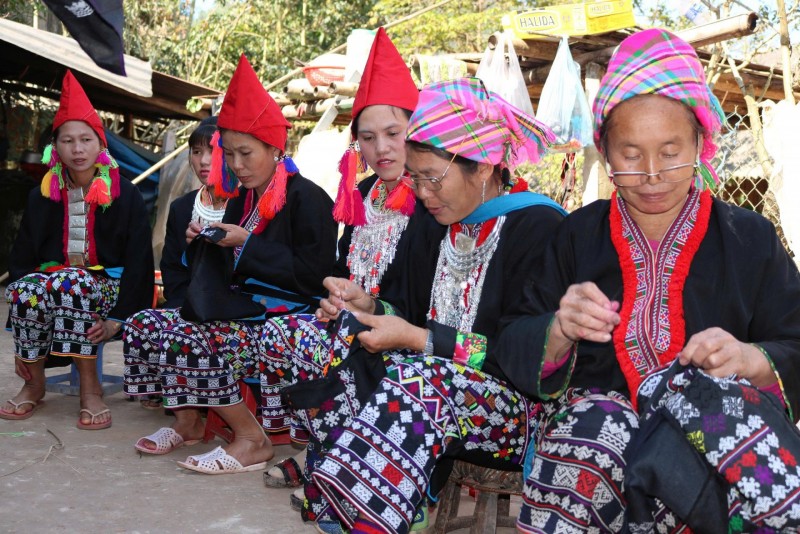 |
| Many young people in Huoi Sau still take an interest in making their own traditional ethnic costumes. (Photo: Duy Linh) |
As she crossed the threshold of her husband's home, the red veil was lifted, marking the moment she officially embarked on a new chapter of her life - as a wife and mother, taking on the responsibilities and concerns of family life. At that moment, her embroidered garments were far more than colourful attire. They were a talisman, a blessing from her ancestors, and the culmination of hundreds of hours of patient work that her mother had devoted over many years to preparing for her daughter's future.
Yet modern life is bringing with it a growing wave of change. Shiny rolls of industrial thread, convenient synthetic-blend fabrics and even ready-made traditional outfits sold at local markets are becoming increasingly common. They are certainly convenient and quick, but the spirit of nature, the warmth of human sweat and the breath of the women who embroider these garments are gradually fading away.
Preserving cultural heritage or letting memories fade?
Conversations with young people in Huoi Sau today inevitably raise a poignant question: How many among those in their late teens and twenties can still read the stories written on fabric?
Tan Mui Hin, a young woman from the hamlet, lowered her eyes to look at her wedding dress before hesitantly admitting: “I love wearing traditional clothes because they are beautiful and make me stand out during festivals. But if you ask me to sit down and embroider an entire outfit from beginning to end, like my grandmother and mother do, honestly, that would be very difficult. I don't have much time, and besides... I'm used to holding a phone and a machete for clearing fields. I hardly have the time or patience to count each thread and embroider anymore.”
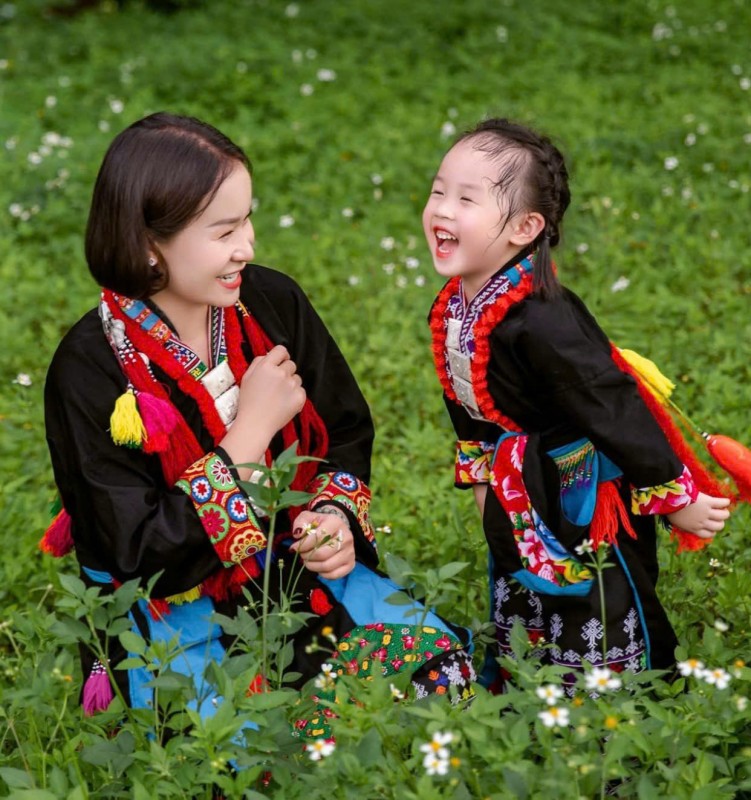 |
| The colours give the traditional costumes of the Dao people in Huoi Sau Hamlet, Muong Cha Commune, their distinctive character. (Photo: Duy Linh) |
Hin's words inadvertently touched upon the greatest concern facing those who preserve cultural heritage in Muong Cha. Land and hamlets may undergo changes in administrative boundaries, and commune and village names may be reorganised as time moves forward. But if the threads passed down through generations are broken, where will the memories of the Dao people go?
Fortunately, amid the daily struggles to make ends meet, there are still people steadfastly keeping this flame alive. On winter evenings by the fire at May's house, as a flashlight illuminates a corner of the room, a few children from the hamlet still gather to practise making stitches on pieces of coarse fabric. Their threads may be crooked and their stitches sparse, but their presence alone offers a reassuring answer: the flow of culture has never truly come to a halt.
As afternoon gradually descends over the Muong Cha valley, wisps of smoke mingle with the mountain clouds, casting a peaceful stillness over Huoi Sau Hamlet. Beneath the house porch, the gentle, rhythmic sounds of the loom continue uninterrupted.
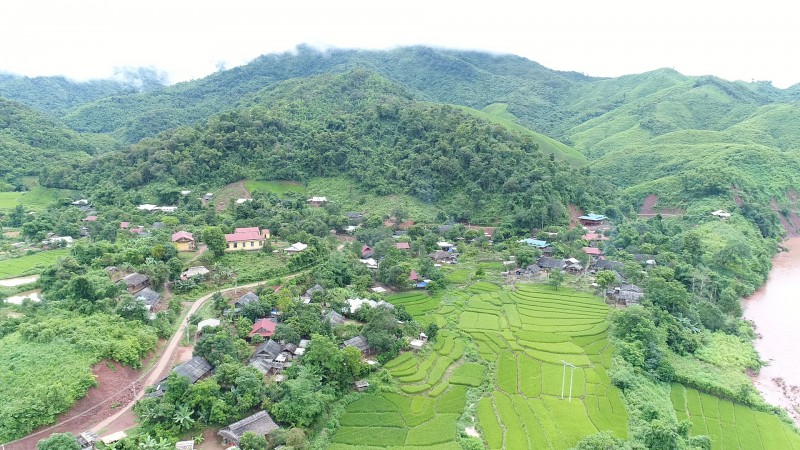 |
| Huoi Sau Hamlet, home to the Red Dao people in Muong Cha Commune, nestles among majestic mountain ranges in the country's far western region. (Photo: Duy Linh) |
Following those threads and stitches, I have come to understand that tracing the memories of the Dao people does not mean searching through dry documentary records. Rather, it means looking to the calloused hands, warm eyes and steadfast hearts of those who remain devoted to their homeland and work tirelessly to preserve their people's cultural identity.
As long as there are people willing to learn and others ready to pass on their knowledge, the embroidered flowers adorning the chests of the Dao people in Muong Cha will continue to bloom - vibrant and proud amid the vast mountains and forests of the Northwest.
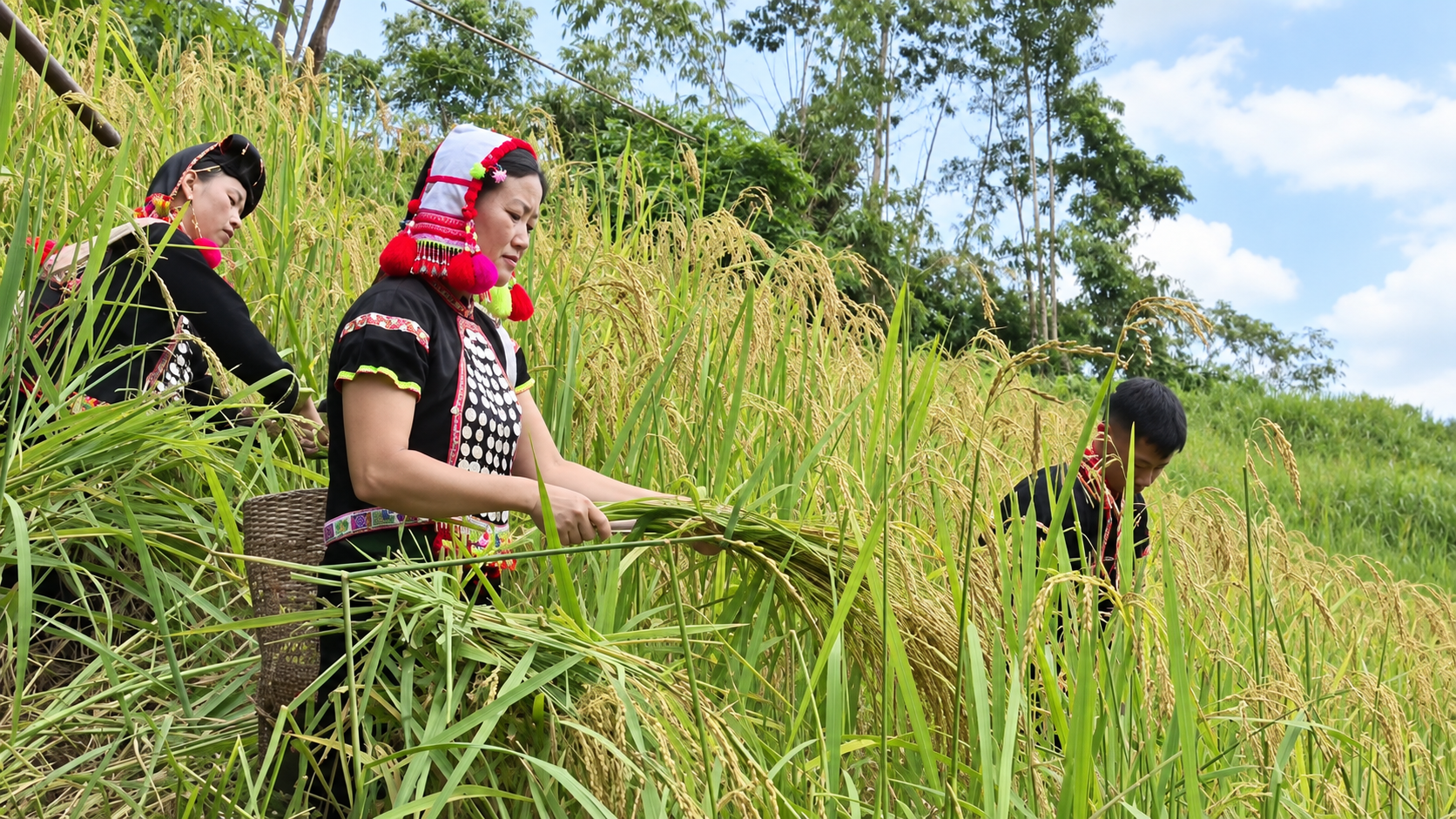 Si La People of Muong Nhe Preserve Filial Piety Through New Rice Festival |
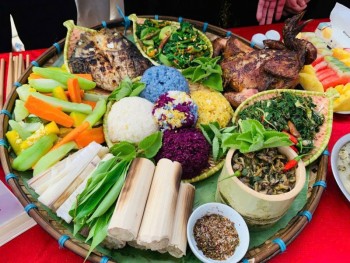 Mountain Flavours and Forest Aromas on the Dining Tables of Thai People in Muong Luan |



Related Stories
 Vietnamese Culture
Young People in Sin Thau Carry Forward Ha Nhi Cultural Heritage
 Vietnamese Culture
Japan Provides VND 15 Billion in Aid for Ethnic Minority Children in Tuyen Quang and Lai Chau
 Vietnamese Culture
Special Tet Program Celebrates Remote Border Communities
 Vietnamese Culture
Strengthening The Most Vulnerable Communities’ Resilience to Natural Disaster Risks
Popular article
 Vietnamese Culture
More Than 400 Activities Nationwide to Mark Viet Nam Cultural Day 2026
 Vietnamese Culture
Mountain Flavours and Forest Aromas on the Dining Tables of Thai People in Muong Luan
 Vietnamese Culture
Si La People of Muong Nhe Preserve Filial Piety Through New Rice Festival
 Vietnamese Culture