
Career Guidance Through Familiar Everyday Activities
| Young People Contribute to Disaster Preparedness in Quang Tri Learning to Be Parents |
Learning a trade through hands-on experience
Before lunch that day, tofu was not simply brought into the kitchen of Yen Minh Primary and Secondary School ready to be served. Instead, the students were given familiar soybeans and guided through the process of turning them into a dish that regularly appears on their family dining tables.
Beside the grinder, the teacher demonstrated each step while guiding groups of students to put the soybeans into the machine, showing them how to operate it and repeatedly reminding them to exercise caution. At each stage, the activity was paused for explanation: how the soybeans should be prepared, how they should be ground, how long they should be pressed, and what steps should follow before the beans could finally become finished tofu. One by one, the students tried their hands at each stage under the supervision of their teachers.
Students gain hands-on experience in the various stages of making tofu. (Video: Dinh Hoa)
Among the students watching each step was V.G. Linh, a seventh-grader. Before taking part in the hands-on session, Linh said she had eaten tofu many times but had never wondered how it was made. She had also never imagined that producing a single piece of tofu involved so many stages.
Being able to watch, listen to the teachers’ explanations and directly participate in several stages made the process of making tofu seem “more diverse” and “more interesting” than she had imagined. However, she also admitted that she could not yet remember all the steps or complete an entire batch of tofu by herself. Linh hoped she would have the opportunity to take part in more practical sessions like this so that she could remember each stage thoroughly and, one day, make tofu at home for her whole family to enjoy.
For Linh, the experience sparked her curiosity. From simply knowing tofu as a ready-made food, the seventh-grader began to take an interest in the story behind it: Where do the ingredients come from? How is the product made? And could such activities become a profession? These are also the questions the school hopes to encourage students to explore by choosing tofu-making as part of its career-orientation education.
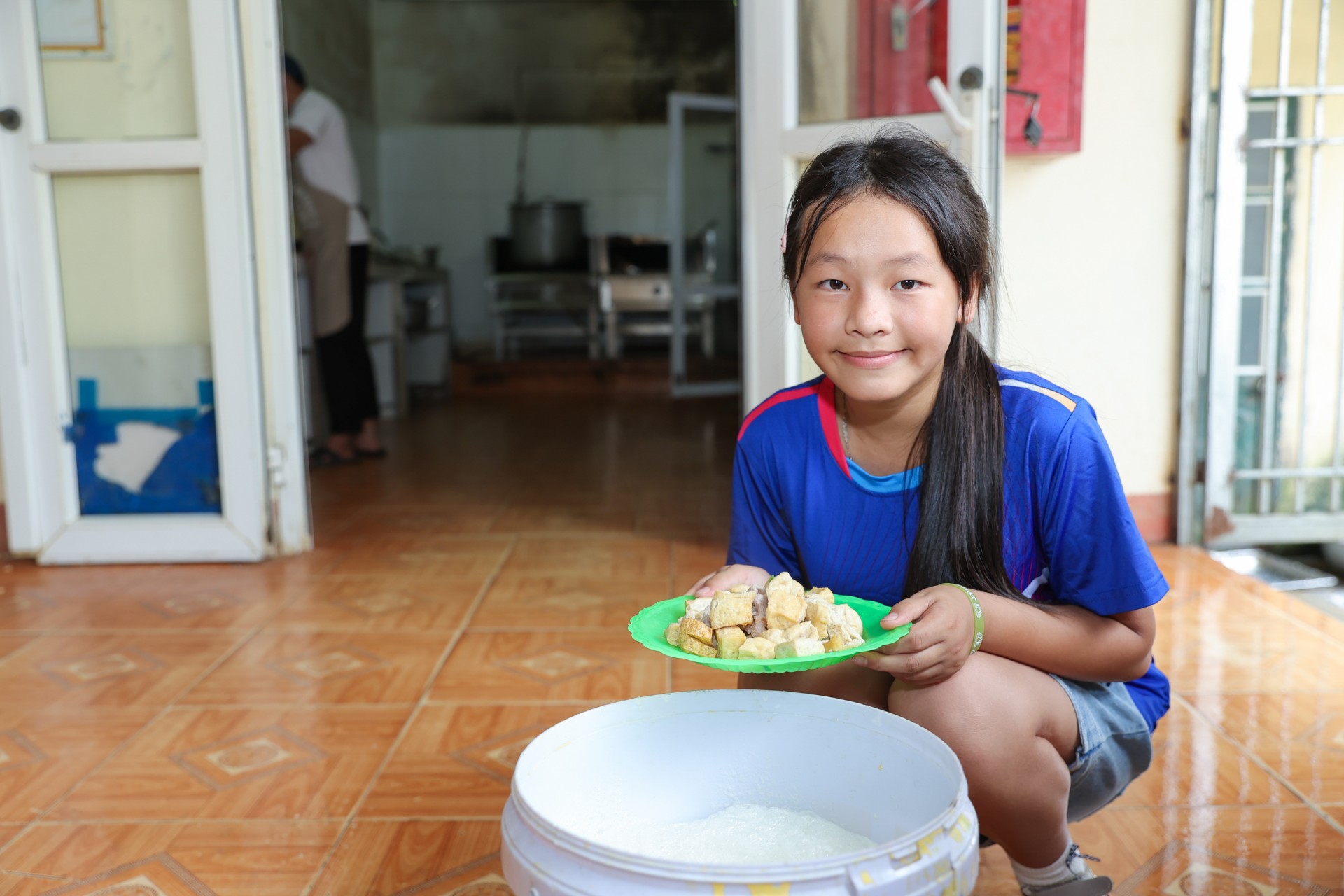 |
| V.G. Linh with a dish of stir-fried pork and tofu, made from the tofu produced during the hands-on session at Yen Minh Primary and Secondary School. (Photo: Dinh Hoa) |
According to Nguyen Thi Lan, a teacher at Yen Minh Primary and Secondary School, Yen Minh Commune is home to a large Hmong population, and soybeans are widely grown by local residents and closely connected to their daily lives. Soybeans are used not only to make tofu, but also to produce bean sprouts, prepare soups, and use young soybean pods as food. As such, soybeans are both a familiar ingredient and a potential livelihood-generating product.
Lan said that in the past, many students tended to associate a “profession” with jobs such as civil servants, teachers, or occupations they considered “prestigious” or “high-level.” They rarely thought that activities they encountered in everyday life could also generate an income if carried out systematically, with proper skills and resulting in a marketable product. Therefore, what the school hopes students will learn from making a batch of tofu is not simply the technique of food processing. More importantly, it is about helping them look at the work that has always surrounded them from a different perspective.
Career orientation through familiar everyday activities
Making tofu is just one of many ways Yen Minh Primary and Secondary School brings the world of careers closer to its students. According to Nguyen Thi Lan, the school has organised or guided students in experiencing activities such as growing vegetables and caring for chickens and pigeons. On other occasions, teachers have taken students outside the school to learn about the traditional craft of making banh cuon (steamed rice rolls) or visited a motorbike repair shop, where they could observe mechanics at work.
Each activity offers a different experience. When growing vegetables, students are guided through everything from preparing raised beds and determining the appropriate planting depth for each type of crop to caring for the plants. When learning about livestock farming, they learn how to observe animals and recognise unusual signs that may indicate illness. For tofu-making and other service-related occupations, in addition to hands-on practice, teachers incorporate knowledge about food hygiene and safety, cost calculations, and how a product is made and eventually reaches consumers.
What these activities have in common is that they are all closely connected to the everyday lives of local students. As a result, what they learn at school is not unfamiliar to them. Through teachers’ guidance, however, they have the opportunity to gain a more systematic understanding of these jobs and learn practical skills that can be immediately applied at home.
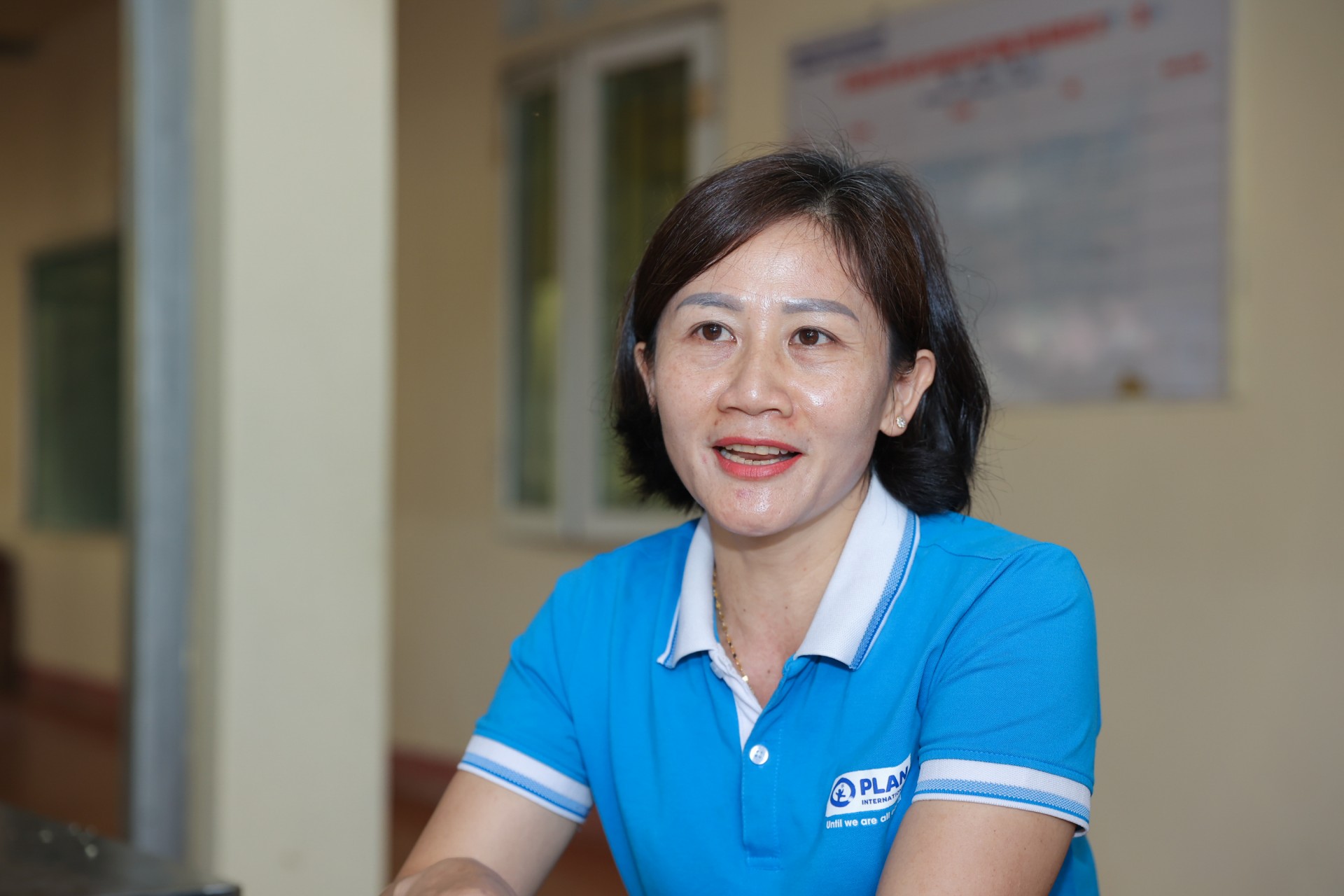 |
| Nguyen Thi Lan, a teacher at Yen Minh Primary and Secondary School. (Photo: Dinh Hoa) |
According to Lan, the practical sessions also create opportunities for teachers and students to build closer relationships. Students can exchange ideas, ask questions, and work with teachers to address situations that arise during the activities. Many students who were previously shy have gradually become more confident, not only sharing their thoughts about the work they are doing but also opening up more about their studies and personal lives.
The change has gradually extended to students’ parents as well. Seeing their children take part in practical activities, learn new skills and become more active has brought parents a sense of joy. In the past, inviting parents to the school was not easy, but in recent years, many have become more enthusiastic, willingly arranging their schedules to participate alongside their children and teachers. Lan believes this also represents a significant change in how parents show interest in and support their children’s education and development.
The career-orientation activities at Yen Minh Primary and Secondary School are part of the Girls Ready for Future (GR4F) project, an initiative implemented by Plan International in Yen Minh and Meo Vac districts of the former Ha Giang Province. Following the administrative reorganisation, the project area is now located across eight communes in Tuyen Quang Province: Meo Vac, Khau Vai, Sung Mang, Niem Son, Yen Minh, Thang Mo, Mau Due and Duong Thuong. The project ran from July 2021 to June 2025, with a total budget of approximately VND 6.5 billion.
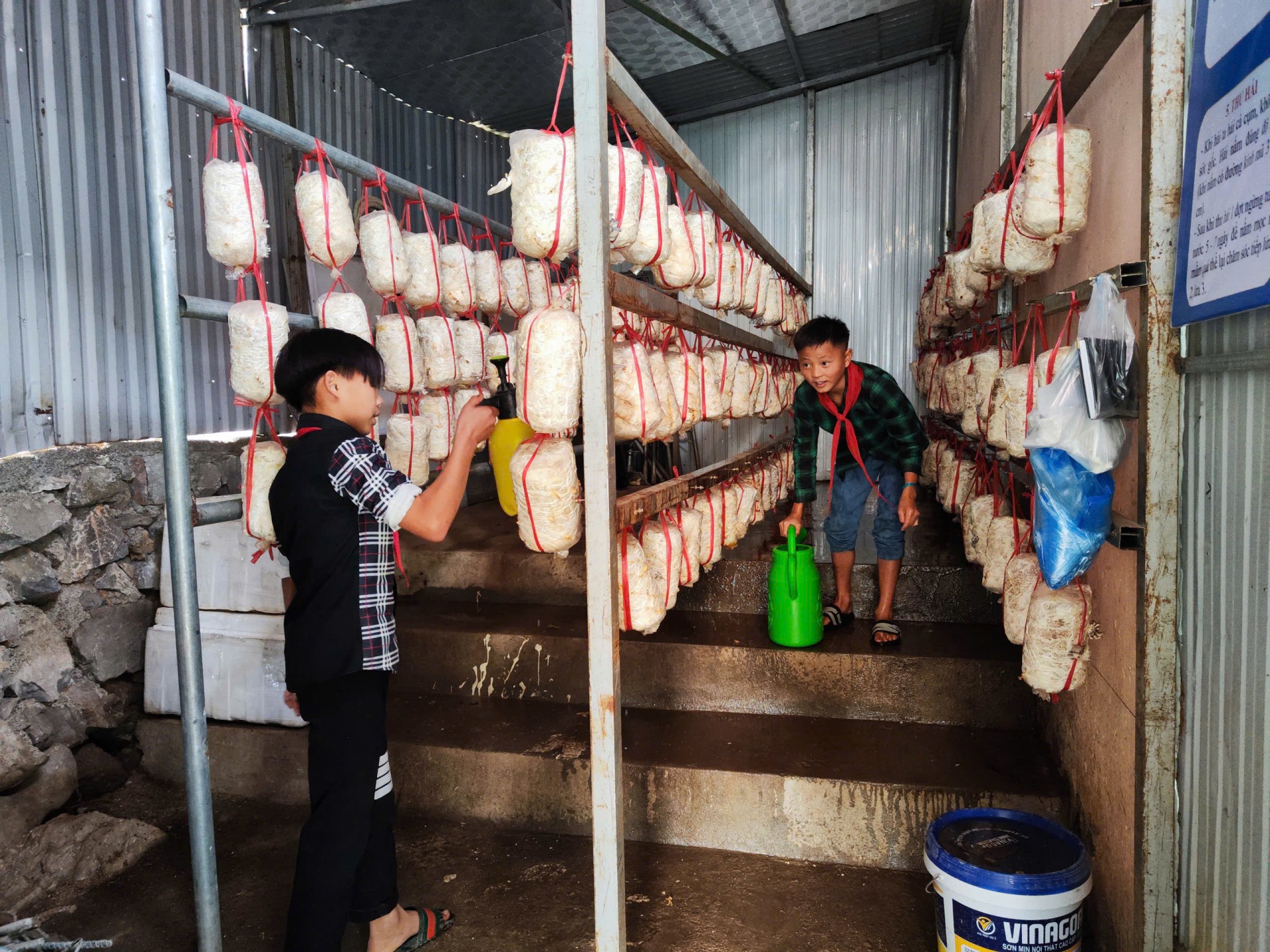 |
| Students growing mushrooms. (Photo: Hoang Huy) |
According to Dinh Bien Hoa, a programme officer at Plan International, the project focused on bringing career education closer to students through integrated lessons, career-experience activities, experiential livelihood models and children's clubs. Rather than introducing occupations solely through theory, students had opportunities to directly engage in, observe and try out activities related to the actual conditions of their local communities.
After four years of implementation, the career-orientation model was expanded to all 37 of the 37 secondary schools in the project area. In total, 12,212 career-orientation lessons were delivered, 132 children's clubs and 37 career-experience models were established, while 84 competitions for teachers specialising in career guidance were held, contributing to improved capacity among teaching staff.
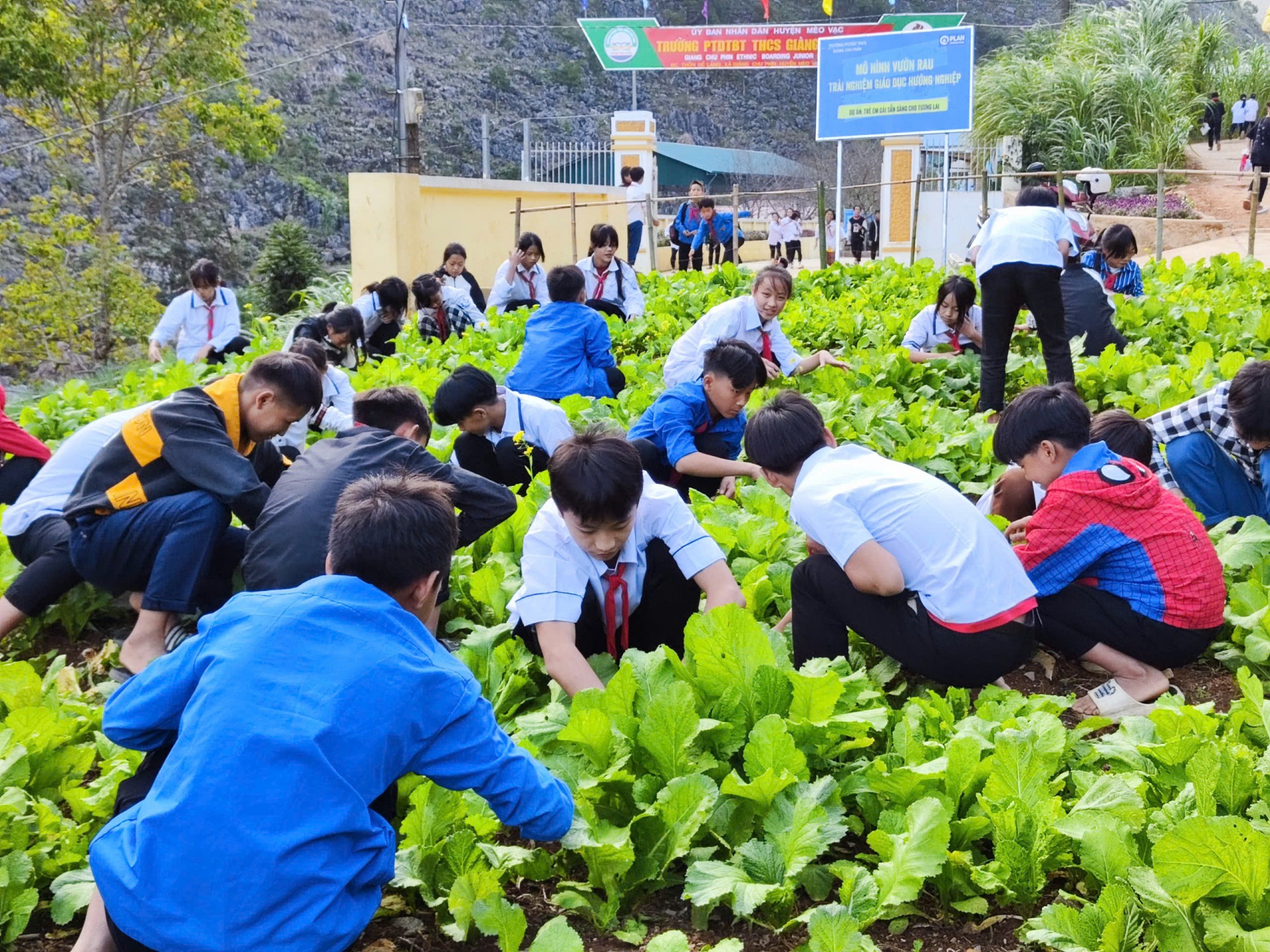 |
| An experiential vegetable garden model for career education at Meo Vac Secondary School, Giang Chu Phin branch (Meo Vac Commune, Tuyen Quang Province). (Photo: Hoang Huy) |
According to Hoa, the project's impact is reflected not only in the number of lessons and models implemented. Through their participation, students developed a clearer understanding of their career orientations, while parents gained a better understanding of their children's options for further study and vocational training after completing secondary school. Teachers, meanwhile, strengthened their capacity to organise career-orientation activities in line with the new education programme.
The GR4F project has now concluded, but its career-orientation lessons did not end with the project. At Yen Minh Primary and Secondary School, teachers continue to maintain these experiential activities and incorporate them into the school's programme, giving new generations of students opportunities to explore familiar occupations in their communities. Nguyen Thi Lan hopes such activities can be organised more regularly and adapted to actual local conditions, giving every student more opportunities to try their hand at different activities before considering their future career choices.
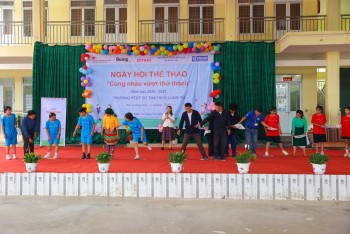 Sports Bring Students, Families and Schools Together Sports Bring Students, Families and Schools Together Lung Pu Semi-boarding Primary and Lower Secondary School held the sports festival “Together overcoming challenges” on September 17 in Tuyen Quang, creating a space for students to exercise, interact and strengthen connections with their peers, teachers and parents. |
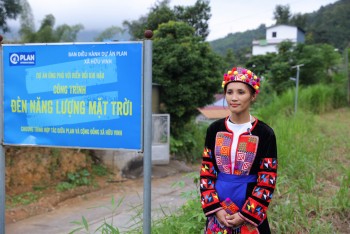 Brighter Streets, A Livelier Village Brighter Streets, A Livelier Village Once among the roads that residents were reluctant to use after dark, the roads in Tan Tien Village, Yen Minh Commune, Tuyen Quang Province, are now illuminated by solar-powered streetlights supported by Plan International. The lighting has made travel more convenient and safer, while also expanding the space available for residents to socialise, play and connect after a day of work. |

Most read


Related Stories
 Viets Home
Healthy Body, Strong Mind
 Viets Home
Sports Bring Students, Families and Schools Together
 Viets Home
Learning to Be Parents
 Viets Home
Brighter Streets, A Livelier Village
Recommended
 Viets Home
Eight Additional Remains of Fallen Soldiers Discovered at Le Thi Rieng Park
 Viets Home
UAE Culture Comes Alive in Hanoi
 Viets Home
WVI and Dien Bien Chart Next Chapter in Support for Children
 Viets Home
Tuyen Quang: New Space for Reading, Experiential Learning and Career Guidance for Kim Xuyen Students
Popular article
 Viets Home
Finding Confidence in Learning English
 Viets Home
Dien Bien Buries Remains of 10 Fallen Soldiers at Tong Khao Martyrs' Cemetery
 Viets Home
My New Home: An Invitation to Visit
 Viets Home