Viet Nam, Thailand strengthen supply chain links to mark 50 years of ties
The Vietnamese Embassy in Thailand has hosted a seminar on bilateral economic connectivity to celebrate 50 years of diplomatic relations and open a new phase of trade and investment cooperation.
As part of activities marking the 50th anniversary of Viet Nam-Thailand diplomatic relations (August 6, 1976 - August 6, 2026), the seminar gathered Thai Vice Minister of Foreign Affairs Vijavat Isarabhakdi, leaders of the Thailand-Viet Nam Business Council (TVBC), the Vietnamese Association in Thailand, the Federation of Thai Industries, and the Thai Chamber of Commerce, along with business executives and scholars from both nations.
In his opening remarks, Vietnamese Ambassador to Thailand Pham Viet Hung noted that upgrading bilateral ties to a Comprehensive Strategic Partnership in May 2025 has created strong momentum for closer cooperation. Identifying economics, trade, and investment as core pillars, he stated that priority now lies not just in capital volume, but in building durable linkages between businesses and supply chains to withstand global economic shifts.
Delivering the keynote speech, Vice Minister Vijavat Isarabhakdi called for turning the Comprehensive Strategic Partnership into concrete results through the “Three Connects” strategy to maximize complementarity between the two economies, reported VOV.
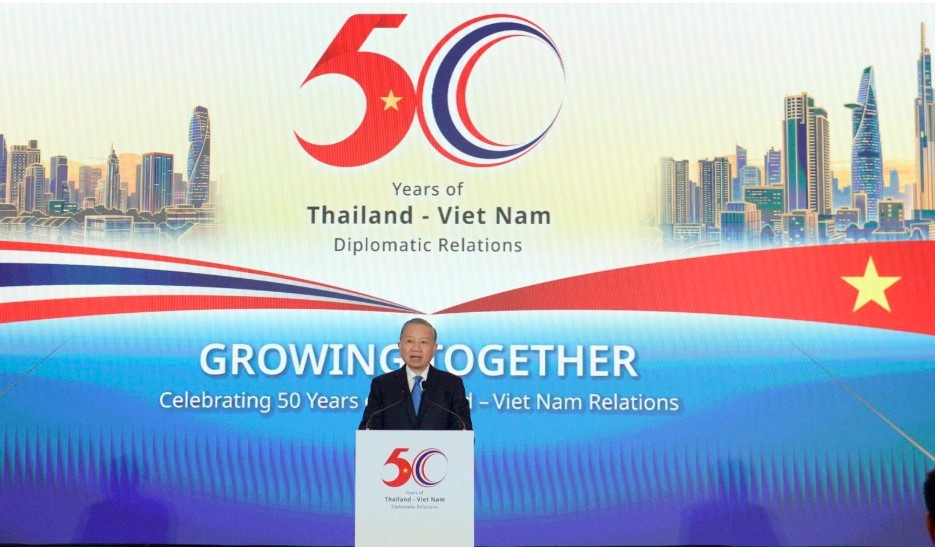 |
| General Secretary of the Communist Party of Viet Nam Central Committee and President To Lam speaks at the Viet Nam-Thailand Business Forum to celebrate 50 years of Viet Nam-Thailand diplomatic relations (Illustrative photo) |
First, he emphasized supply chain connectivity through transport infrastructure, cross-border logistics via Laos, and high-value sectors including aircraft maintenance, information technology, artificial intelligence (AI), and semiconductors. Second, he pointed to local economic connectivity backed by 20 twin-city and provincial agreements alongside roughly 250 direct weekly flights, including Thai Airways' new Bangkok-Da Nang service set to begin on December 1, 2026. Third, he outlined cooperation in sustainable development and digital finance, supported by 37 Thai-invested renewable energy projects in Viet Nam worth about US$2.64 billion and bilateral QR payment integration.
During panel discussions, representatives from TVBC and Thammasat University identified strong potential for cooperation in supplier networks, AI adoption, digital trade, and green commerce across the automotive, energy, and agri-food industries.
A Thammasat University expert added that as ASEAN attracts US$244 billion in foreign direct investment, Viet Nam and Thailand should move beyond competition to pool resources, accelerate technology transfer, train workers, and build shared competitiveness.
From a business perspective, Nguyen Van Phuoc Linh, Country Manager of FPT in Thailand and Taiwan (China), detailed FPT's cooperation with C.P. Group in applying AI and the Internet of Things (IoT) to the agri-food value chain. This model combines Vietnamese technology expertise with Thai manufacturing scale.
Similarly, a representative from Kim Long Motor presented its operational shift in Thailand starting in May 2026, moving from completely built-up vehicle exports to localized component assembly with a localization rate above 50%. The company plans to develop Thailand into a regional manufacturing and export base for ASEAN between 2027 and 2030.
Alongside discussions on policy and investment opportunities aimed at bringing bilateral trade to US$25 billion in the near term, the seminar also served as an open platform for business communities and scholars from both countries to build mutual trust and understanding, paving the way for substantive progress in the next phase of development.
Viet Nam remains attractive destination for Japanese businesses
Strong growth prospects, a skilled workforce and a stable political and social environment are making Viet Nam an attractive destination for Japanese businesses and investors, participants at an investment promotion conference heard in Ho Chi Minh City on November 12.
The 2026 Japan Investment Promotion Conference was jointly organized by the municipal Investment and Trade Promotion Center (ITPC) and Japan’s Gunma Bank.
Fukai Akihiko, President and Representative Director at Gunma Bank and head of a business delegation from Japan’s Gunma prefecture, said cooperation between Gunma and Viet Nam has continued to expand in recent years. Around 15,000 Vietnamese people currently live in Gunma, forming the largest foreign community in the prefecture. Many skilled Vietnamese workers are contributing to local economic development in manufacturing, programming and other sectors, he noted.
About 60 businesses from Gunma have invested and operated in Viet Nam, with many planning to expand their operations and increase investment. Ho Chi Minh City, one of Vietnam’s leading economic centers, has attracted particular interest thanks to its strong growth and connectivity advantages, reported VNA.
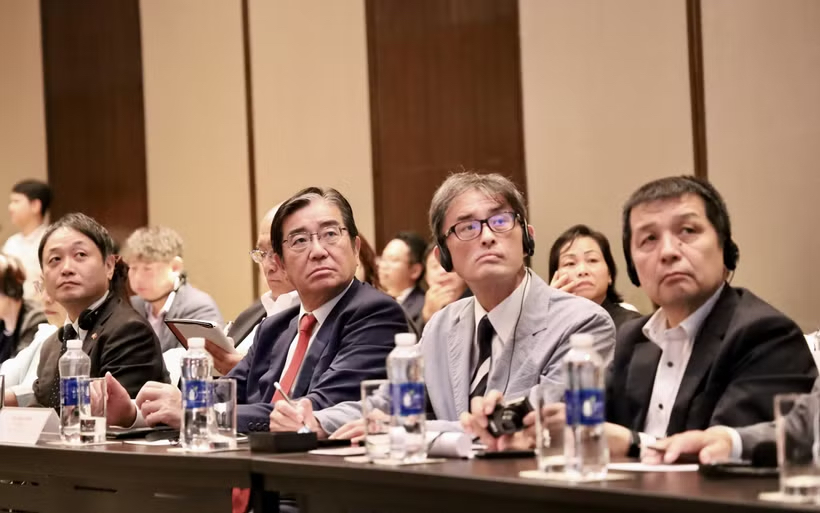 |
| Japanese business representatives review Ho Chi Minh City’s investment project portfolio at the conference. (Photo: VNA) |
Fukai said Viet Nam is one of the most attractive economies in ASEAN for businesses seeking new investment opportunities. Its manufacturing sector is gaining ground, supported by an abundant workforce and its strategic location in the region. Foreign investors have established production facilities in various industries, including automobiles, electronics and garments.
Vietnam’s growing pool of well-educated information technology professionals is another advantage. The rapid development of the IT sector has attracted international companies to software development and digital services. Meanwhile, expanding tourism, accommodation, hotel and business process outsourcing (BPO) services are creating further investment opportunities.
Yoshinori Wakatabi, Chairman and Representative Director of Yosen Kogyo, said his company has established a legal entity and opened its first food business outlet in Hanoi last month. It is now exploring further investment opportunities in Ho Chi Minh City.
Operating in sectors ranging from electronic components and food production to environmental services, construction and retail, the company is particularly interested in the southern metropolis’s infrastructure development, information technology and computer-related industries.
Wakatabi pointed out that Japanese businesses often struggle to understand Viet Nam's business environment and regulations. He called for more information-sharing seminars and practical investment incentives, particularly in land and taxation, to facilitate project implementation and factory construction.
Cao Thi Phi Van, ITPC Deputy Director, said Japan is among Ho Chi Minh City’s leading economic partners in investment, trade and development cooperation. Japanese investors have 84 newly licensed projects in the city, with total registered capital exceeding 43 million USD.
She highlighted potential cooperation in manufacturing, supporting industries, electronics and semiconductors, automobiles, green transport, new materials, garment and footwear production, food processing and the circular economy.
The city is also developing a new economic space connecting markets, manufacturing, logistics, infrastructure, human resources and services. For 2026–2030, it has identified around 250 projects calling for investment across nine sectors, including seaports and logistics, high technology, transport infrastructure, education, housing, healthcare, trade and services, and culture and sports.
Van affirmed that the city would continue improving its investment environment, reforming administrative procedures and expanding digital transformation in public management, while supporting investors throughout the process from initial market research to project implementation and expansion.
Both sides also called for regular exchanges of information on policy changes, investment opportunities, market demand and Japanese industry standards to encourage more technology-driven businesses to establish long-term operations in Viet Nam.
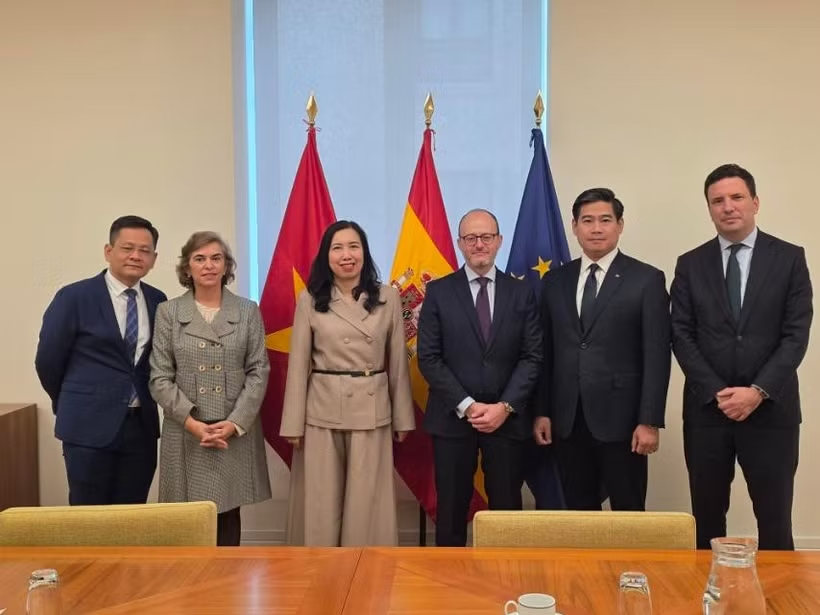 Viet Nam News Today (Nov. 8): Viet Nam, Spain Seek to deepen Strategic Partnership |
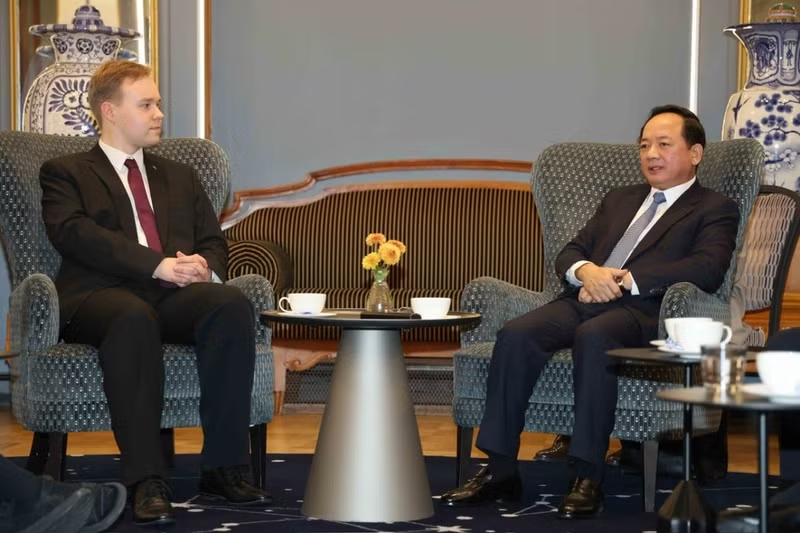 Viet Nam News Today (Nov. 9): Viet Nam, Finland Move to Strengthen Political Trust, Expand Cooperation |