| Viet Nam News Today (Nov. 5) notable headlines Viet Nam, EU shape future of green economy, new value chains Vietnamese localities strengthen investment links with Korean businesses Viet Nam’s 10-month FDI inflows reach over US$54 billion Hanoi, HCM City lead in 10-month public investment disbursement Viet Nam positions itself in global AI supply chain National Geographic recommends southern Viet Nam for November travel Cruise ship Royal Princess brings 3,000 foreign tourists to Khanh Hoa Vietjet to operate Da Nang flights to Osaka, Jakarta in December RoK's Udeok Global Scholarship helps Vietnamese students pursue their dreams |
 |
| Speakers at a discussion on prospects for cooperation in developing new value chains in the context of a changing global landscape (Photo: VNA) |
Viet Nam, EU shape future of green economy, new value chains
The Viet Nam-EU Economic and Trade Cooperation Forum 2026 was held in Hanoi on November 4, aiming to strengthen policy dialogue and promote bilateral economic ties.
The forum, themed “Shaping the Future Green Economy & New Value Chains”, was jointly organised by the Ministry of Industry and Trade, the EU Delegation to Viet Nam, the EU-ASEAN Business Council (EU-ABC) and the European Chamber of Commerce in Viet Nam (EuroCham).
In his remarks Deputy Minister of Industry and Trade Luong Hoang Thai said the ninth edition of the forum serves as an effective channel for regular exchanges between government agencies and business communities on policies, market development, trade connectivity and investment.
Viet Nam is pursuing major strategic economic goals, including maintaining macroeconomic stability, achieving average annual GDP growth of at least 10% during 2026-2030 and becoming one of the world's 30 largest economies by 2030, he noted.
The year 2026 marks a new chapter in Viet Nam-EU relations following their elevation of bilateral ties to a Comprehensive Strategic Partnership. Together with the Viet Nam-EU Free Trade Agreement (EVFTA), the upgraded ties provide a solid foundation for more substantive and effective trade and investment cooperation.
More than six years after the EVFTA took effect, bilateral trade has maintained positive growth. Two-way trade surpassed 65 billion USD in the first nine months of 2026, up nearly 20% year on year.
The EU is Viet Nam's fourth-largest trading partner, third-largest export market and sixth-largest import market, while Viet Nam is the EU's largest trading partner in ASEAN and its ninth-largest goods supplier, cited VNA.
Thai said Viet Nam hopes the EU will remain a key export market and become a strategic partner in trade upgrading, industrial linkages, economic autonomy and the adoption of higher sustainability standards.
He added that Viet Nam seeks to increase exports of technology-intensive, deeply processed and high-value-added products while importing advanced machinery, equipment, materials, green technologies and circular energy solutions from Europe.
Given the EU's technological strengths, management expertise and financial resources, Viet Nam called on European partners to expand technical assistance, technology transfer and investment in green, digital and energy transitions and circular economy projects. It also expects the EU to translate commitments under the Just Energy Transition Partnership (JETP) into concrete financial and technological support.
EU Ambassador to Viet Nam Julien Guerrier reaffirmed that Viet Nam is a strategic partner of the bloc, saying the upgraded relationship has generated fresh political momentum.
He stressed that the full and effective implementation of the EVFTA is essential to unlocking cooperation potential, particularly through fair market access and a stable, transparent and predictable business environment.
The EU supports Viet Nam's efforts to improve law enforcement, shift from pre-inspection controls towards risk-based management, and ensure more consistent implementation of regulations across localities, he said. Such reforms would strengthen investor confidence, reduce costs and attract high-quality European investment.
Guerrier highlighted cooperation opportunities in renewable energy, circular economy, sustainable manufacturing, aerospace, seaports, airports, logistics, semiconductors, digital transformation, strategic minerals, healthcare, biotechnology and high-tech agriculture.
Noel Clehane, Vice Chairman of the EU-ABC, said Viet Nam is well positioned to attract a greater share of EU investment, manufacturing, technology and business partnerships in ASEAN, but should focus on high-quality, long-term investment that generates greater added value.
European investment could bring advanced technologies, expertise, workforce development and stronger links with Vietnamese enterprises, helping the country integrate more deeply into regional and global value chains, he said.
Participants also highlighted cooperation in the energy sector. Trinh Quoc Vu, Deputy Director of the Electricity Authority of Viet Nam under the Ministry of Industry and Trade, said Viet Nam's net-zero target by 2050 and ambitious economic growth goals are placing greater demands on energy security.
He called on European businesses to participate more actively in implementing the revised Power Development Plan VIII through investment in power generation and grid infrastructure, technology provision, technical solutions and international financing.
Viet Nam also hopes to work with European partners to develop renewable energy supply chains, particularly for offshore wind power, to meet domestic demand and serve export markets, he added.
Vietnamese localities strengthen investment links with Korean businesses
The Vietnamese Embassy in the Republic of Korea (RoK) held a conference on November 4 to connect Vietnamese localities and businesses with Korean partners, seeking to open up new opportunities and promote investment cooperation in emerging sectors.
The conference saw the presence of a delegation from Quang Ninh city led by Vice Chairman of the municipal People’s Committee Le Van Anh, and a delegation from Bac Ninh city led by Standing Vice Chairwoman of the municipal People’s Council Tran Thi Hang. Nguyen Dong Trung, Deputy Director of the External Relations and Cultural Diplomacy Department under the Ministry of Foreign Affairs, also attended.
The event gathered more than 200 Korean and Vietnamese participants, including representatives of major companies such as Samsung, LH, Hanwha, Lotte and Shinhan Bank, as well as economic associations and organisations like the Business Association of Vietnamese in Korea (BAVIK). It provided a platform for Korean companies to discuss investment needs, the business environment and project implementation directly with representatives of Vietnamese localities.
In his opening remarks, Vietnamese Ambassador to the RoK Vu Ho said bilateral relations are growing strongly and becoming more substantive under the Comprehensive Strategic Partnership framework. Economic, trade and investment cooperation remain key pillars, while collaboration is expanding into new areas such as semiconductors, artificial intelligence (AI), digital technology, clean energy and innovation.
He stressed that direct connections between Vietnamese localities and Korean businesses will help tap complementary strengths, expand investment opportunities and deliver practical results. The embassy will continue facilitating partnerships, promoting Viet Nam’s investment environment and supporting businesses in turning cooperation opportunities into projects.
Representatives of Quang Ninh and Bac Ninh introduced their development orientations, advantages and priority sectors for attracting Korean investment. Quang Ninh has strengths in the marine economy, tourism, logistics and energy, while Bac Ninh has developed an industrial base centered on electronics, high technology and foreign-invested enterprises.
Anh highlighted Quang Ninh’s strategic location, seaports, border gates and transport infrastructure, saying the city hopes to attract Korean investment in renewable and clean energy, green industries, logistics, smart seaports, infrastructure, smart city development and environmental technology. It also encourages investment in high-quality tourism and services, along with sectors with high value added.
Meanwhile, Hang said Bac Ninh wishes to attract more high-tech projects, especially in semiconductors, next-generation electronics, AI, supporting industries, research and development, smart manufacturing and automation. It also aims to strengthen links between foreign-invested and domestic firms, promote technology transfer, develop a skilled workforce and elevate local businesses' position in global supply chains, according to VNA.
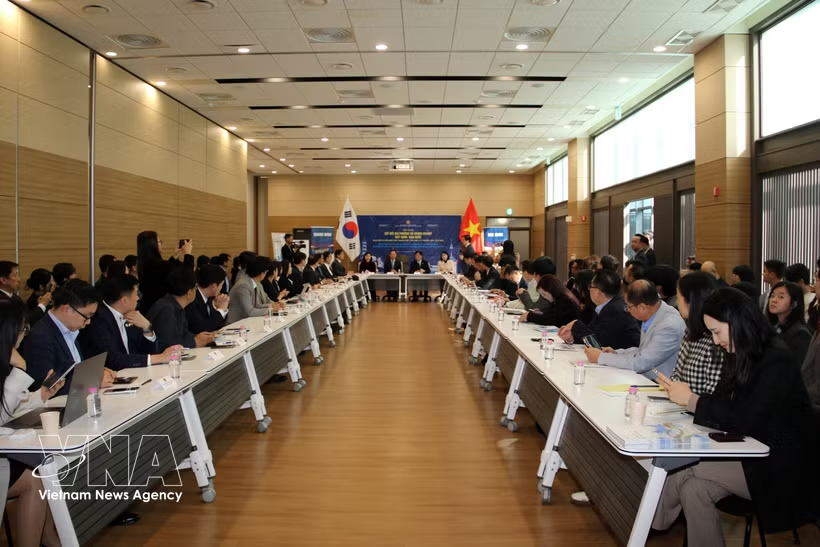 |
| The conference held on November 4 to connect Vietnamese localities and businesses with Korean partners. (Photo: VNA) |
Chairman of the Korea–Vietnam Economic and Cultural Association (KOVECA) Kwon Sung Taek stressed the need to strongly shift from diplomatic exchanges and activities to promoting direct links between localities and businesses that centre on actual demand and concrete projects.
While Quang Ninh could strengthen connections with Korean localities that excel in tourism, seaports, and the maritime economy such as Busan, Gangwon, and Jeju, Bac Ninh holds significant potential for cooperation with industrial hubs like Gyeonggi, South Chungcheong, and North Gyeongsang.
He proposed concrete cooperation projects in high-end tourism, port logistics and smart city development in Quang Ninh, and semiconductors, electronics, AI, robotics and smart factories in Bac Ninh. He also called for expanding collaboration in education, high-quality manpower training, student exchanges and cultural activities.
KOVECA affirmed its readiness to serve as a bridge through cooperation committees, business forums, investment promotion activities, and support for business networking, thereby helping to identify and select viable projects for implementation.
Viet Nam’s 10-month FDI inflows reach over US$54 billion
Foreign direct investment inflows into Viet Nam reached a 17-year high of US$54.85 billion as of October 31, 2026, the National Statistics Office has reported.
Of the above figure, Viet Nam licensed 3,478 new projects with total registered capital of US$30.73 billion, up 2.2 times year-on-year in capital volume.
The processing and manufacturing sector made up the largest share, with US$14.61 billion, accounting for 47.5 percent of the total, followed by transportation and warehousing with US$5.15 billion (16.7 percent).
Meanwhile, foreign investors poured additional US$ 16.13 billion in 1,079 existing projects, up 33.2 percent in investment capital from the same period last year.
Foreign investors also conducted 2,616 transactions involving capital contributions and share purchases worth a combined US$7.99 billion, up 49.6 percent year-on-year, reported VGP.
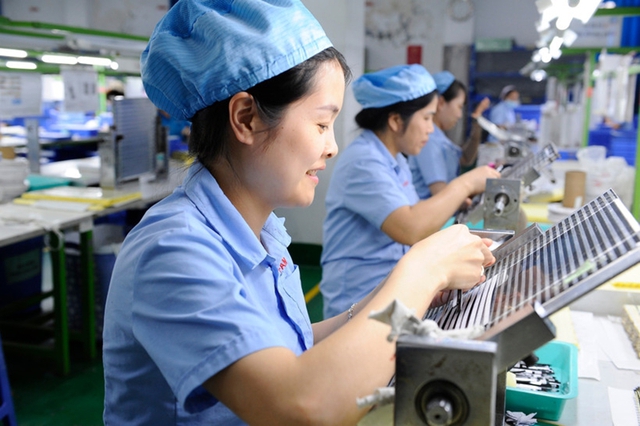 |
| Photo: VGP |
Among 80 countries and territories with newly licensed projects in Viet Nam during the reviewed period, Singapore took the lead, with US$9.52 billion, accounting for 31 percent of the newly registered capital. South Korea ranked second with US$5.81 billion (18.9 percent), followed by Luxembourg with US$4.99 billion (16.2 percent), Hong Kong with US$3.57 billion (11.6 percent) and China with US$2.77 billion (9 percent).
Disbursed FDI also maintained positive momentum, reaching an estimated US$24.08 billion in the first 10 months, up 13.1 percent year-on-year.
The processing and manufacturing sector made up US$19.96 billion, or 82.9 percent, of the disbursed capital, followed by real estate business with US$1.76 billion (7.3 percent) and electricity, gas, hot water, steam and air conditioning production and supply with US$785.2 million (3.3 percent), according to the National Statistics Office.
Hanoi, HCM City lead in 10-month public investment disbursement
Hanoi and Ho Chi Minh City have led in disbursement value, while Dien Bien Province recorded the highest score in the assessment of 2026 capital-plan implementation.
As of the end of October 2026, Viet Nam had disbursed VND 708,567.4 billion (about US$27.30 billion) in public investment funds, equivalent to 74.1% of the plan assigned by the Prime Minister.
According to Report No. 908 dated November 3, 2026, issued by the Ministry of Finance, the National Assembly approved a total state-budget-funded public investment plan of VND 1,105,823.4 billion (about US$42.60 billion) for 2026. The plan assigned by the Prime Minister, after deducting amounts not yet allocated in detail, stood at VND 955,867.4 billion (about US$36.82 billion).
Hanoi led the country in disbursement value at VND 125.4 trillion (about US$4.83 billion), followed by Ho Chi Minh City with VND 111 trillion (about US$4.28 billion). Together, the two cities disbursed more than VND 236 trillion (about US$9.09 billion).
However, a large disbursement value does not necessarily mean a higher rate of plan fulfillment or the highest performance score. According to the Ministry of Finance, Dien Bien province recorded the highest score nationwide in the assessment of 2026 capital-plan implementation.
More than VND7.8 trillion yet to be allocated in detail
The total public investment capital allocated in detail by ministries, central agencies and localities reached VND 1,004,348.6 billion (about US$38.69 billion). Excluding additional capital plans assigned by localities, the amount allocated in detail was VND 948,056.2 billion (about US$36.52 billion), equivalent to 99.2% of the plan assigned by the Prime Minister.
Nevertheless, VND 7,811.2 billion in central budget funds (about US$301 million) had yet to be allocated in detail, accounting for 0.8% of the plan. The amount involved five ministries and central agencies and 20 localities.
The report cited difficulties with investment procedures, the incomplete assignment of medium-term capital plans, and issues related to national target programs, school construction in border areas and supplementary funding as the main reasons.
Disbursement rates varied across ministries, central agencies and localities. Eight ministries and central agencies and 16 localities recorded rates above the national average, while 25 ministries and central agencies and 18 localities were below it.
The Ministry of Science and Technology and the Viet Nam Cooperative Alliance were among those with disbursement rates below 15% and no disbursement volume recorded in the report’s progress assessment, cited VOV.
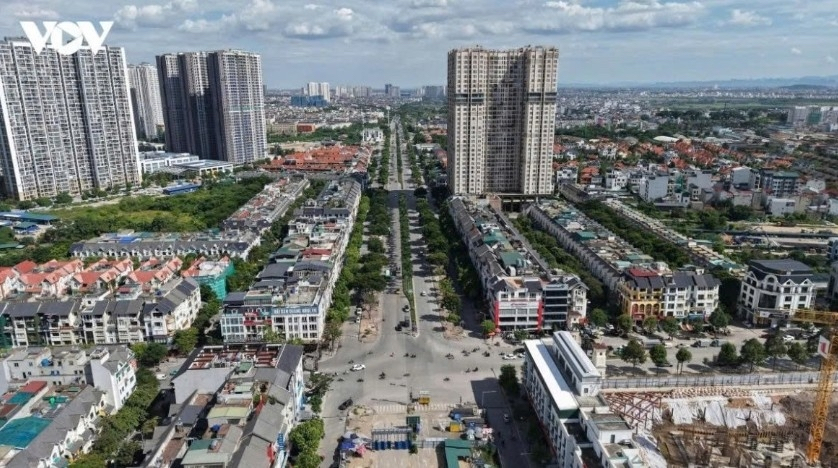 |
| Hanoi ranks first nationwide in public investment disbursement value. |
For capital plans from the previous year that were permitted to continue into 2026, implementation results also varied among agencies and localities.
Overall, public investment disbursement in the first 10 months of 2026 increased from the same period last year, but progress remained uneven among ministries, sectors and localities. In the final months of the year, completing the allocation of the remaining funds, resolving investment-procedure difficulties and strengthening the accountability of units with slow disbursement will be important to fulfilling the 2026 public investment plan.
Viet Nam positions itself in global AI supply chain
While Viet Nam does not manufacture leading-edge logic chips or high-bandwidth memory (HBM), it is enhancing its position in the AI supply chain by producing essential components that keep data centres running while becoming a major player in outsourced semiconductor assembly and testing (OSAT).
This assessment was made by Frederic Neumann, Chief Asia Economist and Co-Head of Global Investment Research, Asia at HSBC, and Justin Feng, Asia Economist at HSBC.
He pointed out that the AI supercycle is still roaring, for now. Electronics sector purchasing managers’ indices (PMIs) continue to signal strong operating conditions and expanding orders across industrial, consumer and computing products — globally and in Asia.
Viet Nam may not produce leading-edge logic chips or high-bandwidth memory (HBM), but it does supply the less glamorous – yet essential – components that keep data centres running, such as server racks and printed circuit boards, reported VOV.
 |
| Viet Nam moves up the global AI supply chain |
This did not happen overnight. Viet Nam has spent years climbing a crowded Asian electronics ladder dominated by Japan, the Republic of Korea, Taiwan, mainland China, Singapore, Malaysia and Thailand. It has built formidable production and assembly capabilities in smartphones, audio equipment, displays, home appliances, lower-end chips and consumer electronics.
That industrial buildup has paid off handsomely. Last year, Viet Nam exported US$160 billion of electrical and electronic machinery, equivalent to roughly 30% of its GDP. The country is enjoying a robust growth with a strong third-quarter GDP print, supported by trade, manufacturing and infrastructure investment
Foreign manufacturers have helped power that surge. Korean firms, such as Samsung and LG, built large industrial clusters and supplier ecosystems. More recently, mainland Chinese outbound direct investment (ODI) has added fresh momentum: over the past three years, mainland Chinese ODI flows into Viet Nam totaled US$9 billion, making it one of Southeast Asia’s largest recipients.
Viet Nam is benefiting from mainland China’s industrial reinvention — from the world’s factory floor to the world’s factory for factories, supplying the components and equipment for factories elsewhere. No Southeast Asian economy has recorded a larger increase in imports of Chinese intermediate components than Viet Nam. Those inputs create manufacturing jobs and business opportunities, while helping Vietnamese firms integrate into fiercely competitive regional supply chains.
For Chinese manufacturers, Viet Nam’s appeal rests partly on the electronics capabilities that earlier Korean investment helped establish. The country also offers a relatively young, lower-cost and adequately skilled workforce.
Yet Viet Nam still largely handles final assembly, while Chinese and Korean companies supply higher value-added components and equipment. Long-term economic spillovers are not guaranteed, and the AI boom should not breed complacency. Investor concerns over capital spending and profitability are rising, while data-centre expansion faces tighter constraints on energy, land, water, regulation and manufacturing capacity.
Viet Nam’s next move is to continue climbing up industrial supply chains. China offers a precedent, having evolved from assembler for foreign multinationals to competitor against global leaders. Viet Nam has already recorded Asia’s largest increase in export complexity over the past decade, led by electronics, and its young industrial base is expanding as workforce across much of Asia is rapidly aging.
That advantage will endure only if Viet Nam uses the AI moment to build capabilities, not merely capacity, by deepening domestic supplier networks and absorbing more foreign technical and commercial know-how.