
Oxfam: Three Decades of Partnership with the People of Viet Nam
| Sustaining Land with Bamboo Shoots: New Livelihood for Bru-Van Kieu Women in Quang Tri Learning to Livestream Agricultural Products |
Standing with people through difficult times
As the Hoang Dinh dyke in Ky Anh District, Ha Tinh Province, neared completion, local residents placed a symbol on the dyke to express their gratitude to Oxfam Great Britain and Ireland.
In the early 1990s, Ky Anh was frequently affected by storms and floods, while large areas of agricultural land were contaminated by saltwater. With support from Oxfam Great Britain and Ireland, the district authorities, local residents and technical experts worked together to build the Hoang Dinh dyke. The project helped protect more than 3,000 households and restore hundreds of hectares of rice fields.
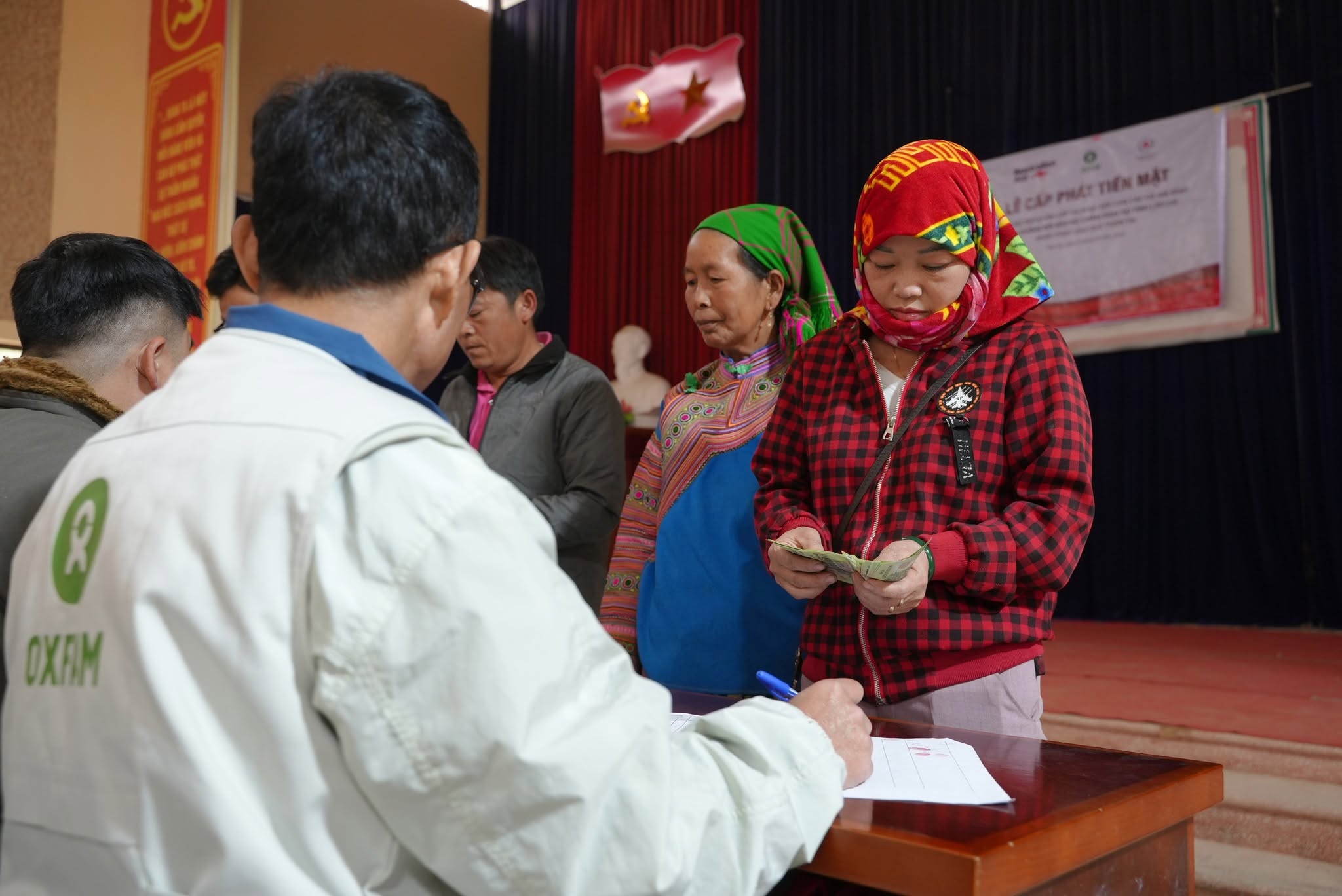 |
| Le Thi Nam (right) receives cash assistance at a distribution event organised by Oxfam in Viet Nam in coordination with the Lao Cai Provincial Red Cross Society in March 2025. |
More than three decades later, in Lao Cai, Le Thi Nam was also deeply moved when she received financial assistance from Oxfam in Viet Nam and the provincial Red Cross Society in March 2025.
“I wanted to say thank you, but I could not find the words,” Nam shared. Her house was still under construction when Typhoon Yagi struck in 2024, sweeping away almost all her belongings. She decided to use the assistance to buy rice and cover her children's schooling expenses.
Nam was among more than 45,000 people who received support through a project to address the aftermath of Typhoon Yagi, implemented by Oxfam in coordination with the Hoa Binh Provincial Women's Union, the Red Cross societies of Lao Cai and Yen Bai provinces, and local partners. With a total budget of nearly US$1.5 million, the project was implemented in 15 communes across the three provinces (under the administrative boundaries before the administrative reorganisation) from September 2024 to July 2025.
Oxfam began providing assistance to Viet Nam in 1955, primarily through humanitarian relief activities. When Viet Nam embarked on its Doi Moi (Renewal) process, Oxfam expanded its activities to include hunger eradication and poverty reduction, support for the development of water supply systems, dykes and irrigation infrastructure, the piloting of new farming models, and the provision of production skills to local communities. From the 1990s onwards, Oxfam's member organisations gradually established representative offices in Viet Nam.
According to Oxfam's statistics, over the years, the organisation has implemented 136 projects with a total budget of US$115 million, providing support in 45 of Viet Nam's 63 provinces and centrally governed cities (under the administrative boundaries in effect before July 1, 2025), and directly benefiting nearly six million people.
More knowledge, more opportunities
“I was not entirely convinced, and I was worried too,” recalled Duong Thi Thanh from Uc Ky Village (Phu Binh Commune, Thai Nguyen Province). “If we used fewer seeds, wouldn't that mean harvesting less rice?”
In 2012, when an Oxfam project introduced her to the System of Rice Intensification (SRI), a method involving transplanting young seedlings at wider spacing and using less seed, fertiliser and water, Thanh decided to give it a try and encouraged several other households to join her. In the very first crop season, they reduced their rice seed use by as much as 60%, while the harvested grains were larger and more uniform. Fourteen years later, in 2026, most households in Uc Ky Village continue to apply this cultivation method.
Since 2007, Oxfam America has supported the Plant Protection Department under the Ministry of Agriculture and Rural Development in piloting and scaling up the SRI method across 13 provinces. By 2015, according to Oxfam's figures, 1.8 million farmers had adopted the method.
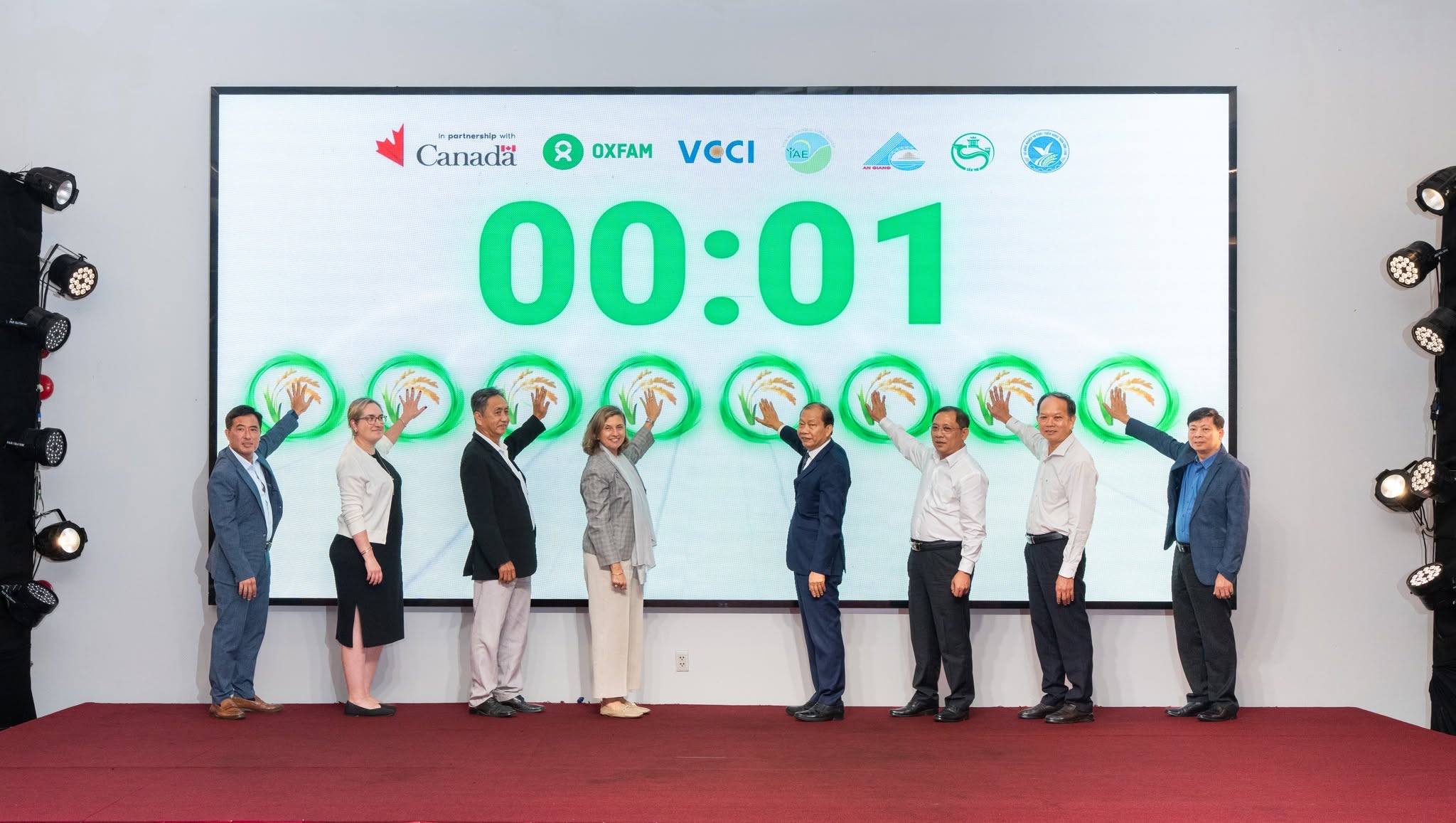 |
| Oxfam in Viet Nam and its partners launch the project “Developing Sustainable, Low-Emission and Climate-Resilient Rice Value Chains in the Mekong Delta” (GoRICE) on October 28, 2026, in Can Tho. |
Today, in the Mekong Delta, Oxfam continues to support farmers in adopting sustainable rice production practices and adapting to climate change. The GoRICE project (2025-2030), funded by the Government of Canada, aims to help 20,500 rice growers in Can Tho, An Giang and Vinh Long improve their incomes through low-emission rice production and consumption.
In Cao Bang, in 2018, Luu Thi Tan, an ethnic Nung woman, began growing organic ginger for the Development of Agriculture and Environment Consulting Company (DACE), earning ten times as much as she had from growing maize. She chose to sell her produce to the company rather than traders because “the company offers more stable prices”.
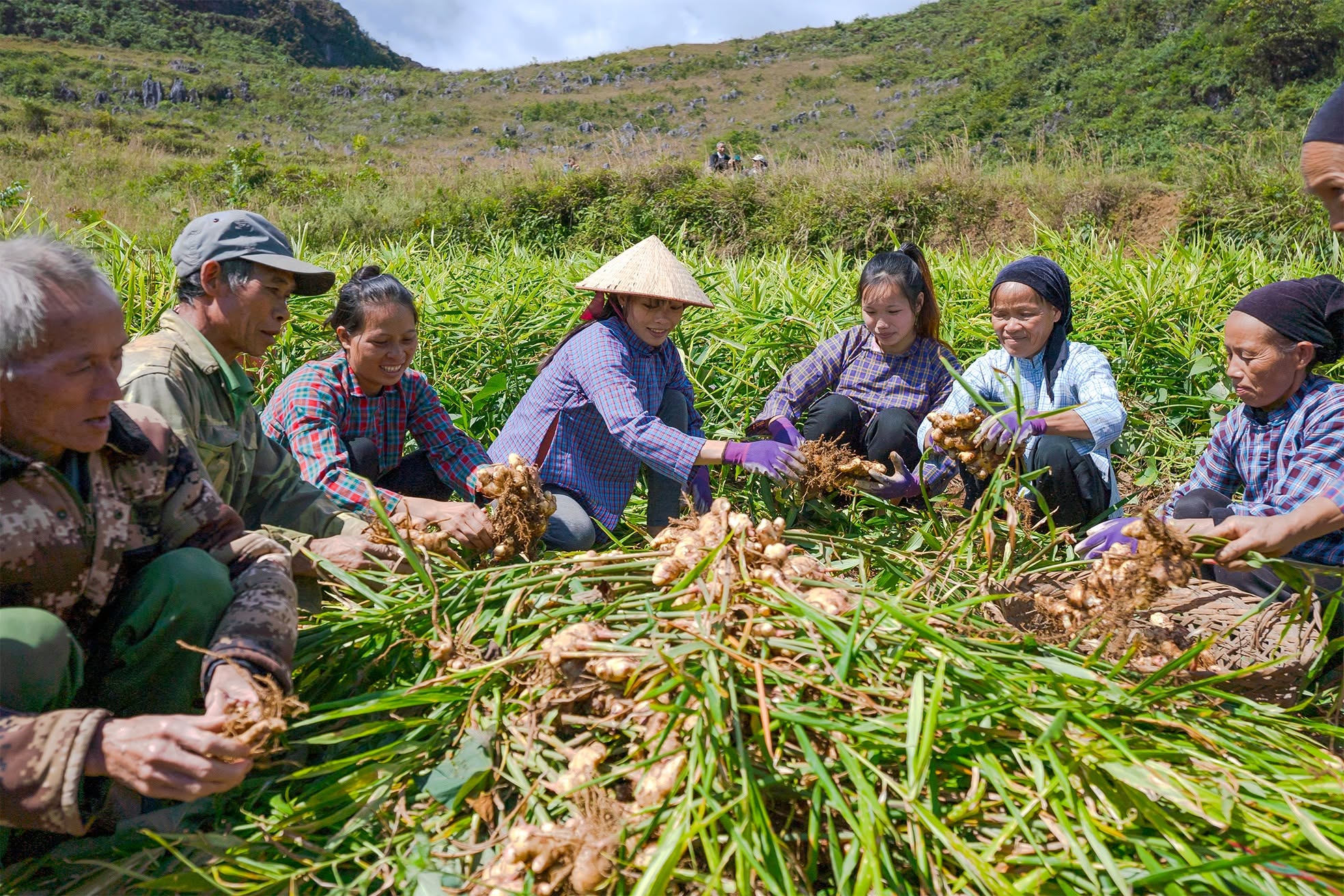 |
| Farmers harvest ginger in Cao Bang Province for supply to DACE. |
According to Oxfam, Tan is now one of 3,014 households in Cao Bang participating in DACE's organic spice supply chain. The company provides seeds, technical guidance and guaranteed purchases at prices 10-20% higher than market rates. DACE is one of 70 enterprises participating in Oxfam's Enterprise Development for Development project (2015-2022), through which businesses received training in responsible business management.
For Ngo Thi Phuong Lanh in My Xuyen, Soc Trang (formerly Soc Trang Province), the most valuable thing she gained from participating in an Oxfam project was confidence. In May 2015, she initially did not want to attend the training because she disliked being in crowded places. On her first day, she felt “like a little child starting kindergarten”. By the third day, she had tried leading the group.
Lanh was one of 96 farmers who took more than 5,000 photographs as part of the “Breaking out of the cocoon” visual storytelling project. Through the training sessions, women and men alike reflected on how work and responsibilities were divided within their families and explored ways to challenge stereotypes, such as the notion that women must shoulder all household chores and men must make all the decisions.
In October 2026, residents of Cam Kim, Hoi An, harvested their first crop of water lilies under a women-led livelihood development initiative linked to ecological conservation in the buffer zone of the Cu Lao Cham - Hoi An Biosphere Reserve. The initiative is being implemented by the University of Danang under the project Supporting Women-Led Green Transition Initiatives (2024-2029), funded by the European Union and implemented by Oxfam.
| Since 1993, Oxfam, together with local authorities and partners, has implemented 40 disaster relief programmes in 25 provinces and cities across Viet Nam, with a total budget of more than US$16 million. These programmes have directly supported approximately 910,000 people, particularly disadvantaged women, children, older people and persons with disabilities. During 2025-2026, Oxfam has worked with local partners to help communities recover from the impacts of Typhoon Wipha in Nghe An, Typhoons Bualoi and Matmo in Thai Nguyen, and Typhoon Kalmaegi in Da Nang. Activities have included cash assistance, hygiene supplies, livelihood recovery support, training, and the provision of equipment for local disaster response forces. In Ha Tinh, Oxfam has partnered with the Ha Tinh Centre for Community Development to provide cash assistance to help residents restore their livelihoods, while strengthening the disaster preparedness and response capacity of communities, businesses and commune-level disaster response forces. |
Since the late 1990s, Oxfam has gradually shifted from implementing individual projects to developing long-term programmes, with a focus on strengthening the capacities of local communities and partners. As Viet Nam became a middle-income country, Oxfam placed greater emphasis on creating opportunities for poor people, women, migrants and ethnic minority communities to participate in and benefit from the country's development process.
Speaking to Viet Nam Times Magazine in November 2025, Vu Thi Quynh Hoa, Country Director of Oxfam in Viet Nam, said that one of the decisive factors in ensuring the sustainability of projects was “promoting the proactive role of communities”. According to her, local people, particularly women and vulnerable groups, need to be meaningfully involved in the design, implementation and monitoring of initiatives. Projects should also be aligned with market needs while respecting local knowledge and culture. Effective models should be integrated into national target programmes and local socio-economic development plans to secure the resources needed for their continuation and expansion.
Vu Thi Quynh Hoa expressed her appreciation for the support of the Committee for Foreign Non-Governmental Organization Affairs, the Viet Nam Union of Friendship Organizations, the People's Aid Coordinating Committee, ministries, sectors and local authorities. Decades of cooperation have enabled Oxfam and its Vietnamese partners to implement humanitarian and development projects, contributing to Viet Nam's goal of sustainable poverty reduction.
In the country's new stage of development, Oxfam remains committed to supporting the implementation of Viet Nam's national goals, with a focus on green transformation, digital transformation and strengthening community capacity.
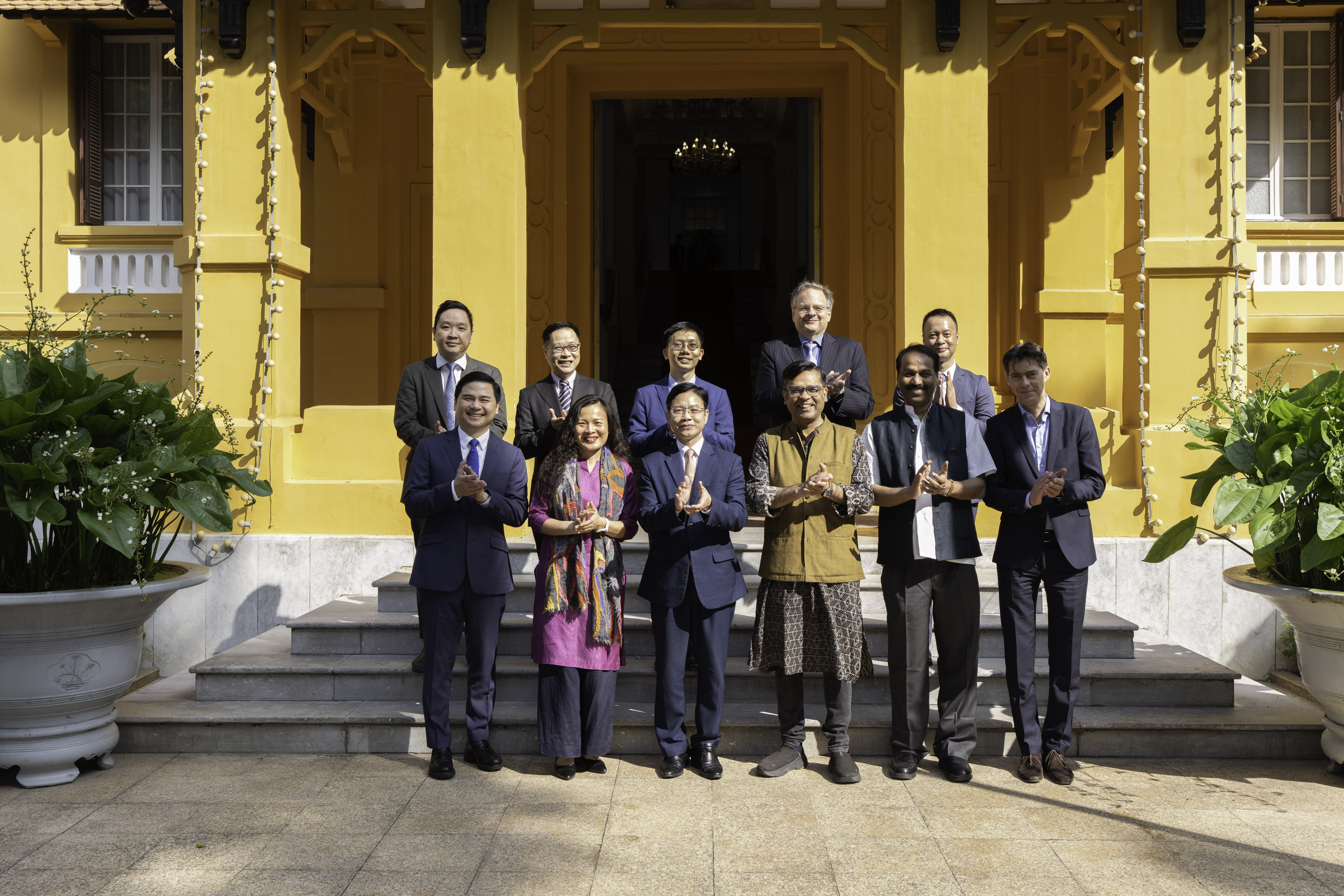
| Researching and implementing green development initiatives, applying appropriate technologies, using resources efficiently and enhancing community resilience are among the areas of cooperation proposed by Deputy Minister of Foreign Affairs and Chairman of the Committee for Foreign Non-Governmental Organization Affairs Ngo Le Van during his reception for Amitabh Behar, Executive Director of Oxfam International, on November 26 in Ha Noi.
Deputy Minister Ngo Le Van expressed his hope that Oxfam would continue to accompany Viet Nam in sustainable poverty reduction, ensuring social welfare, promoting gender equality and responding to climate change, while sharing knowledge and experience and strengthening the capacities of Vietnamese partners and local communities. Amitabh Behar described Viet Nam's development journey as a source of inspiration for the world and expressed his desire to learn from the country's experience in inclusive, people-centred development. Oxfam wishes to continue working alongside Viet Nam in achieving its development goals towards 2045. According to Vu Thi Quynh Hoa, Country Director of Oxfam in Viet Nam, cooperation with partners is a key priority in the organisation's new strategic direction. |
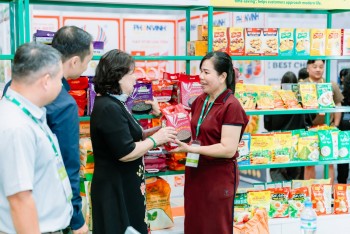 Oxfam and VCCI-HCM Help Businesses Improve Management and Connect with Markets |
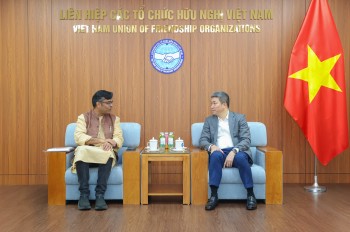 Three Priorities for Oxfam’s Engagement in Vietnam |
Most read


Related Stories
 Friendship
Oxfam Looks to New Directions for Cooperation in Viet Nam
 Friendship
Three Priorities for Oxfam’s Engagement in Vietnam
 National
Proactively Identifying Development Needs to Expand Cooperation with Foreign NGOs
 Economy
Oxfam and VCCI-HCM Help Businesses Improve Management and Connect with Markets
Popular article
 Friendship
Viet Nam-Romania Friendship Opens New Avenues for Cooperation
 Focus
KOVECA (RoK) Promotes Cooperation with Vietnamese Partners in Promising Sectors
 Friendship
Romanians Pass Down Vietnamese Martial Arts Through Generations
 Friendship