
Romanians Pass Down Vietnamese Martial Arts Through Generations
| Vietnamese State President Holds Phone Talks With Romanian Counterpart A New Age for Vietnamese-Romanian Relations |
Growing up with Vietnamese martial arts
Ioana Maxim began practising Qwan Ki Do when she was just four years old. Her first instructor was her father, Marius Maxim, a fifth-dan black belt and coach at the Kim Long Dao Club in the city of Fălticeni, Romania.
From a little girl who followed her father to martial arts classes, Ioana gradually grew up alongside her training sessions. In May 2026, at the age of 19, she won a gold medal in the team sparring event alongside three teammates representing Romania at the Qwan Ki Do World Championships. This was also her first appearance at the senior-level World Championships.
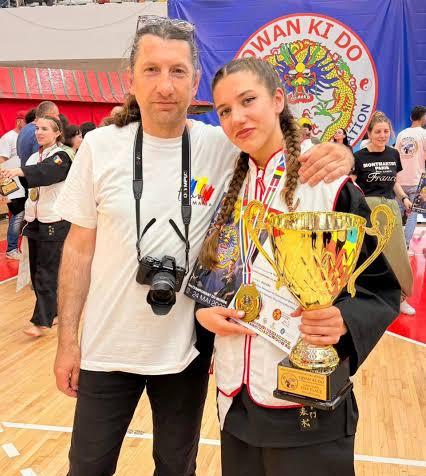 |
| Ioana Maxim with her father, Marius Maxim, after winning the gold medal in the team sparring event at the Qwan Ki Do World Championships in May 2026. |
For 15 years, Marius has been both a father and a personal instructor to his daughter. Her mother, Ionela Maxim, regularly attends acompetitions to encourage and support her. In addition to training and competing, Ioana is currently studying physical education and sports in Bucharest and is also involved in officiating Qwan Ki Do competitions.
Ioana is one of many young martial arts students mentored by Marius Maxim. At the 2015 National Championships alone, he coached and prepared 20 young students from the Kim Long Dao Club for the competition.
In many localities across Romania, Qwan Ki Do is organised into regular classes for children, teenagers and adults.
In late October 2026, a training session for young students at the Dao Club in the city of Iași took place in a special atmosphere. The children came to class dressed in Halloween costumes and took part in martial arts exercises. The training hall is a place where they not only develop their physical fitness but also make friends and learn discipline.
 |
| A special Qwan Ki Do training session for young students dressed in Halloween costumes at the Dao Club in Iași, in late October 2026. |
Also in Iași, Qwan Ki Do has found a place in higher education. Students at Alexandru Ioan Cuza University can join the Qwan Ki Do group under the university's sports club, where they can take part in practical training sessions and introductory classes. The website of the university's Faculty of Physical Education and Sport also lists the university's Qwan Ki Do group under the Alexandru Ioan Cuza University Sports Club among its student clubs.
More than four decades of teaching Vietnamese martial arts
In the city of Pașcani, the Long Ho Club has become a place where generations of local martial arts students have trained and formed lasting bonds. Children as young as five or six can enrol in classes. As of November 2026, after 41 years of operation, the club has more than 100 students.
During Qwan Ki Do training sessions, students learn the formal greeting, standing postures, footwork, punching, kicking and blocking techniques, as well as traditional forms. These movements are practised repeatedly to develop endurance, agility, coordination and body control.
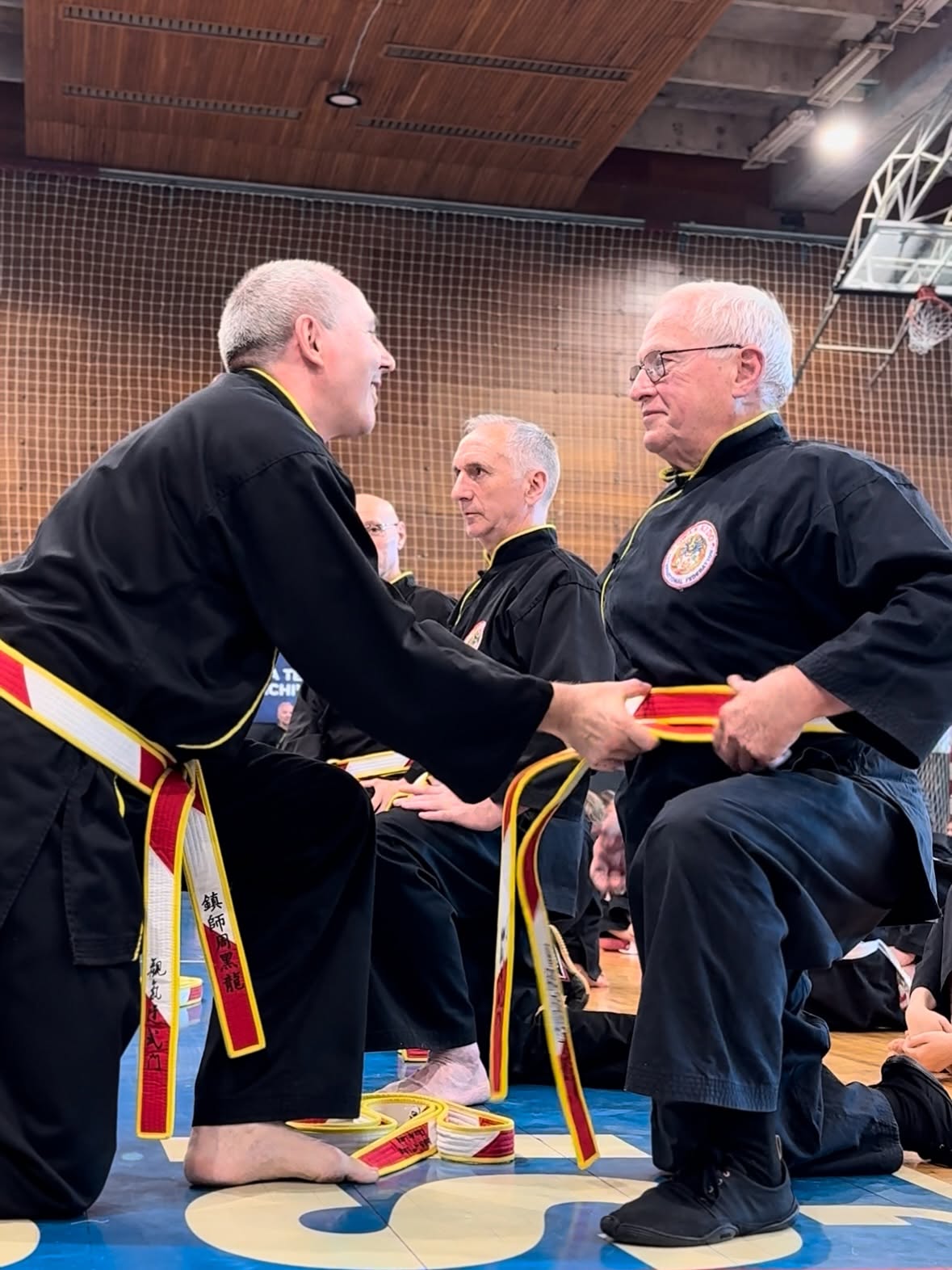 |
| The Long Ho Club has become a place where generations of martial arts students in Pașcani have formed lasting bonds. |
The Long Ho Club was founded by Adrian Zămosteanu and Ovidiu Covaci. Covaci belongs to the first generation of students in Romania to be awarded a Qwan Ki Do black belt. His story is closely linked to the early days of Vietnamese martial arts instruction in Iași. In 1979, martial arts master Fidèle Gouandjika, from the Central African Republic, who had studied martial arts under Pham Xuan Tong in France, organised karate and Vietnamese kung fu training sessions in the city. These classes laid the foundations for the development of Qwan Ki Do in Romania.
In 1984, three years after martial arts master Pham Xuan Tong officially founded Qwan Ki Do in France, the discipline's first black belt examination was held in Romania under the supervision of Master Gouandjika. Ovidiu Covaci was among the nine students awarded black belts. Subsequently, at Gouandjika's recommendation, Master Pham Xuan Tong appointed Covaci as Technical Director of Qwan Ki Do in Romania.
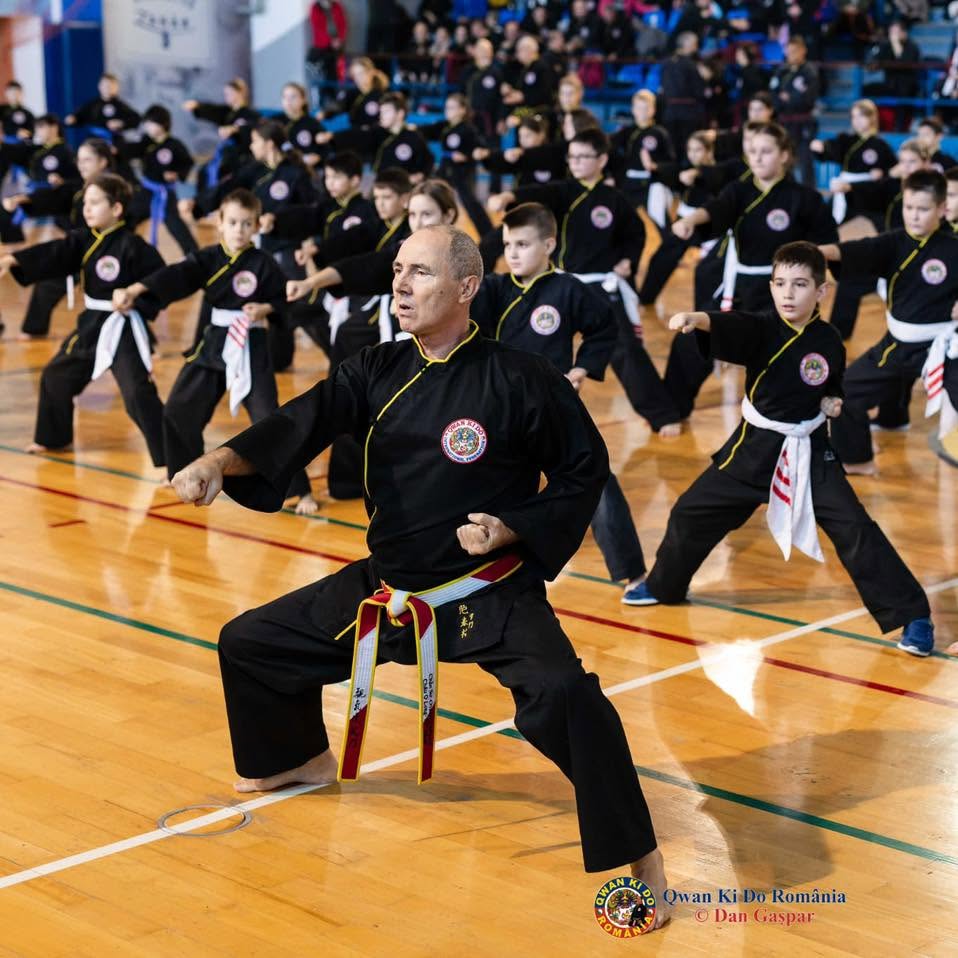 |
| Master Ovidiu Covaci personally instructs students in martial arts techniques. |
In 1985, Ovidiu Covaci and Adrian Zămosteanu established the Long Ho Club in Pașcani. Gouandjika's students continued to open classes and teach the martial art in various localities, including Botoșani, Suceava, Pașcani and Bucharest.
In October 2025, Long Ho marked its 40th anniversary with a performance programme and a reunion of those who had trained and taught at the club. On this occasion, Adrian Zămosteanu, the club's president and a lawyer who has spent decades teaching Qwan Ki Do, was awarded the title of Honorary Citizen of Pașcani.
According to Zămosteanu, what matters most to Long Ho is not the number of titles or medals won, but the process of self-improvement, character education and respect. He believes these values are what have kept the club's members united over four decades. Ovidiu Covaci, meanwhile, regards Long Ho as a family that has nurtured generations of young people in a spirit of discipline, friendship and dedication.
According to the Qwan Ki Do organisation in Romania, its network currently comprises more than 40 clubs nationwide, regularly organising classes, training programmes, grading examinations and exchange activities for practitioners of different ages.
After more than four decades of teaching in Romania, many Qwan Ki Do exercises and techniques have retained their Vietnamese names. In the Romanian Martial Arts Federation's technical programme for children and its 2026 competition calendar, terms such as “Thao Quyen” (forms), “Song Luyen” (paired practice) and “Giao Dau” (sparring) are still used.
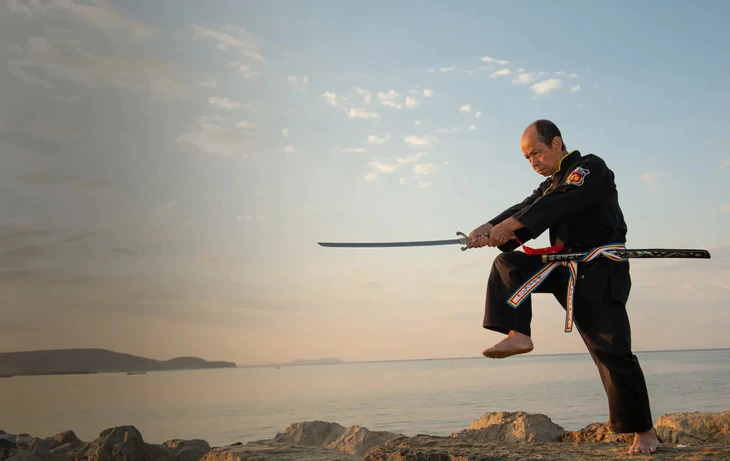
In 1981, Vietnamese-born martial arts master Pham Xuan Tong founded Qwan Ki Do in Toulon, France, based on his systematisation of the Vietnamese and Chinese martial arts knowledge he had acquired. In May 2018, Alexandru Ioan Cuza University awarded Master Pham Xuan Tong an honorary doctorate. |
 Vietnam-Romania Friendship Association, Embassy Boost Cooperation |
 Romania Wishes to Deepen Collaboration with Vietnam |




Related Stories
 Friendship
Promoting Vietnam-Romania Educational Cooperation
 Overseas Vietnamese
Vietnamese Summer Language Class Opens in Romania
 Friendship
People-to-People Exchanges Strengthen Vietnam–Romania Friendship
 Focus
Strengthen Understanding, Develop Vietnam-Romania Relations Commensurate with Potential
Popular article
 Friendship
Viet Nam in the Heart of Leader Fidel Castro
 Friendship
Top Leader Sends Message on International Day of Solidarity with the Palestinian People
 Friendship
Viet Nam and Brazil Strengthen People-to-People Ties and Cooperation
 Friendship