
People and Businesses to Benefit from Special Mechanisms for Viet Nam’s Tourism Development
| Vietnam, Iran to Tap Potential and Opportunities for Tourism Development GMS International Conference with Focus on Sustainable Tourism Development |
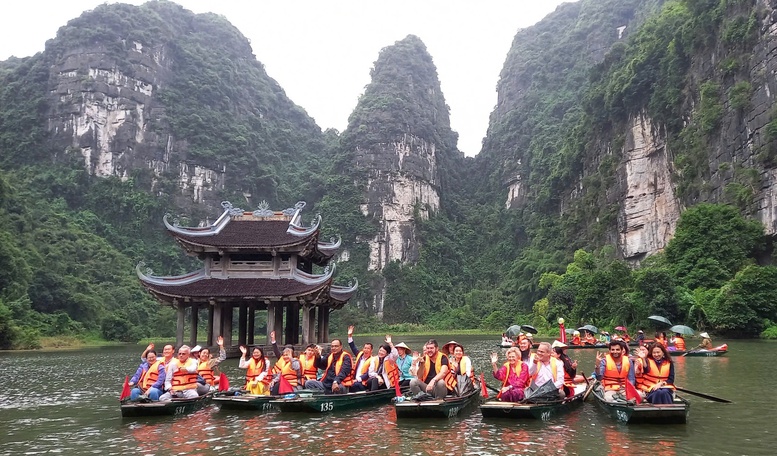 |
| International tourists enchanted by Viet Nam’s natural beauty. |
National Assembly Resolution No. 59/2026/QH16 on a number of special mechanisms and policies for Viet Nam’s tourism development opens up numerous opportunities for businesses, local residents and cooperatives. The policies focus on addressing difficulties related to investment procedures, tax incentives, support for product development, workforce training and expanding market access for local products.
The resolution was adopted by the National Assembly on November 21, 2026, and will take effect from January 1, 2027, through December 31, 2036.
A range of preferential policies for businesses
More favourable investment conditions. Eligible tourism projects can carry out investment, land, construction and environmental procedures simultaneously through an integrated process. High-quality projects, key projects and projects of strategic importance are also entitled to infrastructure development support, priority in promotional activities and market connectivity.
Tax and land rental incentives. For eligible tourism facilities, key projects may enjoy a corporate income tax rate as low as 10% for five years, as well as land rental exemptions and reductions. Projects of strategic importance may also be granted corporate income tax exemptions for up to four years, followed by a 50% reduction in tax payable for up to the next nine years.
Four-star and higher resort hotels located in tourism centres or national tourism areas, with a gross construction density of below 25%, may be considered for a land rental reduction of up to 30% over five years. This incentive applies to areas designated for landscaping, greenery, water features and common spaces that are not directly used for commercial purposes.
Opportunities to develop products and attract more visitors. Vietnamese organisations and businesses investing in eligible new tourism models are entitled to corporate income tax exemptions for two years and a 50% reduction for the following four years on income generated from those models. Airlines and travel companies that launch new routes or restore existing ones to bring visitors to localities will receive support under provincial policies.
Rather than simply introducing additional incentives to attract investment, the special mechanisms for tourism development are designed to classify projects and clearly determine the corresponding level of support based on each project's role and investment quality.
Creating favourable conditions for local residents, business households and cooperatives
More opportunities to develop tourism in their home localities. Eligible small- and medium-sized ecotourism, agricultural tourism, community-based tourism and craft village projects will receive support in accessing credit, developing brands, promoting their products and connecting with markets.
Local residents can participate in project management, provide services and share benefits in accordance with each project's benefit-sharing arrangements. Local authorities may provide support for upgrading community-based accommodation facilities, access roads to tourist attractions, clean water supplies and sanitation facilities.
Vocational training support and more local employment opportunities. The State budget will support vocational skills, foreign language, management and digital skills training for Viet Nam's tourism workforce, with priority given to rural workers, ethnic minority communities and cooperative members. High-quality projects, key projects and projects of strategic importance must ensure that local residents account for at least 20% of their workforce.
More stable market outlets for OCOP products. Travel organisations, businesses and accommodation establishments that sign long-term contracts to purchase OCOP products will receive local government support based on the value of goods actually purchased. This will give producer households and cooperatives more opportunities to secure long-term sales to the tourism sector.
Expanding experiences and facilitating travel for visitors
For tourists, the resolution also introduces a number of mechanisms aimed at diversifying tourism activities and attracting international visitors. Accordingly, certain entertainment complexes, festival streets and recreational areas may be permitted to operate on a trial 24/7 basis under schemes approved by competent authorities.
International visitors will have access to a wider range of experiences and greater convenience through policies expanding bilateral visa exemptions and piloting visa and residency arrangements for certain groups of international visitors staying in Viet Nam for extended periods.
 Vietnam Accelerates Digital Transformation in Tourism Development |
 Can Tho Diversifies Tourism Products to Attract More Visitors |
Most read


Related Stories
 Travel
Viet Nam Cultural Digital Map Officially Launched
 Travel
Strengthening Tourism Promotion to Enhance Viet Nam's Global Appeal
 Travel
Da Nang Unveils 100 Outstanding Tourism Experiences
 Travel
Viet Nam Promotes Tourism in Hungary
Popular article
 Handbook
Bringing European Cinema Closer to Vietnamese Audiences
 Handbook
Viet Nam Among Countries Making Significant Progress in Quality Infrastructure
 Handbook
Storytellers of Andersen’s Fairy Tales
 Handbook