
Storytellers of Andersen’s Fairy Tales
| Ambassador Nicolai Prytz Leaves Strong Imprint on Viet Nam-Denmark Cooperation and People-to-People Exchange Denmark and Vietnam Celebrate 55 Years of Diplomatic Relations in Da Nang |
Translations that accompanied childhood
Writer and book editor Nguyen Hoang Dieu Thuy still remembers the two volumes of Andersen’s Fairy Tales that her father bought for her when she was in primary school. The books were thick, with darkened pages. She would often lie on her stomach on the bed, resting her arms on a small pillow as she read by the window overlooking a green rice field. Once, so engrossed in reading, she forgot about the pot of rice cooking on the stove and let it burn.
Decades have passed, yet she still remembers Princess Lise and the flock of swans, the Little Mermaid, the Snow Queen and the witches in the stories. At that time, books were scarce, making the two volumes of Andersen’s fairy tales her father had bought for her all the more precious.
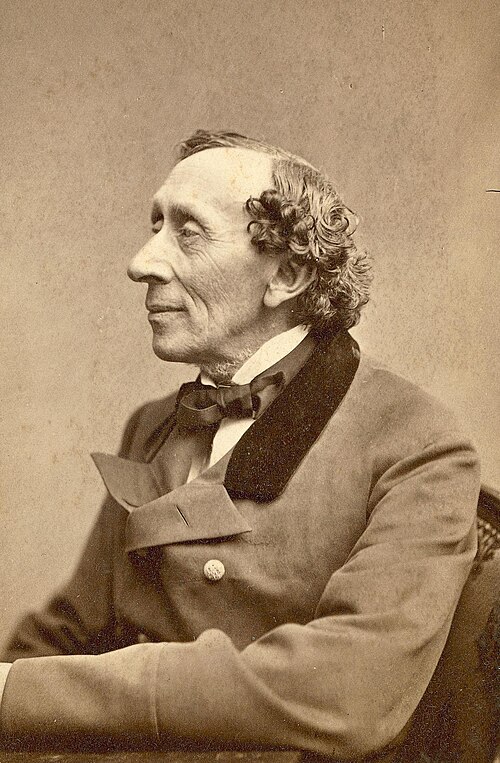 |
| Danish writer Hans Christian Andersen in an 1869 photograph by Thora Hallager. (Photo: Wikimedia Commons) |
As she grew older and began working as a writer and book editor, Nguyen Hoang Dieu Thuy came to appreciate many things she had not fully understood as a child. In her view, Andersen’s characters have complex personalities and are closer to real human beings than the clearly defined good and evil characters found in traditional folk tales. His stories do not always have happy endings, either. Some endings need to be understood on a deeper level. This, she believes, is why Andersen continues to captivate readers even as they grow older.
In Viet Nam, Andersen’s fairy tales have been introduced through numerous translations. One translator who devoted many years to this work was Tran Thi Minh Tam.
At a book event introducing Andersen’s Fairy Tales in Hanoi in 2018, Niels Julius Lassen, Denmark’s first Ambassador to Viet Nam, recalled working with her. Tran Thi Minh Tam frequently asked questions about the stories’ content and language. Some of her questions were so challenging that he had to visit a Danish library to consult reference materials before finding the answers.
Tran Thi Minh Tam spent more than 20 years translating the Danish author’s works. In 2003, she introduced a collection of 88 stories. Subsequent editions were expanded to include more than 100 stories. By 2018, the collection had been reprinted 16 times.
In March 2018, she became the first Vietnamese recipient of the Hans Christian Andersen Global Award, in recognition of her contributions to introducing and popularising the Danish author's works. She passed away on May 17 of the same year.
Her translations continue to be reprinted by Kim Dong Publishing House. Tran Minh Tam’s name remains on editions of Andersen’s Fairy Tales published for Vietnamese readers.
Translator Nguyen Bich Lan also spent her childhood immersed in Andersen’s fairy tales. She recalled that he was her favourite author of children's literature when she was young. After more than two decades in the translation profession, she had the opportunity to return to those stories in the role of a translator.
In 2020, Nha Nam Publishing House released the complete collection of Andersen’s Fairy Tales in two volumes, comprising 155 stories. Volume One was translated by Trang Hai, Tam Thuy and Maiiosha, while Volume Two was translated by Bích Lan from the English edition, The Complete Fairy Tales of Hans Christian Andersen.
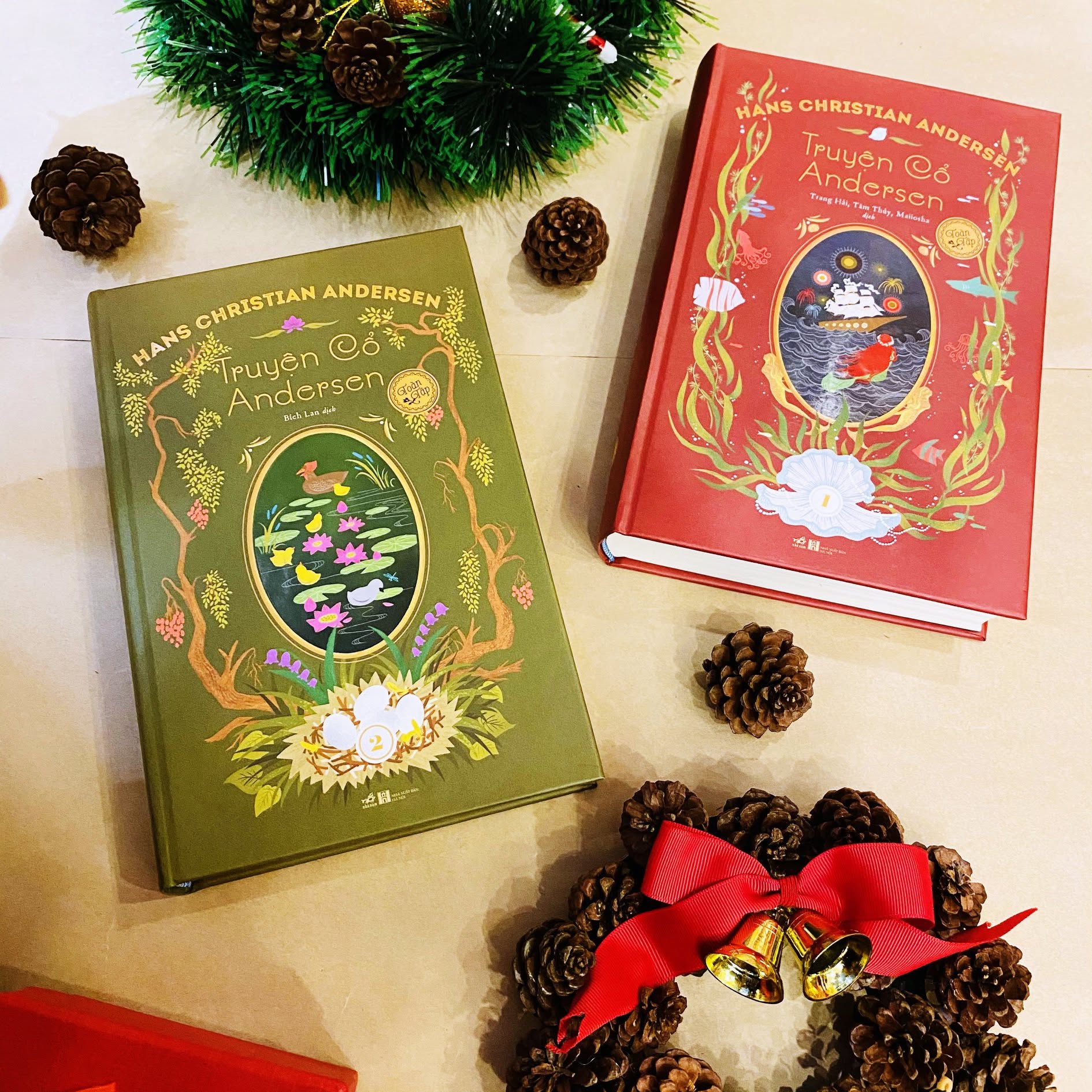 |
| The complete collection of Andersen’s Fairy Tales, published by Nha Nam in 2020. |
Translator Nguyen Bich Lan expressed her pride in being part of this project. What she particularly valued was the opportunity it gave Vietnamese readers to access Andersen’s stories in a complete edition, without cuts or abridgements. The stories that had once captivated her as a child were now being translated by her for other readers.
Some adults continue to make a habit of returning to Andersen’s works. A reader on Goodreads, a social networking platform for book lovers where members share and review books, recalled reading Andersen’s Fairy Tales many times as a child, to the point of almost memorising the stories. Later in life, whenever she felt weary of the demands of adulthood, she still enjoyed waiting for a day of gentle drizzle, making herself a hot cup of Milo, snuggling under the covers and opening the old book once again.
Andersen’s translations continue to be reprinted. In late 2025, TIMES Books released the first four volumes of its Complete Collection of Andersen’s Fairy Tales, illustrated by artist Hung Luong. Each volume contains more than 20 stories and is approximately 300 pages long, printed in full colour.
Today, Andersen’s books come in a wider variety of formats and illustrations than before. Yet the stories Nguyen Hoang Dieu Thuy once read in those two volumes with their darkened pages can still be found in the publications available to children today.
Andersen’s fairy tales on the Vietnamese water puppet stage
In its programmes for children in 2026, the Viet Nam National Puppetry Theatre continues to bring Andersen’s fairy tales to the stage. Characters such as the Ugly Duckling, the Little Mermaid and the Steadfast Tin Soldier are brought to life through a combination of water puppetry and conventional puppetry.
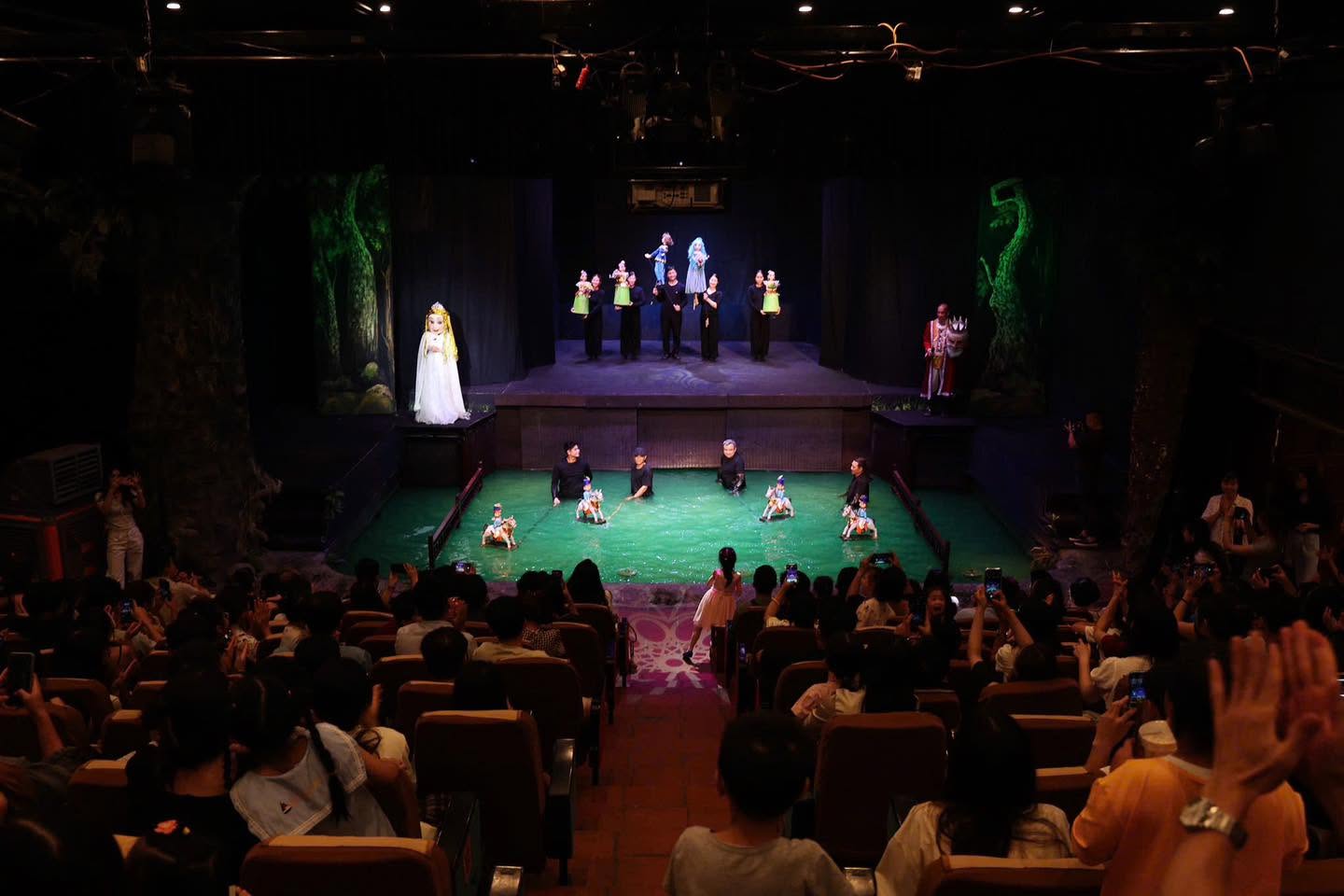 |
| The Viet Nam National Puppetry Theatre continues to bring Andersen’s fairy tales to the stage. |
Behind the water pavilion curtain, puppets move across the water under the skilful control of puppeteers. Music, lighting and each successive scene bring familiar characters from the pages of books before the eyes of young audiences.
The idea of adapting Andersen’s stories into water puppet performances was initiated in 2005 by director and sculptor Ngo Quynh Giao, former Director of the Viet Nam National Puppetry Theatre.
Previously, water puppet performances were often associated with scenes of rice planting, duck herding, rural festivals and folk characters such as chú Tễu (uncle Teu). Adapting Andersen’s works required artists to find ways to create figures such as the Little Mermaid, the Steadfast Tin Soldier and the Ugly Duckling, while also depicting the stories’ situations through water puppetry techniques.
A character living beneath the ocean, a tin soldier facing numerous challenges or a duckling shunned by others each presents different requirements in terms of character design, movement and stage arrangement.
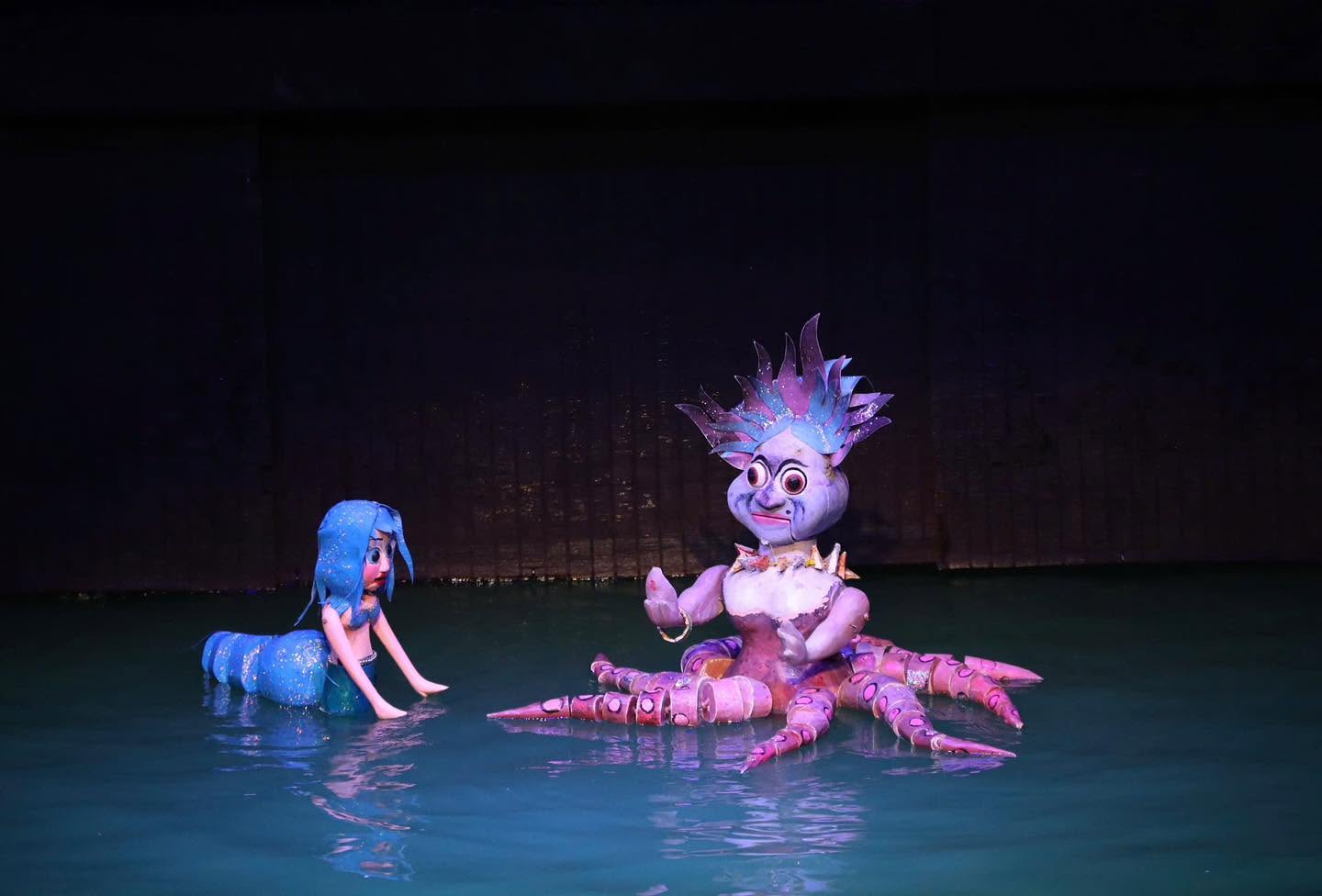 |
| The Little Mermaid on the water puppet stage. |
In 2010, the programme Andersen’s Fairy Tales participated in the International Puppet Festival and won first prizes in the categories for directing and performance.
In late December 2013, nine artists from the Viet Nam National Puppetry Theatre brought Andersen’s characters to the stage at the Quai Branly Museum in Paris, France.
There, the water stage was only half a metre deep, compared with the approximately one-metre depth of conventional stages in Viet Nam. The artists had to practise manipulating the puppets while kneeling. Although only nine performers took on work that normally required nearly 20 artists, they still managed to use the full complement of puppets in the programme.
Under these conditions, The Steadfast Tin Soldier, The Ugly Duckling and The Little Mermaid were still performed using Vietnamese water puppetry before French audiences. The programme attracted considerable public interest, particularly among children.
Nguyen Tien Dung, then Deputy Director of the Viet Nam National Puppetry Theatre and head of the performing troupe in France, observed that adapting famous European stories required creativity in staging while preserving the distinctive characteristics of Vietnamese water puppetry.
Following the tour, the artists continued to revise the programme. In late 2024, the theatre introduced a new version of Andersen’s Fairy Tales, combining water puppetry and conventional puppetry. It used a script by Ngo Quynh Giao and was edited and directed by People's Artist Nguyen Tien Dung. People's Artist Vuong Tat Loi was responsible for puppet design, artist Ngo Thang oversaw stage design, and musician Tuan Nghia composed the music.
With this new staging approach, characters can appear either on the water or on the dry stage. This gives the artists greater flexibility in portraying situations that are difficult to convey entirely through water puppetry.
During the 2026 performance season, the production team continued to refine the scenes, pacing, sound and lighting, while increasing interaction with young audiences.
People's Artist Nguyen Tien Dung hopes that children attending the programme will gain greater exposure to traditional art forms while also discovering compassion, empathy and faith in the goodness of life through Andersen’s stories.
After the performances, children also have the opportunity to meet and take photographs with the puppet characters. The Little Mermaid and the Ugly Duckling have left the pages of books to stand alongside them on a Vietnamese stage, becoming part of the childhood memories captured in photographs today.
| Hans Christian Andersen was born on April 2, 1805, in the city of Odense, Denmark, into a poor family. His father was a shoemaker, while his mother worked as a washerwoman. From an early age, Andersen loved books and the stories his father read to him. In 1819, at the age of just 14, Andersen moved to Copenhagen with the ambition of pursuing a career in the performing arts. He tried his hand at singing and acting before eventually focusing on literature. In 1835, Andersen published the first volumes of Fairy Tales Told for Children. Unlike many authors who primarily retold traditional folk tales, Andersen created numerous original stories inspired by his imagination, folklore and contemporary life. His stories feature emotionally rich characters, who are sometimes lonely and endure great misfortune. Their endings are not always happy. Among his best-known works are The Little Mermaid, The Ugly Duckling, The Little Match Girl, The Emperor’s New Clothes and The Steadfast Tin Soldier. Andersen died on August 4, 1875, in Copenhagen. His works have been translated into numerous languages and are widely read around the world. Since 1967, April 2, Andersen’s birthday, has been observed as International Children's Book Day, with the aim of encouraging a love of reading among children. |
 True Fairy Tales of Vietnamese Children Got Adopted By Superstars |
 Generation Equality: Modern Fairy Tales Help Realize Women's Rights and Promote Equality |




Related Stories
 World
Generation Equality: Modern Fairy Tales Help Realize Women's Rights and Promote Equality
 Vietnamese Culture
First fairy tale books on gender equality officially introduced to Vietnamese children
Popular article
 Handbook
“Anna Karenina” Translated Directly from Russian into Vietnamese For the First Time
 Handbook
Viet Nam Unveils Its First Secure Semiconductor Chip and Platform
 Handbook
Viet Nam, US Strengthen Technological Cooperation and Use of Archival Records to Search for Fallen Soldiers’ Remains
 Handbook