
How India Is Advancing Human Rights Through Inclusive Housing
 |
Within this framework, the focus on women-led ownership in major housing schemes marks an important shift from seeing women as dependents to recognising them as rights holders and asset owners in their own name. Pradhan Mantri Awas Yojana in its rural and urban forms, the second phase of PMAY Urban, and the Credit Linked Subsidy Scheme together show how housing policy is being used as a tool for inclusion, gender justice and empowerment of the economically weaker sections.
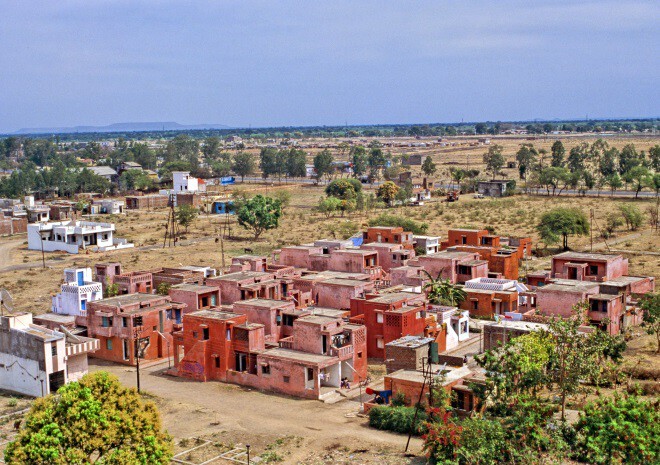
In rural India, Pradhan Mantri Awas Yojana Gramin explicitly connects the idea of a pucca house with dignity and social inclusion of the rural poor. The scheme aims to provide permanent houses with basic facilities to houseless and kutcha house dwellers in a time bound manner, but it goes beyond construction numbers. An advisory issued under PMAY Gramin directs that women members must be included in sanction and ownership details, either as sole owners or as joint owners with male members, and even allows adding women as secondary owners where houses were initially sanctioned only in the name of men. This administrative step has major social implications because land and housing titles in rural India have traditionally been male dominated, which has contributed to women’s economic dependency and vulnerability.
The results of this gender focused approach are visible in ownership patterns. Government data indicates that nearly three out of four PMAY Gramin houses are in the name of women, and the current goal is to move towards 100 percent women ownership under the scheme. By making female ownership the norm rather than the exception, the programme is shifting intra household power relations in favour of women. A house in her name strengthens a woman’s bargaining position within the family, makes it harder to displace or abandon her, and gives her a tangible asset that can be leveraged for credit, work and social status. For Dalits, Adivasis, single women and landless labourers, this combination of secure housing and legal recognition delivers both physical safety and a new sense of identity in the village community.
The design of PMAY Gramin also links shelter to a broader habitat approach. Rural houses under the scheme are complemented through convergence with schemes for sanitation, drinking water, electricity, LPG and now solar power. This ensures that the beneficiary does not just receive four walls and a roof, but an integrated living environment that supports health, privacy and security, especially for women. Access to a toilet within the premises reduces risks of harassment, electricity improves safety after dark, and LPG connections reduce drudgery and health risks from traditional cooking fuels. When all these facilities are tied to a home owned by a woman, the overall impact on her dignity and well being is much deeper than a standard welfare transfer.
In urban India, Pradhan Mantri Awas Yojana Urban and its upgraded PMAY Urban 2.0 extend the same logic of inclusive housing to slum dwellers, low income workers and the aspiring middle class. From the beginning, PMAY Urban introduced a mandatory provision that the female head of the family should be the owner or co owner of the house in the economically weaker section and lower income group categories. This requirement clearly signals that public subsidy for housing is conditional on recognising women’s right to property. It also acknowledges that women in low income urban households often bear the burden of unpaid care work and are among the most affected by insecure housing, evictions and poor services.
The second phase, PMAY Urban 2.0, retains this emphasis on equity while widening the scope and instruments used to deliver affordable housing. It is structured around four verticals that is beneficiary-led construction, affordable housing in partnership, affordable rental housing and an interest subsidy scheme. Through these, it supports self construction on its own land, incentivises private and public partnership projects, and encourages the creation of formal rental stock for migrants and urban poor. PMAY Urban 2.0 explicitly mentions widows, single women, persons with disabilities, senior citizens, transgender persons, Scheduled Castes and Scheduled Tribes, minorities and other vulnerable groups as priority beneficiaries. By naming these categories and building them into guidelines, the mission recognises that housing deprivation overlaps with social discrimination and attempts to correct it.
Affordable rental housing and attention to groups like street vendors and sanitation workers also matter for women’s dignity in cities. Women in these occupations often live in informal settlements or shared rooms without privacy or security. When they gain access to formal rental or ownership housing, it improves not only their safety but also their ability to participate in the labour market, send children to school and access public services. For women migrants, single women or survivors of violence, a secure roof in an authorised area can be the difference between remaining trapped in abusive situations and starting an independent life.
The Credit Linked Subsidy Scheme operates as a financial lever within this ecosystem to make formal housing finance accessible to families that would otherwise be excluded. Under CLSS, eligible beneficiaries in economically weaker, lower income and specified middle income groups receive an interest subsidy on housing loans for purchase, construction or extension of a house. A critical condition under CLSS is that for EWS and LIG categories, women ownership is mandatory; at least one female member must be an owner or co owner of the property. This ties the flow of concessional finance directly to women’s asset creation, encouraging families and lenders to accept women as legitimate borrowers and property holders.
By embedding human rights principles into programme design, India’s housing policy now does more than build units; it builds a sense of belonging and self respect among those who have long been on the margins. The economically weaker sections, especially women, are being brought into the centre of development through a mix of legal recognition, financial support and targeted priority in implementation. Ensuring a secure, dignified home for every family is thus emerging not just as a development target, but as a concrete expression of the constitutional promise of equality and justice.