How India is expanding education and opportunity for tribals, women, and youth
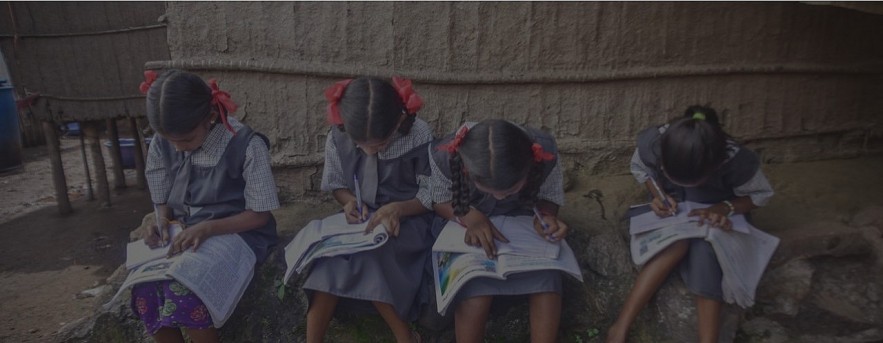 |
For tribal communities, women, and youth—groups that have historically faced structural barriers to education—the focus has shifted decisively toward access, retention, and relevance.
Residential schooling through Eklavya Model Residential Schools, gender-focused interventions under Beti Bachao BetiPadhao and Samagra Shiksha, and culturally grounded learning models are together redefining how education reaches the most remote and vulnerable populations.
At the same time, skill development programmes aligned with local economies and cultural traditions are creating new pathways to livelihoods.
Tribal skill hubs under the Deen Dayal Upadhyaya GrameenKaushalya Yojana are linking education with crafts, eco-tourism, and entrepreneurship, often leveraging tribal festivals as platforms for market access and community pride, European Times.
This integrated approach—combining schooling, gender equity, cultural preservation, and skills—reflects a rights-based development model where education is not only about literacy or employment, but about dignity, identity, and sustainable participation in India’s growth story.
Education as a right and a development imperative
Education in India is constitutionally recognised as a fundamental right under Article 21A, and its scope has expanded in policy and practice to include equitable access, cultural relevance, and continuity across social groups.
For Scheduled Tribes, women, and rural youth, the challenge has historically been not only enrolment but retention and meaningful learning outcomes.
Government initiatives over the past decade increasingly address these dimensions together, viewing education as both a social right and a foundation for economic empowerment.
Recent data from national education programmes indicate sustained efforts to reduce dropout rates, close gender gaps, and extend schooling infrastructure into tribal and remote regions.
These efforts are complemented by skill development schemes that recognise local knowledge systems and cultural economies as assets rather than obstacles to modern education.
Eklavya model residential schools and tribal education access
Eklavya Model Residential Schools have emerged as a cornerstone of India’s strategy to improve educational outcomes for Scheduled Tribe students.
Established in tribal-dominated districts, these fully residential schools provide free education from upper primary to senior secondary levels, along with accommodation, nutrition, and healthcare support.
In recent years, Eklavya schools have operated across more than 500 tribal districts, enrolling approximately 3.5 lakh ST students.
The design of these schools directly addresses high dropout rates observed at the primary level in many tribal regions, which have historically exceeded 70 percent in some areas.
By offering a stable residential environment, Eklavya schools reduce barriers related to distance, seasonal migration, and household economic pressures.
Importantly, the curriculum framework emphasises instruction in the mother tongue, especially in early grades, facilitating comprehension and cognitive development while respecting linguistic diversity.
Cultural preservation is embedded in the schooling model. Students are encouraged to engage with tribal art, music, folklore, and traditional knowledge systems, ensuring that education strengthens rather than erodes cultural identity.
This approach aligns with broader constitutional protections for tribal culture and promotes a sense of belonging that supports long-term retention and academic progression.
Gender equity through education
Parallel to tribal education initiatives, India’s gender-focused education policies have delivered measurable outcomes.
The Beti Bachao Beti Padhao programme, combined with interventions under Samagra Shiksha, has prioritised girls’ enrolment, retention, and transition to secondary education.
These schemes provide scholarships, residential hostels, bicycles, uniforms, and sanitation facilities, particularly targeting rural and marginalised communities.
Official education statistics show a steady improvement in the Gender Parity Index in secondary education, rising from around 0.93 a decade ago to near parity in recent years.
This progress reflects the cumulative impact of financial incentives, infrastructure expansion, and community engagement that reduces socio-cultural barriers to girls’ education.
Residential hostels for girls from Scheduled Tribes and other disadvantaged groups play a critical role in enabling continuity of schooling beyond the primary level.
By ensuring safety, proximity to schools, and academic support, these facilities contribute to higher retention and learning outcomes.
The emphasis on secondary education is particularly significant, as it correlates strongly with improved health, economic participation, and intergenerational educational attainment.
Cultural integration in schooling and the role of tribal festivals
A distinctive feature of India’s evolving education model is the integration of cultural rights into formal learning environments.
In tribal regions, schools increasingly incorporate local festivals, traditions, and histories into curricula and extracurricular activities. Celebrations of festivals such as Hornbill in Nagaland or Bhagoria in central India are used as educational platforms to teach history, ecology, art, and social values.
This integration serves multiple purposes. It reinforces constitutional safeguards for cultural expression, prevents cultural assimilation through homogenised curricula, and fosters community ownership of educational institutions.
When students see their cultural heritage reflected and respected in schools, attendance and engagement tend to improve, supporting retention goals.
Educational authorities and state governments have encouraged schools to collaborate with local elders, artisans, and cultural practitioners during festivals, transforming these events into experiential learning opportunities.
Such practices strengthen intergenerational knowledge transfer and position schools as custodians of cultural continuity rather than agents of cultural loss.
Skill development and livelihoods rooted in local economies
Education access is increasingly complemented by skill development initiatives that align learning with livelihood opportunities. Under the Deen Dayal Upadhyaya GrameenKaushalya Yojana, tribal skill hubs have been established to train youth in both traditional and emerging sectors.
These hubs focus on skills such as bamboo and cane crafts, lacquer work, textile weaving, forest-based products, and eco-tourism services.
Training programmes combine technical instruction with entrepreneurship development, quality standards, and digital literacy. By formalising traditional skills and linking them to modern markets, these initiatives enhance income potential while preserving cultural practices.
In many regions, tribal festivals serve as marketplaces and exhibition platforms, allowing artisans and trainees to showcase products to tourists, government buyers, and private enterprises.
Eco-tourism training under DDU-GKY leverages the ecological knowledge and cultural heritage of tribal communities. Youth are trained as guides, hospitality providers, and conservation workers, integrating environmental sustainability with economic development.
This model positions education and skills as instruments of community-led growth rather than external dependency.
Education, culture, and skills as a unified framework
India’s approach to education and skill development for tribals, women, and youth reflects an increasingly integrated policy framework.
Schooling initiatives address access and retention, gender-focused schemes ensure equity, cultural integration safeguards identity, and skill programmes translate learning into livelihoods.
Together, these elements form a continuum from early education to economic participation.
The emphasis on mother-tongue instruction, residential facilities, and cultural relevance demonstrates a shift from uniform delivery models to context-sensitive education.
Similarly, the alignment of skill training with local economies and cultural events strengthens market linkages while reinforcing community pride.
This integrated framework supports broader national objectives, including inclusive growth, reduction of regional disparities, and achievement of Sustainable Development Goals related to education, gender equality, and decent work.
It also reflects constitutional commitments to social justice and cultural autonomy.
India’s expanding focus on education access and skill development for tribals, women, and youth illustrates how inclusion and cultural respect can coexist with economic advancement.
Through Eklavya schools, gender-focused education schemes, culturally grounded curricula, and locally aligned skill hubs, the country is building pathways that extend from classrooms to livelihoods.
By recognising education as a right, culture as an asset, and skills as a bridge to sustainable income, India’s policy framework offers a holistic model of development.
As these initiatives continue to scale, they reinforce a vision where learning empowers communities without erasing identity, and where growth is rooted in both knowledge and heritage.