IMF says India among fastest-growing major economies
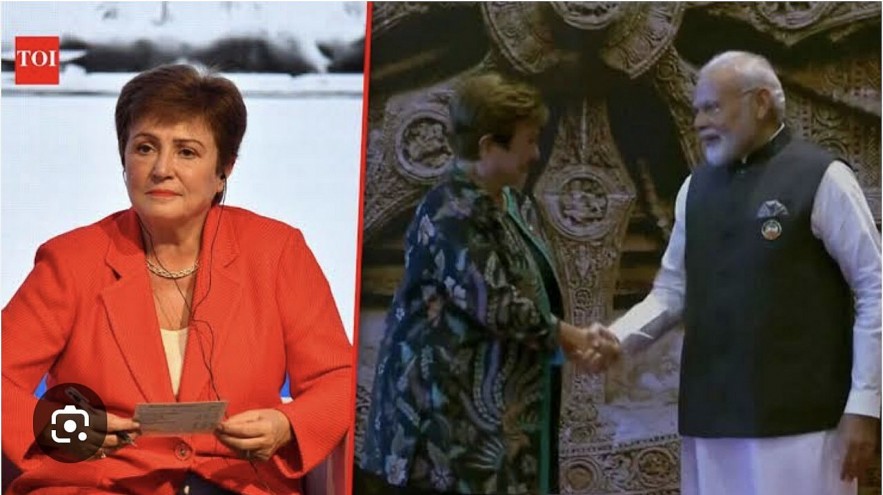 |
IMF Chief Kristalina Georgieva credits this to strong fundamentals, robust consumption, and sustained policy momentum. While global growth faces downgrades due to geopolitical tensions and rising oil prices, India’s domestic demand-driven model offers a crucial buffer. Backed by consistent projections from the World Bank and RBI, India’s growth band remains steady. But challenges loom large. Oil dependency, inflation nearing upper limits, and global financial volatility could test stability. The narrative is clear—India is outperforming, but not immune. As energy shocks and trade disruptions reshape the global economy, India’s ability to navigate these risks will define its next growth chapter.
Speaking on the outlook, Georgieva said there is no indication of any sharp or disruptive downturn in India’s growth trajectory, even as global conditions remain volatile due to ongoing geopolitical tensions and supply-side pressures from the West Asia war.
India’s growth is more than two times higher than the average normal growth, and that comes because of the strength of fundamentals,” she said, pointing to macroeconomic stability and sustained domestic demand as key drivers.
Global debt risks rise as war deepens economic strain
The relatively strong outlook for India comes against a far more fragile global backdrop.Global public debt is projected to cross 100% of GDP by 2029, returning to levels last seen after World War II, as successive shocks continue to erode fiscal space.
Georgieva warned that the ongoing West Asia conflict is adding a fresh layer of strain, unsettling energy markets and trade flows at a time when many governments are already stretched.
Unlike the COVID-19 crisis, which delivered a sharp but contained shock, the current phase reflects the cumulative impact of repeated disruptions - from pandemic aftereffects to geopolitical tensions and now conflict-driven supply risks.