
India eyes ‘global manufacturing powerhouse’ status with budget boost
 |
India’s newly unveiled budget signals a bid to cement its status as a global manufacturing powerhouse through a raft of policy measures, but analysts say the US$630 billion allocation will still require supplement as the country seeks new markets to diversify its trade.
The measures, rolled out in Finance Minister Nirmala Sitharaman’s budget speech on Sunday, are seen to have addressed two critical issues – creating jobs for young workers, comprising the world’s largest youth pool, as well as ensuring that the country is able to leverage several free-trade agreements to significantly boost exports.
Funds allocated to manufacturing industries include 100 billion rupees (US$1 billion) to establish India as a biopharma hub, 100 billion rupees for container manufacturing and 50 billion rupees for semiconductor and display manufacturing.
The total budget marked a 7.7 per cent increase from last year’s estimates.
Sitharaman said the government would scale up manufacturing in seven strategic sectors including biopharma, semiconductors, electronics components and rare earth magnets. Three chemical production parks will be set up to reduce import dependency.
She also announced the revival of 200 legacy industrial clusters for better efficiency, the establishment of five regional medical hubs for tourism and healthcare, and the development of five university townships near industrial corridors.
These measures are aimed at driving up India’s long-held target of increasing the share of manufacturing to 25 per cent of gross domestic product, which currently stands at 16-17 per cent.
Saurabh Agarwal, tax partner at consulting firm EY India, said the federal budget shifted the focus towards “becoming a global manufacturing powerhouse”.
“By securing upstream supply chains in chemicals and rare earths and developing clusters [or] corridors for these sectors, the government is looking to build ‘strategic indispensability’,” he said.
“This gives investors the policy certainty needed to scale high-precision manufacturing.”
While India has experienced a surge in certain manufacturing investments, which has helped drive exports of smartphones and automobiles, smaller countries have emerged as formidable competitors in sectors including electronics and garments.
India’s garment exports have lost significant ground to Bangladesh, Vietnam and other Asian competitors over the last decade due to higher labour costs, smaller operating scales, and a lack of duty-free access in key markets.
Analysts noted that the federal budget had earmarked 120 billion rupees through two separate funds for scaling up micro, small and medium-sized enterprises (MSMEs) with the aim of creating “Champion SMEs”.
Manoj Purohit, partner in financial services tax, tax and regulatory services at BDO India, said the proposed impetus for MSMEs would help attract capital.
“Foreign investors would now look to MSMEs as an additional investment avenue, thereby making MSME IPOs [initial public offerings] more lucrative in attracting foreign capital,” he said, adding that it would help India become a more self-reliant economy in the coming years.
The government also raised the capital spending to 12.2 trillion rupees (US$133.1 billion) from the current revised estimate of about 11 trillion rupees, as private investment has remained tentative.
The Indian economy has remained resilient in the face of US tariffs of up to 50 per cent and is estimated to have recorded robust growth of 7.4 per cent in the financial year ending March 2026.
Christian de Guzman, senior vice-president at Moody’s Ratings, said India’s sovereign credit profile would remain largely unchanged following the proposed budget measures.
“The budget provides tactical support for the economy against the backdrop of prevailing external uncertainties, including the unresolved issues around US tariffs, and despite the proven resilience of economic growth over the past year,” he said.
At the same time, support for the economy, which included measures announced in recent months such as a rehaul of the Goods and Services Tax – an indirect tax levied on the supply of goods – would shrink tax revenues and add pressure to a debt burden, he noted.
Biswajit Dhar, an economics professor at Delhi’s Council for Social Development, said the measures alone would not be enough to significantly boost the country’s manufacturing sector, especially for those in the MSMEs.
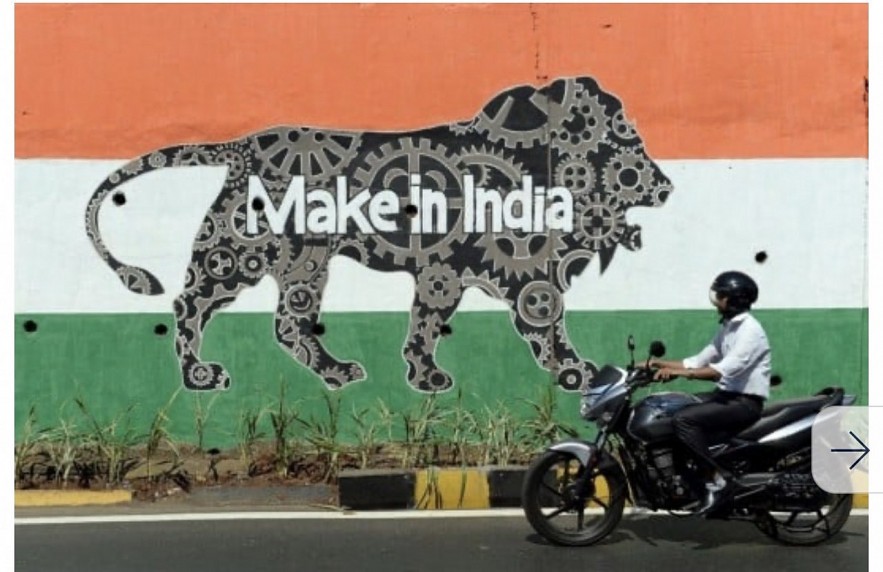
India already has existing programmes for boosting manufacturing, such as a “Make in India” initiative dating back to 2014, and a Production Linked Incentive scheme launched in 2020 which provides financial incentives to manufacturers for goods produced locally.
“What you need to focus on is making the earlier schemes more effective,” Dhar said.
He urged clarity on the new measures, noting that investors who had taken part in the earlier initiatives might get confused. “They will think that the new programmes will offer them something more.”
While a boost for MSMEs was needed, the sector also required a completely new institutional framework to address its concerns, as enterprises often did not have collateral assets that could be pledged for availing credit, he said.
“The proposed comprehensive review of the foreign investment regulations is eagerly awaited and should boost the attractiveness of India as an investment destination,” said Xerxes Antia, corporate transaction and restructuring partner at BTG Advaya, a prominent Indian law firm.