
India’s defence exports surge 25-fold since 2017
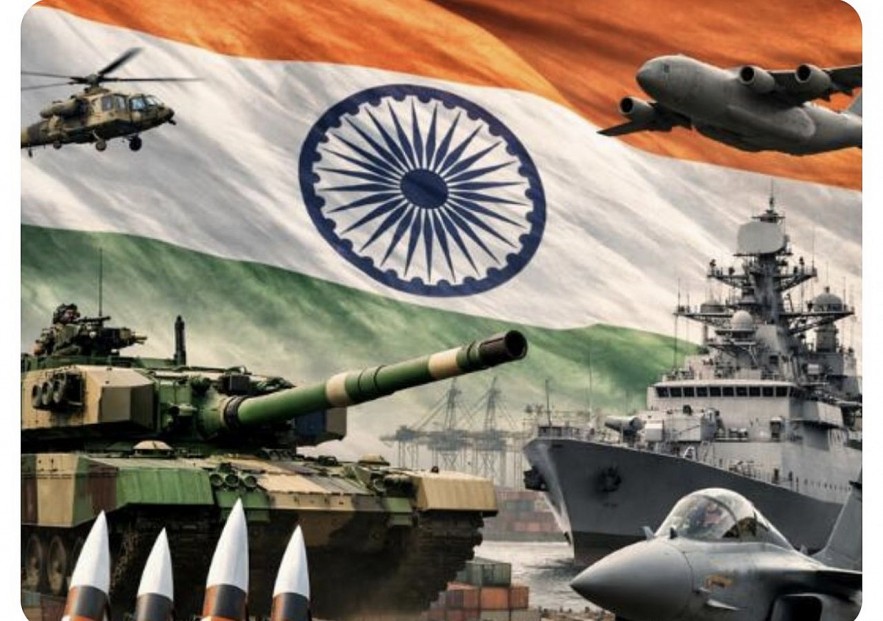 |
India’s defence exports have surged more than 25-fold from Rs 15 billion in FY2017 to a record Rs 384 billion in FY2026, while domestic defence production has climbed to an all-time high of Rs 1.54 trillion in FY2025, reflecting a structural shift in the country’s military-industrial ecosystem towards indigenous manufacturing and export-led growth, according to a new Rubix Data Sciences report.
The report said the expansion has been driven by sustained government focus on self-reliance under the Atmanirbhar Bharat and Make in India initiatives, rising participation of private firms, increased domestic procurement, and growing global demand for Indian-made defence systems.
India has also set ambitious medium-term targets of achieving Rs 3 trillion in defence production and Rs 500 billion in defence exports by FY2029, signalling a long-term strategic shift from import dependence toward domestic manufacturing capability.
The report noted that India’s defence budget has nearly tripled over the past decade, rising from Rs 2.53 trillion in FY2014 to Rs 7.85 trillion in FY2027, while the country ranked as the world’s fifth-largest military spender in 2025. Defence spending has broadly remained stable at around 2 per cent of GDP, reflecting what the report described as a calibrated balance between fiscal discipline and military modernisation.
According to the report, the government’s procurement strategy is increasingly favouring domestic industry. In FY2025, the Ministry of Defence signed 193 contracts worth Rs 2.09 trillion, with nearly 92 per cent of contracts by volume and 81 per cent by value awarded to Indian firms.
The shift has significantly widened the role of private industry in defence manufacturing. The private sector’s share in defence production increased from 19 per cent in FY2017 to 23 per cent in FY2025, while nearly 16,000 MSMEs are now participating in the defence ecosystem. The report added that 788 industrial licences have been issued to 462 companies, reflecting deepening industrial participation.
Data cited from the Stockholm International Peace Research Institute showed naval platforms accounted for nearly 55 per cent of India’s defence exports between 2016 and 2025, followed by artillery systems at 13 per cent and missiles at 12 per cent. The report noted that exports of naval vessels surged sharply in recent years, while exports of missiles and munitions recorded around 65 per cent compound annual growth between FY2018 and FY2026.
The report said India approved a record level of defence procurements during FY2026, including approvals worth USD 71 billion covering Rafale fighter jets, transport aircraft, submarines, missile systems, surveillance platforms and air-defence systems.
At the same time, the report identified persistent structural challenges that could slow India’s self-reliance ambitions. These include continued dependence on imported jet engines, advanced semiconductors, sensors and strategic systems such as the S-400 air-defence platform. It also pointed to limited scale among private manufacturers, gaps in high-end R&D capability and vulnerabilities arising from global supply chain disruptions and technology transfer restrictions.
India’s defence start-up ecosystem has also expanded sharply. According to the report, more than 1,000 defence start-ups are now active in the country, while over 950 aerospace, maritime and defence technology start-ups founded between 2017 and 2025 collectively attracted nearly USD 2 billion in funding.
The report concluded that India’s defence sector is entering a long-term expansion phase driven by self-reliance policies, rising geopolitical tensions, growing export acceptance, expanding private participation and increasing adoption of advanced technologies such as drones, AI and electronic warfare systems. However, it warned that achieving full strategic autonomy would require sustained progress in critical technology development, deeper domestic R&D capability and reduced dependence on foreign suppliers for high-end systems.







Recommended
 Economy
Promoting Role of Private Economic Sector
 Economy
India’ drone production ecosystem is evolving
 Economy
The Credibility Dividend: Why India’s global commitments matter
 Economy
Meta taps Indian startup founder to solve WhatsApp's revenue puzzle
Popular article
 Economy
Data Economy Emerges as Vietnam’s Next Growth Engine
 Economy
How India rewrote its economic destiny
 Economy
Hong Kong (China) unlocks new opportunities with Central Asia
 Economy