India’s export resilience: Record highs in H1 FY26 showcase rising global competitiveness
 |
The first half of FY26 (fiscal year of 2026) has set new benchmarks, with exports reaching record highs in both quarters and culminating in the highest-ever export performance for the first six months of any financial year.
A record-breaking start to FY26
The year began with extraordinary momentum. In the first quarter of FY26, spanning April to June 2025, India’s overall exports reached USD 209.0 billion, exceeding the previous year’s figure of USD 202.5 billion for the same period.
This rise demonstrates the improved competitiveness of Indian goods and services and reflects the strengthening of the country’s position in global value chains.
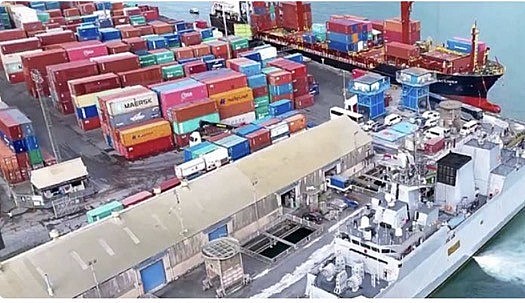
The surge in Q1 highlights the growing efficiency of supply chains within India, supported by significant upgrades in logistics, port capacity, and export facilitation measures that have made it easier for exporters to reach global markets.
The first quarter also saw substantial contributions from both the merchandise and services sectors. India’s services exports have consistently shown resilience and innovation, particularly in information technology, consulting, fintech, and digital solutions.
Meanwhile, merchandise exports benefited from rising shipments of engineering goods, electronics, pharmaceuticals, and agricultural produce.
Q2 marks the highest-ever July–Sept export performance
The second quarter of FY26, covering July to September 2025, further strengthened India’s export narrative. Total exports for the quarter rose to USD 209.9 billion, the highest ever recorded for any Q2 in India’s trade history.
This represents a significant increase from USD 193.2 billion in the corresponding quarter of the previous year, signalling a broad-based recovery and expanding export capacity across multiple sectors.
India’s performance in Q2 was driven by notable growth in smartphone shipments, backed by the country’s expanding electronics manufacturing base and the continued success of the Production-Linked Incentive (PLI) schemes.
Agricultural exports also played a key role, supported by stable monsoon conditions that strengthened output and ensured steady supplies. At the same time, services exports maintained their upward trajectory, with global demand for India’s technology-driven and knowledge-based solutions remaining strong.
Even as several competing economies saw contractions in their export volumes, India stood out as a country capable of riding global uncertainties with confidence.
Highest-ever H1 exports reflect structural strength
Together, the performances of Q1 and Q2 resulted in India achieving its highest-ever half-yearly exports in the first half of FY26.
From April to September 2025, the country’s total exports reached USD 418.9 billion, marking a 5.86 per cent rise from USD 395.7 billion during the same period in 2024.
The modernisation of logistics networks, the strengthening of port connectivity, and the rollout of digital solutions for customs and documentation have significantly reduced inefficiencies and accelerated export operations.
Meanwhile, targeted incentives for sectors such as electronics, pharmaceuticals, renewable energy equipment, textiles, and engineering goods continue to enhance India’s export readiness.
Rising competitiveness in a complex global landscape
India’s export success becomes even more notable when viewed against the backdrop of global challenges. Several major economies witnessed stagnation or declines in exports in 2025 due to uneven demand recovery, currency fluctuations, and inflationary pressures.
India’s ability to outperform global trends demonstrates how effectively it has diversified its export basket, tapped into high-value segments, and strengthened its manufacturing and services capabilities.
The country’s improved competitiveness stems from a combination of dynamic policy support, expanding domestic capacity, and increasing global confidence in India as a reliable trade partner.
The PLI schemes have been particularly influential, enabling large-scale manufacturing across sectors such as smartphones, electronics components, pharmaceuticals, and electric mobility solutions.
Meanwhile, India’s technology-driven services sector continues to be a global leader, accounting for a significant share of the country’s export earnings.
This has enabled the country to enter new markets, deepen ties with existing trade partners, and emerge as a dependable supplier during times of global rebalancing.
A promising path ahead for the rest of FY26
Seasonally strong months ahead, combined with the sustained demand for Indian services, expanding electronics production, and stable agricultural supply, point to a promising trajectory.
Policy measures that continue to focus on ease of doing business, enhanced logistics efficiency, and digital trade facilitation provide exporters with a supportive environment that encourages innovation and expansion.
The government’s efforts to secure new trade partnerships, modernise trade agreements, and support exporters through dedicated schemes ensure that the export ecosystem remains poised for sustained growth.
As Indian businesses grow more globally integrated and internationally competitive, the country’s ability to expand its export footprint will only strengthen further.
The highest-ever quarterly and half-yearly export numbers highlight the resilience, adaptability, and competitiveness of Indian industries, as well as the effectiveness of strategic reforms undertaken in recent years.