
India’s farm story: A decade of Transformation
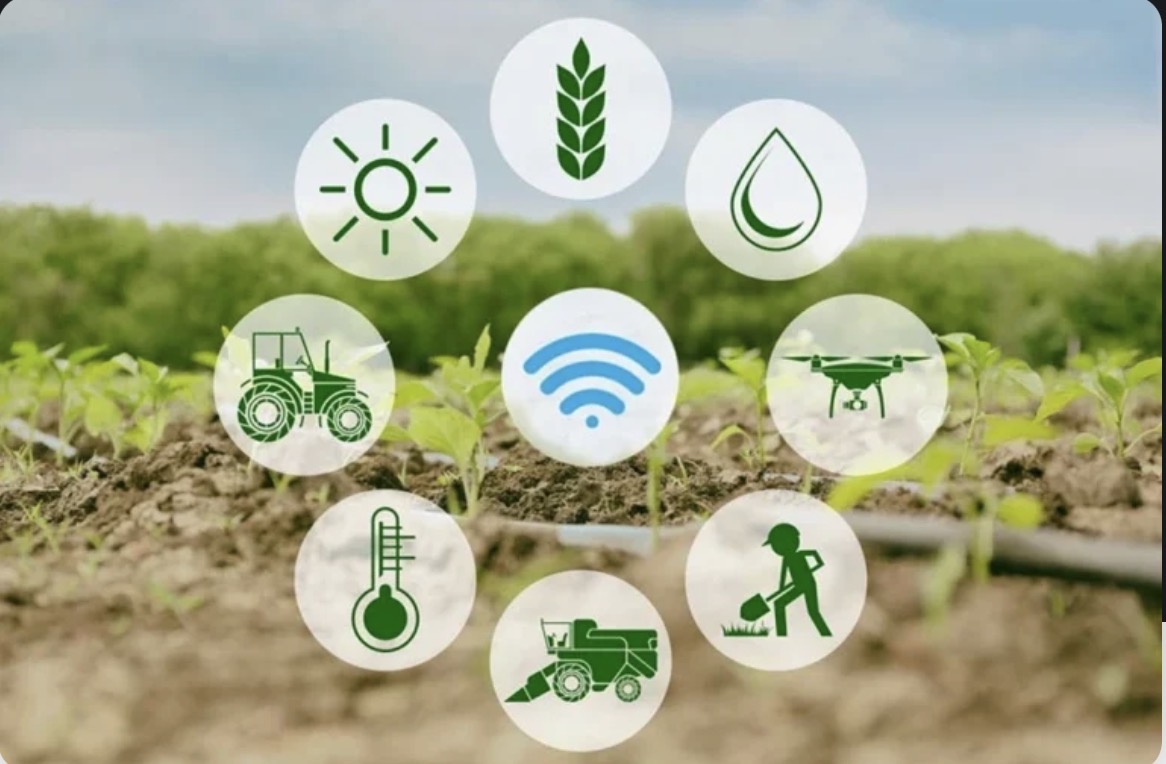 |
When the Prime Minister assumed office in 2014, agriculture and farmer welfare were placed at the heart of India’s development agenda. Since 2015, this commitment has increasingly translated into a broader transformation from improving production and farm incomes to building an agriculture sector that is productive, resilient, technology-driven and sustainable.
With that phrase he placed research and innovation at the heart of India’s farm future. Those words were more than a statement of policy direction; they embodied a pragmatic vision whose wisdom and foresight were unmistakably vindicated by the evidence that emerged a decade later.
The transformation underway since 2015 is therefore significant. The years 1995–96 and 2014–15 have been marked as structural breakpoints because they mark distinct phases in the evolution of Indian agriculture. The first reflects the gradual impact of economic liberalisation, greater market integration, changing consumption patterns and the slowdown in cereal productivity growth, while the second marks the emergence of a more diversified, technology-enabled and resilience-oriented agricultural system driven by irrigation expansion, digital platforms, market reforms and increasing focus on sustainability and climate adaptation.
Agricultural growth, which averaged about 2.7 per cent during 1967–1995 and about 3.0 per cent during 1996–2014, accelerated to around 4.5 per cent during 2015–2025 (Food grains at 8.4MT/annum, Fruits and Vegetables at 7.6MT/annum and Milk at Mt/annum). The last two years have witnessed an exceptional increase in food grain production, with the increase recorded at 22.1MT per annum, significantly higher than that observed during the preceding years..
This achievement reflects the combined impact of stronger Centre–State coordination, effective convergence of programmes, adoption of climate-resilient technologies, focused investments, and enhanced support to farmers. More importantly, this growth has become broader, drawing strength not only from cereals but also from horticulture, dairy, fisheries, poultry and other high-value activities. This is the agriculture that will power the next phase of India’s development.
Our objective must no longer be defined simply as producing more. We must produce more with lessless water, less land, less energy and fewer avoidable inputswhile producing better quality, safer and more nutritious food. The transformation in Indian consumption itself provides a powerful signal. In rural India, cereals accounted for about 57 per cent of food expenditure in 1972–73; by 2022–23, this had fallen to around 11 per cent. At the same time, the share of milk and milk products, fruits, vegetables, eggs, meat and fish rose from about 20 per cent to nearly 48 per cent. Urban consumption has followed a similar trajectory. Our farms must respond to this new India.This means greater emphasis on pulses, oilseeds, fruits, vegetables, dairy, fisheries, poultry and other high-value commodities. It means moving from a narrow concept of food security towards nutrition security. It means enabling farmers to participate in value chains where the real economic opportunity increasingly lies in grading, processing, packaging, branding, logistics and exports.
Our ambition should be to develop Indian agricultural products with globally recognised quality, traceability, safety and branding. The next phase must connect farmers not merely with domestic consumers but with international value chains. This will create employment, encourage rural entrepreneurship and enable a greater share of the value generated by agriculture to remain in rural India.But this transformation cannot be delivered by the Union Government alone. Agriculture is a shared national responsibility. States, local governments, research institutions, FPOs, cooperatives, private enterprises, financial institutions and civil society must work together. The future requires convergence across agriculture, water, energy, food processing, nutrition, climate, trade and rural development.
This is also where the spirit of cooperative federalism becomes critical. India’s agro-ecological diversity demands solutions that are local in implementation but national in vision. The journey from Viksit Krishi to Viksit Bharat will ultimately be measured not merely by tonnes produced, but by the quality of life of our farmers. A prosperous farmer is the foundation of a prosperous rural economy. A resilient farm is the foundation of resilient food systems. And a competitive agricultural value chain is the foundation of a globally competitive Bharat.We therefore need to move confidently from the paradigm of “how much can we produce?” to “how efficiently, sustainably and profitably can we produce?”
The Green Revolution secured India’s food future. The next agricultural transformation must secure India’s prosperity, nutrition, natural resources and global leadership. Prime Minister has given the nation a clear direction: Indian agriculture must become an important pillar of Viksit Bharat.
Our task is to turn that vision into action through science, innovation, infrastructure, markets, institutions and, above all, by placing the Indian farmer at the centre of every agricultural policy.As we move towards Viksit Bharat 2047, the farmer must not merely be a beneficiary of development. The farmer must be an architect of India’s developed future. That is the agricultural transformation India must now pursueand that is the foundation on which the India of 2047 will stand.


Recommended
 Economy
Connecting International Resources to Promote Green Development and Climate Change Adaptation
 Economy
Qashier Launches QashierGM, an AI General Manager That Works With the Whole Team
Popular article
 Economy
Women in Quang Tri's Mountainous Areas Proactively Seek Markets for Local Agricultural Products
 Economy
150 deep-tech startup stalls, global research partnerships at Emerging Science, Technology and Innovation Conclave
 Economy
PETRONAS Lubricants International and UM Motorcycles Announce Strategic Global Partnership to Power the Future of Riding
 Economy