India’s Reset Of The Indus Waters Treaty
The treaty itself is portrayed as outdated, shaped by a different geopolitical and environmental context, with structural imbalances in water allocation and no meaningful mechanisms for adaptation, despite India’s prior attempts at renegotiation.
The decision is framed as legally justifiable under the principle of fundamental change in circumstances and as a reversible, proportionate step rather than a breach of international law.
 |
That context no longer exists. Demographic pressures alone have transformed the equation: India’s population has more than tripled since 1960. Simultaneously, northern India’s agricultural core—Punjab and Haryana—faces accelerating groundwater depletion, while projections indicate a significant decline in basin-wide water availability by mid-century.
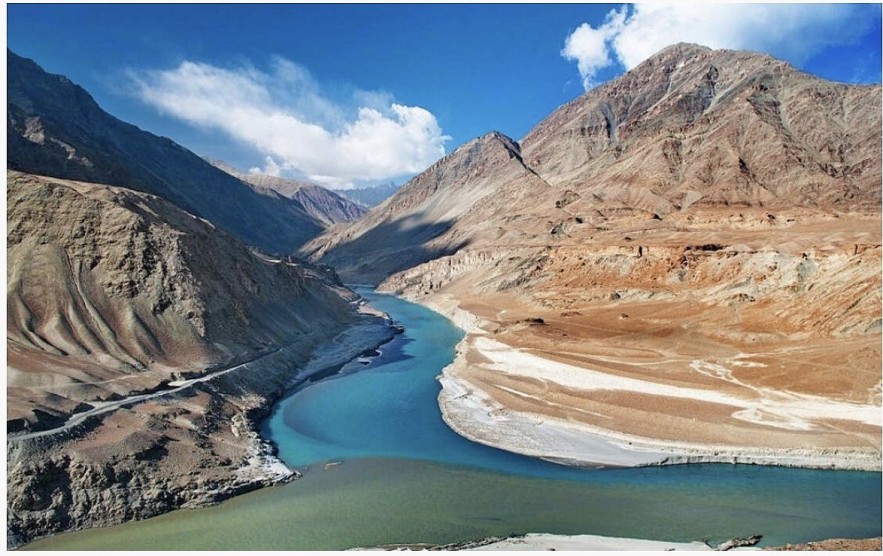
Climate change has further eroded the treaty’s foundational assumptions. Glacial melt, shifting precipitation patterns, and increasingly erratic river flows have rendered the original hydrological model obsolete. Yet the treaty contains no meaningful provisions for climate adaptation, periodic review, or real-time environmental monitoring.
The economic implications are equally significant. By linking water access to policy behavior, India has introduced a direct economic dimension into the strategic equation. Irrigation systems, food production, and hydropower generation—all heavily dependent on Indus flows—now operate under a new layer of uncertainty.
Simultaneously, India gains strategic space to optimise water use within its own territory, particularly in water-stressed regions. This is a recalibration of incentives, aligning resource stability with responsible state conduct.