Viet Nam and China step up parliamentary cooperation to deepen bilateral ties
Viet Nam and China will deepen strategic trust and expand substantive cooperation in trade, investment, railway connectivity, science and technology, with their legislative bodies playing a greater role in translating high-level agreements into practical results.
The view was shared by Tran Thanh Man, President of the National Assembly of Viet Nam and Zhao Leji, Chairman of the Standing Committee of China’s National People’s Congress (NPC), during their talks in Beijing on October 12, as part of the former’s official visit to China. The two leaders subsequently co-chaired the second session of the Cooperation Committee between the National Assembly of Viet Nam and the National People’s Congress of China.
Deepening strategic trust and expanding practical cooperation
Welcoming the high-ranking Vietnamese delegation, NPC Chairman Zhao commended Vietnam’s achievements in socio-economic development and socialist construction, expressing confidence that the country would successfully implement the Resolution of the 14th National Party Congress and make further progress in its new era of national development.
He reaffirmed China’s high regard for relations with Viet Nam and its readiness to advance bilateral ties in line with the high-level common perceptions reached by the two countries’ leaders, particularly those established during General Secretary of the Communist Party of Viet Nam Centra Committee and State President To Lam’s successful visit to China in April 2026.
National Assembly President Man for his part congratulated China on its 77th founding anniversary and commended its major development achievements, including the important contributions of the National People’s Congress. He expressed confidence that, under the leadership of the Communist Party of China, with General Secretary and President Xi Jinping at its core, China would successfully achieve its goal of building a prosperous, strong, democratic, culturally advanced, harmonious and beautiful modern socialist country.
In a frank and friendly atmosphere, the two sides briefed each other on the situation in their respective Parties and countries and the activities of their legislative bodies. They welcomed the positive, in-depth and comprehensive development of Viet Nam-China relations in recent years.
They also reviewed progress in implementing the outcomes of the first session of the Cooperation Committee between the two legislatures, held in August 2025. The progress demonstrated the role of the two legislative bodies in sharing experience in national security, strengthening political trust, promoting economic and trade cooperation, advancing science and technology and innovation, enhancing strategic connectivity, and fostering people-to-people exchanges.
The two leaders exchanged views on measures to further translate the common perceptions reached by the top leaders of the two Parties and countries into concrete outcomes.
Looking ahead, both host and guest agreed to maintain high-level exchanges and enhance strategic trust, providing a stronger political foundation for cooperation through various channels and across different fields. They called for a new level of substantive bilateral cooperation, particularly in more balanced and sustainable trade, high-quality investment, coordinated and modern railway connectivity, and science and technology.
They also stressed the importance of strengthening the social foundations of bilateral ties through local cooperation and exchanges in education, culture, tourism and among the two peoples.
Both sides vowed to enhance coordination at multilateral forums, effectively manage their land border, and better control and resolve maritime differences to maintain peace and stability at sea.
NPC Chairman Zhao further proposed closer alignment between the two countries’ development strategies, particularly in the digital and green economies, artificial intelligence, smart border gates and cross-border economic zones. He suggested accelerating railway construction linking the two countries and connecting with the China-Europe railway network.
China welcomes increased exports of Vietnamese agricultural products to its market and supports Viet Nam in making effective use of trade fair mechanisms organised by China, he said.
He also highlighted the importance of public support for bilateral relations, proposing stronger cooperation in tourism, culture, media, healthcare, sports and people-to-people exchanges, particularly among younger generations. China welcomed more Vietnamese pupils and students to study in the country. The two sides also agreed to strengthen coordination at regional and international forums and cooperate on initiatives concerning development, security, civilisation and global governance, according to VOV.
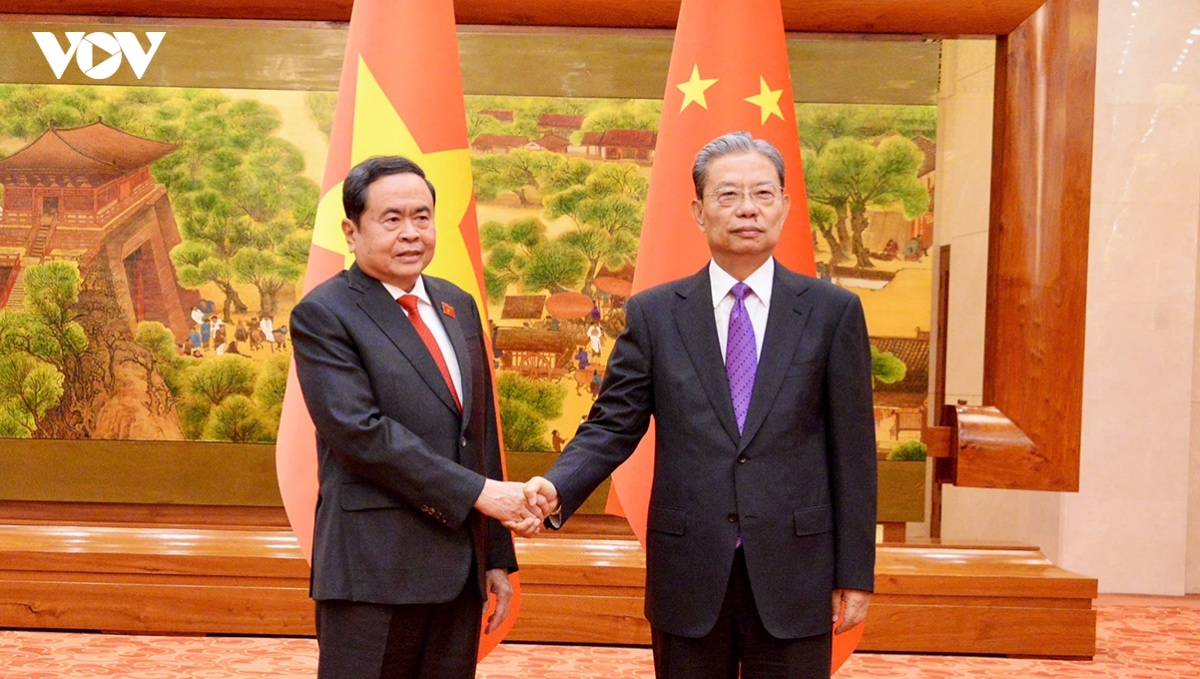 |
| Tran Thanh Man (L), President of the National Assembly of Viet Nam, and Zhao Leji, Chairman of the Standing Committee of the National People’s Congress of China (NPC), during their talks in Beijing on October 12, as part of the former’s official visit to China. |
Strengthening legislative cooperation to deliver tangible results
On cooperation between the two legislative bodies, National Assembly President Man proposed more exchanges and experience-sharing in professional activities and lawmaking. He called on the two sides to help establish a favorable legal environment for priority areas of bilateral cooperation, strengthen oversight of the implementation of bilateral commitments and agreements, enhance the representative role of their legislatures in fostering public support, and coordinate more closely at multilateral parliamentary forums.
NPC Chairman Zhao welcomed his guest’s proposals and affirmed that China’s NPC attaches importance to friendly exchanges and practical cooperation with the Vietnamese National Assembly. He expressed readiness to deepen exchanges on legislation and oversight, improve national governance capacity, and promote the role of legislative bodies in politics of each country. Such cooperation, he said, would help advance bilateral ties and strengthen friendship between the two peoples.
Following their talks, the two leaders co-chaired the second session of the Cooperation Committee between their legislatures.
The session focused on connectivity between the two countries’ development strategies, science and technology, and social governance, as well as strengthening the social foundations of bilateral relations. Chairpersons of relevant committees from both legislative bodies presented papers sharing their countries’ legislative experience and discussed ways to enhance the role of the highest legislative bodies in policymaking, institutional and planning connectivity, and the creation of a more enabling legal framework for cooperation.
Discussions also covered the exercise of supreme oversight to promote the implementation of bilateral commitments and agreements in key areas, including integrated strategic infrastructure and development spaces, science and technology, innovation, digital transformation, artificial intelligence, smart urban governance, cultural and tourism cooperation, high-quality human-resource training and people-to-people exchanges.
Both sides commended the significance and practical value of the Cooperation Committee mechanism. They agreed that specialised committees of the Vietnamese National Assembly and China’s NPC would work closely with relevant ministries, sectors and localities to implement the high-level agreements and common understandings in a coordinated and serious manner.
They reaffirmed their commitment to the “six-mores” orientation for bilateral relations so as to deepen the Comprehensive Strategic Cooperative Partnership and build a Viet Nam-China community with a shared future that carries strategic significance. They stressed that the common understandings reached at the second session should be translated into concrete, substantive results.
Earlier the same day, National Assembly President Tran Thanh Man met with Chinese Premier Li Qiang and Chinese friendship figures.
Viet Nam, Australia step up digital technology, AI cooperation
Viet Nam and Australia are stepping up cooperation in digital technology and artificial intelligence (AI), with a focus on practical projects, technology transfer, investment and workforce development.
A Vietnam–Australia forum on investment and development cooperation in digital technology and AI was held in Hanoi on October 12 by the Department of Digital Technology and AI (DDA) under the Ministry of Science and Technology and the Viet Nam-Australia Scholars and Experts Association (VASEA).
The forum followed a memorandum of understanding inked by the two sides on August 10, 2026, at the University of Technology Sydney, aiming to strengthen links between the two countries’ technology, investment and innovation ecosystems.
A highlight was the launch of V-bridge, a platform developed by the DDA, FPT Group and VASEA to connect businesses and organizations across the Vietnam–Australia technology ecosystem.
DDA Director Nguyen Khac Lich said the forum aimed to foster cooperation among regulators, research institutions, universities, businesses and investors, opening up opportunities in technology research, development, transfer, commercialization and investment. AI, semiconductors and innovation were identified as key areas for future collaboration.
Renee Deschamps, Chargé d’Affaires a.i. at the Australian Embassy in Viet Nam, said Australian businesses are keen to engage in Vietnam’s digital development, particularly in semiconductors, AI and cybersecurity. They also hope to share expertise and support Vietnamese companies in technology and investment, cited VNA.
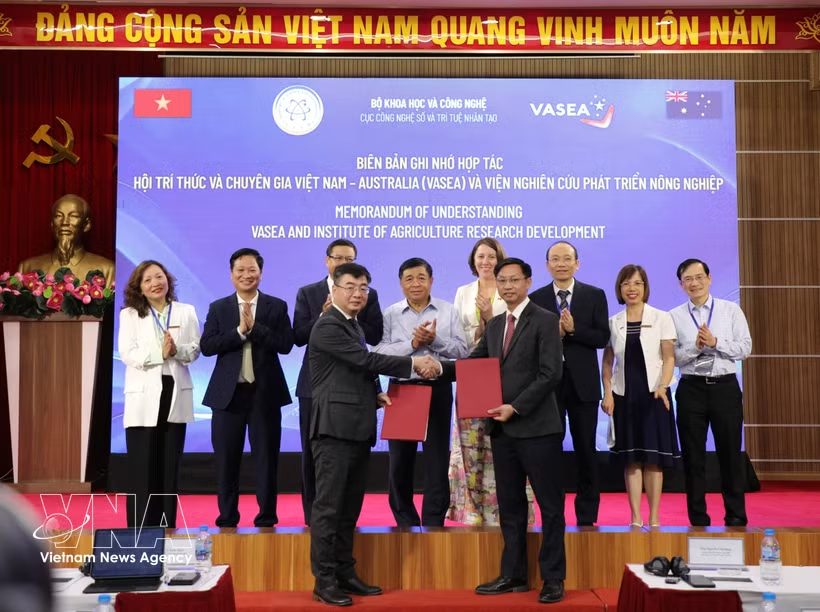 |
| The signing of an MoU between the Department of Digital Technology and Artificial Intelligence and the Institute for Agricultural Research and Development at the forum. (Photo: VNA) |
Deputy Minister of Science and Technology Le Xuan Dinh said Viet Nam has a strong demand for technology applications, a skilled engineering workforce and businesses expanding internationally. Australia, meanwhile, is home to universities, research institutions and an innovation ecosystem that Vietnamese partners could tap into, reported VNa.
He called for cooperation to focus on practical projects with measurable results, linking research and product development with market needs and workforce training. AI projects should prioritize data quality, reliability and control, while semiconductor cooperation could cover chip design, design verification, pilot production support and testing.
Dinh also urged partners to establish clear operating arrangements for V-bridge, regularly update verified information on technological capabilities and market demand, and provide follow-up support on technical, commercial and investment issues.
The ministry will help connect resources, provide policy guidance and address obstacles within its remit, the deputy minister added.
Two panel discussions explored cooperation in AI, semiconductors and innovation, as well as investment opportunities, commercialization and business expansion. Around 10 digital technology products from Vietnam’s Make in Viet Nam program and Australia were also showcased, enabling businesses to promote their solutions and connect with partners, experts and investors.
Vietnam’s economic transformation opens up major cooperation opportunities with EU: PM
Vietnam’s strong economic transformation is opening up significant opportunities for cooperation with the European Union (EU) and its member states, Prime Minister Le Minh Hung said on October 12.
At a meeting in Hanoi with Ambassador Julien Guerrier, Head of the EU Delegation to Viet Nam, and other ambassadors and chargés d’affaires of EU member states, PM Hung said Viet Nam is resolutely implementing major policies to achieve its medium- and long-term development goals.
Viet Nam is determined to achieve double-digit economic growth during 2026-2030 and pursue two centenary goals: becoming a developing country with modern industry by 2030 and a developed, high-income country by 2045, he said.
The country is accelerating its growth model transformation, with new growth drivers based on science and technology, innovation, digital transformation and green transition. It is also working to improve the legal framework, particularly in energy, investment and business, to mobilise resources for national development.
Assessing Viet Nam-EU ties, PM Hung said they have grown steadily deeper and more substantive since diplomatic relations were established 36 years ago.
Viet Nam is the first Southeast Asian country to establish a Comprehensive Strategic Partnership with the EU. The bloc is Vietnam’s fourth-largest trading partner, third-largest export market and fifth-largest import market, he noted.
Viet Nam attaches great importance to its relations with the EU and its member states and wants to effectively implement the new partnership framework, he added.
Against the backdrop of complex global and regional developments, PM Hung called on both sides to make better use of their respective strengths, coordinate more closely in addressing common challenges and pursue long-term mutual benefits.
He proposed increasing exchanges and contacts at all levels, strengthening coordination at multilateral forums and enhancing defense and security cooperation. He also called for collaboration in strategic and emerging areas, including science and technology, innovation, critical raw materials, strategic infrastructure, energy transition, digital transformation and green transition.
The PM highlighted opportunities for cooperation in new energy development, green hydrogen and ammonia production technologies, offshore wind power and energy infrastructure modernisation.
He also called for stronger cooperation in strategic transport infrastructure, particularly high-speed and urban railways, seaports and aviation, with the EU providing support in finance, technology and human resources training. The leader said European companies should be encouraged to invest in Viet Nam.
PM Hung stressed the importance of expanding education and training cooperation, promoting academic exchanges and developing high-quality human resources through the Erasmus program. He also urged the EU to facilitate the integration of Vietnamese communities in member states into their host societies, enabling them to serve as bridges between the sides.
He called on the diplomats to promote the effective implementation of the EU-Vietnam Free Trade Agreement (EVFTA), accelerate the ratification of the EU-Vietnam Investment Protection Agreement (EVIPA), and further facilitate two-way trade and investment, VNA reported.
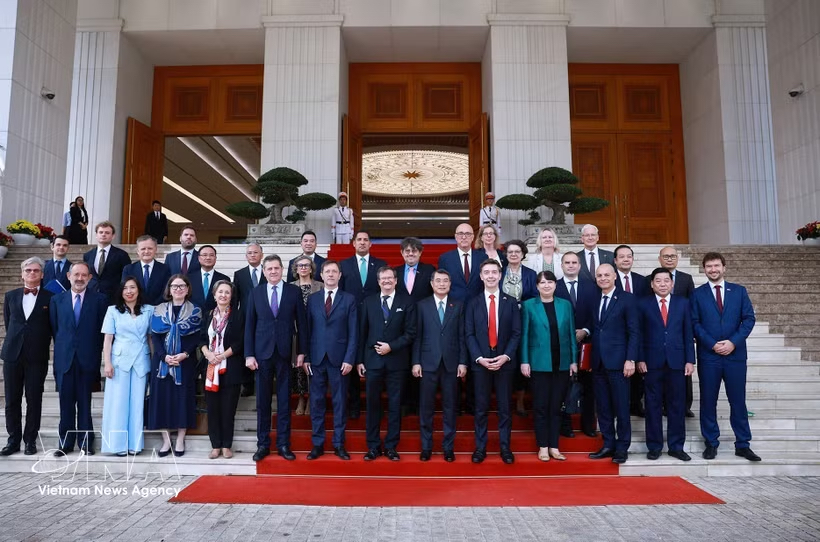 |
| Prime Minister Le Minh Hung meets with Ambassador Julien Guerrier, Head of the EU Delegation to Viet Nam, and other ambassadors and chargés d’affaires of EU member states in Hanoi on October 12. (Photo: VNA) |
The PM also urged them to support the European Commission’s early removal of its illegal, unreported and unregulated (IUU) fishing “yellow card” against Viet Nam.
He highly valued the EU’s recognition of Viet Nam's efforts to improve its legal framework and strengthen cooperation on tax matters, as well as the EU’s decision to remove Viet Nam from its list of non-cooperative jurisdictions for tax purposes.
For issues on which the two sides hold different views, PM Hung called for continued dialogue and the use of existing bilateral mechanisms to ensure that differences do not affect their Comprehensive Strategic Partnership.
Speaking on behalf of the EU diplomats, Guerrier said Viet Nam-EU relations are increasingly substantive, trustworthy and dynamic, stressing that Viet Nam plays a very important role amid current global uncertainties. Maintaining and strengthening stable, reliable ties with Viet Nam is therefore particularly important to the EU, he said.
Guerrier said both sides have significant opportunities to expand cooperation. European companies were keen to increase investment and partnerships in green transition, supply chains, transport, strategic infrastructure, critical raw materials, science and technology, defense and security, and other areas of mutual interest.
The ambassador affirmed that the EU wishes to continue accompanying Viet Nam in its new phase of development.
The two sides agreed to prepare thoroughly for upcoming high-level diplomatic engagements and accelerate the implementation of their Comprehensive Strategic Partnership through practical cooperation programs and projects with a long-term vision, creating fresh momentum for deeper and more effective bilateral relations.
Could storms make landfall in Viet Nam over the next month?
Viet Nam may see fewer tropical storms than usual from October 11 to November 10, but landfall remains possible. Forecasters also warn of widespread heavy rain, particularly in central regions, despite above-average temperatures nationwide.
Temperatures across Viet Nam expected to exceed seasonal averages
Nguyen Duc Hoa, Deputy Head of the Climate Forecasting Division at the National Center for Hydro-Meteorological Forecasting, said average temperatures across Viet Nam are expected to be 1-2 degrees Celsius above the long-term average during the October 11-November 10 period.
In northern Viet Nam and areas stretching from Thanh Hoa to Hue, temperatures could be 1.5-2.5 degrees above normal, with even greater differences in some locations, cited VNN.
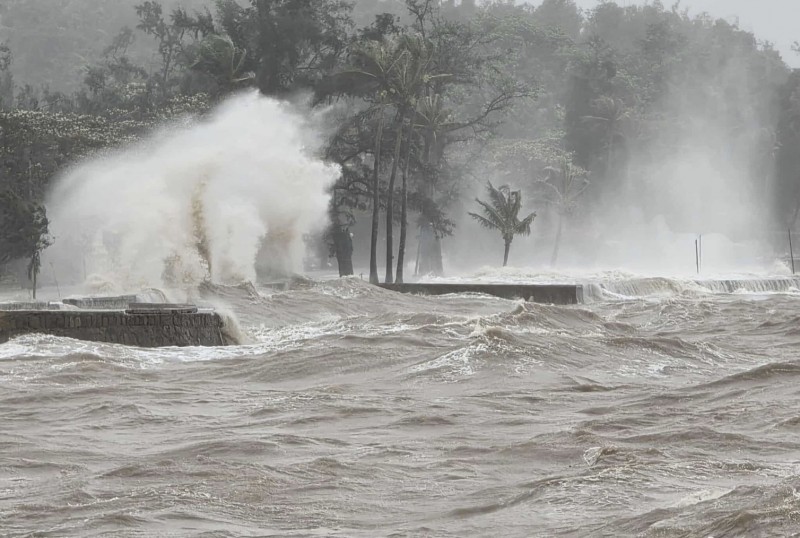 |
| Tropical storms could still make landfall in Viet Nam over the coming month despite forecasts of below-average storm activity. Photo: Bao Khanh |
Regarding rainfall, the northern mountainous region, southern Viet Nam and Lam Dong Province are forecast to receive precipitation close to seasonal averages, although some areas could see 10-20% more rain than usual.
Elsewhere, rainfall totals are expected to be 20-40% below the long-term average.
Notably, some areas between Ha Tinh and Quang Ngai could experience rainfall deficits of 40-50% compared with the same period in previous years.
Fewer storms expected, but landfall risk remains
According to the national meteorological agency, tropical storms and depressions in the East Sea are expected to occur less frequently than the long-term average during the forecast period.
However, the possibility of a storm or tropical depression affecting mainland Viet Nam cannot be ruled out.
Historical data show that the East Sea typically experiences around two tropical storms or depressions during the same period, with an average of approximately 0.8 systems making landfall in Viet Nam.
Despite the outlook for below-average storm activity, widespread heavy rainfall remains a concern, particularly in central Viet Nam.
Cold air outbreaks are also expected to occur less frequently than normal for this time of year.
Meanwhile, hazardous weather phenomena, including thunderstorms, tornadoes, lightning, hail and strong wind gusts, could continue to occur across the country.
Meteorologists warned that the interaction of several atmospheric systems could trigger widespread rainfall over mainland Viet Nam.
These include the intertropical convergence zone, upper-level wind convergence, the southwest monsoon and cold air masses.
Their combined effects could also increase the risk of tornadoes, lightning, hail and damaging wind gusts.
As climate change contributes to increasingly complex weather patterns and more frequent extreme events, authorities and residents are urged to closely monitor meteorological forecasts and warnings, particularly short-range forecasts covering the next one to three days.
El Nino has also intensified to a very strong level and is forecast to reach peak intensity by the end of 2026.
Although its strength is expected to decline during the first months of 2027, the phenomenon is likely to remain very strong.
From now until the end of 2026, the number of tropical storms and depressions developing over the East Sea and affecting mainland Viet Nam is expected to remain below the long-term average.
During the 2026-2027 winter, cold air activity is forecast to be weaker than usual, while severe cold spells are likely to arrive later and occur less frequently.
Rainfall deficits are another major concern.
Through the end of 2026, precipitation across the south-central coastal region, the central highlands and southern Viet Nam could be 20-40% below normal.
The rainy season in these areas may also end earlier than usual.
During the first months of 2027, below-average rainfall and an early onset of hot weather are expected in southern provinces.
These conditions could increase the risk of drought, water shortages and saltwater intrusion, posing further challenges for communities and agricultural production.
 Viet Nam News Today (Oct. 8): Viet Nam Sees Panama as Key Partner in Latin America Viet Nam News Today (Oct. 8): Viet Nam Sees Panama as Key Partner in Latin America |
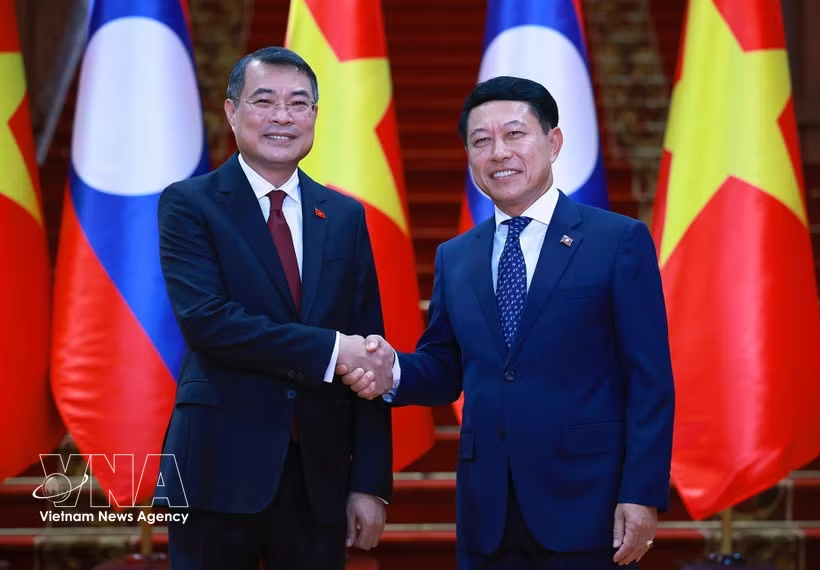 Viet Nam News Today (Oct. 9): Vietnamese PM Le Minh Hung Holds Talks with Lao Counterpart Saleumxay Kommasith Viet Nam News Today (Oct. 9): Vietnamese PM Le Minh Hung Holds Talks with Lao Counterpart Saleumxay Kommasith |