| Viet Nam News Today (Oct. 9) notable headlines Vietnamese PM Le Minh Hung holds talks with Lao counterpart Saleumxay Kommasith Viet Nam makes active contributions to 63rd Human Rights Council session Viet Nam targets 10%+ GDP growth in 2027, eyes productivity boost, resource efficiency Austria's int’l healthcare company plans to invest €1.2 billion in Viet Nam Viet Nam ranks among world’s top 10 favorite countries in 2026 Viet Nam, Laos seek breakthroughs in economic, transport, logistics connectivity NA Vice President holds bilateral meetings on sidelines of IPU-153 Lam Dong seeks stronger economic, tourism links with RoK Buckwheat blossoms help extend tourism season in stone plateau |
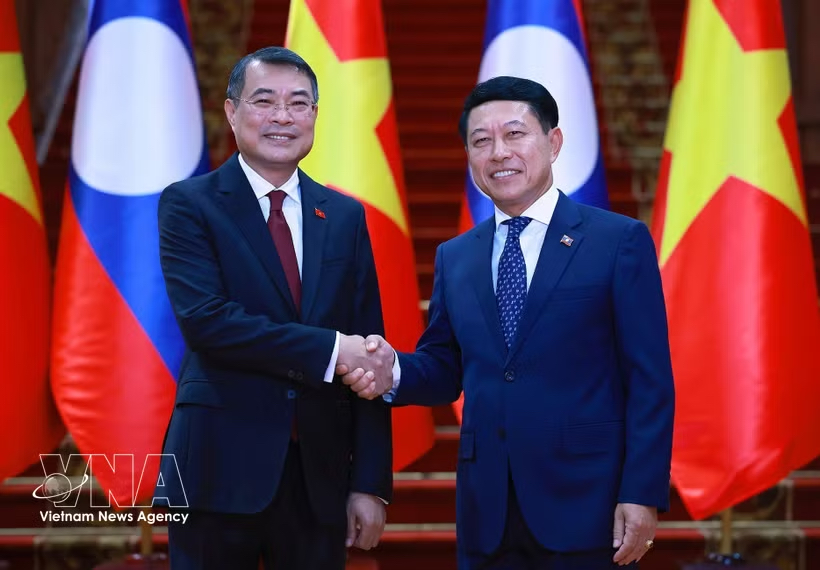 |
| Prime Minister Le Minh Hung (left) holds talks with his Lao Prime Minister Saleumxay Kommasith in Vientiane on October 8. (Photo: VNA) |
Vietnamese PM Le Minh Hung holds talks with Lao counterpart Saleumxay Kommasith
Prime Minister Le Minh Hung and his Lao counterpart Saleumxay Kommasith held talks in Vientiane on October 8, agreeing to further deepen the Viet Nam-Laos special relationship, with political ties continuing to serve as the core for bilateral relations.
PM Saleumxay warmly welcomed PM Hung on his first official visit to Laos as head of the Vietnamese Government, saying that the trip reflects the high level of political trust and the special and faithful ties between the two Parties, States and people of Laos and Viet Nam. He expressed his belief that the visit will help further deepen the great friendship, special solidarity, comprehensive cooperation and strategic cohesion between Laos and Viet Nam in a substantive and effective manner.
The Lao leader congratulated Viet Nam on its important achievements, particularly in socio-economic development, maintaining high growth and enhancing its international position and role. He also expressed sincere thanks for Vietnam’s valuable and effective support for Laos’s revolutionary cause and national construction and development.
For his part, PM Hung thanked the Lao side for its warm and fraternal welcome and congratulated PM Saleumxay on his election as the Prime Minister by the 10th National Assembly of Laos.
He expressed his confidence that PM Saleumxay will successfully lead the Lao Government in implementing the 10th five-year socio-economic development plan, contributing to the successful implementation of the Resolution of the 12th National Congress of the Lao People’s Revolutionary Party (LPRP).
PM Hung conveyed greetings and congratulations from General Secretary of the Communist Party of Viet Nam (CPV) Central Committee and President To Lam, National Assembly President Tran Thanh Man, and Standing Member of the CPV Central Committee’s Secretariat Tran Cam Tu to Lao leaders and PM Saleumxay. He also thanked the Lao Party, Government and people for their close and faithful support for Viet Nam.
The Vietnamese leader congratulated Laos on its achievements and spoke highly of the Lao Government’s efforts to maintain political, defense and security stability, strengthen macroeconomic stability, control inflation, sustain growth and enhance international integration. He stated that Viet Nam stands ready to accompany and support Laos within its capacity, particularly by sharing experience in macroeconomic management, finance and budget, institutional reform, infrastructure development and human resources training.
The two leaders informed each other about the situation in their respective countries, development orientations and key tasks in implementing the resolutions of their respective Party congresses, cited VNA.
They expressed satisfaction with the positive and comprehensive development of the bilateral ties in recent times and reaffirmed that the Viet Nam-Laos, Laos-Vietnam special relationship remains the top priority in each country’s foreign policy.
The two sides agreed to continue promoting the pivotal role of their trusted political ties in providing overall direction for the bilateral relations; maintain regular all-level visits and meetings; make full use of cooperation mechanisms across all channels; and effectively implement high-level agreements, cooperation plans between the two governments, and cooperation programmes between ministries, sectors and localities of the two countries.
They affirmed that defense and security cooperation remains a pillar of the bilateral ties, agreeing to strengthen coordination in maintaining security, political stability and social order, combating transnational crime, drug-related crime, human trafficking, smuggling and high-tech crime, and managing and protecting the shared border. They also agreed to promote cooperation in emerging areas such as defense industry and cybersecurity.
Regarding economic cooperation, the two sides regarded investment as a bright spot in the bilateral relationship. Viet Nam currently has about 300 investment projects in Laos with registered capital of around 7 billion USD, making Laos the top investment destination for Vietnamese businesses.
The two sides agreed to create breakthroughs in economic connectivity, encourage investment in high-value-added sectors, and promote transport, infrastructure, logistics and border-gate connectivity. They will work to increase bilateral trade to 5 billion USD and eventually 10 billion USD annually, while accelerating major projects and resolving difficulties related to mechanisms, procedures and investment efficiency.
Viet Nam will continue supporting Laos in training officials, experts and high-quality human resources, PM Hung stated.
The two sides highlighted the Laos-Vietnam Friendship University project as a symbolic undertaking connecting knowledge and nurturing friendship between the two countries for future generations.
The Vietnamese leader took this occasion to announce that Viet Nam will provide 2 million USD to build two schools in Laos’s Huaphan and Champasak provinces, supporting education and human resources development.
The two PMs also discussed measures to boost and improve efficiency of cooperation in science and technology, transport, energy and mining, and agreed to carefully prepare activities for the Viet Nam-Laos, Laos-Vietnam Year of Friendship and Solidarity 2027, marking the 65th founding anniversary of diplomatic ties (September 5, 1962 - 2026) and the 50th founding anniversary of the signing of the Viet Nam-Laos Treaty of Friendship and Cooperation (July 18, 1977 - 2027).
They agreed to step up information sharing and consultations on strategic issues related to the security, stability and development of each country; continue close coordination and mutual support at the Association of Southeast Asian Nations (ASEAN), the United Nations, Mekong sub-regional mechanisms and other multilateral mechanisms.
PM Hung invited PM Saleumxay to attend the Ayeyawady-Chao Phraya-Mekong Economic Cooperation Strategy (ACMECS) Summit and the Cambodia-Laos-Myanmar-Vietnam (CLMV) Summit in Viet Nam in November.
Following the talks, the two leaders witnessed the signing of 11 cooperation documents in security, justice, finance, energy, education and training, ethnic and religious affairs and cooperation between localities. They also attended the handover ceremony for a data and citizen identification centre project, and the launching ceremony of the Laos-Vietnam Friendship University project.
Viet Nam makes active contributions to 63rd Human Rights Council session
Viet Nam made active and substantive contributions to the 63rd regular session of the UN Human Rights Council (HRC63), advancing initiatives on vaccination, older persons’ rights and other human rights priorities during its 2026–2028 term as a Council member.
The month-long session, held in Geneva from 7 September to 7 October, marked the conclusion of the Council’s three regular sessions in 2026. It adopted 38 resolutions and decisions, held six thematic panel discussions and 37 interactive dialogues with Special Procedures and other United Nations human rights mechanisms, reviewed thematic reports and updates as well as human rights situations in 20 countries and territories. It completed the adoption of the outcomes of the fourth cycle of the Universal Periodic Review (UPR) for 15 countries, and appointed seven mandate holders to the Council’s Special Procedures and working groups.
Viet Nam advances initiatives on vaccination and older persons’ rights
Throughout the session, the Vietnamese delegation took part in consultations and negotiations on nearly 40 draft resolutions and discussions, co-sponsored eight resolutions and seven joint statements, and co-hosted or participated in a number of side events and initiatives.
A notable contribution was Vietnam’s leadership in drafting and presenting a joint statement on vaccination and access to vaccines, co-sponsored by 42 countries.
The statement underlined the essential role of vaccination in primary health care, universal health coverage and the implementation of the Sustainable Development Goals (SDGs). It called for efforts to close immunisation gaps and ensure timely, affordable and equitable access to vaccines, alongside stronger international cooperation, sustainable financing and the sharing of technology and knowledge to advance the right to the highest attainable standard of health.
Viet Nam also hosted a high-level discussion on promoting the right to health of older persons and developing a comprehensive framework to ensure their enjoyment of human rights, co-sponsored by the Philippines and Slovenia, reported VOV.
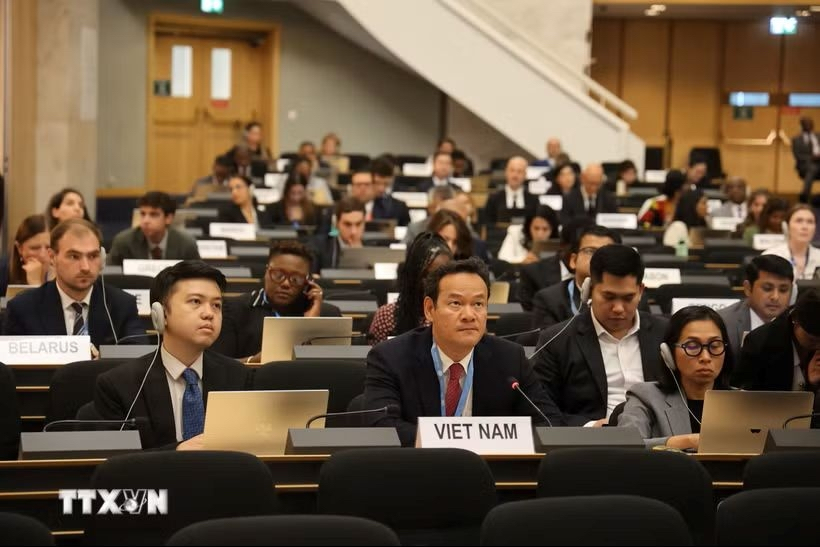 |
| Ambassador Mai Phan Dung, Permanent Representative of Viet Nam to the United Nations Office and other international organizations in Geneva, attends the 63rd regular session of the UN Human Rights Council |
The discussion was moderated by Ambassador Mai Phan Dung, Permanent Representative of Viet Nam to the United Nations Office and other international organizations in Geneva, and brought together Zvezdan Pirtošek, Independent Expert on the enjoyment of all human rights by older persons, representatives of the World Health Organization (WHO), Gavi, the Vaccine Alliance, the International Labour Organization (ILO), the Philippines and Vietnam’s Ministry of Health, as well as nearly 100 participants.
Participants discussed access to health services for older persons, the role of universal health coverage, primary health care, prevention, vaccination and long-term care in promoting healthy ageing, measures to reduce inequalities in access to health care, and policies and practices to advance the rights of older persons.
Broader engagement on human rights issues
Viet Nam also co-hosted two side events during the session, one on strengthening cooperation in combating human trafficking in the context of online scams, organised by Thailand, and another on reviewing the efforts and achievements of the ASEAN Intergovernmental Commission on Human Rights (AICHR), organised by the Philippines.
The Vietnamese delegation also participated in and delivered statements during discussions on economic, social and cultural rights, the right to development, the rights of older persons, the right to clean water and sanitation, human rights education and training, the rights of indigenous peoples and climate finance, among other issues of international concern.
Vietnam’s engagement at HRC63 came as the country implements the Resolution of the 14th National Party Congress and enters a new development phase focused on rapid and sustainable growth, including an ambition for double-digit economic growth and continued improvements in people’s living standards.
In this context, Viet Nam has continued to emphasise respect for, protection and promotion of human rights and citizens’ rights, with people placed at the centre, as both the subject and beneficiary of development. The country has also promoted dialogue, cooperation and a balanced approach, sharing its experience and advancing practical initiatives, particularly on the rights of vulnerable groups.
Its participation in HRC63 therefore reflects Vietnam’s efforts to play an active and responsible role as a Council member for the 2026–2028 term, while contributing to the Council’s work on the basis of the UN Charter and international law.
Viet Nam targets 10%+ GDP growth in 2027, eyes productivity boost, resource efficiency
Viet Nam has set a target of at least 10% GDP growth in 2027, with the Party Central Committee stressing that the goal must be driven by higher productivity, stronger competitiveness and greater economic self-reliance, backed by more effective use of resources and faster implementation.
The target, adopted at the fourth plenum of the 14th Party Central Committee, is part of a broader effort to create momentum for the following years. In his closing remarks, General Secretary of the Communist Party of Viet Nam Central Committee and President of Viet Nam To Lam said 2027 must be a year of acceleration and breakthroughs, laying the foundation, position and capacity for subsequent development.
The Party Central Committee also set a target of keeping average consumer price inflation at around 4.5% while maintaining macroeconomic stability and major economic balances. High growth, the top leader stressed, must go hand in hand with social progress and equality, environmental protection and improvements in people’s living standards.
Turning available resources into growth
A central question raised in the speech is how the country can turn the resources already mobilised into actual productive capacity.
The Party Central Committee noted that although Viet Nam has achieved important results in the first year of implementing the 14th National Party Congress Resolution, some resources already allocated have been slow to be put to use. The implementation of projects and the settlement of outstanding issues remain behind schedule in some areas.
Party General Secretary and State President To Lam called for resources already mobilised to be channelled into production and business, creating jobs and strengthening development capacity. Removing institutional bottlenecks, however, must go together with stronger capacity to absorb capital and adequate infrastructure, energy and human resources, cited VOV.
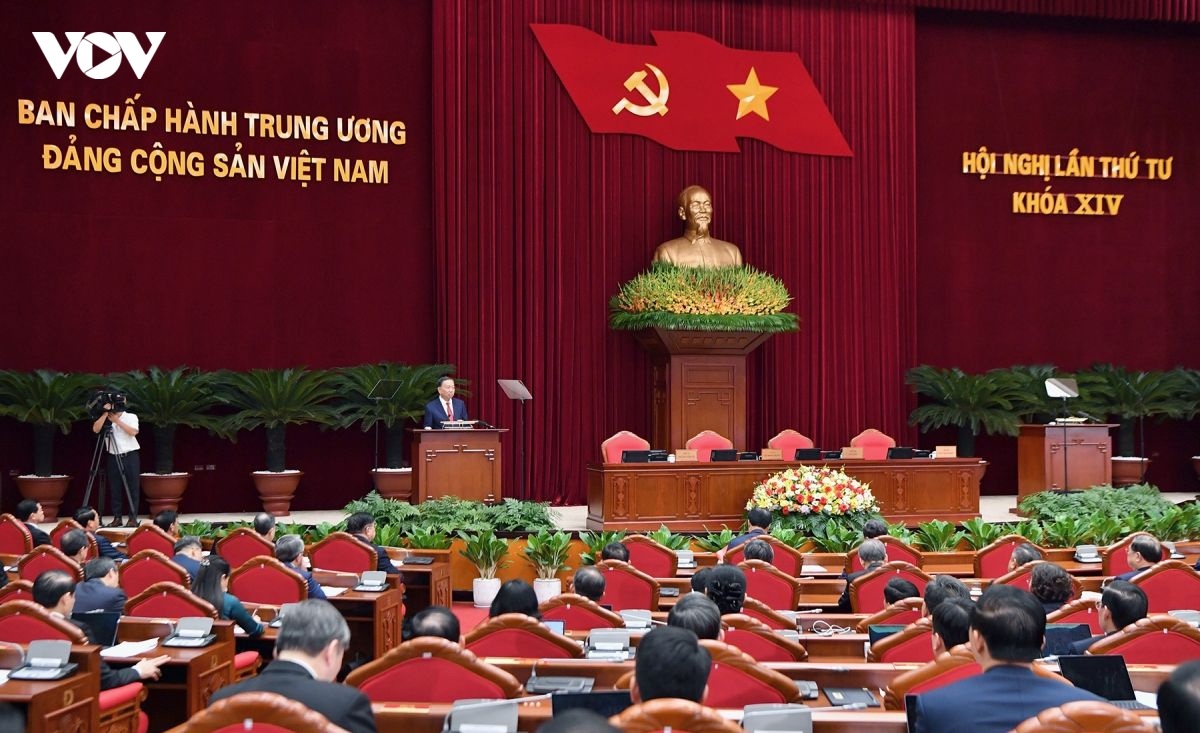 |
| Delegates attend the closing ceremony of the fourth plenum of the Party Central Committee in Hanoi on October 8. |
The approach also calls for greater mobilisation of private investment, stronger domestic businesses and firmer purchasing power. Public investment should play a leading role in attracting social investment and improving regional connectivity, while disbursement should be linked to actual progress and quality rather than simply the amount of capital spent.
Growth must rest on productivity and competitiveness
The 10%+ target is presented not simply as a matter of mobilising more capital, but as a demand for a stronger growth model.
The Party Central Committee stressed that high growth must be based on productivity, competitiveness, economic self-reliance and a stable long-term foundation. Science and technology, innovation and digital transformation are expected to play a stronger role in raising productivity and competitiveness.
Foreign investment is also expected to contribute more to domestic development through technology transfer and stronger links with Vietnamese enterprises. This places greater emphasis on the value created within the economy, rather than investment and trade expansion alone.
The leader’s speech also links growth with fiscal and monetary coordination, inflation control and risk management, while stressing financial discipline and the need to assess public spending through actual results.
Implementation becomes the test
Behind the growth target is a broader question of whether decisions can be translated into action quickly and effectively.
Party General Secretary and State President To Lam identified implementation as a weak point in some areas, citing slow coordination, limited initiative and capacity constraints at the grassroots level. He requested that ministries, sectors and localities resolve matters within their authority and report issues beyond their authority together with proposed solutions.
This is where the speech’s emphasis on decentralisation, authority and accountability connects directly with the 2027 growth target.
The Party Central Committee called for responsibilities and authority to be clearly defined and for the allocation of tasks to be matched by sufficient personnel and resources. Once authority has been delegated, those entrusted with it must make decisions and take responsibility for them.
The same principle applies to policy implementation. Responsibility cannot stop at issuing documents; agencies in charge must monitor implementation, address problems within their remit and propose changes when policies no longer fit reality. Where a policy fails to achieve its objectives, the quality of policy advice, policy design and implementation responsibility must all be examined.
Personnel reform is therefore also tied to the growth objective. The top leader’s closing speech calls for officials to be selected, assigned and assessed according to the demands of their tasks, with actual performance serving as a key basis for evaluating their competence and suitability.
Ultimately, the implementation of the Party Central Committee’s decisions will be measured by results. The Party General Secretary and State President called on each level of the Party organization and each official to focus on key tasks, resolve matters within their responsibility and follow through on commitments.
“Once a task is accepted, it must be carried out; once a commitment is made, it must be fulfilled,” he said, urging the political system to move into action immediately after the plenum.
Austria's int’l healthcare company plans to invest €1.2 billion in Viet Nam
VAMED Engineering GmbH of Austria plans to invest €1.2 billion in Viet Nam over the next five years, creating jobs for thousands of workers while promoting knowledge and technology transfer.
The above information was unveiled by César Louis-Philip Marseille, Managing Director of VAMED Engineering GmbH of Austria and member of the Board of Directors of VAMED+WWH Group of Germany during his meeting with Deputy Prime Minister Pham Thi Thanh Tra in Ha Noi on October 7.
According to Marseille, Viet Nam is one of VAMED's important partners in Southeast Asia, adding that the group wishes to continue working with Viet Nam through concessional credit projects, public-private partnerships (PPPs), and cooperation with private-sector partners, while supplying medical products from Austria and Germany to Vietnamese partners.
The group also proposed studying the deployment of a hospital ship model in Phu Quoc Island in the southern province of An Giang.
The new model could provide healthcare services to a large number of patients and help strengthen Viet Nam's healthcare capacity, he emphasized.
Pham, for her part, acknowledged VAMED's partnership with Viet Nam since 1997.
Over nearly three decades, the group has deployed around €158 million in ODA funding and implemented 10 key projects, contributing to the upgrading of medical equipment at 15 military hospitals, Ha Noi-based Bach Mai Hospital, Ho Chi Minh City-based Cho Ray Hospital and Hue Central Hospital in the central city of Hue, as well as medical waste incinerators for 25 clusters of provincial-level hospitals, VGP reported.
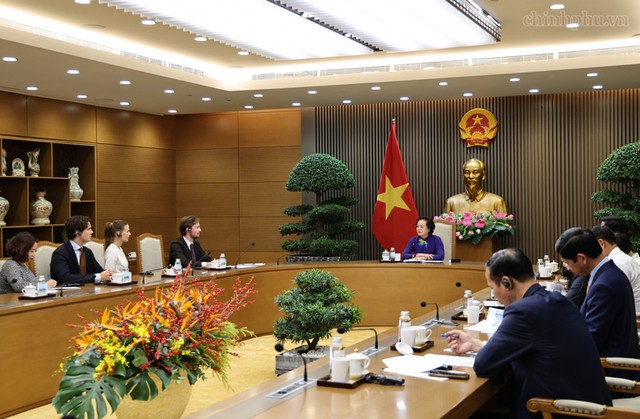 |
| Deputy Prime Minister Pham Thi Thanh Tra hosts a reception for César Louis-Philip Marseille, Managing Director of VAMED Engineering GmbH of Austria and member of the Board of Directors of VAMED+WWH Group of Germany, Ha Noi, October 7, 2026 - Photo: VGP |
She welcomed VAMED's hospital ship initiative, especially in the context that the nation is set to host the APEC Economic Leaders' Week 2027 in Phu Quoc.
Pham urged the group to study the possibility of investing in an elderly healthcare and nursing system in Viet Nam.
Viet Nam ranks among world’s top 10 favorite countries in 2026
Viet Nam has ranked 10th among the world’s 20 most favorite countries in 2026, with 92.99 points by the the renowned US travel magazine Condé Nast Traveler, the Viet Nam National Authority of Tourism (VNAT) reported on October 8.
VNAT said the recognition reflected the growing prominence of Viet Nam on the international tourism map, thanks to its diverse landscapes, rich cultural heritage, distinctive cuisine and memorable travel experiences.
These include Hanoi, with its Old Quarter and rich cultural heritage; Ho Chi Minh City, known for its dynamic pace of life; Ha Long Bay, renowned for its spectacular scenery; and Hoi An and Hue, which stand out for their heritage values. Meanwhile, Da Nang, Phu Quoc, the mountainous routes of northern Viet Nam and the distinctive cultural spaces of the Central Highlands offer visitors a wide range of unique experiences. Together, these attractions create a diverse and distinctive tourism landscape of Viet Nam in the eyes of international visitors.
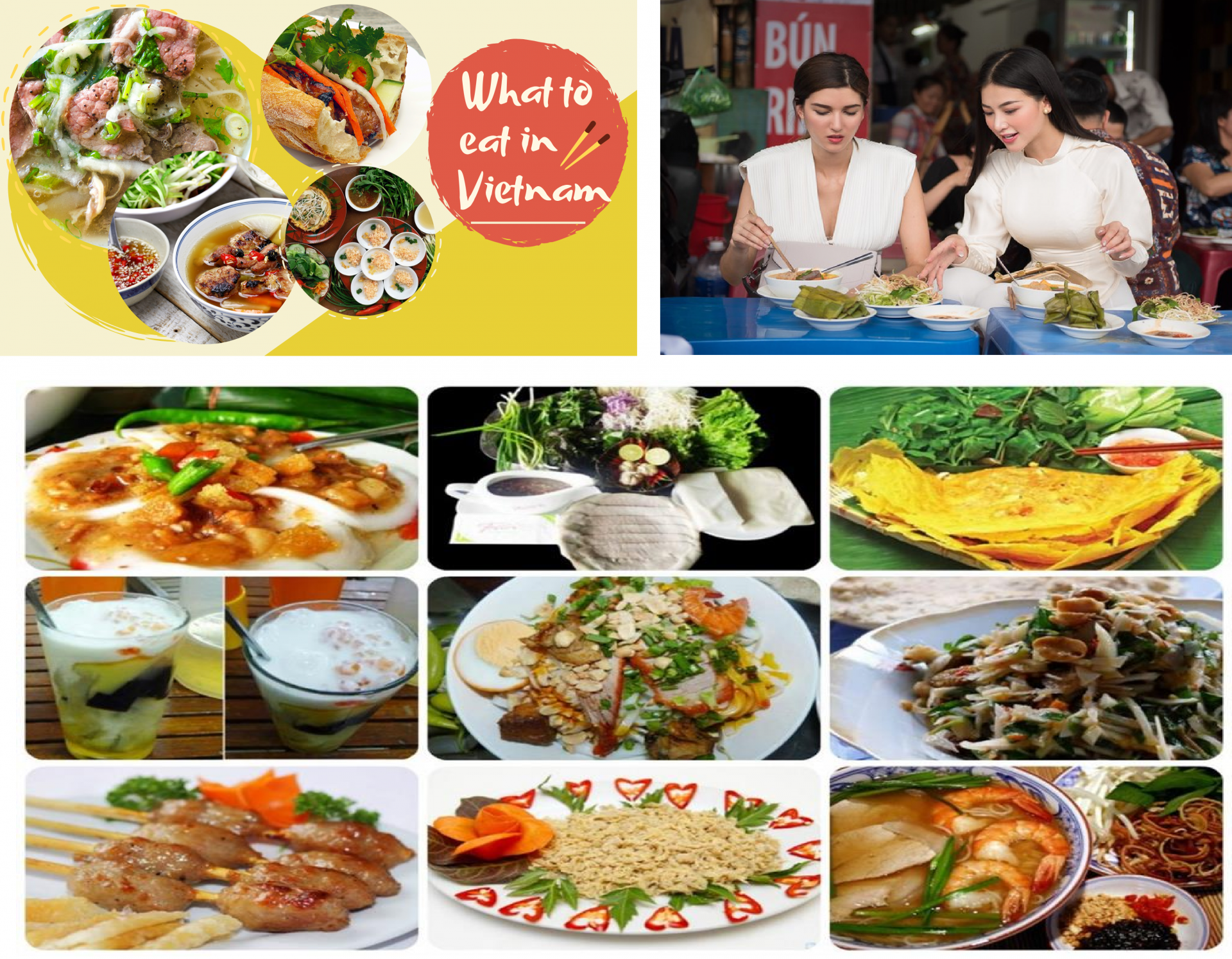
Cuisine has also become one of the special “touchpoints” in the journey of discovery. From pho (rice noodle soup), banh mi (Vietnamese baguette) and coffee to local dishes imbued with the distinctive flavours of each region, Vietnamese culinary culture helps bring the image of Viet Nam closer to international travelers.
At the same time, the friendliness and openness of local people, together with experiences rooted in local life, are increasingly adding to the appeal of journeys to explore the S-shaped country.
Vietnam’s inclusion in the top 10 favorite countries in the 2026 Readers’ Choice Awards adds another important milestone to the country’s international tourism brand. The result not only underscores the destination’s appeal but also reflects growing international appreciation for Vietnam’s natural beauty, cultural heritage, cuisine and people, VNA reported.
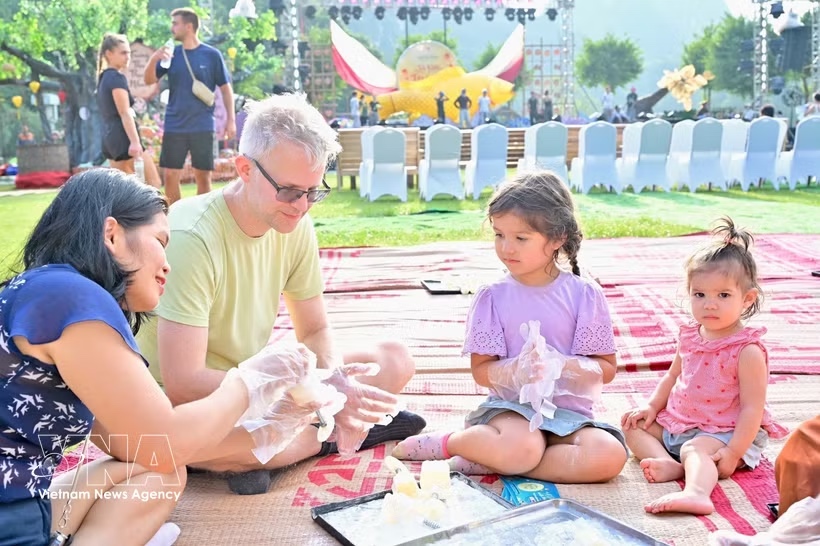 |
| International tourists enthusiastically participate in activities associated with the Mid-Autumn Festival (Photo: VNA) |
Other countries on the list are Japan, Italy, Ireland, Cambodia, Spain, Portugal, France, Greece, Panama, the Republic of Korea, Thailand, Poland, Norway, Croatia, Austria, Switzerland, Singapore, Sweden and Germany.
Earlier, the Travel & Tourism Development Index 2026 released by the World Economic Forum showed that 13 of Vietnam’s 17 travel and tourism development pillar indicators were rated from upper-middle to world-leading levels. Notably, Viet Nam ranked ninth globally for safety and security, placing it among the world’s top 10 countries in this category.
This advantage is particularly significant as Vietnam’s tourism sector targets 25 million international arrivals and around 150 million domestic tourist trips in 2026.

 Viet Nam News Today (Oct. 04): Viet Nam Posts GDP Growth of 9.95% in Q3
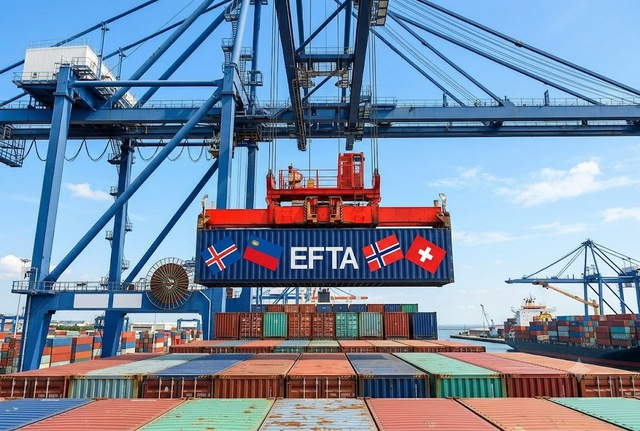 Viet Nam News Today (Oct. 6): Viet Nam Prepares For Signing Trade Deal With European Free Trade Area