Viet Nam prepares for signing trade deal with European Free Trade Area
The Ministry of Industry and Trade has finalized a proposal to sign free trade agreement (FTA) between Viet Nam and the European Free Trade Association (EFTA).
The proposal has been submitted to the Ministry of Justice for appraisal. Then, it wil lbe submitted to the Government for consideration of the signing of the agreement.
Negotiations on the Viet Nam–EFTA FTA, known as VEFTA, were launched in 2012. Following more than 14 years of negotiations and 21 official negotiating rounds, the two sides have concluded discussions on the full text of the agreement.
EFTA comprises Switzerland, Norway, Iceland and Liechtenstein. The agreement is expected to help Viet Nam diversify its export markets and create new opportunities for Vietnamese enterprises to expand their presence in markets with high purchasing power.
The proposed agreement covers a wide range of areas, including trade in goods and services, investment, rules of origin, technical barriers to trade, sanitary and phytosanitary measures, trade facilitation, government procurement, intellectual property, competition, small- and medium-sized enterprises (SMEs), and sustainable development.
More than 90 percent of EFTA tariff lines to be liberalized immediately
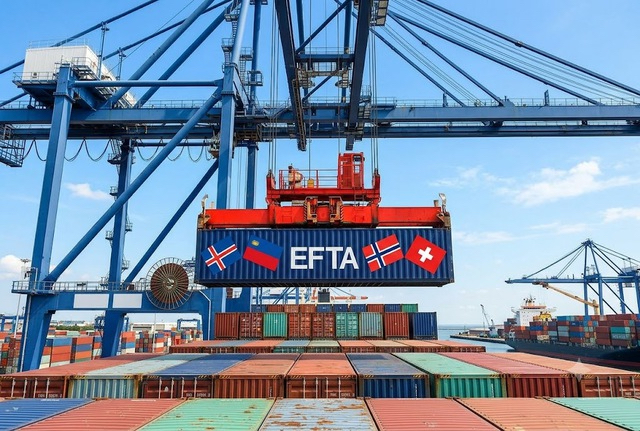
Under the agreement, EFTA members have committed to immediately liberalizing more than 90 percent of tariff lines, covering 99.5 percent of Viet Nam's exports to the bloc.
EFTA will also eliminate tariffs immediately on all industrial products, including seafood, VGP reported.
 |
| Photo: VGP |
As a result, major Vietnamese export items such as textiles and garments, footwear, seafood, computers, electronic products and components, machinery and equipment will benefit from immediate tariff elimination.
EFTA will also reduce tariffs on a number of major Vietnamese agricultural products, including rice, honey, fruits and vegetables.
For its part, Viet Nam has offered to eliminate tariffs on more than 86% of tariff lines, equivalent to 99.9 percent of imports from EFTA, either immediately or according to reduction schedules ranging from three to 15 years.
Significant room to expand exports and investment
Vietnamese exports to the EFTA market with good turnover and growth in 2024–2025 included seafood, with export value exceeding US$52 million; footwear, more than US$49 million; machinery, equipment, tools and spare parts; means of transport; computers, electronic products and components, more than US$40 million; and textiles and garments, more than US$26 million.
Meanwhile, Viet Nam mainly imports from EFTA products serving domestic production, including machinery and equipment, electrical and mechanical products, chemicals, seafood materials and pharmaceuticals.
In investment cooperation, Switzerland and Norway are the two EFTA members with significant investment ties with Viet Nam.
As of the end of 2025, Switzerland had 234 valid investment projects in Viet Nam with total registered capital of more than US$2.4 billion, ranking 20th among 153 countries and territories investing in Viet Nam.
Norway had 62 valid projects with total registered capital of US$201.57 million, ranking 40th among 153 countries and territories investing in Viet Nam.
According to the Ministry of Industry and Trade, the signing of the agreement is expected to help diversify export markets for Vietnamese enterprises and facilitate greater access for Vietnamese goods to markets with high purchasing power and stringent quality standards.
The EFTA bloc has annual import turnover of around US$630 billion, while imports from Viet Nam currently account for only about 0.65 percent, indicating substantial potential for further growth.
The agreement is also expected to attract high-quality investment from EFTA countries into sectors prioritized by Viet Nam, including high technology, processing and manufacturing, clean energy, green transition, innovation and human resource development.
Viet Nam’s approach to innovation inspires countries worldwide: WIPO
The World Intellectual Property Organisation (WIPO)'s Global Innovation Index (GII) 2026 report ranked Viet Nam 43rd among 139 countries and economies, making it a leading example of how to turn the index into a practical tool for action.
In an interview recently granted to Viet Nam News Agency correspondents in Switzerland, Sacha Wunsch-Vincent, Head of Section, Economics and Statistics Division and co-editor of the GII report, gave insights into this year's theme: “Powering Entrepreneurs at the Frontier of Science: Turning Pilots into Pipelines”.
According to him, the theme underscores the need to turn scientific breakthroughs into startups and technology commercialising firms. Doing so requires countries to combine three core elements.
The first is a strong research system, where universities and scientists patent inventions and found companies around them. The second is long-term financing: a sustainable funding chain, especially late-stage venture capital, that spans 10 to 15 years and supports projects from prototype to industrial-scale production. The third is dynamic businesses with a heavy focus on research and development (R&D) to bring products to market.
Wunsch-Vincent said the GII has evolved beyond a ranking into a policy diagnostic tool used by about 70% of WIPO member states, or nearly 100 countries.
Viet Nam earned “full marks” on all three criteria for using the index effectively, he said. The first is in-depth research. Viet Nam works closely with WIPO and analyses its strengths, weaknesses and long-term trends in detail, cited VNA.
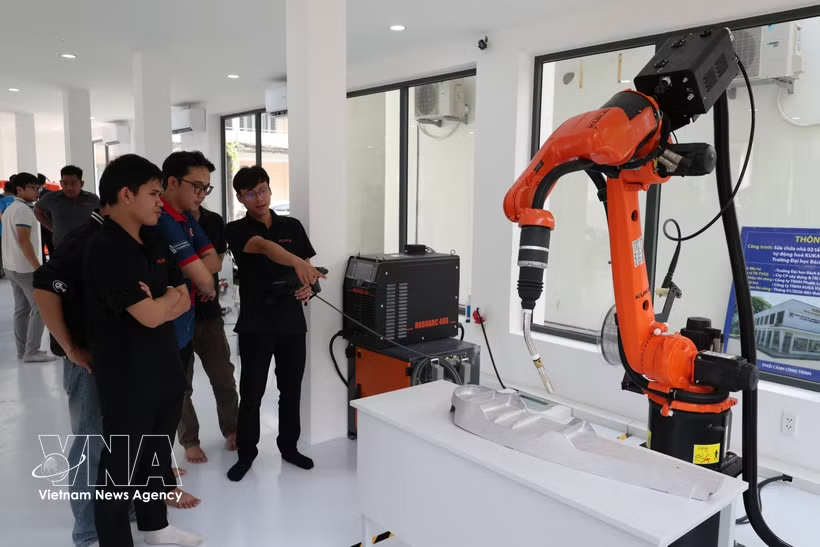 |
| Testing industrial robots at the University of Science and Technology – University of Da Nang (Photo: VNA) |
The second is pooling resources nationwide. Viet Nam set up a dedicated GII working group linking central and local authorities and adopted ambitious targets, notably lifting R&D spending to 2% of gross domestic product.
The third is systematic monitoring and promotion of innovation at the local level, shown by annual tracking of performance results. Viet Nam's creation of its own Provincial Innovation Index (PII) has burnished the capacity of individual cities and provinces.
He said Viet Nam's approach to adopting the GII and coordinating with government agencies at both central and local levels is an invaluable lesson many other countries are studying and trying to replicate. Viet Nam has thereby contributed considerably to capacity building and sci-tech cooperation, and its PII has prompted many other WIPO members to adopt similar models.
Looking ahead, he praised the close cooperation between the two sides, which goes well beyond the GII report. WIPO will keep helping Viet Nam make effective use of the IP system, including not only patents but also trademarks and industrial designs, to help local companies raise their value and move up in global supply chains, he said.
The two sides will also deepen cooperation in strategic areas, including accelerating technology transfer from research institutes and universities to companies and expanding IP-based financing, such as using patents as collateral, laying a foundation for faster growth in the years ahead, he added.
Hanoi to celebrate Capital Liberation Day with fireworks and musical performances
Hanoi will host high-altitude fireworks displays combined with musical performances on the evening of October 10 as the centerpiece of celebrations marking the 72nd anniversary of the Capital’s Liberation (October 10, 1954 - October 10, 2026).
Speaking at a press briefing on October 5 regarding third-quarter socio-economic performance, a representative of the municipal Department of Culture, Sports and Tourism announced that a 15-minute fireworks show will begin at 21:00 on October 10 at two main locations.
West Lake will feature 900 pyrotechnic platforms integrating high- and low-altitude fireworks, water effects, and synchronized music, while Hoan Kiem Lake, near the Hanoi Post Office, will host a 350-platform display.
Alongside the fireworks, the city has organized a string of cultural and artistic events throughout October. Highlights include premier musical programs at the Ho Guom Theater, the special concert “Hanoi Symphony,” and commemorative events honoring the 80th traditional day of the capital's armed forces at the Ba Kieu Temple flower garden. Professional art troupes are also performing across various cultural spaces throughout the city.
Tourism promotion efforts have been stepped up with the introduction of 72 suggested tour itineraries showcasing the capital's heritage, craft villages, and culinary culture, alongside the launch of the smart tourism platform HanoiGo, cited VOV.
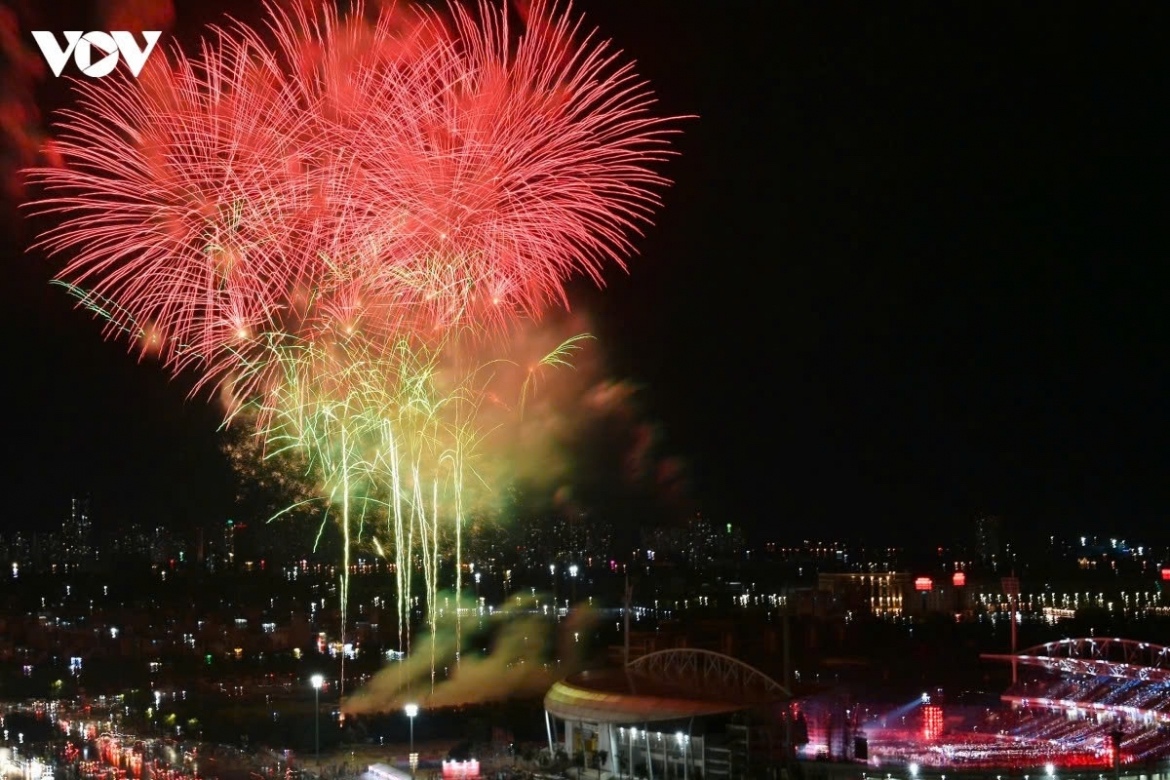 |
| Hanoi will let off fireworks at 9 p.m. on October 10 to celebrate the 72nd anniversary of its Liberation Day. |
Major festivals, including the Hanoi Autumn Festival and the heritage event “Source of Heritage at the Heart of the Capital,” are also underway, while city-level historical sites continue to open doors to visitors and host cultural activities to educate the younger generation on traditional history.
Organizers emphasized that these commemorative activities not only create a joyful atmosphere and serve the public's cultural needs, but also play a vital role in preserving heritage and promoting Hanoi as a safe, hospitable destination for international visitors.
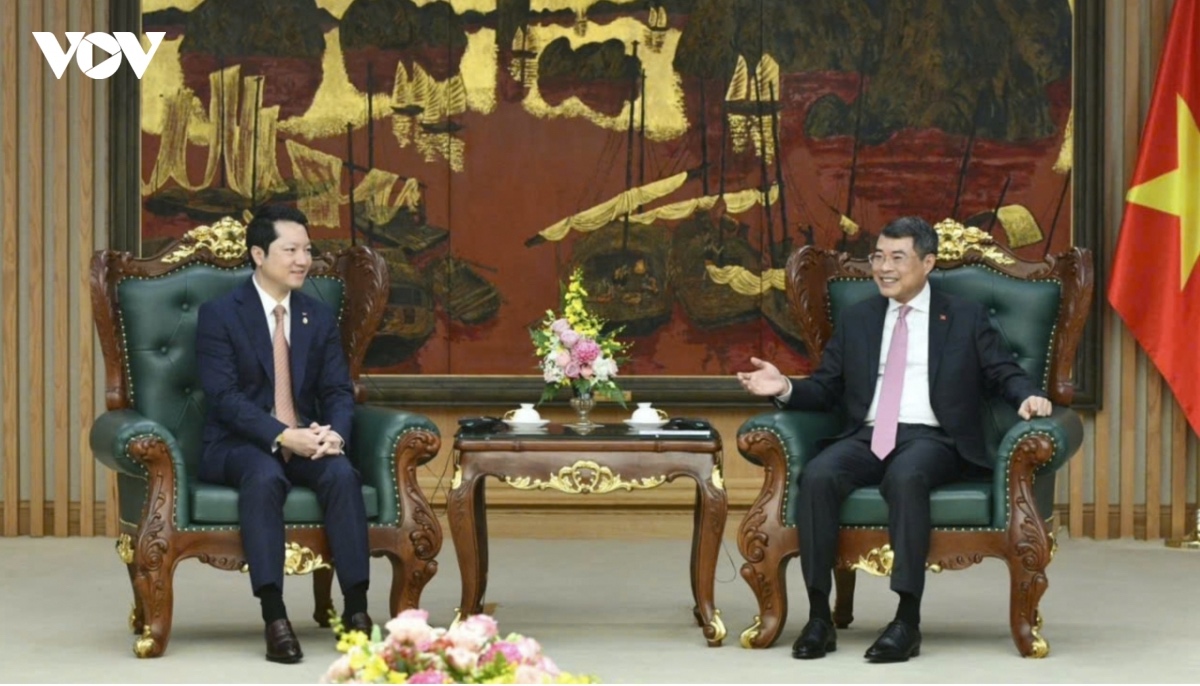 Viet Nam News Today (Sep. 30): Viet Nam, Cambodia Step Up Inspection Cooperation, Economic Ties Viet Nam News Today (Sep. 30): Viet Nam, Cambodia Step Up Inspection Cooperation, Economic Ties |
 Viet Nam News Today (Oct. 1): Viet Nam, India Move to Deepen Business, E-commerce Connectivity Viet Nam News Today (Oct. 1): Viet Nam, India Move to Deepen Business, E-commerce Connectivity |