
Several Factors Bolster Viet Nam's Economic Growth Prospects in 2026
| World Peoples Assembly Days in Viet Nam 2026 Conclude, Opening New Avenues for Cooperation Six Key Tasks of the Viet Nam Union of Friendship Organizations for 2026-2031 Term |
 |
| Experts from ADB, UOB, and Standard Chartered have all raised their GDP growth forecasts for Viet Nam this year (Photo: TTTXVN). |
Positive growth results in the first half of 2026 are reinforcing international organizations' confidence in Viet Nam's economic outlook. ADB, UOB, and Standard Chartered have all raised their GDP growth forecasts for Viet Nam this year, with the highest forecast reaching 9.5%.
Many foreign banks raise their growth forecasts
In a report released on September 23, the Asian Development Bank (ADB) raised its forecast for Viet Nam's economic growth to 7.8% in 2026 and 7.6% in 2027.
The adjustment comes after Viet Nam's economy achieved a growth rate of 8.2% in the first half of 2026, significantly higher than the 7.5% recorded in the same period of the previous year. The ADB noted that growth was sustained across key economic sectors.
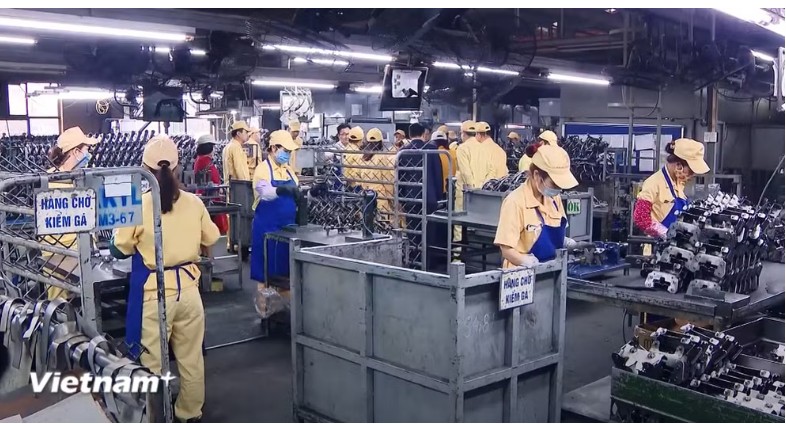 |
| In a report released on September 23, the Asian Development Bank raised its forecast for Viet Nam's economic growth to 7.8% in 2026 and 7.6% in 2027 (Photo: Vietnam+). |
Viet Nam has the potential to effectively leverage its position as a transit and transformation hub in the supply chain, especially in the processing, manufacturing, electronics, logistics, and export sectors.
In addition, Viet Nam's network of trade agreements that it has signed and is implementing, its proximity to major manufacturing centers, its dynamic workforce, and its stable economic and political environment continue to be important advantages.
Not only ADB, but UOB banking experts have also significantly raised their forecast for Viet Nam's GDP growth in 2026 to 8.5% from the 7% forecast given earlier this year.
The growth momentum is supported by infrastructure investment, FDI inflows, demand related to artificial intelligence (AI), and the trend of diversifying supply chains towards ASEAN, noted UOB. These structural factors, along with the expanding consumer market and enhanced regional connectivity, are laying the foundation for Viet Nam to sustain growth in the coming years.
Meanwhile, Standard Chartered raised its forecast for Viet Nam's economic growth in 2026 to 9.5%, up from 7.2% previously. The bank attributed the stronger-than-expected recovery in manufacturing, investment, and domestic consumption to factors supporting the growth outlook.
Tim Leelahaphan, senior economist for Viet Nam and Thailand at Standard Chartered, said that although global uncertainties and inflationary pressures remain factors to watch, Viet Nam enters the second half of the year from a solid position.
Growth drivers come from many sources
These forecast adjustments indicate that Viet Nam's growth prospects are being viewed positively from many perspectives.
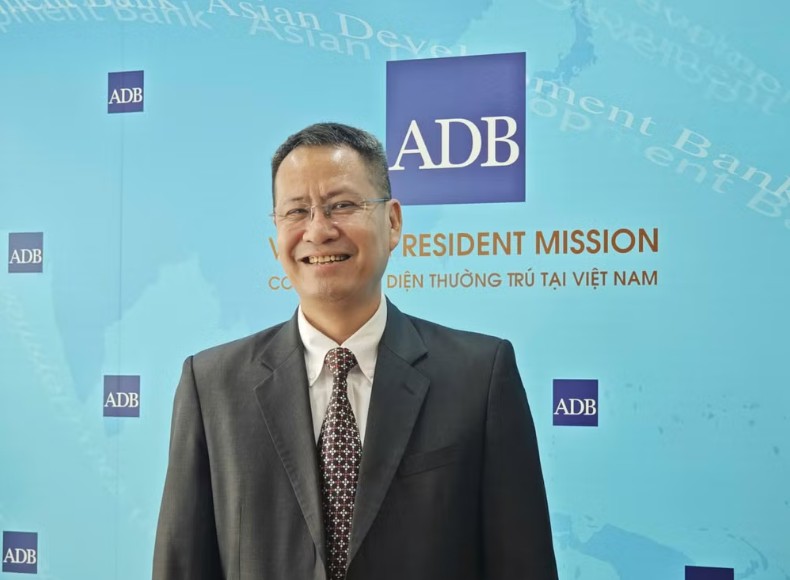 |
| ADB expert Bui Minh Giap believes that competition in the region will intensify in the next 3-5 years (Photo: Vietnam+). |
According to Paul Kim, Head of Personal Financial Services at UOB Viet Nam, the first half of 2026 shows that the global environment could change rapidly, from geopolitical tensions to fluctuations in energy and commodity prices.
In the near future, Viet Nam continues to demonstrate resilience thanks to domestic demand, foreign investment inflows, export competitiveness, infrastructure development, and supportive policies.
Previously, UOB also assessed better-than-expected economic performance and strong demand for AI as key factors driving growth. Notably, the strong growth in registered FDI indicates very positive prospects for future capital disbursement, reinforcing expectations that 2026 could become a record year for foreign investment attraction in Viet Nam.
From a medium-term perspective, UOB experts believe that infrastructure investment, FDI, AI-related demand, and the trend of diversifying supply chains towards ASEAN are relatively supportive in the long term. The expanding domestic consumer market and enhanced regional connectivity could create additional room for growth.
However, Paul Kim noted that trade policy, geopolitics, inflation, and interest rates will continue to be important factors that businesses and investors need to monitor. Being committed to long-term goals while simultaneously staying informed and proactively adapting to changes in the economic environment is increasingly necessary.
A shift to productivity-based growth
Although current dynamics are creating a positive foundation, experts believe that Viet Nam's advantages will not naturally be sustainable.
According to expert Bui Minh Giap, competition in the region will intensify in the next 3-5 years. Requirements regarding origin, green standards, data, and technological skills will also become increasingly stringent.
“To sustain these advantages, I believe Viet Nam needs to shift more quickly from a growth model based on capital, labor, and FDI inputs to one based on productivity, innovation, labor skills, domestic enterprises, and domestic added value,” he emphasized.
In addition to leveraging existing growth drivers, the challenge for Viet Nam is to improve the quality of growth. The ability to attract FDI needs to be linked to expanding domestic production capacity and increasing domestic value, while infrastructure development must go hand in hand with improving productivity and competitiveness.
This is also a significant factor for medium- and long-term growth prospects, given the increasing competition for investment and the restructuring of supply chains in the region.
According to Shantanu Chakraborty, ADB Country Director, Viet Nam's positive economic results in the first half of the year demonstrate its resilience and potential to sustain strong economic growth.
“To maintain momentum and achieve higher-quality progress, Viet Nam needs to continue managing its macroeconomic policies prudently to curb inflation, ensure financial stability, accelerate structural reforms, and ensure continued investment-driven economic expansion, leading to improvements in productivity,” said Shantanu Chakraborty.
Despite supportive factors, the global economic environment remains fraught with uncertainty. According to UOB experts, trade policies, geopolitical tensions, and energy volatility could impact international trade and production costs.
Domestically, the progress of investment programs and structural reforms will be a crucial factor in the ability to sustain medium- and long-term growth.
From a market perspective, UOB experts believe that equities may experience periods of consolidation or correction in the short term as investors reassess the outlook for inflation, interest rates, and bond yields. The long-term outlook for risky assets continues to be supported by corporate earnings and investment flows into AI-related technologies and infrastructure.
The role of disciplined and goal-oriented asset management are also emphasized. Investment strategies need to be aligned with each individual's financial goals, risk tolerance, and investment timeframe.
 Viet Nam’s Push Toward Technology-Driven Growth Viet Nam’s Push Toward Technology-Driven Growth The World Bank Group’s (WB) decision to upgrade Viet Nam to the upper-middle-income economy category marks a historic milestone after 17 years of sustained efforts. However, to overcome the “middle-income trap” and achieve high-income country status by 2045, Viet Nam will face an entirely new set of development challenges as its traditional growth drivers reach their limits. |
 Viet Nam Is Moving Towards Quality and Sustainable Growth Viet Nam Is Moving Towards Quality and Sustainable Growth Over the past 40 years, through the Doi Moi (Renewal) reform process, Viet Nam has achieved rapid economic growth and established itself as an emerging economy in Asia. As an FDI businessman who has accompanied this process, I feel immensely proud. |


Most read


Related Stories
 Economy
Viet Nam, US Seek Higher-Quality Economic Ties
 National
Viet Nam News Today (Oct. 13): EU-Vietnam Partnership Set for Deeper Cooperation and Tangible Results
 Economy
New Opportunities for Breakthroughs In Viet Nam - Canada Science and Technology Cooperation
 National
Vietnam News Today (Sep. 14): PM Le Minh Hung Outlines Three Major Orientations For BRICS at 18th Summit
Recommended
 Economy
Oxfam and VCCI-HCM Help Businesses Improve Management and Connect with Markets
 Economy
Tay Ninh and Thanh Hoa Seek Investment Partners and Market Expansion Opportunities in Bulgaria
 Economy
India converts gas-fuelled plant for green ammonia
 Economy
India’s Startups Are Srengthening the Country’s Space Tech Boom
Popular article
 Economy
ZTE Launches M8000 Intelligent Computing Micro-Module Data Center, New-Gen AIDC IT POD Solution for Global Deployment
 Economy
Mountains and Seas Unite for a New Chapter: "Sojourn in Guizhou" International Promotion Conference Held in Macao
 Economy
Vietnamese And Bulgarian Businesses Seek Further Cooperation Opportunities
 Economy