
Vietnamese Account for Majority of Highly Skilled Foreign Workers in Japan
| Vietnamese engineers get high evaluation from Japanese enterprises Vietnam General Confederation of Labor Prevent Usury Among Local Workers |
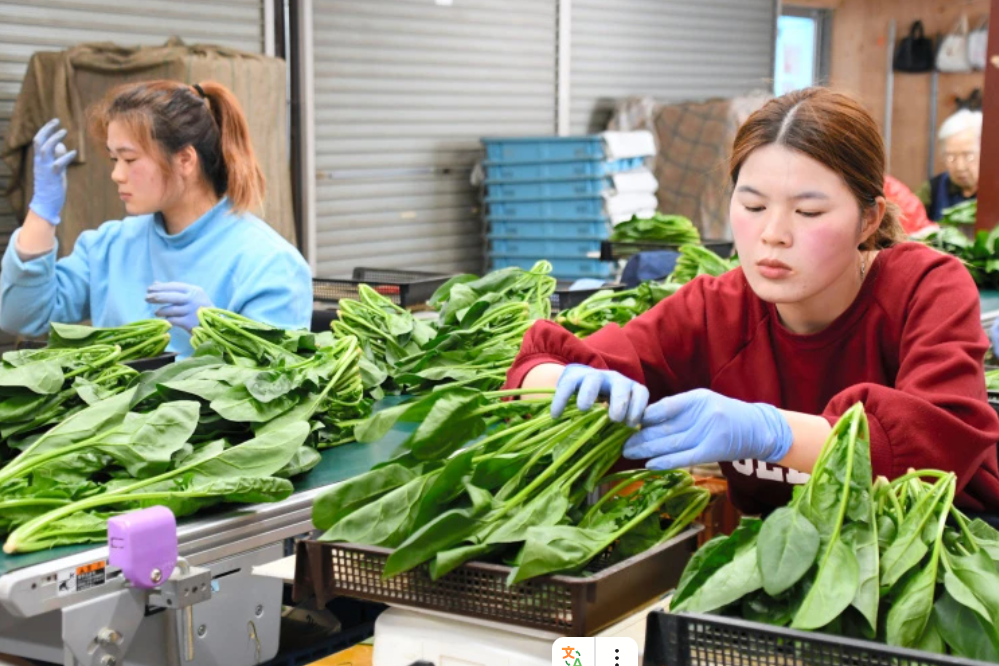 |
| Vietnamese women granted “Specified Skilled Worker” status in agriculture sort spinach at a farm for packaging in Kitahiroshima, Hiroshima Prefecture, on October 30, 2023. (Photo: Kuroda Rikuri) |
According to figures released by Japan’s Immigration Services Agency (ISA) on September 29, as of the end of June 2026, Japan had 444,256 foreign workers under its skilled worker program, an increase of 13.8 percent in just six months and the highest figure ever recorded.
Notably, among the higher-skilled workers eligible for long-term employment, officially classified by Japan as “Specified Skilled Worker (ii),” there were 18,295 people, of whom 13,761 were Vietnamese. This means Vietnamese workers accounted for more than 75 percent.
Put simply, for every four foreign workers in this category in Japan, about three are Vietnamese.
No longer simply a few years working in Japan
The 75 percent figure is particularly notable because this is not a group of workers who have recently arrived in Japan for short-term employment. According to Jiji Press and Nippon.com, workers seeking to move into this category must meet higher requirements in terms of professional qualifications and experience.
More importantly, they are no longer subject to the maximum five-year employment limit that applies to ordinary skilled workers.
People in this category can renew their residence status multiple times and, if they meet the requirements, bring their spouses and children to live with them in Japan. In other words, they have significantly greater opportunities to work and establish long-term lives in Japan.
The fact that Vietnamese workers account for more than 75 percent of this group therefore indicates a shift. While Vietnamese workers in Japan were previously concentrated mainly among those working for limited periods, an increasing number have accumulated experience, improved their professional skills and entered a category that offers greater potential for long-term participation in Japan’s labor market.
Nearly 177,000 Vietnamese workers in the skilled worker program
In the more common category, known in Japan as “Specified Skilled Worker (i),” Vietnamese workers also rank first among foreign nationalities, ahead of workers from Indonesia and Myanmar. As of the end of June 2026, Japan had 425,961 foreign workers in this category, including 163,154 Vietnamese workers.
Adding the 13,761 workers in the higher-skilled category brings the total number of Vietnamese workers employed in Japan under the skilled worker program to 176,915.
Vietnamese workers are concentrated in sectors where Japan faces labor shortages, including industrial manufacturing, food processing, construction, restaurants, agriculture and elderly care.
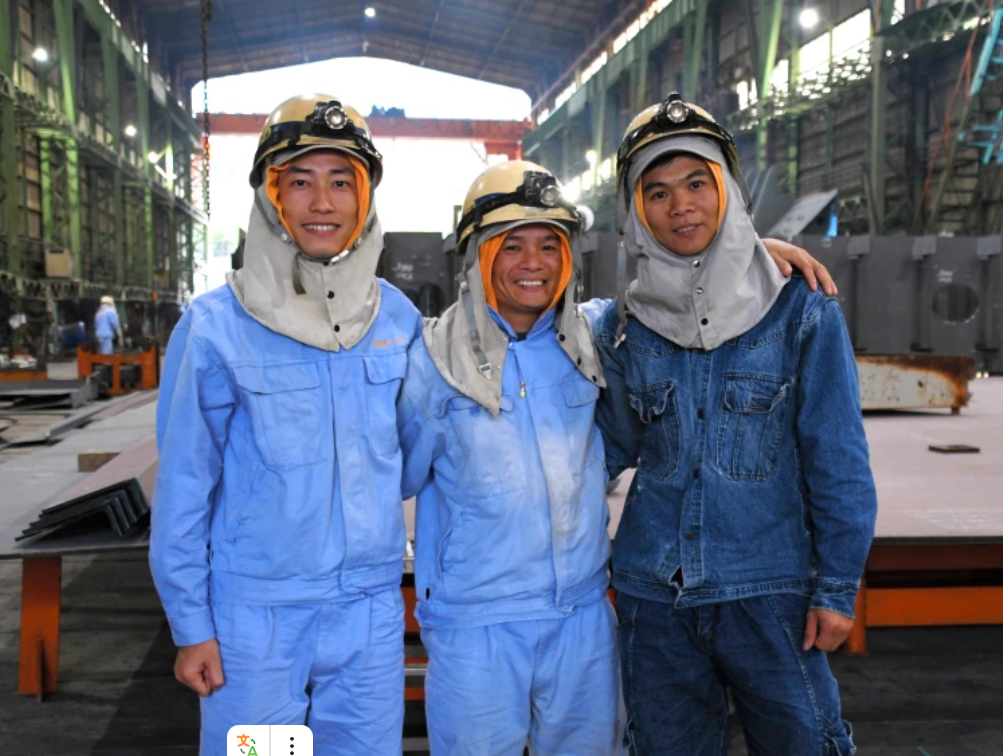 |
| Three Vietnamese workers at Innoshima Tekko shipbuilding company. All three obtained “Specified Skilled Worker (ii)” status in October 2023. (Photo: Kuroda Rikuri) |
Vietnamese have become Japan’s largest foreign workforce
Looking at the labor market as a whole, the position of Vietnamese workers is even more notable.
According to figures from Japan’s Ministry of Health, Labour and Welfare compiled by Nippon.com, Japan had approximately 2.6 million foreign workers as of October 2025, a record high.
Of these, approximately 610,000 were Vietnamese, accounting for 23.6 percent. This means that nearly one in four foreign workers in Japan is Vietnamese.
Viet Nam is currently Japan’s largest source of foreign labor, ahead of China and the Philippines.
In terms of population, the Vietnamese community in Japan had also grown to approximately 681,100 people by the end of 2025, making it the second-largest foreign community in Japan, after the Chinese community.
Holding the top position is no longer easy
Behind these impressive figures, however, a new competition is emerging.
Vietnamese workers remain the largest group, but the number of workers from Indonesia and Myanmar is growing rapidly. According to Nippon.com, the number of Myanmar workers in Japan increased by 42.5 percent in 2025, while the number of Indonesian workers rose by 34.6 percent, compared with a 6.2 percent increase among Vietnamese workers.
Japan is aging rapidly and facing labor shortages in factories, construction sites, restaurants and elderly care facilities. As a result, the country is becoming increasingly reliant on workers from abroad, particularly from Southeast Asia.
Amid this massive movement of labor, Viet Nam continues to hold a distinctive position. Nearly one in four foreign workers in Japan is Vietnamese. And among higher-skilled workers who have the potential to work long term and bring their families to Japan, about three out of every four are Vietnamese.
 Over 10,000 Vietnamese Workers Sent to the Republic of Korea for Seasonal Employment Over 10,000 Vietnamese Workers Sent to the Republic of Korea for Seasonal Employment |
 Affirming Role of Vietnam’s Quality Workforce in Japan Affirming Role of Vietnam’s Quality Workforce in Japan |


Most read


Poland Inaugurates Memorial Plaque Honouring Architect Who Helped Preserve Hoi An

First Congress of the Dong Thap Union of Friendship Organizations for the 2026-2031 Term


Related Stories
 Overseas Vietnamese
Japanese Children Enjoy Learning Vietnamese, Honor President Ho Chi Minh
 Friendship
Vietnam-Japan Friendship Association Enhances Engagement with Partners in Japan
 Overseas Vietnamese
Vietnamese Football Tournament in Japan Raises Funds for Central Vietnam
 Overseas Vietnamese
“Vietnamese Class” in Small House in Yamagata
Recommended
 Overseas Vietnamese
Book Launch Of "Back To The Realm Of Memories" By Vietnamese And Bulgarian Authors Held in Hanoi
 Overseas Vietnamese
Vietnamese Cuisine Builds Cultural Bridges in Hwaseong
 Overseas Vietnamese
Fukuoka to Host “Vietnamese Village” at 2026 Unity Festival
 Overseas Vietnamese
Japan Law Quiz Awards Presented to Vietnamese Community in Japan
Popular article
 Overseas Vietnamese
Vietnamese Community in India Strengthen Community Ties and Preserve Language
 Overseas Vietnamese
Vietnamese Community Becomes Japan’s Second-Largest Foreign Community
 Overseas Vietnamese
“Honorary Citizen of Seoul” Tran Ngoc Lam Appointed Prosecutor of Seoul Migrant Network
 Overseas Vietnamese