
India expands its role in space exploration
 |
India’s space journey is entering a transformative phase. From Aryabhata in 1975 to Chandrayaan-3, Aditya-L1, Gaganyaan and the planned Bharatiya Antariksh Station, India has progressed from the early use of space technology for development to the frontiers of scientific exploration and human spaceflight.
Space technologies today touch communications, agriculture, education, healthcare, disaster management, environmental protection, navigation and everyday economic activity. India is expanding its capabilities from the use of space technology to the development and provision of space-related technologies and services.
From Aryabhata to a New Space Era
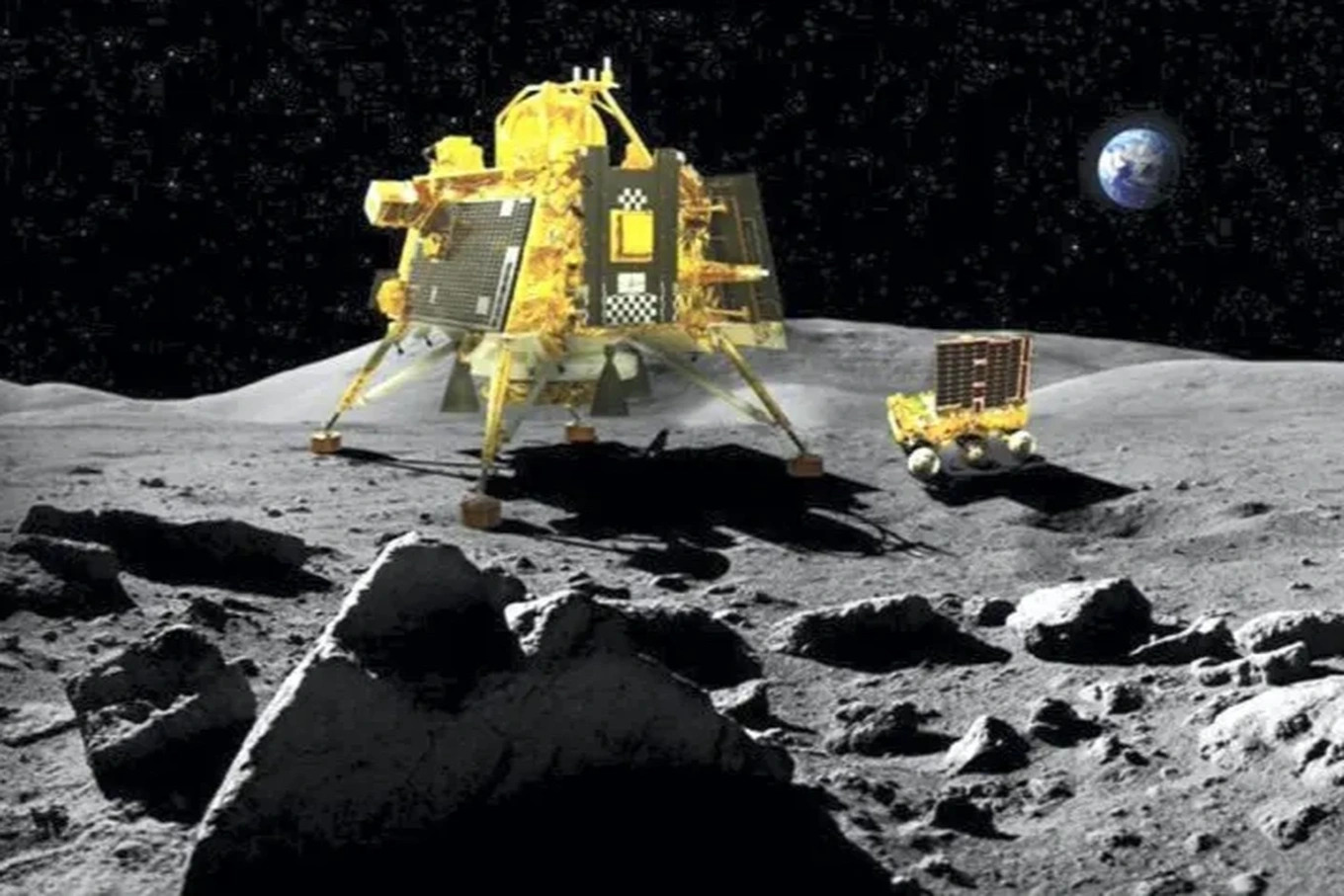
The success of Chandrayaan-3 in 2023 demonstrated India’s ability to achieve a highly complex lunar landing. Aditya-L1 subsequently extended India’s scientific reach towards the Sun. SpaDeX demonstrated orbital docking capabilities, while Gaganyaan is preparing the country for human spaceflight. These achievements are not isolated milestones. They are building blocks of a much larger technological ecosystem. India is now developing capabilities to support lunar sample return, planetary exploration, space station construction, human spaceflight, and, eventually, crewed lunar exploration. The transition is from individual missions to an integrated space architecture.
The Moon Is Only the Beginning
Chandrayaan-3 demonstrated India’s capability to achieve a controlled lunar landing. The next stage is considerably more ambitious. Chandrayaan-4, approved in 2024, is designed to land on the Moon, collect samples and return them to Earth. Sample-return missions require far greater technological sophistication than a landing alone, involving multiple launches, rendezvous and docking, sample collection, ascent from the lunar surface and a safe return to Earth.
The mission's importance extends beyond the lunar samples themselves. India is developing facilities to curate and analyse the material returned from the Moon, thereby building a scientific infrastructure to support future lunar research. This marks a fundamental shift in approach. India is not merely visiting the Moon; it is preparing to build sustained scientific capabilities for lunar exploration.
India’s planetary ambitions are expanding, with Shukrayaan (Venus Orbiter Mission) targeted for launch in March 2028 to study Venus’s atmosphere, surface and subsurface, offering insights into planetary evolution and habitability. Meanwhile, Aditya-L1, positioned about 1.5 million km from Earth, studies solar activity and space weather.
The most visible symbol of India’s technological transition may be Gaganyaan, the country’s human spaceflight programme. Human spaceflight requires a much higher level of reliability. Crew escape systems, life-support technologies, parachutes, re-entry systems and extensive testing are essential before astronauts can travel safely into space. India has therefore adopted a phased approach, using uncrewed missions to validate critical systems before undertaking crewed flights.
Space Technology: Improving Life on Earth
The greatest contribution of India’s space programme may ultimately be felt not millions of kilometres away, but here on Earth. Satellite technology has become essential for weather forecasting, agriculture, navigation, communications, disaster management and environmental monitoring. Earth-observation satellites can help identify vulnerable areas before floods, cyclones and landslides, while satellite communications can support emergency response in remote regions.
Space-based data supports environmental management by monitoring forests, water bodies, urban expansion, pollution and weather patterns, thereby strengthening climate action and disaster preparedness. Satellite communications can expand access to healthcare in remote areas, while augmented and virtual reality enable medical education and training. India’s space programme is therefore advancing inclusive development by connecting technologically advanced centres with remote and underserved communities.
From Space Research to Industrial Innovation
India’s space programme is delivering broader technological benefits across the economy. Innovations in advanced electronics, sensors, materials, communications, navigation and manufacturing are finding applications beyond space missions. Technology transfers are strengthening domestic manufacturing and enabling Indian enterprises to enter sophisticated supply chains. More than 900 application-specific integrated circuits developed by ISRO’s Semi-Conductor Laboratory for railway locomotives illustrate this cross-sector impact.
Space as an Engine of Jobs and Skills
India’s expanding space economy is creating employment across a wide ecosystem beyond scientists and astronauts, including engineers, software developers, electronics specialists, technicians, manufacturers, logistics providers and service professionals. Growing production of launch vehicles and satellite components is strengthening supply chains and creating opportunities for skilled and semi-skilled workers. The sector is also inspiring young Indians through educational outreach, university research and skills-development programmes, encouraging careers in science, engineering and technology. The significant contribution of women scientists further highlights the space programme’s role in promoting greater participation and inclusion in science and technology.
Global Cooperation
India’s growing space capabilities are increasingly relevant to international cooperation. The country’s ability to undertake complex missions at comparatively modest costs has attracted global attention. India’s launch capabilities, satellite services and space technologies offer opportunities for cooperation with both advanced and developing economies.
India’s space journey has evolved from Aryabhata to lunar exploration, from studying the Moon to exploring the Sun, and now towards human spaceflight. The next phase will be shaped by deeper scientific missions, a national space station, stronger private-sector participation, and advanced launch capabilities.


Most read


Popular article
 Economy
Viet Nam Is Moving Towards Quality and Sustainable Growth
 Economy
Growth meets green: How India is building a climate strategy without slowing development
 Economy
India Is Supposed to Take Steps to Build Strategic Sectors
 Economy