
Viet Nam, Japan promote exchanges on law and justice
Chief Judge of the People’s Court of Hanoi - Region 2 Hoang Ngoc Thanh on October 2 chaired a working session with a delegation from the Nanko patent attorneys club of Japan to exchange experience in the legal framework and practical handling of intellectual property (IP) disputes and cases in Viet Nam.
The People’s Court of Hanoi - Region 2 is the only regional-level court in northern Viet Nam vested with jurisdiction over IP-related cases arising in 20 northern provinces and cities.
The delegation was led by Kazuya Senda, an attorney, patent attorney and the club's secretary-general, together with Takanobu Mori, a patent attorney and the club deputy secretary-general, members of the club’s Executive Board and other members.
Established in 1928, the Nanko patent attorneys club is a professional organisation bringing together Japanese patent attorneys. It focuses on professional education, networking and support for the Japan patent attorneys association.
Speaking at the working session, Thanh said the meeting provided an opportunity for the two sides to share practical experience in judicial activities, thereby enhancing mutual understanding of the laws and practices governing the settlement of IP-related cases in Viet Nam and Japan, according to VNA.
 |
| The delegation from the Nanko patent attorney club of Japan and officials and judges of the People's Court of Hanoi - Region 2 pose for a group photo (Photo: VNA) |
During the session, members of the club raised questions and held direct discussions with judges from the People’s Court of Hanoi - Region 2 on practical issues arising in the settlement of IP disputes.
Discussions focused on the legal framework governing IP rights, recent trends in IP disputes, procedures and timelines for dispute resolution, and the relationship between the Intellectual Property Office of Viet Nam and the courts in handling such cases.
The Japanese delegates also shared their experience in collecting and assessing evidence and discussed the role of technical expertise in IP litigation, the application of provisional emergency measures, sanctions, compensation for damages and other remedial measures.
They further exchanged views on practical experience in enforcing rights related to trademarks and industrial designs, as well as the enforcement of court judgments and decisions in the field of IP.
Judges from the People’s Court of Hanoi - Region 2, in turn, shared information on Vietnam’s legal regulations and discussed Japan’s legal provisions and practical experience in resolving IP disputes with members of the club.
The two-way exchange provided participants with additional perspectives on the application of law, assessment of evidence, dispute resolution and protection of the legitimate rights and interests of parties involved in IP matters.
The meeting offered the two sides an opportunity to deepen professional exchanges and mutual understanding of the legal systems and judicial practices governing IP, thereby contributing to greater professional interaction and cooperation in the legal and judicial fields between Viet Nam and Japan.
Viet Nam remains growth bright spot in Southeast Asia
In September, major international media outlets and financial institutions offered positive assessments of Vietnam’s economic outlook, describing the country as a growth bright spot in Southeast Asia while highlighting notable developments in its financial market.
Solid growth foundation
Reuters, Bloomberg and the World Bank (WB) continued to highlight Vietnam’s strong economic performance in the region. According to WB data, the country’s GDP surged from US$16.24 billion in 1994 to US$514.7 billion.
Notably, measured by purchasing power parity, the Vietnamese economy has surpassed US$1 trillion, providing a solid foundation for its goal of becoming a developed nation by 2045.
A report jointly released by US global management consulting firm Bain & Company, Singaporean financial services group DBS and Singapore-based strategic consultancy Vriens & Partners said Viet Nam remained a leading growth market in Southeast Asia, with baseline growth projected at 6.2%.
Growth has been driven by its increasingly important role in global supply chains, as the country has become a key manufacturing link for multinational corporations such as Samsung, Intel and Foxconn. Foreign-invested enterprises currently account for around 70% of Vietnam’s total export turnover.
A notable milestone in September was the official inclusion of the Vietnamese stock market among secondary emerging markets by UK index provider FTSE Russell, reported VOV.
 |
| Nestlé Viet Nam is a Swiss-invested enterprise that has continuously increased its investment and expanded operations in Hung Yen province since 2017. (Photo: VNA) |
According to FTSE Russell, the move could help Viet Nam attract around US$6 billion in foreign capital. US asset manager Vanguard also announced plans to increase its investment in Viet Nam to US$2.5 billion, reflecting growing international investor interest in the Vietnamese market.
Embracing technology wave
Domestic manufacturing has also shown a strong recovery. According to the S&P Global Manufacturing Purchasing Managers’ Index (PMI), the PMI of Viet Nam's manufacturing sector stood at 53.3 in August 2026, marking the 14th consecutive month above the 50-point threshold and the strongest improvement since the beginning of the year.
Commenting on the recovery, S&P Global noted that a key strength of Vietnam’s manufacturing sector is businesses’ ability to optimise operational efficiency. Despite global geopolitical uncertainties, companies have proactively cut costs and reduced excess labour to focus on boosting core output. This approach helped production expand at its fastest pace in more than two years.
Meanwhile, the rapid development of artificial intelligence (AI) and automation is reshaping Vietnam’s labour market. A survey by Japan’s Reeracoen Group and Rakuten Insight showed that among six surveyed ASEAN markets, Viet Nam recorded the highest proportion of businesses reporting improved revenue, at 46%, as well as the highest rate of companies expanding recruitment, at 16%. Business confidence also remained relatively positive, with 59% of executives optimistic about their business prospects.
According to Malaysia-based HR Asia, Viet Nam is the only Southeast Asian market where AI and automation rank as the leading factor prompting workers to change careers, cited by 39% of respondents.
The trend highlights the increasingly visible impact of technology on career choices in Viet Nam and underscores the need for workers to adapt and upgrade their skills as the labour market undergoes rapid transformation.
ABB committed to support Vietnam’s energy transition, digital transformation
ABB Group of Switzerland has reaffirmed its commitment to supporting Vietnam’s development through advanced electrification and automation technologies, as the country accelerates industrial modernisation, digital transformation and energy transition.
Focus will be placed on energy infrastructure, data centres, talent development and industrial innovation, it said.
The commitment comes as negotiations on a Free Trade Agreement (FTA) between the European Free Trade Association (EFTA) and Viet Nam have been concluded. The agreement is expected to strengthen trade, investment and technology cooperation between Viet Nam and the four EFTA member states of Switzerland, Norway, Iceland and Liechtenstein.
According to ABB, this marks an important step forward as Viet Nam promotes industrial modernisation and energy transition under the Power Development Plan VIII, which is expected to require 136 billion USD in power generation and transmission investments by 2030.
“Viet Nam has established itself as one of Asia's most dynamic growth markets, supported by a strong industrial base, a talented workforce, and a growing innovation ecosystem,” said Jessica Nguyen, General Director, Country Holding Officer, and Chairwoman of the Board at ABB Viet Nam.
“With our Swiss heritage and more than three decades of experience in Viet Nam, we are confident that the successful conclusion of the EFTA-Vietnam FTA negotiations will create new opportunities for collaboration, innovation, and investment, while supporting Viet Nam's ambitions for industrial modernisation, digitalisation, and sustainable growth.”
The group also noted that Viet Nam's data center sector is expanding rapidly, driven by growing demand for cloud computing, AI applications, and digital services. Total data center power capacity is projected to increase from approximately 580 MW in 2025 to nearly 980 MW by 2030, placing greater emphasis on power reliability, energy efficiency, and sustainability, reported VNA.
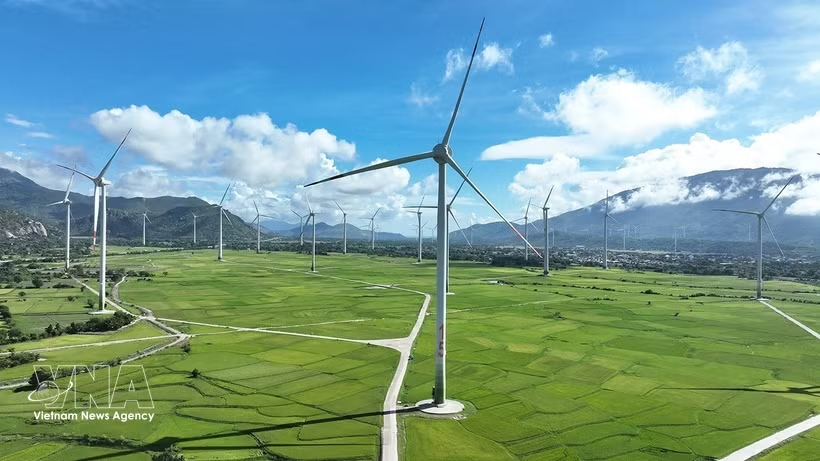 |
| Wind farm in Thuan Nam commune, Khanh Hoa province (Illustrative photo: VNA) |
This growth comes as Viet Nam faces mounting pressure to strengthen its energy infrastructure.
“Data center are becoming a critical foundation of Viet Nam's digital economy. As digital demand accelerates amid growing pressure on the power system, operators need infrastructure that delivers reliability, efficiency, and visibility across their operations. Through ABB's end-to-end portfolio of electrification, automation, and digital energy management solutions, we help customers secure reliable power, optimise energy use, maximise uptime, and advance their sustainability goals. In Viet Nam, this expertise is already supporting landmark developments such as CMC Creative Space, one of the country's largest Tier III-standard data center projects, helping build future-ready facilities that support both business growth and Viet Nam's energy transition,” said Jessica Nguyen.
Recognising that a skilled workforce is essential to Viet Nam's long-term growth and digital transformation, ABB is committed to helping develop the next generation of engineers and technology professionals. Through partnerships with leading institutions including Hanoi University of Science and Technology (HUST), Hanoi University of Industry, RMIT University Viet Nam, Ton Duc Thang University, and Viet Nam National University Ho Chi Minh City, ABB helps bridge the gap between academia and industry through knowledge-sharing initiatives, industry training, and access to advanced technologies.
“Vietnamese students possess strong STEM foundations, ambition, and a remarkable willingness to learn and work hard. Yet classroom learning alone is not enough. Future engineers need meaningful exposure to real-world technologies and industry challenges to be job-ready from day one,” added Jessica Nguyen. “Through our university partnerships, ABB is helping bridge that gap by equipping the next generation with the practical skills and confidence needed to thrive.”
Since establishing operations in Viet Nam in 1993, ABB has built a strong nationwide presence and today operates three facilities across the country, including its headquarters in Ho Chi Minh City, an office in Hanoi, and an Electrification Distribution Solutions (ELDS) manufacturing factory in Bac Ninh.
Cold front to bring thunderstorms, sharp temperature drop to northern Viet Nam
A strengthening cold front will reach northern Viet Nam from Oct. 4, bringing thunderstorms and sharply lower temperatures, with Hanoi forecast to turn chilly early on Oct. 5 after heavy rain in some areas.
According to the National Center for Hydro-Meteorological Forecasting, a mass of cold air to the north of Viet Nam was moving southward on Oct. 2. Scattered showers and thunderstorms were already occurring in parts of the northern region, with temperatures at 7 a.m. generally ranging from 27-29 degrees Celsius.
The cold air is forecast to reach the northeastern region around the evening and night of Oct. 4 before spreading to other parts of northern Viet Nam and the area from Thanh Hoa to Hue.
Winds will shift to the northeast at force 2-3, strengthening to force 3-4 in coastal areas.
From the night of Oct. 4, the northeastern region and Thanh Hoa will turn chilly, with cold conditions possible in some high mountainous areas. Minimum temperatures are forecast at 19-22 degrees across northern Viet Nam and Thanh Hoa and 14-17 degrees in high mountainous areas.
The latest forecast follows an earlier assessment that northern Viet Nam would experience two phases of cold air in early October, with an easterly cold air mass arriving from the evening and night of Oct. 1 before strengthening more significantly around Oct. 4-5.
Nguyen Duc Hoa, deputy head of the Climate Forecasting Division at the National Center for Hydro-Meteorological Forecasting, had forecast that temperatures would begin declining across northern provinces from Oct. 5.
He said minimum temperatures would generally range from 20-23 degrees Celsius, while some high-altitude areas in Lang Son and Lao Cai could fall below 18 degrees, bringing noticeably cooler conditions at night and in the morning.
Hanoi to turn chilly after thunderstorms
In Hanoi, rain, moderate rain and thunderstorms are forecast from the night of Oct. 4 through the morning of Oct. 5, with heavy rain possible in some locations.
The capital is expected to turn chilly from around early morning on Oct. 5 as the effects of the cold air become more pronounced.
Across northern Viet Nam, the cold front is expected to bring rain, moderate rain and thunderstorms from Oct. 4 through the morning of Oct. 5, with locally heavy to very heavy rainfall.
From the night of Oct. 4 through Oct. 6, the area from Thanh Hoa to Hue is also forecast to experience moderate rain and thunderstorms, with heavy to very heavy rain possible in some places.
Forecasters warned of tornadoes, lightning, hail and strong wind gusts during thunderstorms.
Hoa said the risks are heightened because the cold air is arriving after a period of hot weather. The interaction between warm and cold air masses could destabilize the atmosphere, potentially producing severe thunderstorms, strong gusts and even hail.
Heavy thunderstorms could also cause localized flooding in low-lying areas.
Cold front follows unusually hot late September
The change in weather comes after a period of unusually intense heat in northern and central Viet Nam in late September.
Hoa said the heat was caused by the southern edge of a low-pressure trough over southern China being compressed by continental high pressure to the north, combined with the circulation of a subtropical high at upper levels.
As a result, the northern midlands and plains, southern Phu Tho and the region from Thanh Hoa to Da Nang experienced hot weather, with severe heat in some places. Maximum temperatures generally reached 35-36 degrees Celsius, with some locations exceeding 37 degrees.
On Sept. 29, eight maximum temperature readings in northern and central Viet Nam exceeded previous historical records.
In Hai Duong, Hai Phong, the temperature reached 37.3 degrees, surpassing the previous record of 37.2 degrees set on Sept. 5, 2024 and Sept. 2, 2020. Nam Dinh in Ninh Binh recorded 37 degrees, above the previous record of 36.6 degrees on Sept. 2, 2020, while Nho Quan in Ninh Binh reached 37.7 degrees, exceeding the 37.4-degree record set on Sept. 3, 1988.
Northern Viet Nam typically experiences one or two heatwaves in September, each lasting two to four days. However, late-September and early-October heat has occurred before, including in 2009, 2010, 2016 and 2023, VNN reported.
 |
| Cold air is expected to bring rain and cooler weather to northern Viet Nam. Photo: Minh Hien |
The latest heatwave was expected to end on Oct. 2.
For October as a whole, average temperatures nationwide are forecast to be 0.5-1.5 degrees Celsius above the long-term average, although hot weather in the northern plains and midlands and central Viet Nam is expected to become largely localized.
Strong winds and rough seas expected
The approaching cold air will also significantly affect maritime conditions.
From around early morning on Oct. 5, winds in the Gulf of Tonkin are forecast to shift to the northeast and strengthen to force 6, occasionally force 7, with gusts of force 8-9. Waves are expected to reach 2-3 meters, producing rough seas.
From Oct. 5, northern waters of the East Sea are forecast to experience northeast winds of force 6-7, gusting to force 8, with waves of 2-4 meters and rough seas.
From Oct. 6, the area of strong winds is expected to expand across the northern East Sea, including the Hoang Sa special zone.
Tropical storms could still affect Viet Nam in October
Despite the arrival of cold air, forecasters said tropical cyclone risks remain during October.
Hoa said rainfall in mountainous northern Viet Nam this month is forecast to be 5-20% above the long-term average. Other parts of the northern region and the area from Thanh Hoa to Hue are expected to receive 20-40% less rain than average, while rainfall in the south-central coast, Central Highlands and southern Viet Nam is forecast to be 5-20% below average.
Widespread heavy rainfall may still occur during the month, with central Viet Nam the area most likely to be affected.
The number of storms and tropical depressions operating in the East Sea in October is forecast to be below the long-term average. However, forecasters have not ruled out the possibility of a storm or tropical depression affecting Viet Nam's mainland.
The long-term October average is around two storms or tropical depressions in the East Sea, of which 0.8 make landfall.
Further cold air outbreaks are also expected to affect northern and central Viet Nam during the month.
Hoa stressed that weather patterns are becoming increasingly complex amid climate change and advised authorities and residents to closely follow forecasts and warnings so they can adjust production plans, prepare appropriate response measures and ensure safety.