Vietnamese, Laos Party bodies step up coordination in combating misinformation in digital environment
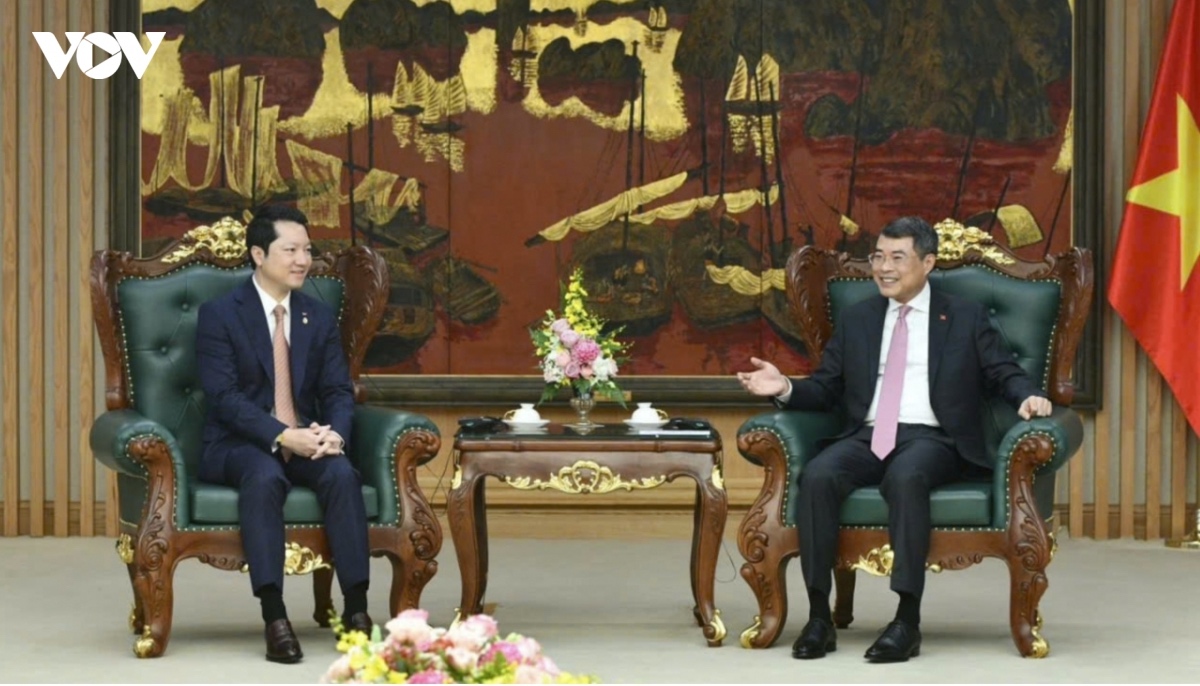
Head of the Party Central Committee’s Commission for Publicity Trinh Van Quyet hosted a reception in Hanoi on September 29 for Deputy Head of the Lao People’s Revolutionary Party (LPRP) Central Committee’s Commission for Propaganda and Training Sakhone Phommalath, with both sides pledging closer cooperation in communications, ideological and press work.
Quyet said both countries are carrying out ideological, communications and press work, as well as efforts to protect the Party’s ideological foundation, amid growing challenges, particularly the rapid development of artificial intelligence (AI) and digital platforms.
He described an increasingly volatile online environment in which public sentiment can shift by the day and even the hour. Hostile forces, he said, are using AI to produce fake news, clone voices and distort information in an effort to undermine the two Parties, States and bilateral ties. Young people, the heaviest social media users, pose a particular challenge for both sides, he added.
Quyet called for ideological work to be carried out in physical and digital spaces at the same time, alongside faster digital transformation across the ideological and cultural sectors.
He also briefed the Lao delegation on Resolution 25-NQ/TW, the Politburo's new strategy for Party ideological work. The resolution calls for accurate assessements and forecasting of the situation, and quick handling of ideological issues to avoid being caught off guard. It also seeks to rally the entire political system and society, young people in particular, and to build a Vietnamese culture able to resist harmful content online.
The host also cited plans to strengthen technical systems from the central to the grassroots level, along with local cultural mechanisms to deliver official information to the public, according to VNA.
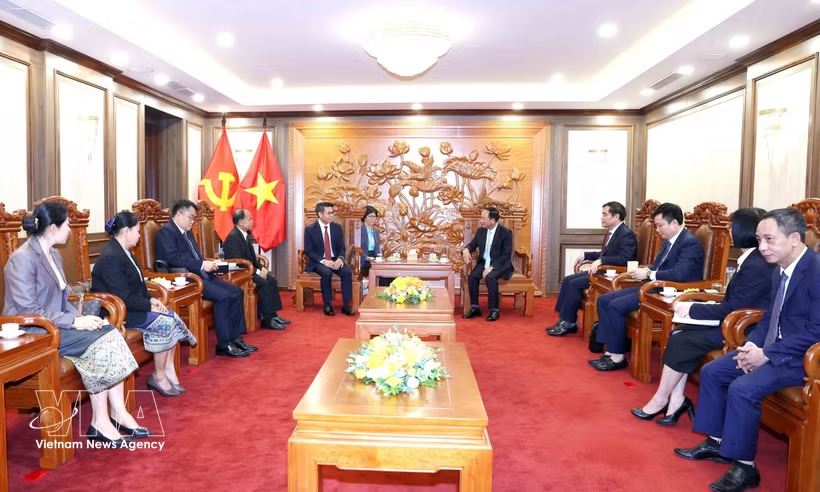 |
| At the reception for Deputy Head of the Lao People’s Revolutionary Party (LPRP) Central Committee’s Commission for Propaganda and Training Sakhone Phommalath (Photo: VNA) |
He said 2027 will be a milestone year, marking 65 years of diplomatic ties and 50 years since the Treaty of Amity and Cooperation was signed, and proposed deeper ties between the two commissions.
Accordingly, he urged them to keep close coordination and finalise a draft 2027-2031 cooperation agreement, which will go to the relevant authorities for approval so it can be signed in 2027.
He also called for more sharing of experience on political and ideological work, communications, press guidance and external information, with more attention to newer areas such as digital communications and the monitoring and steering of public opinion.
At the same time, the two sides should maintain and improve training courses in Vietnam for Lao propaganda officials, expand personnel exchanges, especially among young officials and specialists, and step up communications on bilateral relations in 2027. This, he said, will reinforce cooperation between the commissions and the two countries' friendship, special solidarity and comprehensive partnership.
Sakhone, for his part, said Laos has been streamlining its organisational apparatus, including folding the mass communications sector, previously under the Ministry of Information, Culture and Tourism, into the commission. The change is meant to make the commission's advice to the Party Central Committee on communications work more effective.
Summarizing an earlier working session between the two commissions, Sakhone said they reviewed cooperation over 2022-2026 and agreed on priorities for the next period. These include stepping up communications alongside digital transformation, improving mass communications and efforts to counter false and misleading information, and continuing to streamline the organisational apparatus.
Noting that Vietnam's experience fits Laos's conditions and communications priorities, he hoped that the Commission for Publicity will share more experience and guidance to help turn Party resolutions into practice and make information work more effective.
Hanoi, Frankfurt seek to deepen economic, tourism ties
Hanoi and Frankfurt have significant potential to expand cooperation in digital transformation, sustainable technology, trade and finance, Frankfurt Mayor and Head of Economic Affairs Nils Kößler emphasised.
He made the remarks during a working session with a delegation of the Hanoi People’s Council, led by Vice Chairwoman Pham Thi Thanh Mai, at Frankfurt’s Römer City Hall on September 28 to discuss opportunities to strengthen economic and tourism ties between the two cities.
Kößler described Hanoi and Frankfurt as “drivers of their respective regions and gateways to the world.” He said Hanoi is one of Southeast Asia’s dynamic economic centres, with strong growth, innovation capacity and future-oriented industries.
Frankfurt, meanwhile, is one of Europe’s leading financial and logistics hubs, home to an international airport and the DE-CIX Internet exchange. These advantages could make the city an ideal gateway for Vietnamese businesses seeking to expand into the European market, he said.
Mai, for her part, said Hanoi wants to further deepen its cooperation with Frankfurt and Hessen state and hopes to attract more businesses, investors and tourists from the German city and state.
According to Mai, Frankfurt is a gateway to Germany for many Vietnamese people. Direct air routes connecting Hanoi and Ho Chi Minh City with Frankfurt, together with growing economic ties, provide an important foundation for stronger connectivity between the two sides.
Cultural ties have also been strengthened through activities of the Goethe-Institut in Hanoi and various cultural and artistic exchange programs.
Economic cooperation between Frankfurt and Vietnam has developed over many years. Frankfurt Economic Development established ties with Vietnam following a visit in 2009, while VietinBank established a presence in Frankfurt a year later. During 2022-2023, FrankfurtRheinMain GmbH International Marketing of the Region (FRM GmbH) opened a representative office in Vietnam, VNA reported.
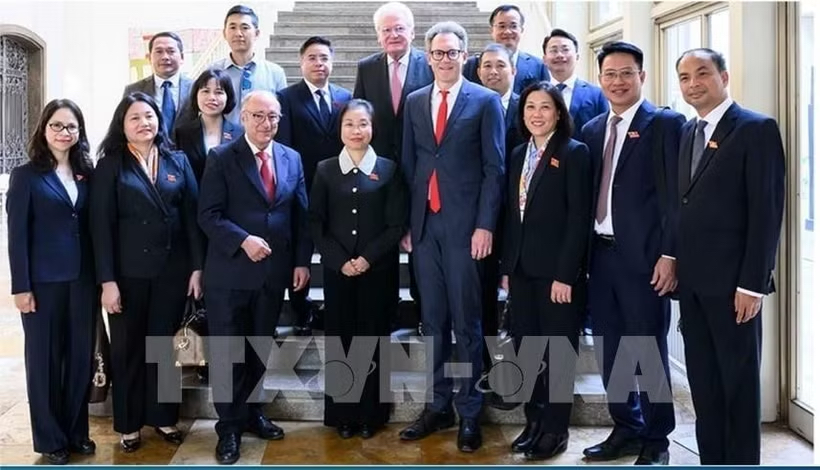 |
| The Hanoi People’s Council delegation at Frankfurt City Hall. (Photo: VNA) |
A number of businesses and organisations from Frankfurt and Hessen state have also expanded their operations in Vietnam. Messe Frankfurt has organised and participated in trade fairs in the country, while Frankfurt-based Deutsche Bank and KfW maintain offices or branches in Vietnam. Hessen-based companies including Messer, Stada and Braun have also developed production facilities in Vietnam.
The Frankfurt side noted Vietnam’s strong economic growth over recent decades and its emergence as one of Southeast Asia’s fastest-growing economies, with Hanoi playing an important role in the national economy.
Vietnam's Engineering Unit Rotation 4 completes UN mission, returns home
Vietnam's Engineering Unit Rotation 4 successfully completed its peacekeeping mission at the United Nations Interim Security Force for Abyei (UNISFA) and returned to Hanoi on September 29.
A welcome ceremony was held at Noi Bai International Airport, presided over by Senior Lieutenant General Nguyen Truong Thang, Member of the Party Central Committee, Standing Member of the Central Military Commission, Deputy Minister of National Defense, and head of the ministry's steering committee on UN peacekeeping operations. General Thang presented flowers and gifts from the Central Military Commission and the Ministry of National Defense to the unit's command, outstanding soldiers, and female peacekeepers.
General Thang hailed the unit for accomplishing its comprehensive duties with absolute safety despite harsh climatic conditions and severe operational challenges in the remote region of Abyei.
On the engineering front, the unit focused on constructing, repairing, and upgrading transport infrastructure and technical systems to meet mission requirements, directly supporting both mission operations and the humanitarian needs and daily lives of local residents, cited VOV.
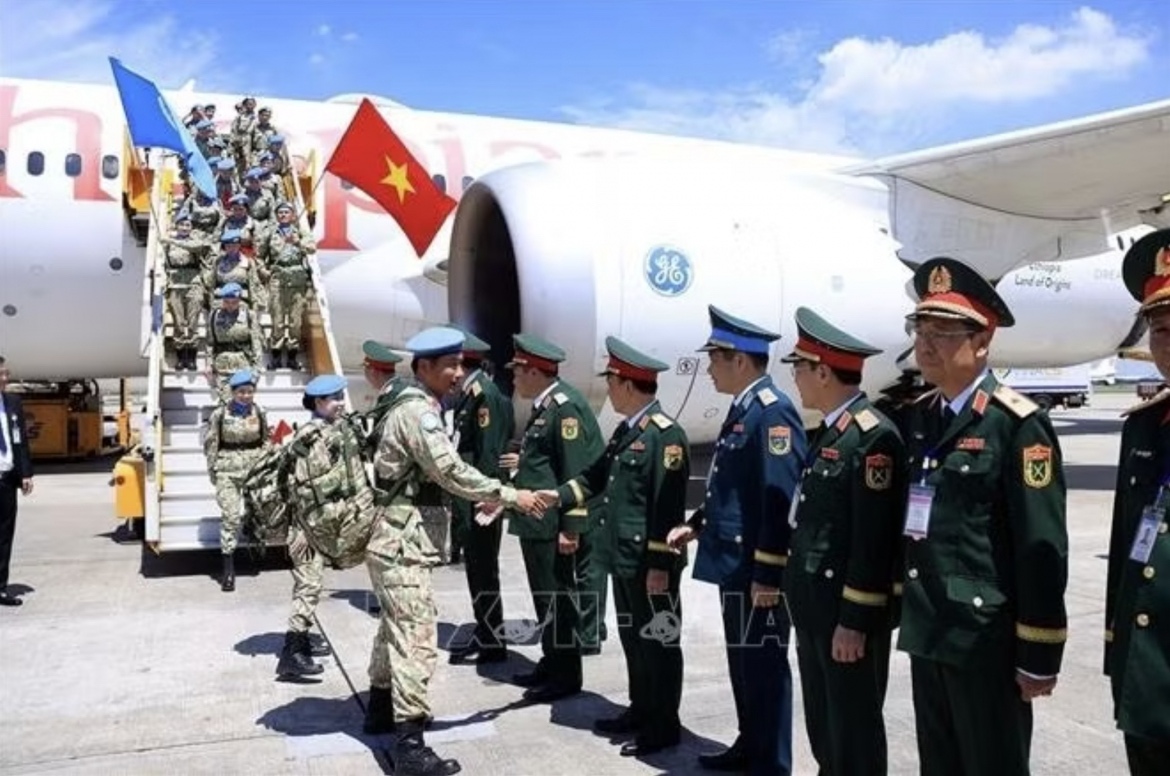 |
| Leaders of the Ministry of National Defense welcome home Engineering Unit Rotation 4 upon completing its international mission. (Photo: VNA) |
Apart from key duties, the unit actively engaged in civil-military cooperation, supporting local communities through infrastructure repairs, school and hospital renovations, and material assistance. Local administration and residents expressed deep appreciation for these practical contributions, which reinforced international trust in Vietnam's blue-helmet forces and promoted the humane image of Vietnamese soldiers.
Following the homecoming, General Thang instructed the Vietnam Department of Peacekeeping Operations, the Corps of Engineers, and relevant agencies to conduct a comprehensive review of the mission, expedite preparations for rotational forces for the coming year, and closely monitor UN missions to advise the Central Military Commission and the Ministry of National Defense on matters concerning Vietnam's participation in UN peacekeeping operations.
Vietnam sees surge in Russian arrivals and growing demand for premium stays
Russian arrivals in Vietnam topped 1 million in the first eight months of 2026, up about 166%, as travelers increasingly plan their own trips, stay longer and seek more varied experiences.
The Da Nang’s Department of Culture, Sports and Tourism recently held an event titled “Da Nang and Russia - CIS: A shared journey, shaping the future,” focusing on ties with Russia and the Commonwealth of Independent States.
Vietnam draws growing interest from Russian visitors
Figures shared at the event showed a sharp rise in arrivals from Russia and other CIS countries in the first eight months of 2026. Russian arrivals alone exceeded 1 million, an increase of about 166% from the same period in 2025.
High-income travelers and those in the premium segment account for an increasing share, suggesting that Vietnam is attracting greater attention among visitors with substantial spending power considering Southeast Asian destinations.
According to Thu Nguyen, business development director for Yandex Ads in Vietnam, restored air services have played an important role in bringing Russian visitors back, but they are not the only factor.
Vietnam’s political stability has helped position it as a safe destination amid disruptions in some traditional Russian holiday destinations, such as Dubai and Thailand. Visa policies comparable to those elsewhere in the region, along with active tourism promotion, have also encouraged arrivals.
Da Nang welcomed more than 440,000 visitors from Russia and the CIS in the first eight months of the year, up nearly 95% year on year, according to Nguyen Thi Hoai An, deputy director of the city’s Department of Culture, Sports and Tourism. The city ranks second after Nha Trang for Russian tourist arrivals.
An said the recovery of Da Nang’s Russian market was linked to the resumption of charter flights connecting the city with locations across Russia and the CIS. Da Nang has also stepped up promotion, business connections and destination marketing on digital platforms.
Changing travel habits call for a more targeted approach
Thu Nguyen said Russian travel habits had changed markedly since the Covid-19 pandemic. Previously, visitors were mainly older travelers on package tours. Now, nearly 80% fall into Gen Z and family travel segments, with the latter around 25–45 years old, and tend to search for flights, hotels and experiences themselves.
Russian visitors often take extended holidays, she said. They increasingly buy one-way tickets, stay longer and visit several Vietnamese cities rather than remaining in a single destination.
These changes place new demands on destinations. Rapid growth in arrivals does not mean visitor numbers should be the sole focus, Thu Nguyen said. Vietnam and Da Nang need to identify their target segments, spending power and expectations for experiences in order to develop suitable tourism products, cited VNN.
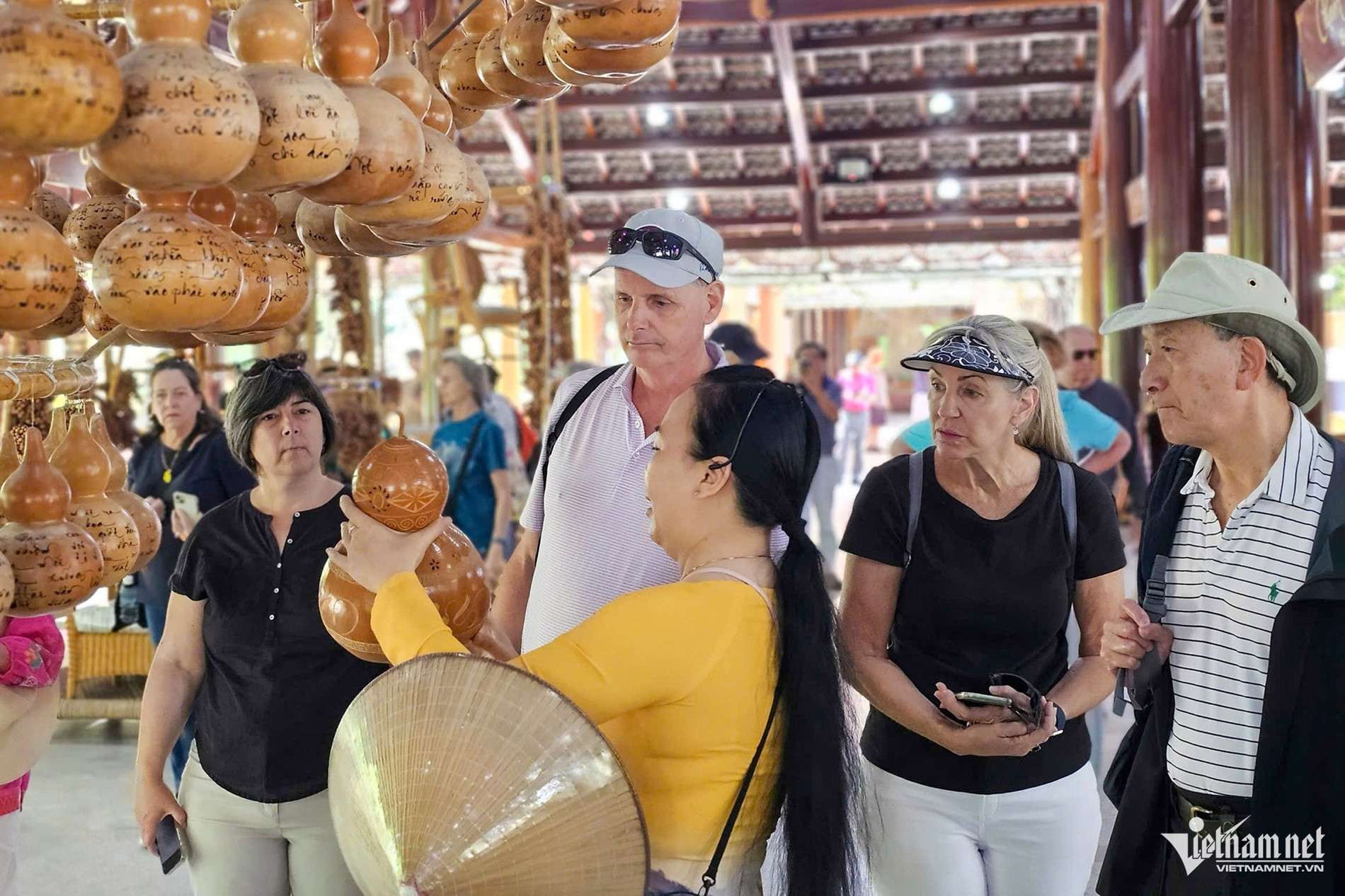 |
| Russian visitor arrivals in Vietnam are increasing. |
Attracting large numbers without paying attention to quality and spending could leave a destination positioned as a low-cost option. Da Nang’s challenge, therefore, is to reach the right segments, improve visitor experiences and increase the value each traveler brings.
Hoang Thai Minh, a representative of Anex Vietnam, said the company connected 21 cities across Russia and the CIS with destinations in Vietnam during the past season. Da Nang alone received visitors from 11 cities.
Russian travelers are increasingly researching destinations, hotels and experiences before deciding on a trip. They are also showing greater interest in spas, boutique properties and resorts, while combining relaxation with sightseeing, entertainment and hotel services.
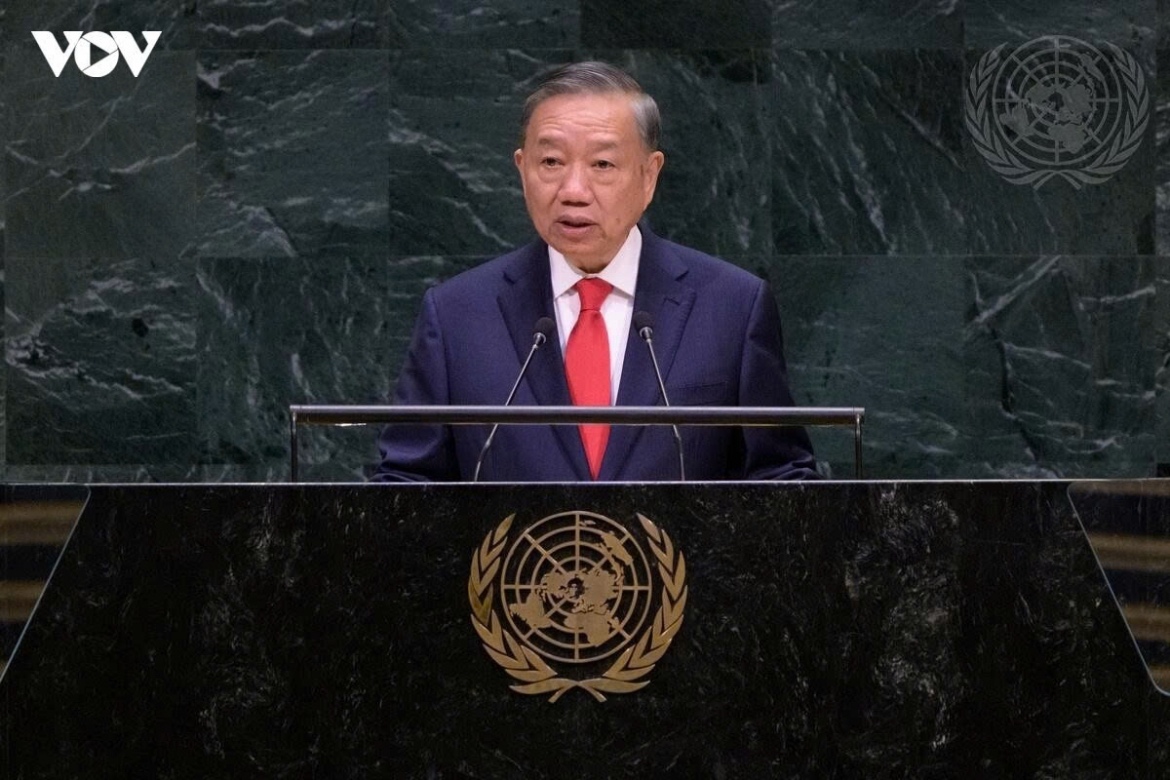 Vietnam News Today (Sep. 25): Experts Highlight Viet Nam’s Proactive Role in Shaping Global Affairs Vietnam News Today (Sep. 25): Experts Highlight Viet Nam’s Proactive Role in Shaping Global Affairs |
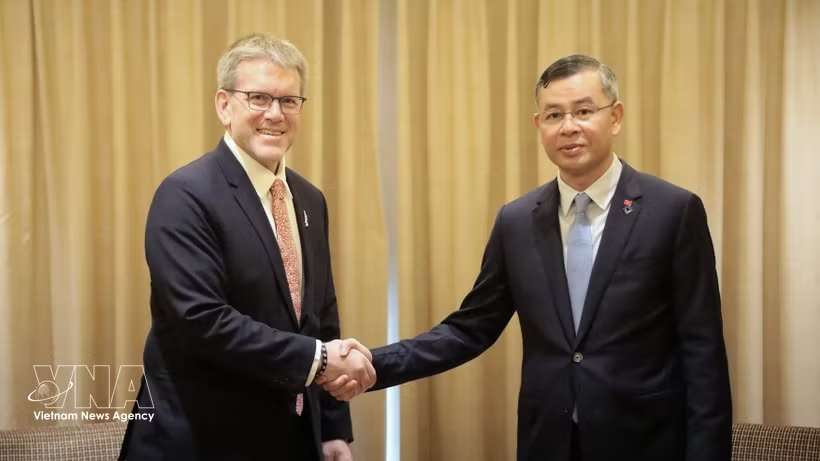 Vietnam News Today (Sep. 27): Viet Nam, US Step Up Investment, Financial Cooperation Vietnam News Today (Sep. 27): Viet Nam, US Step Up Investment, Financial Cooperation |