
Viet Nam News Today (Oct. 19): Vietnam Seeks to Expand Trade Ties With New Markets in Middle East
| Viet Nam News Today (Oct. 19) notable headlines Viet Nam, Iceland boost economic, trade, investment ties Viet Nam seeks to expand trade ties with new markets in Middle East Viet Nam and EFTA pen landmark free trade agreement in Hanoi Viet Nam climbs GII rankings: Turning innovation into competitiveness Viet Nam’s para-athletics team determined to win medals in Nagoya Da Nang expands tourism markets through 7,000 business connections Dien Bien fair promotes Vietnam-Laos -China trade links Energy self-reliance underpins Vietnam’s double-digit growth ambitions Bac Ninh builds ecosystem to attract next-generation FDI |
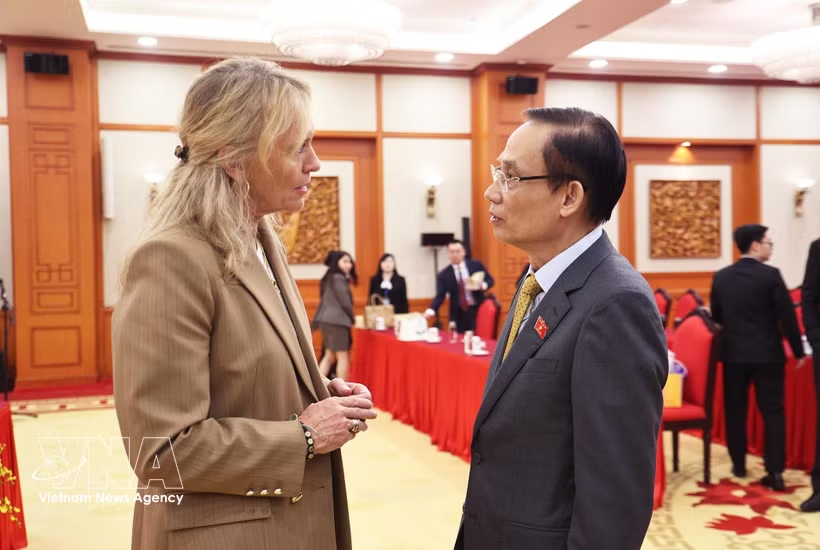 |
| Minister of Foreign Affairs Le Hoai Trung and his Icelandic counterpart Þorgerður Katrín Gunnarsdóttir (Photo: VNA) |
Viet Nam, Iceland boost economic, trade, investment ties
Minister of Foreign Affairs Le Hoai Trung met with his Icelandic counterpart Þorgerður Katrín Gunnarsdóttir on October 18 during her visit to Viet Nam to sign the Free Trade Agreement between Viet Nam and the European Free Trade Association (EFTA).
Trung welcomed the positive development of multifaceted cooperation between Viet Nam and Iceland, noting that the two countries still had considerable untapped potential.
He commended Iceland and Gunnarsdóttir personally for their positive contributions to the negotiations and signing of the Vietnam-EFTA Free Trade Agreement, cited VNA.
The Vietnamese minister called on the two foreign ministries to maintain close coordination and play their role as focal agencies in further advancing bilateral cooperation. He also urged them to work with relevant agencies to soon bring the newly signed agreement into force, creating new opportunities for people and businesses in both countries.
Echoing Trung's views, Gunnarsdóttir spoke highly of Viet Nam's role and standing in the region and expressed a desire to work with her Vietnamese counterpart to expand cooperation in areas where both countries have strengths, significant potential and shared interests, particularly economy, trade and investment, and energy infrastructure.
She affirmed that Icelandic people and businesses had high expectations for the opportunities and potential arising from the commitments under the Vietnam-EFTA Free Trade Agreement.
On the occasion, Gunnarsdóttir invited Trung to visit Iceland at a mutually convenient time.
Viet Nam seeks to expand trade ties with new markets in Middle East
Viet Nam attaches great importance to expanding trade relations with new markets, including Lebanon, in the Middle East and Africa, viewing this as a driving force for the country’s economic growth and development.
The statement was made on October 16 by Vietnamese Ambassador to Egypt and Lebanon Nguyen Nam Duong at the Vietnam-Lebanon Business Forum, which he co-chaired with Ibrahim Faz, Vice President of the Tripoli and North Lebanon Chamber of Commerce, Industry and Agriculture.
Drawing representatives of more than 50 Lebanese businesses, the event introduced the investment and business environments of both countries and reviewed bilateral trade ties, while addressing Lebanese businesses' questions about market access, investment and business opportunities in Viet Nam.
The forum took place during the ambassador's working visit to Lebanon, where he presented his credentials to President Joseph Aoun and officially assumed his role as Viet Nam's non-resident ambassador to the country.
President Aoun congratulated Duong on his appointment and said the Lebanese people held Viet Nam and its people in high regard, while appreciating the country's historic struggle for independence. He also praised Viet Nam's socio-economic achievements, Doi moi (Renewal) process and international integration, noting that its new development orientations and strategies were helping enhance its international standing, according to VNA.
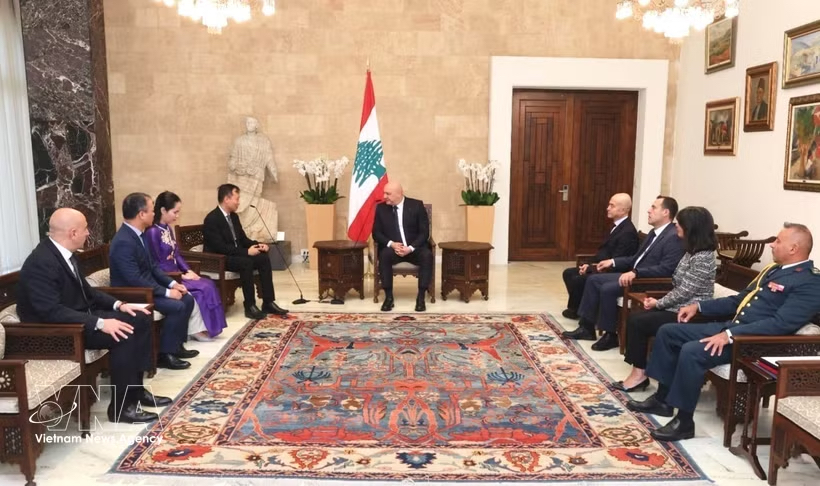 |
| Lebanese President Joseph Aoun receives Vietnamese Ambassador to Egypt and Lebanon Nguyen Nam Duong as he presents his credentials on October 15. (Photo: VNA) |
He expressed his desire to strengthen friendship and cooperation between the two countries, voiced his hope for an early visit to Viet Nam. He said he would instruct Lebanese authorities to facilitate the ambassador's work.
During the visit, Duong also held meetings with government agencies, trade promotion organisations and cultural and sports institutions to advance bilateral cooperation.
During his meeting with Aline Younes, Director of International Affairs at Lebanon's Ministry of Foreign Affairs and Emigrants, both sides agreed to strengthen coordination and pursue concrete measures to make bilateral relations more substantive. They highlighted the importance of exchanges at all levels, coordination at international and regional forums, and stronger South-South cooperation.
Meeting Baha Al-Zaghir, President of the Lebanese Vovinam Federation, the ambassador praised the growth of Vovinam and the federation’s active efforts to promote the martial art in Lebanon. He noted that the Vietnamese martial art not only promoted Viet Nam's cultural values and martial spirit but also served as a bridge between the two countries' people, fostering friendship and mutual understanding.
Through these diplomatic engagements, the Vietnamese Embassy has strengthened links with Lebanese authorities, trade and investment promotion organisations, cultural and sports institutions, and the local business community, helping broaden cooperation opportunities and advance Vietnam-Lebanon relations in a practical and effective manner.
Viet Nam and EFTA pen landmark free trade agreement in Hanoi
Viet Nam and the four member states of the European Free Trade Association (EFTA) have signed a free trade agreement, opening new prospects for trade, investment and innovation following 14 years of negotiations.
The signing ceremony was held in Hanoi on October 18 and witnessed by General Secretary of the Communist Party of Viet Nam Central Committee and State President To Lam.
Vietnamese Minister of Industry and Trade Le Manh Hung signed the agreement alongside representatives of EFTA’s four member states, namely Switzerland, Norway, Iceland and Liechtenstein.
The signing marks an important milestone in Vietnam’s economic relations with the four European economies and reflects both sides’ commitment to strengthening economic cooperation, promoting free trade and supporting a rules-based international trading system amid continued global uncertainty.
A comprehensive framework for trade and investment
The Vietnam–EFTA Free Trade Agreement, known as VEFTA, covers a broad range of areas, including trade in goods, tariffs, technical barriers to trade, sanitary and phytosanitary measures, customs procedures and trade remedies.
Its provisions also extend to trade in services, investment, intellectual property, government procurement, competition, small and medium-sized enterprises, dispute settlement, and trade and sustainable development.
The agreement is expected to improve market access for businesses on both sides, helping Viet Nam diversify its export and import markets while strengthening its participation in global value chains. It could also create further opportunities to attract high-quality investment, advanced technology and management expertise from EFTA economies.
Building on growing economic ties
Economic and trade relations between Viet Nam and EFTA have developed steadily, supported by complementary trade structures and business demand on both sides.
In 2025, bilateral trade reached EUR4.8 billion, with Viet Nam recording a trade surplus of EUR2.5 billion, according to figures reported by Vietnam’s Ministry of Industry and Trade. The figures exclude Switzerland’s gold trade.
Vietnam’s main exports to EFTA markets include seafood, footwear, textiles and garments, machinery, electronic products and components. In return, Viet Nam imports machinery and industrial equipment, chemicals, pharmaceuticals and production inputs from the four countries, according to VOV.
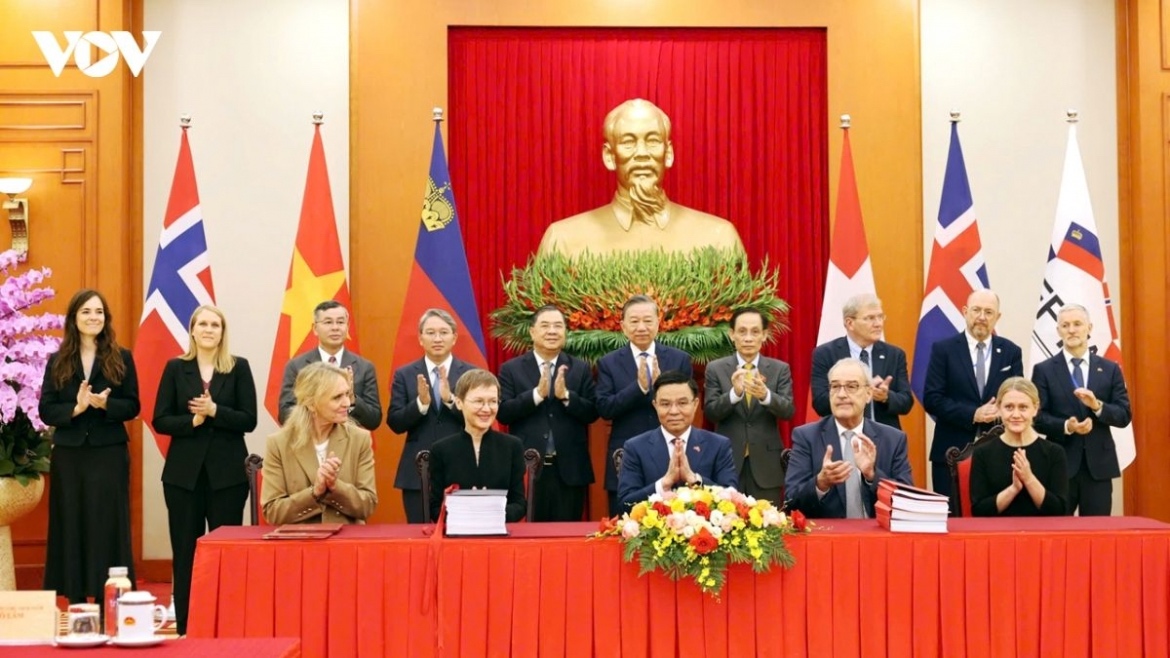 |
| Viet Nam and the four member states of the European Free Trade Association (EFTA) - Switzerland, Norway, Iceland and Liechtenstein - sign a free trade agreement in Hanoi on October 18, 2026. |
Investment cooperation has also expanded. By the end of 2025, Switzerland had 234 investment projects in Viet Nam with registered capital exceeding US$2.4 billion, while Norway had 62 projects worth more than US$201 million.
Businesses and investors from EFTA are active in sectors including industry, food, pharmaceuticals, energy and technology. Further cooperation is being explored in innovation, high technology, logistics and precision engineering.
With its wide-ranging commitments, VEFTA is set to provide a stronger framework for expanding commercial ties, improving business competitiveness and encouraging sustainable economic growth. Its practical benefits will depend on implementation, including the completion of the relevant procedures before the agreement enters into force, as well as businesses’ ability to meet market requirements and make effective use of its commitments.
Viet Nam climbs GII rankings: Turning innovation into competitiveness
Moving up one place in 2026 and 16 places over the past decade, Viet Nam now ranks 43rd out of 139 economies assessed by the World Intellectual Property Organisation (WIPO) for innovation. Notably, its innovation output ranking rose two places, from 37th to 35th, helping to improve its overall performance.
The results mark progress, while also highlighting the need to translate the resources invested to date into research capacity, technological products, and greater efficiency in production and business operations.
Policy and resources begin to deliver results
At the launch of the Global Innovation Index (GII), WIPO Director General Daren Tang cited Viet Nam alongside China, India, Türkiye, the Philippines, Morocco, and Indonesia as the economies that had improved their rankings most rapidly since 2013. The WIPO report identified these seven middle-income economies as having made particularly notable advances in the rankings.
Viet Nam remains second among lower-middle-income economies, behind India, and third in ASEAN, after Singapore and Malaysia, NDO reported.
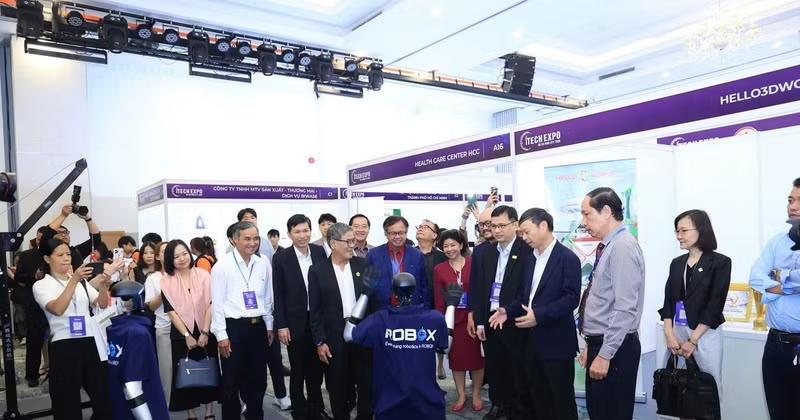 |
| Delegates visit and experience technology products and solutions at iTECH EXPO 2026. (Photo: MST) |
The country continues to rank first globally in two indicators: high-tech exports as a share of total exports and creative goods exports as a share of total exports. Viet Nam has also maintained a record of innovation performance above expectations for its level of development for 16 consecutive years.
Minister of Science and Technology Vu Hai Quan said the two-place rise in innovation outputs was a noteworthy achievement, indicating that policies and resources allocated to the sector were beginning to deliver results.
According to the minister, this progress is linked to the decisive implementation of Resolution No. 57-NQ/TW. Investment in science, technology, innovation, and digital transformation has increased substantially, while the policy and legal framework has been gradually strengthened. The involvement of the state, businesses, research institutes, and universities has helped lay the foundations for an innovation ecosystem.
Alongside increased resources, the approach to management is also changing, shifting from a focus on inputs towards tangible results and effectiveness. Resources are being prioritised for research and development, high technology, strategic technologies, and sectors with the potential to make a significant contribution to national development.
Several indicators point to improvements in the links between research and product development. Collaboration between universities and businesses in research rose seven places to 24th, while the number of researchers employed by businesses improved by two places to 49th. Patent applications by country of origin rose three places to 63rd, while production and export complexity climbed eight places to 44th.
From assessment index to policy tool
The 2026 GII assesses innovation capabilities through 79 individual indicators and identifies the world's top 100 innovation clusters. By examining both innovation inputs and outputs, the index helps each economy identify its strengths and weaknesses and the foundations requiring further investment.
Since 2017, Viet Nam has used the GII as a management and policy tool, assigning specific indicators to relevant ministries and sectors. This approach has established a cross-sector coordination mechanism, linking efforts to improve innovation capacity with the responsibilities of individual agencies.
The Ministry of Science and Technology serves as the focal point for monitoring and coordination, working with ministries, sectors, and local authorities to propose measures to strengthen national innovation capacity.
The use of the GII in policymaking is becoming increasingly widespread. According to WIPO's 2025–2026 survey, 93 member states use GII results when developing strategies and policies on science, technology, and innovation.
For Viet Nam, this year's results highlight areas where the foundations need to be strengthened. While innovation outputs improved in the rankings, innovation inputs fell from 50th to 54th. The human capital and research pillar dropped to 79th, institutions to 64th, and infrastructure to 59th. Scientific and technical publications ranked 106th, while receipts from intellectual property, fees, and licences ranked 110th.
These findings underline the need to link improvements in individual indicators to stronger real-world capabilities, including workforce quality, research capacity, and businesses' effectiveness in applying technology.
Businesses must play genuine role in next phase of progress
According to Minister Vu Hai Quan, to reach the GII's top 40 by 2030 and the top 30 by 2045, Viet Nam needs to focus on three key priorities.
The first is to improve the quality of human resources, particularly those serving strategic technology sectors and the pool of postgraduate-qualified talent. The second is to increase international scientific publications and patent numbers. Of particularly import is the expansion of business participation in research and innovation.
Businesses need to invest more heavily in both finance and people and integrate technology and digital transformation into production and business operations to improve product quality, increase added value, and raise labour productivity. The minister stressed that genuine business engagement was essential to achieving Viet Nam's innovation targets for 2030 and 2045.
As the focal point for coordinating efforts to improve the GII, the Ministry of Science and Technology will continue to refine the institutional framework in response to practical needs, promote investment in research and development, and attract international corporations to establish R&D centres and expand investment in high technology and strategic technologies.
The ministry will also promote funding for technology start-ups, foster innovation clusters and networks, develop technology businesses, and support the adoption, absorption, and mastery of technologies.
Improvements in the rankings must be followed by tangible results across the economy. As businesses continue to invest in research, research institutes and universities align their work with production needs, and ministries, sectors, and local authorities work together to remove bottlenecks, Viet Nam will become better positioned to turn innovation resources into products, higher productivity, and greater national competitiveness.
Viet Nam’s para-athletics team determined to win medals in Nagoya
With a squad of 7 athletes, led by the highly experienced coach Dang Van Phuc, Viet Nam’s para-athletics team is stepping up their preparations in pursuit of positive results at the 5th Asian Para Games.
At the training ground in Nagoya, Aichi Prefecture, Japan, on October 17, the athletes worked diligently on their specialist disciplines, including discus throw, javelin throw, shot put, running, and long jump. Each event has its own technical, physical, and movement-control requirements, calling for thorough preparation and training methods tailored to each athlete’s disability.
Under the guidance of coach Dang Van Phuc, team members are striving to build on their strengths, refine their techniques, and maintain optimal competitive form ahead of the major events.
Among the team members, Nguyen Thi Hai is one of the most experienced athletes, having previously competed at the Paralympic Games. Competing in the F57 classification, she will take part in the discus throw and shot put at the 5th Asian Para Games. Her experience at major competitions provides a foundation for her to pursue strong results and serves as an additional source of motivation for her teammates.
Alongside Nguyen Thi Hai, the team includes Nguyen Thi Ngoc Thuy, Nguyen Thi Kieu, Truong Bich Van, Tran Thi Thuy Hang, Nguyen Ngoc Hiep, and Nguyen Viet Dai. Each athlete will compete in events suited to their strengths, ranging from throwing and putting events to the 400m and long jump.
For visually impaired athlete Nguyen Ngoc Hiep, the support of a guide runner is particularly important, enabling the pair to coordinate their movements, maintain direction, and keep pace during competition.
At the 4th Asian Para Games in Hangzhou, China, in 2023, Viet Nam’s para-athletics team won two medals. Pham Nguyen Khanh Minh took silver in the men’s 400m T12 with a time of 50.17 seconds, while Nguyen Ngoc Hiep won bronze in the men’s 400m T11 with a time of 56.41 seconds. These achievements were significant milestones, motivating the athletes to strive for further success at this year’s Games.
According to the competition schedule, Vietnamese athletes will begin competing in the javelin and discus throw events on October 19. On October 20, Tran Thi Thuy Hang will compete in the women’s discus throw final.
On October 21, Nguyen Thi Hai and Nguyen Thi Kieu will contest the women’s discus throw final in the F56/F57 classification. October 22 is expected to be one of the key days, with Nguyen Viet Dai competing in the javelin throw, Nguyen Thi Hai and Truong Bich Van in the shot put, Nguyen Thi Ngoc Thuy in the discus throw, and Nguyen Ngoc Hiep in the first round of the men’s 400m T11.
On October 23, Nguyen Viet Dai will compete in the men’s shot-put event, while Nguyen Ngoc Hiep will take part in the men’s long jump T11. At the 5th Asian Para Games, athletics, swimming and powerlifting are among the sports expected to contribute medals to Viet Nam’s delegation, NDO reported.
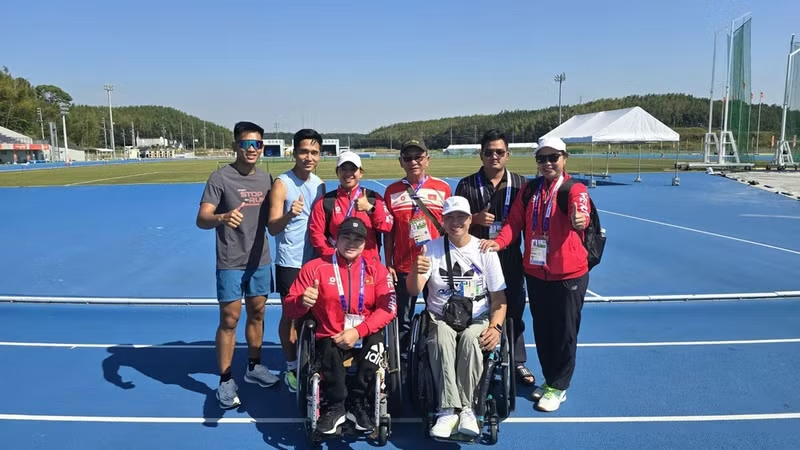 |
| Viet Nam’s para-athletics team during a training session on October 17. (Photo: VP) |
Facing strong competition from athletes from across Asia, the para-athletics team is determined to bring out the best in each athlete, compete with unity and confidence, and strive to push beyond their personal limits.
The pursuit of success in Nagoya requires comprehensive preparation in technical skills, physical fitness, and competitive mindset. Drawing on the coaching staff’s experience, the perseverance of the athletes in training, and their determination to give their best, Viet Nam’s para-athletes are aiming to deliver their strongest performances and contribute to the delegation’s overall results at the Games.
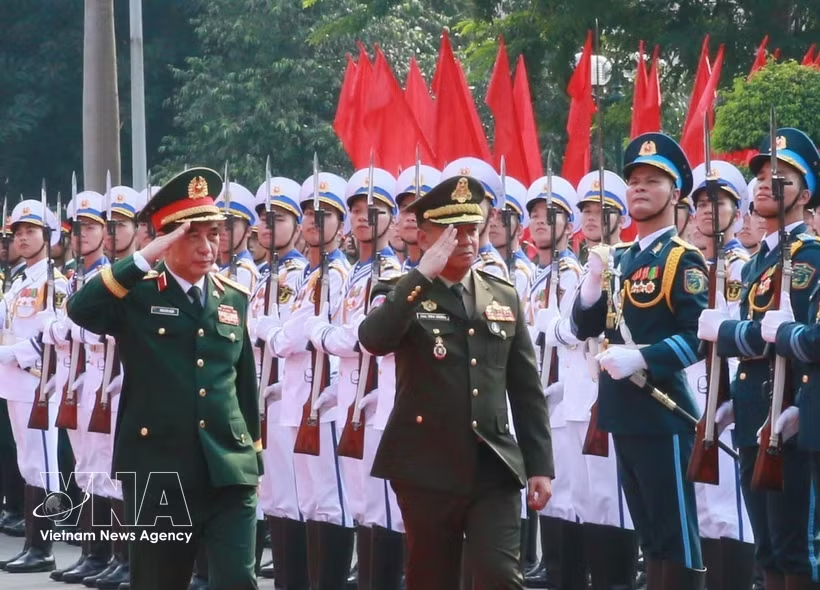 Viet Nam News Today (Oct. 14): Viet Nam, Cambodia Sign Defense Cooperation Plan for 2027 |
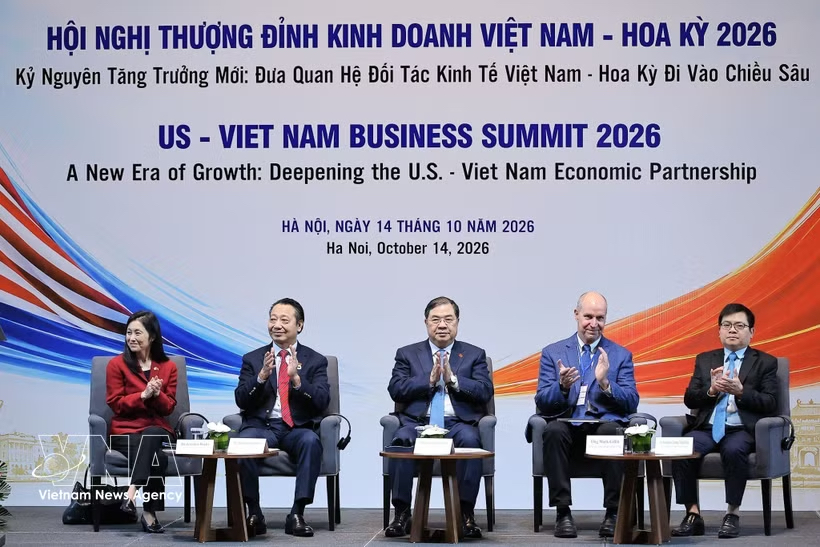 Viet Nam News Today (Oct. 15): Viet Nam, US Seek to Deepen Economic Ties, Promote High-Tech Investment |



Related Stories
 National
Viet Nam News Today (Oct. 18): Viet Nam, Switzerland Outline Priorities to Deepen Comprehensive Partnership
 National
Viet Nam News Today (Oct. 17): Vietnam-EU Ties Set For New Heights With Concrete, Practical Outcomes
 National
Viet Nam News Today (Oct. 16): Vietnam, Australia Work to Turn Momentum Into Substantive Cooperation
 National
Viet Nam News Today (Oct. 15): Viet Nam, US Seek to Deepen Economic Ties, Promote High-Tech Investment
In topics
 National
Viet Nam News Today (Oct. 19): Vietnam Seeks to Expand Trade Ties With New Markets in Middle East
National
Viet Nam News Today (Oct. 18): Viet Nam, Switzerland Outline Priorities to Deepen Comprehensive Partnership
National
Viet Nam News Today (Oct. 17): Vietnam-EU Ties Set For New Heights With Concrete, Practical Outcomes
National
Viet Nam News Today (Oct. 16): Vietnam, Australia Work to Turn Momentum Into Substantive Cooperation
Popular article
 National
DNA Collection Offers Hope to Families of Fallen Soldiers
 National
An Giang Collects DNA Samples to Identify Fallen Soldiers
 National
Viet Nam News Today (Oct. 14): Vietnam, Cambodia Sign Defense Cooperation Plan for 2027
 National