Vietnam to remain active player in shaping ASEAN’s future: minister
Vietnam will continue to serve as a positive factor in helping shape major strategic shifts and the future development of ASEAN, Minister of Foreign Affairs Le Hoai Trung has affirmed.
The official made the statement in an article written on the occasion of the 59th founding anniversary of the Association of Southeast Asian Nations (ASEAN) (August 8, 1967–2026) and the 31st anniversary of Vietnam's accession to the bloc (July 28, 1995–2026).
In the writing, he noted that on August 8, 1967, ASEAN was established, laying the groundwork for regional cooperation in Southeast Asia founded on the core principles of dialogue, trust, and friendship.
Nearly six decades later, the bloc has evolved into one of the world's most successful models of regional cooperation. From a deeply divided region, ASEAN has forged a peaceful and stable regional environment, an epicentre of economic growth, and a cohesive common home where member states are jointly making strong strides forward.
The year 2026 marks a new development phase for ASEAN, starting the implementation of the targets under the ASEAN Community Vision 2045. The bloc possesses crucial foundations to realise this vision: a spirit of solidarity and unified political will among member states; institutional framework and regional integration built over decades; a dynamic market of nearly 700 million people with a young population; and a strong demand for deep cooperation to collectively address shared challenges.
However, the evolving landscape presents new imperatives. ASEAN can no longer merely adapt or react passively to shifts in the strategic environment; it must proactively help shape the rules of the game and lead regional development trends. This demands that ASEAN continue to boldly innovate its mindset and cooperation methodology toward a more proactive, effective, and substantive approach, thus delivering tangible benefits to its citizens and member countries, according to Trung.
Over three decades of journeying with ASEAN have affirmed the correct strategic decisions of the Vietnamese Party and State regarding foreign affairs and international integration. Today, ASEAN has become a vital strategic space closely intertwined with Vietnam’s security interests, development, and international standing, he noted.
As an active, proactive, and responsible member, Vietnam remains steadfast in upholding ASEAN's foundational principles and values. It has actively contributed to maintaining ASEAN solidarity and centrality, promoting international law and a rules-based regional architecture, and fostering a “culture of implementation ”—measuring the success of cooperation through substantive outcomes and tangible benefits for the people.
Vietnam’s enduring contributions to ASEAN throughout this journey reflect a consistent conviction: ASEAN’s success is inextricably linked to the success of each member state, and ASEAN’s collective strength is forged through shared responsibility, mutual interest, and a unified strategic vision, NDO reported.
Guided by this spirit and built upon the nation's posture, potential, and standing after 40 years of Doi Moi (Renewal), Vietnam will continue to serve as a positive factor in helping shape major strategic shifts and the future development of ASEAN, the minister added.
Entering a new era of national development with the aspiration of building a strong and prosperous country, the mindset of “growing alongside ASEAN” will guide Vietnam’s more proactive, positive, and substantive contributions to the ASEAN Community and the co-creation of the region’s shared future.
Adhering consistently to the foreign policy of independence, self-reliance, resilience, and multilateralisation and diversification of external relations, and to the spirit of the Resolution of the 14th National Party Congress, Vietnam will strive to elevate its role, initiatives, and ideas to boost its contributions to ASEAN across six strategic priorities.
The first is proactively creating and maintaining a peaceful, secure, and stable regional environment, Trung noted, elaborating that Vietnam will persistently work with other ASEAN countries to consolidate ASEAN solidarity, uphold the bloc’s centrality, adhere to the principles and codes of conduct, and enhance ASEAN’s responsiveness to increasingly complex security challenges, according to VNA.
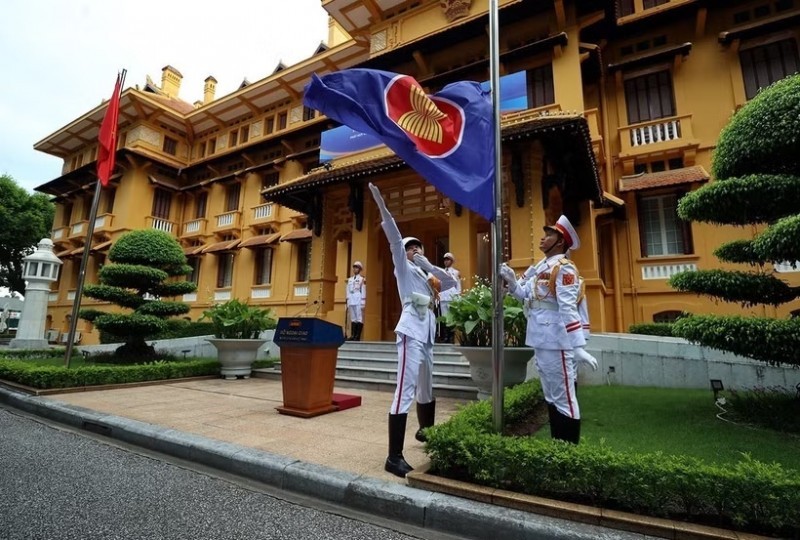 |
| The ASEAN flag hoisting ceremony held in Hanoi on July 31, 2026 to mark the 59th founding anniversary of ASEAN and the 31st anniversary of Vietnam's accession to the bloc. (Photo published by VNA) |
Vietnam will also make concerted efforts to promote dialogue, build trust, and uphold international law, including the 1982 United Nations Convention on the Law of the Sea (UNCLOS). It will further contribute to conflict prevention, the management of differences, and the harmonious resolution of regional issues based on shared interests and responsibilities.
The second is fostering resilience and the quality of regional economic integration. Vietnam will actively collaborate with other ASEAN members to deepen intra-bloc connectivity, diversify markets and supply chains, guarantee economic security, and strengthen resilience to shocks. It will join efforts to safeguard energy and food security, enhance the quality of infrastructure connectivity, and generate new growth drivers rooted in science, technology, and innovation, while advancing the digital economy, green economy, circular economy, and just energy transition.
The third is strengthening the “culture of implementation”. The focus will be on translating agreements into tangible projects and initiatives into measurable outcomes. Priority will be given to supporting disadvantaged countries and sub-regions while leveraging the roles of enterprises, citizens, and regional institutions in narrowing development gaps.
The fourth is enhancing ASEAN’s external relations in a proactive, balanced, and substantive manner. Vietnam will join other member states in deepening and diversifying relations with external partners on the basis of mutual respect, equality, and mutual benefit, ensuring ASEAN centrality and alignment with ASEAN principles.
The fifth is elevating the country’s contributions—from active participation to proactive shaping. Vietnam will actively propose new initiatives and amplify ASEAN’s influence in areas where the countru holds experience and strengths such as digital transformation, innovation, food security, water resource management, climate change response, sub-regional development, Mekong–ASEAN connectivity, and promoting the role of youth, women, and enterprises in the Community building process.
The sixth is reforming operational methods and improving the efficiency of ASEAN institutions. Vietnam and fellow member states aim to build a streamlined and flexible ASEAN equipped with superior forecasting and policy-planning capabilities to meet the requirements of the new development phase, Trung went on.
Against the backdrop of a rapidly changing, complex, and unpredictable world, Vietnam remains firmly convinced that its developmental path is inseparable from the growth of ASEAN. It will continue to accompany, contribute to, and co-create the successful implementation of the ASEAN Community Vision 2045, ensuring ASEAN not only adapts to the times, but also actively shapes and asserts its role, delivering practical benefits to its people and contributing to peace, stability, and shared prosperity in the region and the world, the minister affirmed.
Program promotes Vietnamese and Chinese culinary exchange
The Saigon Professional Chefs Association and the Ho Chi Minh City Tourism Association, in coordination with China's LiangZhiLong Food Group, recently organised the Vietnam-China Culinary Quintessence Exchange 2026, featuring a cooking competition between professional chefs from the two countries.
The event provided a platform for professional exchange while creating opportunities to strengthen connections among organizations and businesses operating in the food, restaurant, hotel and tourism sectors of Vietnam and China, according to NDO.
By combining ingredients and culinary techniques from the two countries, the program helped promote professional exchanges, foster business connections and introduce new flavours to consumers.
A highlight of the event was a cooking competition between teams of Vietnamese and Chinese chefs. Within 60 minutes, each team was required to prepare three dishes using ingredients and products provided at the competition venue. The entire process, from preparation and cooking to plating, was carried out live before the judging panel and visitors.
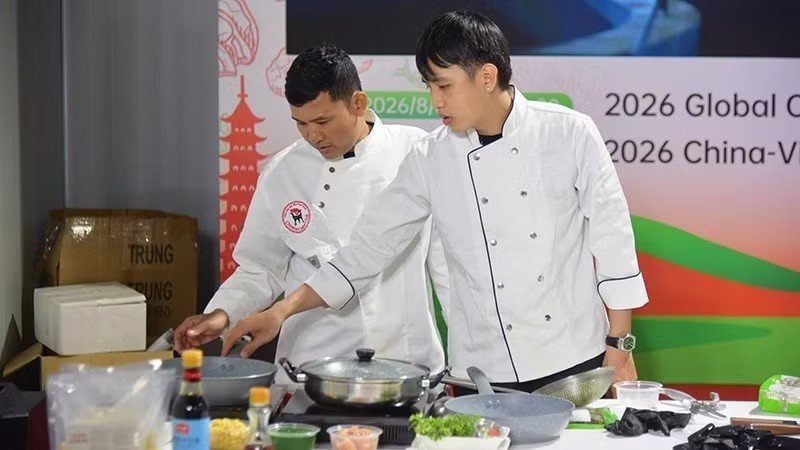 |
| Chefs participate in the program. (Photo: Organizing Committee) |
Pham Son Vuong, President of the Vietnam Chefs Federation and President of the Saigon Professional Chefs Association, said the program aimed to foster friendly relations between Vietnamese and Chinese businesses as well as professional associations in the two countries.
He noted that culinary exchange goes far beyond simply combining ingredients from the two countries in a single dish.
Chefs need to understand the characteristics of each ingredient, achieve the right balance and apply appropriate cooking techniques to create harmonious dishes. The event also provided an opportunity for chefs to exchange professional experience, discover new products and develop fresh ideas for restaurant and hotel menus.
Vietnamese film to be screened at ASEAN Film Festival 2026 in Hong Kong
The fourth edition of the ASEAN Film Festival (AFF) will take place in Hong Kong (China) from August 20, with Vietnamese cinema represented by the film “The Sound of Crossing the Sea”.
The film is expected to help introduce Vietnam’s distinctive cultural and artistic identity to international audiences and the ASEAN community in Hong Kong.
This year’s festival will feature more than 30 selected films from the 11 ASEAN member states, including Timor-Leste, which participates in the event for the first time.
The programme will also expand cultural exchanges by showcasing films from Hong Kong, the Chinese mainland, Australia, Pakistan and Russia. Screenings will be open to the public free of charge at various venues across Hong Kong.
The festival will be opened with the Philippine film “Song of the Fireflies”. Other highlights from ASEAN countries include “SuckSeed” (Thailand), a coming-of-age comedy about a teenage rock band, and “881” (Singapore), a nostalgic musical drama celebrating the getai stage tradition, along with films from Malaysia, Myanmar, Brunei, Indonesia, Cambodia and Laos. Notably, Timor-Leste will present a collection of short films featuring the theme of intangible musical heritage, cited VNA.
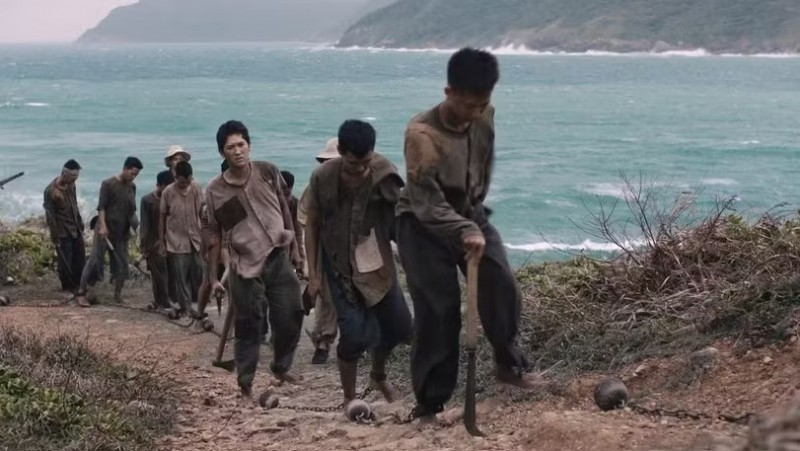 |
| A scene from the film “The Sound of Crossing the Sea”, which portrays steadfast revolutionary soldiers imprisoned at Con Dao Prison (Photo of the producer) |
Speaking about the event, Daryl Ng, Chairman of the Hong Kong–ASEAN Foundation, said film and music are universal languages that bring people together across cultures and generations.
The organizers hope the festival will not only offer audiences rich art experiences but also give the Hong Kong public a deeper understanding of the cultural diversity and creativity of the ASEAN region, he added.
Vietnam wins two gold medals at 2026 International AI Olympiad
Vietnam has won seven medals at the 2026 International Artificial Intelligence Olympiad, with seven of its eight students taking home awards, including two golds, one silver and four bronzes, according to the Ministry of Education and Training.
The two gold medals at the 2026 International Artificial Intelligence Olympiad went to Nguyen Viet Trung Nhan, an 11th grader at the High School for Gifted Students under the University of Science, Vietnam National University, Hanoi, and Nguyen Huu Tuan, a 12th grader at the same school.
The silver medal was won by Nguyen Anh Hung, an 11th grader at the High School for Gifted Students under the University of Science, Vietnam National University, Hanoi.
Four bronze medals went to Phan Dinh Triet, a 12th grader at Le Quy Don High School for the Gifted in Da Nang; Le Minh Quan, a 12th grader at Quang Trung High School for the Gifted in Dong Nai Province; Ha Gia Minh, an 11th grader at the High School for Gifted Students under the University of Science, Vietnam National University, Hanoi; and Nguyen Le Duy Khang, a 10th grader at Le Hong Phong High School for the Gifted in Ho Chi Minh City.
In 2026, the organizers awarded a total of 37 gold, 73 silver and 110 bronze medals. With its results, the Vietnamese team demonstrated its ability to compete among the world’s leading performers in artificial intelligence, while showcasing the students’ talent, thinking skills and ability to engage with emerging technologies.
The Ministry of Education and Training said the achievement demonstrates the quality of Vietnam’s general education at a time when the country is implementing the Politburo’s Resolution No. 57-NQ/TW on breakthroughs in science and technology development, innovation and national digital transformation. The result also provides a foundation for the ministry to continue efforts to make artificial intelligence an official subject in Vietnam’s national excellent student competition in the future, VNN reported.
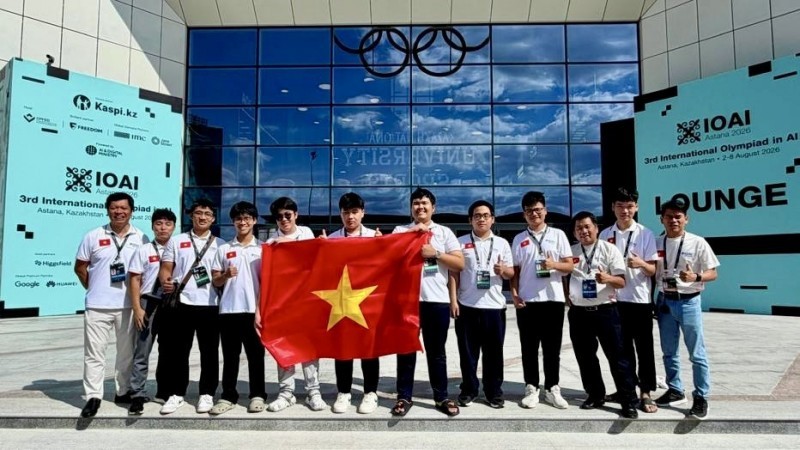 |
| The Vietnamese team at the 2026 International Artificial Intelligence Olympiad. |
2026 marks the first year that the Ministry of Education and Training has organized a two-round selection process for a national team to compete in the International Artificial Intelligence Olympiad. In the first round, 1,188 students from 34 provinces and cities competed online, with 246 advancing to the second round. There, students took an in-person computer-based AI programming test, from which the eight highest-performing students were selected to represent Vietnam at the international competition.
This year’s problems were considered highly challenging and creative, requiring contestants to complete the entire process of solving an artificial intelligence problem, from data analysis and method selection to programming, model training and optimization, testing and final product development. In addition to knowledge of machine learning and artificial intelligence, contestants needed a solid foundation in programming, data structures, algorithms, probability and statistics, optimization and computational resource management.
The 2026 International Artificial Intelligence Olympiad was held in Kazakhstan from August 2-8, bringing together 108 teams representing countries and territories, with 471 students competing in the individual AI programming category.
The number of participating countries and territories increased sharply this year, while the competition materials were prepared in 44 translations across different languages, reflecting the growing scale and competitiveness of the international artificial intelligence competition.