
Vietnam News Today (Jan 18): PM Chairs Meeting on Developing National Strategy on Rare Earths
 | Vietnam News Today (Jan 16): Vietnam Pledges Continued Active, Responsible Role in ASEAN Digital Cooperation |
| Vietnam News Today (Jan. 16): Vietnam Shows Leading Role in ASEAN’s Digital Strategy |
| Vietnam News Today (Jan 18) headlines: Party leader attends groundbreaking ceremony for Ha Noi Medical University elderly health care complex PM chairs 7th meeting of Steering committee for untangling knots in legal system PM chairs meeting on developing national strategy on rare earths Vietnam seeks to strengthen multifaceted cooperation with Guatemala Lao Bao economic zone reinforces gateway role on East–West Corridor Hanoi breaks ground on digital technology, mixed-use park Hanoi Metro carries nearly 21 million passengers last year, as revenue beats targets Phu Quy Island named among top Southeast Asia travel destinations for 2026 New York Times lists Vietnam among Top Global Destinations for 2026 |
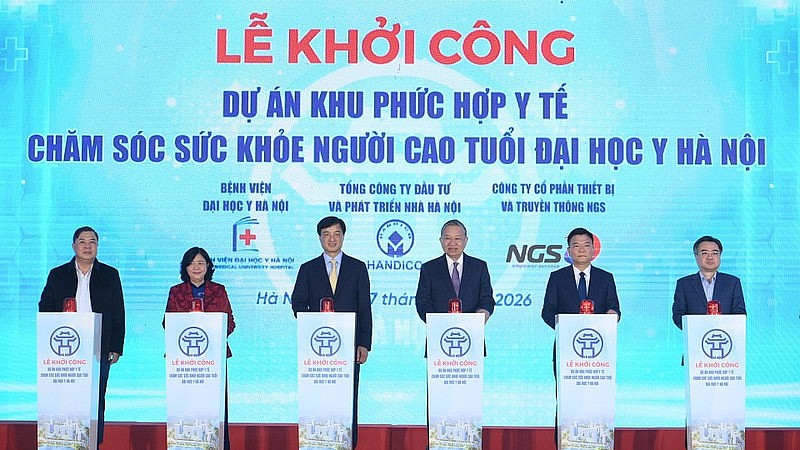 |
| Party General Secretary To Lam (fourth, right) and delegates press the buttons to launch the construction of the Ha Noi Medical University Elderly Health Care - Medical Complex in Ha Noi on January 17 (Photo: NDO) |
Party leader attends groundbreaking ceremony for Ha Noi Medical University elderly health care complex
Party General Secretary To Lam on January 17 attended the groundbreaking ceremony for the Ha Noi Medical University Elderly Health Care - Medical Complex in Ha Noi, as part of activities celebrating the 14th National Party Congress.
The project, developed by a consortium comprising the Ha Noi Medical University Hospital (authorised by the Ha Noi Medical University), the Ha Noi Housing Development and Investment Corporation (HANDICO), and NGS Equipment and Communications JSC, is located at the Hoang Mai campus of the hospital in Ha Noi.
Addressing the ceremony, General Secretary Lam underscored the significance of the project, not only for Ha Noi but also for the national strategy on protecting, caring for and improving public health, particularly for older persons, as the country enters a phase of rapid population ageing.
The leader reaffirmed the Party’s consistent view that humans are both the goal and the driving force of development, stressing that health care remains a central and consistent political task. For the elderly, health care is not merely a medical issue but a profound humanitarian responsibility, reflecting the care of the Party, State, society and families for those who have devoted their lives to the nation, the community and their own families, he stated. Against the backdrop of rising life expectancy and changing family and social structures, the General Secretary noted that without new approaches, the healthcare and social security systems will face mounting pressure. The Party and State have therefore issued a series of important policies and resolutions to proactively respond to population ageing, identifying health care as a key pillar of sustainable development.
He said the project directly translates major Party and State policies on science and technology development, private sector growth, and public health improvement into action, while demonstrating Ha Noi’s determination to apply special mechanisms and policies to implement large-scale projects with long-term spillover effects.
He commended the close coordination among the State, academic institutions, scientists and enterprises, saying it aligns with the Party’s policy of mobilising all social resources for development, with the private sector serving as a key economic driver.
To ensure effective implementation, he called for joint efforts from Ha Noi authorities, the Ha Noi Medical University and participating health care institutions, and investors in the project. He expressed confidence that with collective determination, the project would be implemented successfully and become a symbol of academic, humane and modern health care in the new era.
The Ha Noi Medical University Elderly Health Care - Medical Complex is designed as a multi-functional integrated hub combining high-quality medical services, education and clinical training, scientific research, technology transfer and comprehensive elderly care, forming a synchronised healthcare–education–research ecosystem.
A key feature is its development as a smart, green hospital, applying advanced technologies and artificial intelligence in diagnosis, treatment and governance, while serving as a technological nucleus for Ha Noi’s healthcare digital transformation. It will also deploy advanced medical technologies, including organ transplantation, robotic surgery, minimally invasive interventions, stem cell therapy, gene therapy, radiotherapy, 3D printing and high-tech medical imaging.
The project has a total estimated investment of 16.09 trillion VND (612.48 million USD), with phase one scheduled for completion in 2028 and full completion targeted for 2030.
Its core component, Zone 1, covers around 15 hectares, including approximately 12.9 hectares for construction, featuring a hospital complex of about 2,600 beds. At its centre is a 1,000-bed general hospital serving as a hub linking specialised centres in oncology, surgery and transplantation, geriatrics, endocrinology, dentistry and an international medical centre. The zone also includes the Ha Noi Medical University’s training, research and technology transfer facilities, serving about 10,000 students.
Following completion of the new hospital cluster in 2028 and patient transfer from existing facilities, the project will continue with the construction of specialised surgical and oncology centres, research institutes, dormitories and lecture halls, with full completion by 2030.
Zone 2, covering about 0.7 hectares, comprises a six-storey podium and two 35-storey towers with three basement levels, providing around 1,100 apartments designed specifically for older persons under advanced international models. Housing options range from independent living to assisted and full 24/7 care, integrated with nutrition and rehabilitation services. The residential area is closely linked to the university hospital’s specialised medical system, ensuring continuous, safe and professional health care, and is expected to be completed in 2028.
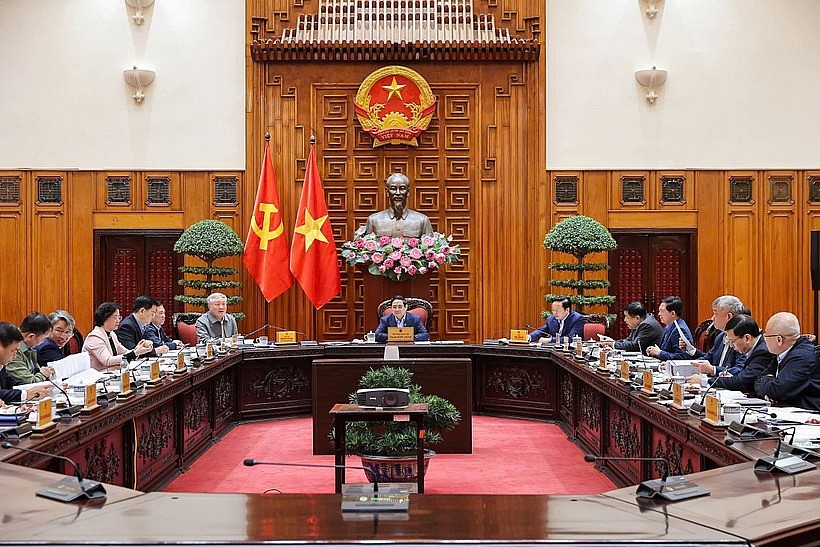 |
| Prime Minister Pham Minh Chinh chairs a meeting of standing Government members in Hanoi on January 17 to discuss the development of a National Strategy on Rare Earths (Photo: VNA) |
PM chairs 7th meeting of Steering committee for untangling knots in legal system
Prime Minister Pham Minh Chinh chaired a meeting of standing Government members in Hanoi on January 17 to discuss the development of a National Strategy on Rare Earths.
The standing cabinet members also looked into a draft Government resolution on mechanisms to remove difficulties and obstacles for transitional BT (build-transfer) projects, a draft decree detailing the handling of obstacles related to BT transport projects, and several other issues.
Regarding the development of the National Strategy on Rare Earths, PM Chinh emphasised the need to strengthen state management in this field and to develop the rare earth industry, contributing to strategic autonomy.
He highlighted tasks and solutions including building and improving institutions, mechanisms, and policies, with priority given to deep processing; financial investment and mobilisation of state resources, public-private partnership resources, and investor capital; infrastructure construction and development; transfer and mastery of advanced and appropriate technologies; promotion of public-private cooperation; and smart governance based on digital transformation.
The Prime Minister requested the Ministry of Agriculture and Environment, together with relevant agencies, coordinate, absorb the opinions raised at the meeting, and finalise the drafts, reports, and proposals for submission to the competent authorities for consideration and feedback.
About mechanisms to address difficulties and obstacles for transitional BT projects, the Prime Minister instructed the Ministry of Finance and relevant agencies to incorporate feedback, finalise and submit the Government resolution for issuance under expedited procedures.
He stressed the requirement to comply with and properly apply regulations, laws, and authorities; and to harmonise interests and share risks among the State, businesses, and the people; and, on that basis, to review and handle projects that have already received inspection conclusions.
For projects without inspection conclusions, provincial-level People’s Committees are tasked with conducting inspections and handling them within their authority, in the spirit of “localities decide, implement and take responsibility.”
Ministries and sectors are to carry out their tasks within their mandates; if issues exceed their authority, they should report to the Government and the Prime Minister, he noted.
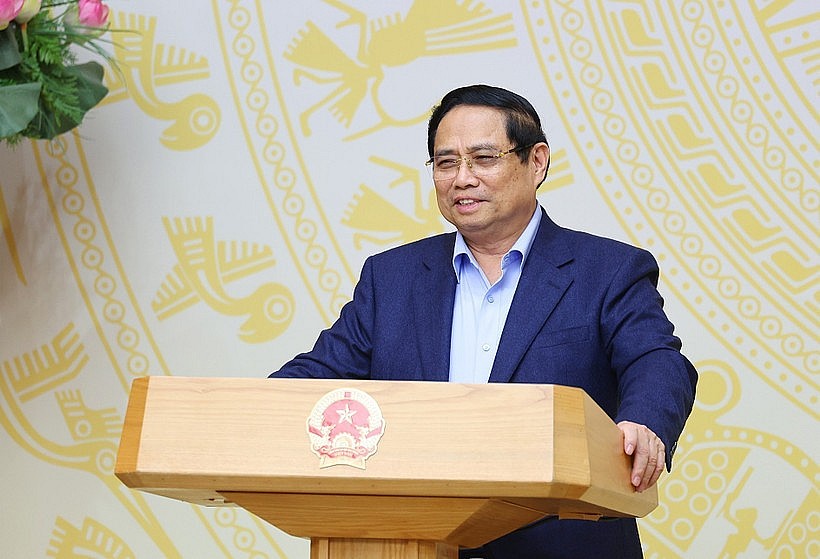 |
| Prime Minister Pham Minh Chinh addresses the 7th meeting of the Government’s Steering Committee for reviewing and untangling knots in the legal document system on January 17 (Photo: VNA) |
PM chairs 7th meeting of Steering committee for untangling knots in legal system
Prime Minister Pham Minh Chinh, who leads the Government’s Steering Committee for reviewing and untangling knots in the legal document system, chaired the committee’s seventh meeting in Hanoi on January 17.
In his address, PM Chinh underscored that institutional building and improvement constitute the “breakthrough of breakthroughs” among the three strategic breakthroughs defined by the Party, serving as both a driver and foundation for national development
In 2025, institutional reform was implemented with strong determination, delivering significant results and the largest legislative workload to date, alongside a fundamental renewal in legislative thinking.
The Government submitted to the National Assembly for approval 99 laws and resolutions, including 55 adopted at the 10th session of the 15th National Assembly, many of which introduced special mechanisms and policies to implement the Politburo’s strategic resolutions. A total of 374 decrees were also issued, he noted.
PM Chinh highlighted the strong determination of the Party, National Assembly and Government to thoroughly remove legal barriers, transforming institutional bottlenecks into a national competitive advantage to unlock resources and create a stable legal framework for development.
Implementing the Politburo’s Resolution No. 66-NQ/TW, Vietnam in 2025 basically completed the removal of legal bottlenecks, achieving a rate of 98.3%. Priority was given to addressing shortcomings in legal documents and ensuring the timely institutionalisation of major Party resolutions.
Legal issues arising from administrative restructuring and the two-tier local government model were also handled, alongside efforts to simplify and cut administrative procedures.
These measures aim to support the 2025 growth target of over 8%, while maintaining macroeconomic stability, controlling inflation, ensuring major economic balances, and promoting fast and sustainable development in tandem with social progress, environmental protection, and national defence and security, said the PM.
The Government leader requested Steering Committee members to provide objective and comprehensive assessments of unsettled issues and proposals identified during the term, particularly those highlighted in the Ministry of Justice’s report on the results of solving legal bottlenecks from 2020 to 2025.
He also asked for a review of the implementation of conclusions from the sixth meeting and comments on the proposed 2026 action plan, based on the principle of “six clear” - clear responsibilities, clear tasks, clear timelines, clear outcomes, clear accountability and clear authority.
According to the agenda, participants reviewed efforts to untangle legal knots since 2020 and discussed orientations and tasks for 2026 and beyond.
 |
| At the groundbreaking ceremony on January 16 for Hanoi's digital technology and mixed-use park in Tay Tuu and Phu Dien wards. (Photo: VnExpress) |
Hanoi breaks ground on digital technology, mixed-use park
The Hanoi People’s Committee, in coordination with FPT Corporation, held a groundbreaking ceremony on January 16 for a digital technology and mixed-use park in Tay Tuu and Phu Dien wards, in a buoyant atmosphere marking the lead-up to the 14th National Party Congress.
Speaking at the ceremony, Vice Chairman of the municipal People’s Committee Truong Viet Dung said the park is envisioned as a key nucleus of the capital’s innovation ecosystem, aligned with its goal of becoming a major national hub for science, technology and the digital economy. Covering nearly 200 hectares with a total investment of more than 2 billion USD, the project, once operational, is expected to provide workspace for around 60,000 experts, digital technology engineers, innovation specialists and supporting workers.
He noted that the decision by a strong domestic technology enterprise to make a large-scale, long-term investment, closely linking its development strategy with the national goal of mastering core technologies, is highly commendable and reflects a clear long-term vision and a strong sense of responsibility towards the development of both the capital and the country.
The Vice Chairman stressed that the project’s success would serve as a vivid example of the “three-party” cooperation model involving the State, enterprises and scientists. Under this model, the State plays a facilitative and guiding role in creating a favourable development environment; enterprises act as the main implementers; and experts and scientists constitute the core intellectual resource.
He affirmed that Hanoi remains fully committed to accompanying the investor, working closely and creating favourable conditions in line with regulations to ensure the project’s smooth and effective implementation.
From the investor’s perspective, FPT Chairman Truong Gia Binh pledged that the technology park would become a centre helping to reinforce the capital’s position as the country’s leading hub for science and technology, and, further afield, gradually realise Vietnam’s aspiration of building its own “Silicon Valley”.
The project will be designed, built and operated in line with green building standards, with a focus on sustainable development and the creation of an integrated “work–live–innovate” environment.
Its core component is a concentrated digital technology, innovation and digital transformation park covering around 168.9 hectares. The remaining area will be developed as an open park featuring internal transport infrastructure, green spaces and water surfaces, creating a high-quality environment for working, research and living. The project is scheduled to be implemented between 2026 and 2031, with the first components expected to be completed and put into operation next year.
Phu Quy Island named among top Southeast Asia travel destinations for 2026
Phu Quy Island in Lam Dong province has been selected as one of the top 10 must-visit destinations in Southeast Asia for 2026 by Thai newspaper Khaosod, praised for its pristine nature and “cinematic beauty.”
“Bangkok is back, Bali is bursting, and Vietnam is viral. As we enter 2026, the real question is: where can you go to actually hear yourself think?” the newspaper said.
Ignoring the neon lights of Orchard Road in Singapore and the selfie-sticks of Angkor Wat in Cambodia, the Thai newspaper on January 5 released a list of 10 “rare” destinations - the “quiet corners” which are still raw, slightly difficult to reach, and authentically ASEAN.
Khaosod highlights Phu Quy Island for its untamed charm, wind-swept scenery, and picture-perfect beauty.
“While everyone heads to Phu Quoc, the real island seekers are taking the ferry from Phan Thiet to Phu Quy. It’s a rugged, volcanic landscape with emerald waters and zero mass tourism. It feels like Vietnam’s coast did 30 years ago,” the newspaper said.
Accommodation on Phu Quy Island is mostly limited to guesthouses and homestays, as large hotels and resorts are rare. The rugged terrain, shaped by volcanic remnants, is surrounded by emerald waters and remains free from mass tourism.
Also known as Cu Lao Thu, Phu Quy lies about 120 km southeast of Phan Thiet and covers roughly 18 sq.m. In addition to the main island, the area includes smaller islets such as Hon Tranh, Hon Do, Hon Da Cao, and Hon Hai.
The island enjoys a cool and fresh climate year-round. The best time to visit Phu Quy is from December to June, as the storm season typically occurs between September and November. During the spring and summer months, the sea is calm and clear, with gentle winds, making it easy to explore the smaller surrounding islets.
In addition to Phu Quy, Khaosod’s list features several lesser-known destinations in Southeast Asia., including Ulu Temburong in Brunei, Nong Khiaw in Laos, Romblon in the Philippines, Doi Mae Salong in Thailand, Koh Tonsay (Rabbit Island) in Cambodia, Bukit Lawang and Sumba Island in Indonesia, Ipoh in Malaysia and Mergui Archipelago in Myanmar.
 | Vietnam News Today (Jan. 14): Vietnam Seeks Stronger Partnership with Singapore Vietnam News Today (Jan. 14): Vietnam seeks stronger partnership with Singapore; Vietnam – China economic, trade cooperation becomes close, complementary: expert;;Vietnam emerges as Asia’s fastest-growing ... |
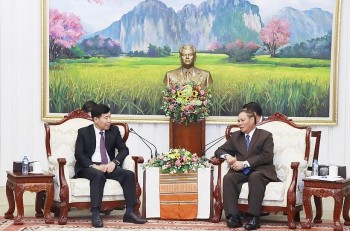 | Vietnam News Today (Jan. 15): Vietnam, Laos Foster Strategic Connectivity in New Context Vietnam News Today (Jan. 15): Vietnam, Laos foster strategic connectivity in new context; 14th National Party Congress of Vietnam seen as historic milestone amid global ... |
Related Stories
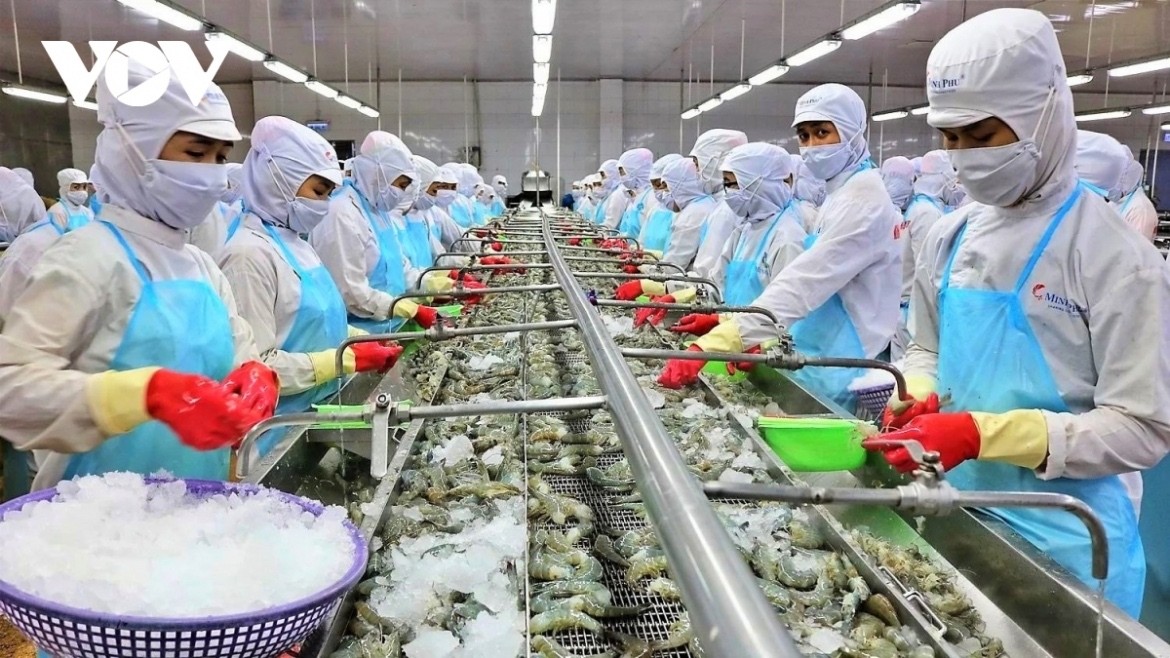 National
Vietnam News Today (July 5): Vietnam Supports Global Efforts for Energy Efficiency at IEA Conference
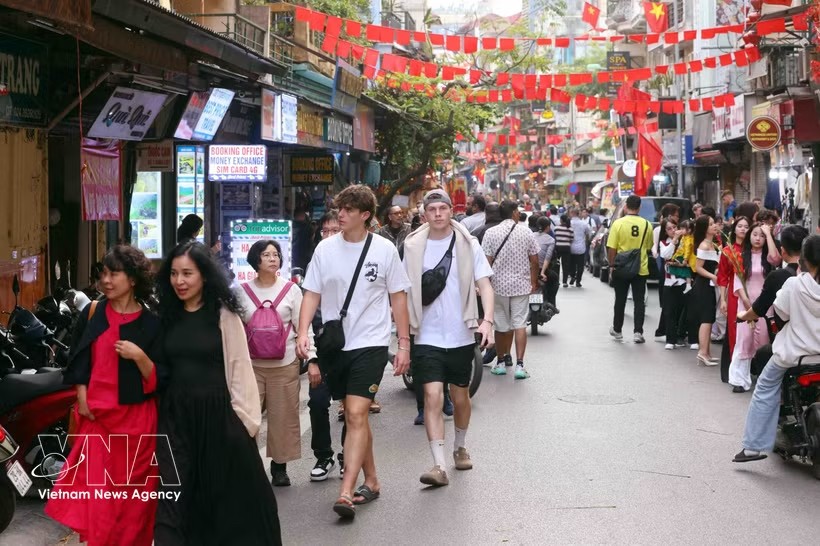 National
Vietnam News Today (July 4): International Tourist Arrivals to Vietnam Rise Nearly 15% in First Half of 2026
Recommended
National
Vietnam News Today (July 4): International Tourist Arrivals to Vietnam Rise Nearly 15% in First Half of 2026
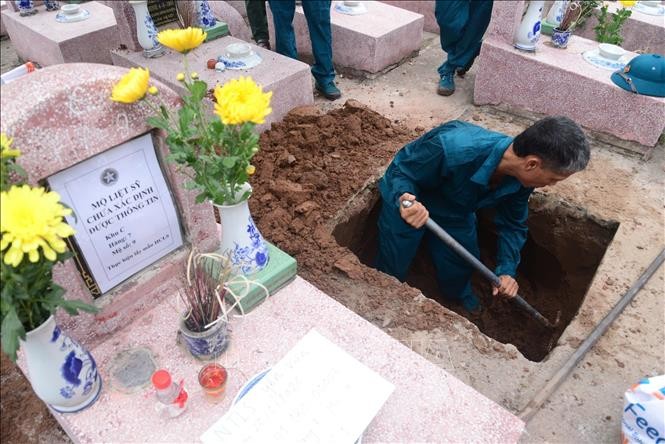 National
500-Day Campaign: Hope of Reunion Through DNA Evidence
 National
Ho Chi Minh City Marks 50 Years with 3D Mapping Light Show
 National
Full Remarks by General Secretary, President To Lam at 50th Anniversary of Sai Gon-Gia Dinh Named After President Ho Chi Minh
 National
New Advances in DNA Technology for Identifying Fallen Soldiers
 National
Foreign Affairs Should Better Serve National Development: Top Leader
 National
Vietnam News Today (July 1): Vietnam and UAE Sign Defense Industry Cooperation Memorandum
 National