| Viet Nam News Today (Sep. 19) notable headlines FTSE Russell vows comprehensive support for Viet Nam’s capital market development Viet Nam to highlight trust, cooperation and multilateralism at UNGA 81 Viet Nam expands role in UN partnership, from beneficiary to contributor Viet Nam, Bulgaria seek to turn Strategic Partnership into tangible results Viet Nam, China strengthen cooperation in combating cross-border crimes Viet Nam remains market of interest for Australian education providers Viet Nam moves to fast-track foreign investment through institutional reforms OCTF 2026 links Viet Nam-China supply chains Viet Nam promotes green, smart seaports linked to modern logistics |
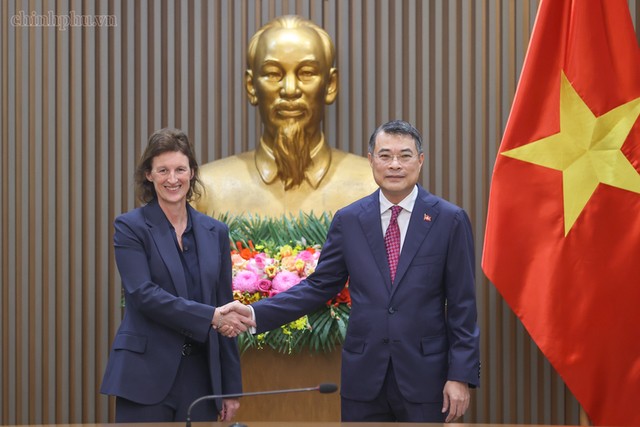 |
| Prime Minister Le Minh Hung (R) and FTSE Russell CEO Fiona Bassett at the Government Office in Ha Noi, September 17, 2026. Photo: VGP |
FTSE Russell vows comprehensive support for Viet Nam’s capital market development
Prime Minister Le Minh Hung on Thursday hosted a reception for FTSE Russell CEO Fiona Bassett who is on a working visit to Viet Nam.
The Prime Minister appreciated FTSE Russell's role in monitoring and assessing Viet Nam's stock market, as well as its support for the development of Viet Nam's stock market toward greater transparency, efficiency and compliance with international standards.
Viet Nam's stock market is expected to officially attain the “Secondary Emerging Market” status under FTSE Russell's classification framework on September 21.
Le highlighted Viet Nam's recent socio-economic achievements, notably its GDP growth of 8.18 percent in the first half of 2026, the highest rate in 15 years.
The Vietnamese Government is resolved to achieve double-digit growth in 2026 and throughout the 2026-2030 period while maintaining macroeconomic stability, controlling inflation and ensuring major economic balances, he said.
Achieving these targets requires the mobilization of substantial financial resources, making the development of a deep, broad-based and efficient capital market an urgent task, the Prime Minister noted.
He stressed the need to mobilize resources from the domestic private sector and foreign investors alongside public investment and bank credit, contributing to stronger and more sustainable economic growth.
The Government has implemented a range of reforms to create more favorable conditions for investors, particularly foreign investors, demonstrating its strong commitment to reforming the stock market and building an increasingly open, transparent and efficient investment environment.
He viewed FTSE Russell's decision to upgrade Viet Nam's stock market as objective recognition of the country's development vision, political determination and reform efforts.
The upgrade should be regarded as the starting point for a new phase of development featuring higher quality, greater scale and increased professionalism of Viet Nam's stock market, he stressed.
In the coming period, Viet Nam will focus on sustaining the upgraded market status by ensuring smooth information flows and maintaining regular dialogue with market participants, while establishing transparent and periodic communication channels with FTSE Russell to stay updated on new standards and areas requiring further improvement, cited VGP.
The Government will also ensure the smooth and stable implementation of reforms, accelerate the deployment of the Central Counterparty (CCP) mechanism, and effectively address issues raised by global securities firms and custodians.
At the same time, supervision and support will be strengthened to help listed companies adopt ESG standards, improve information disclosure and transparency, and implement corporate governance practices in line with OECD principles, Le said.
These measures are important to maintaining and attracting capital flows from global investment funds, he added.
The Prime Minister expressed his belief that through cooperation with FTSE Russell and other global partners, Viet Nam's stock market will continue to develop, not only maintaining its upgraded status but also strengthening its position at the regional level.
He asked FTSE Russell to continue monitoring the Vietnamese market and provide objective, accurate and comprehensive assessments reflecting the realities of Viet Nam's economy and capital market.
He also called on FTSE Russell to work closely with the Ministry of Finance, the State Securities Commission and relevant regulatory agencies to recommend practical solutions aimed at building a stock market with greater transparency and efficiency and stronger alignment with international standards.
The Prime Minister called for FTSE Russell's continued support for Viet Nam in developing and actively participating in the stock market and the broader financial market, including initiatives to operate and attract resources to the International Financial Center.
In reply, FTSE Russell CEO Fiona Bassett described Viet Nam as a remarkable growth story in Asia and a long-term partner, expressing the company's wish to further deepen cooperation with the Vietnamese Government and market participants.
She said FTSE Russell's decision to upgrade Viet Nam's stock market reflects the country's commitments, reform efforts and recent achievements, as well as growing investor confidence.
Viet Nam has emerged as one of the most liquid markets in the Asia-Pacific region, with a high level of participation by foreign investors, Bassett noted.
She said FTSE Russell's announcement on the market upgrade, together with an increase of Viet Nam's weighting in the FTSE Emerging All Cap Index by nearly 50 percent, from 0.329 percent to 0.49 percent, could help drive billions of dollars in capital inflows into the Vietnamese stock market.
FTSE Russell is committed to providing comprehensive support for continued development of Viet Nam's capital market, helping the country achieve its strategic objectives, deepen international integration and attract foreign investment, she affirmed.
The company stands ready to work with Viet Nam in implementing its market development roadmap and contribute further to the Southeaset Asian country's growth story, Bassett said.
According to the CEO, FTSE Russell's support will extend beyond market reclassification to include the development of standards and enhancement of market depth, liquidity and resilience; strengthening investor confidence and international participation; raising international awareness of Viet Nam's capital market; modernizing market infrastructure; promoting institutional investors; developing risk-management tools; and supporting the introduction of new market products.
Viet Nam to highlight trust, cooperation and multilateralism at UNGA 81
Viet Nam is set to use the 81st UN General Assembly High-Level Week to highlight the importance of restoring trust, strengthening multilateralism and expanding cooperation, while reaffirming its readiness to make more substantive contributions to global efforts.
Speaking to the media on September 17 ahead of General Secretary of the Communist Party of Viet Nam Central Committee and State President To Lam’s participation in the High-Level General Debate of the 81st UN General Assembly (UNGA 81) and bilateral activities in the United States from September 20, Ambassador Do Hung Viet, Permanent Representative of Viet Nam to the United Nations, outlined the significance of the upcoming High-Level Week and Vietnam’s priorities at the event.
Restoring trust in a world of profound change
According to Ambassador Do Hung Viet, the 81st UN General Assembly is taking place in the context of profound global changes. Protracted conflicts, climate change, natural disasters and pandemics, together with new challenges arising from rapid advances in science and technology, particularly artificial intelligence, are directly affecting people’s lives and livelihoods as well as national development.
At the same time, progress towards the Sustainable Development Goals remains slow, and resources for development continue to decline sharply. In 2025 alone, official development assistance fell by more than 23%, while global military spending rose to nearly US$2.9 trillion.
Ambassador Viet noted that differences in interests, unilateral approaches and signs of erosion of international law are fuelling mistrust, weakening strategic confidence and hindering dialogue and cooperation.
Against this backdrop, the need for international cooperation and the role of the United Nations have become increasingly evident, as no country can address common challenges on its own. The UN continues to provide a broad forum for countries to maintain dialogue, seek common ground, build frameworks for cooperation and take joint action.
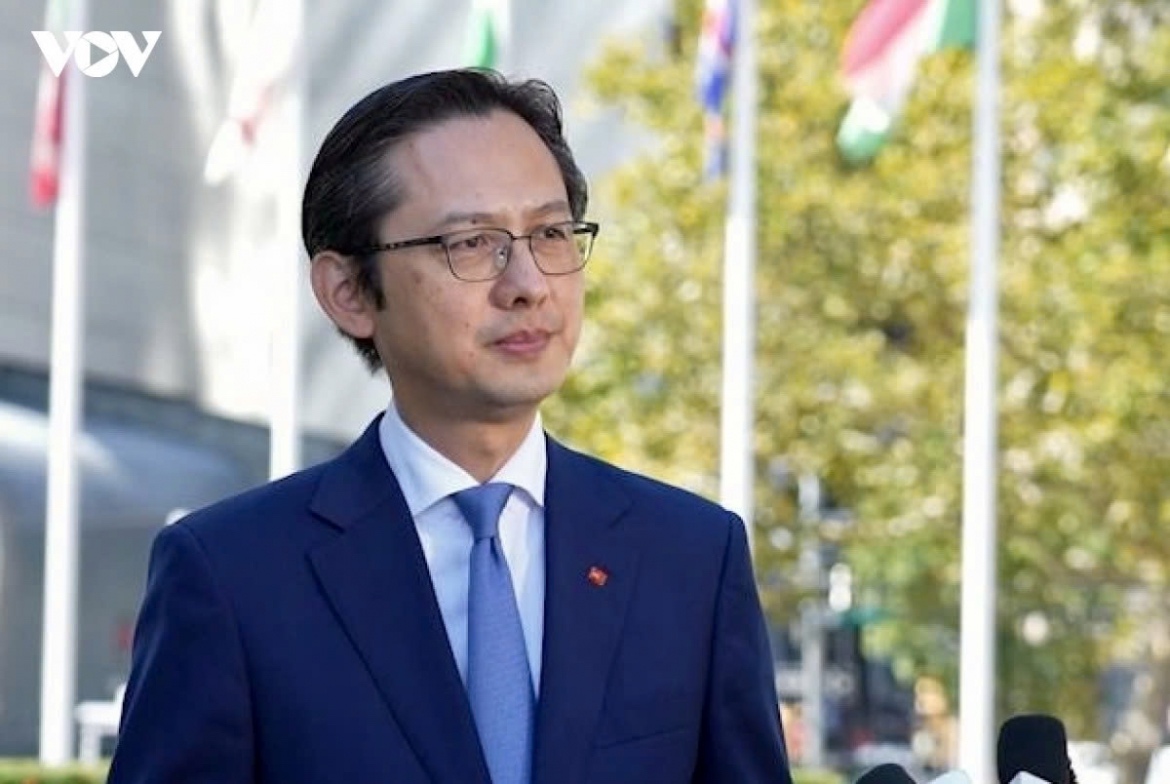 |
| Ambassador Do Hung Viet, Permanent Representative of Viet Nam to the United Nations. |
Ambassador Viet described the theme of the 81st UN General Assembly “Restoring Trust, Managing Transformation: A United Nations That Delivers for All” as timely and appropriate, highlighting the need to restore trust in the United Nations, in multilateralism and in countries’ ability to maintain dialogue and cooperation, respect the fundamental principles of international law and respect one another.
“That trust must be reinforced by fulfilling commitments and delivering concrete, practical results on the ground,” the ambassador said.
The United Nations itself is also entering an important period of transformation. The UN80 Initiative is being implemented with the aim of moving towards a more streamlined, coherent and effective UN system. The process of selecting the 10th UN Secretary-General is also entering a decisive phase, paving the way for a leadership transition and shaping the organisation’s direction in the period ahead.
This year’s High-Level Week will also focus on practical issues including the right to development, climate change and a just transition, sea-level rise, pandemic prevention and preparedness, and nuclear disarmament. These issues are directly linked to peace, security, development and people’s lives.
Vietnam’s message at the UN General Assembly
Given the context, Ambassador Viet said, Party General Secretary and State President To Lam’s leadership of the high-level Vietnamese delegation to the 81st UN General Assembly High-Level Week first and foremost demonstrates the Party and State’s strong emphasis on multilateralism and the central role of the United Nations.
The participation also reflects Vietnam’s consistent foreign policy of independence, self-reliance, peace, friendship, cooperation and development, as well as the diversification and multilateralisation of its external relations.
The trip comes in the first year of implementing the Resolution of the 14th National Party Congress, marking the beginning of a new stage of national development. In this period, external relations and international integration are identified as “key and regular” tasks, with a focus on maintaining a peaceful and stable environment, creating new opportunities for cooperation and connecting Viet Nam more deeply with new currents of global development, according to VOV.
At the UN General Assembly, Party General Secretary and State President To Lam is scheduled to deliver a major address, expected to highlight the message of restoring trust and joining hands to ensure that major global transformations create greater opportunities for peace, cooperation and development, towards a fairer and more humane international order.
“This message comes from a nation that has experienced war, division, isolation and embargoes, and therefore deeply understands the value of peace, independence and self-reliance. It also comes from a Viet Nam undergoing profound transformation and entering a new era of development,” he said.
Towards strategic goals for 2030 and 2045, Viet Nam is focusing on new growth drivers from science and technology, innovation, digital transformation and high-quality human resources, alongside greater attention to people, culture, social equity and harmony with the environment.
These priorities, in the ambassador’s view, align with major United Nations agendas, creating greater scope for Viet Nam to strengthen cooperation, share experience and draw on knowledge, technology and resources for development.
At the same time, Viet Nam wants to make increasingly proactive and substantive contributions to the common work of the United Nations.
“We are not only seeking to make use of opportunities arising from international cooperation, but are also ready to share and contribute to common efforts so that all people and all nations can benefit from the fruits of peace, cooperation and development,” the diplomat analysed.
Viet Nam steps up contributions to common efforts
According to Ambassador Do Hung Viet, one of the most notable developments in Vietnam’s multilateral diplomacy in recent years has been its increasingly active participation in and more substantive contributions to the common work of the international community.
Viet Nam has increasingly been entrusted with greater responsibilities, and has proactively put forward initiatives and contributed to the development of common frameworks and norms.
The ambassador highlighted several recent milestones, including Vietnam’s hosting of the signing ceremony for the United Nations Convention against Cybercrime, known as the Hanoi Convention; its re-election to the UN Human Rights Council; and the election of a Vietnamese expert as a judge of the International Tribunal for the Law of the Sea (ITLOS), receiving the highest number of votes among candidates from the Asia-Pacific region.
In 2026, Viet Nam also assumed for the first time the presidency of the 2026 Review Conference of the Parties to the Treaty on the Non-Proliferation of Nuclear Weapons (NPT).
Most recently, the UN General Assembly adopted a resolution proclaiming 2027–2036 as the International Decade of Culture for Sustainable Development, with 103 countries co-sponsoring it. The initiative was proposed by Viet Nam, which worked with a core group to promote and advocate for it for nearly a year across multilateral forums, from UNESCO to the UN General Assembly.
The initiative represents an implementation of major Party and State policies on the role of culture and people in national development, while placing culture within a common UN cooperation framework for an entire decade.
Ambassador Do Hung Viet noted that the common thread running through these achievements is Vietnam’s choice of issues that are closely linked both to its own interests, strengths and values and to the shared concerns of the international community. Viet Nam also places emphasis on listening, dialogue, reconciling different concerns and seeking common ground.
As a result, multilateral diplomacy is becoming increasingly closely linked to the country’s development, creating greater space for Viet Nam to contribute to issues of common concern and gain access to knowledge, experience and resources for development.
Party General Secretary and State President To Lam’s participation in the 81st UN General Assembly High-Level Week comes at a time of profound global change and as Viet Nam enters a new stage of development. Restoring trust, promoting dialogue, expanding cooperation and making more substantive contributions to common efforts are among the key messages emerging from the trip.
Viet Nam expands role in UN partnership, from beneficiary to contributor
Viet Nam is increasingly sharing its experience, initiatives and solutions with the international community, alongside receiving support from the United Nations, according to UN Resident Coordinator in Viet Nam Pauline Tamesis.
Over the course of its development and international integration, the country has significantly expanded its role in regional and global affairs. This evolution is also reflected in the changing nature of the partnership between Viet Nam and the United Nations.
Tamesis made the remarks in an interview with VOV ahead of General Secretary of the Communist Party of Viet Nam Central Committee and President To Lam’s participation in the coming 81st session of the United Nations General Assembly (UNGA 81) in New York, USA.
From receiving support to contributing to multilateral cooperation
According to the UN Resident Coordinator, the participation of the Vietnamese high-level delegation in the UNGA General Debate sends a clear message about the importance Viet Nam attaches to the United Nations and multilateralism, at a time when international cooperation is increasingly necessary.
She noted that Vietnam’s development has also brought significant changes to its relationship with the UN and the international community. From a country emerging from war and isolation, Viet Nam has become an upper-middle-income country with a deeply integrated economy and an increasingly active role in regional and global affairs.
In her view, the top Vietnamese leader’s working trip is significant not only for Viet Nam-UN relations but also provides an opportunity for the country to bring its perspectives, experience and development aspirations into broader international discussions.
The partnership between Viet Nam and the UN is therefore becoming increasingly two-way. The UN continues to provide support, knowledge and international partnerships to advance the country’s development goals, while its experience, initiatives and solutions can make growing contributions to regional and global agendas.
In the new stage of development, the UN hopes this partnership will continue to support Vietnam’s goal of becoming a developed, high-income country by 2045, while creating greater scope for the country to contribute to peace, sustainable development and international cooperation.
Viet Nam increasingly plays a connecting role
From the perspective of multilateral cooperation, the UN Resident Coordinator said Viet Nam is expanding and deepening its engagement with the United Nations.
The country brings to multilateral forums extensive experience from its post-war reconstruction, poverty reduction, economic integration and sustainable development, Tamesis noted. Such experience is increasingly being shared through UN peacekeeping operations, participation in the Human Rights Council and the Security Council, as well as across the UN development system, reported VOV.
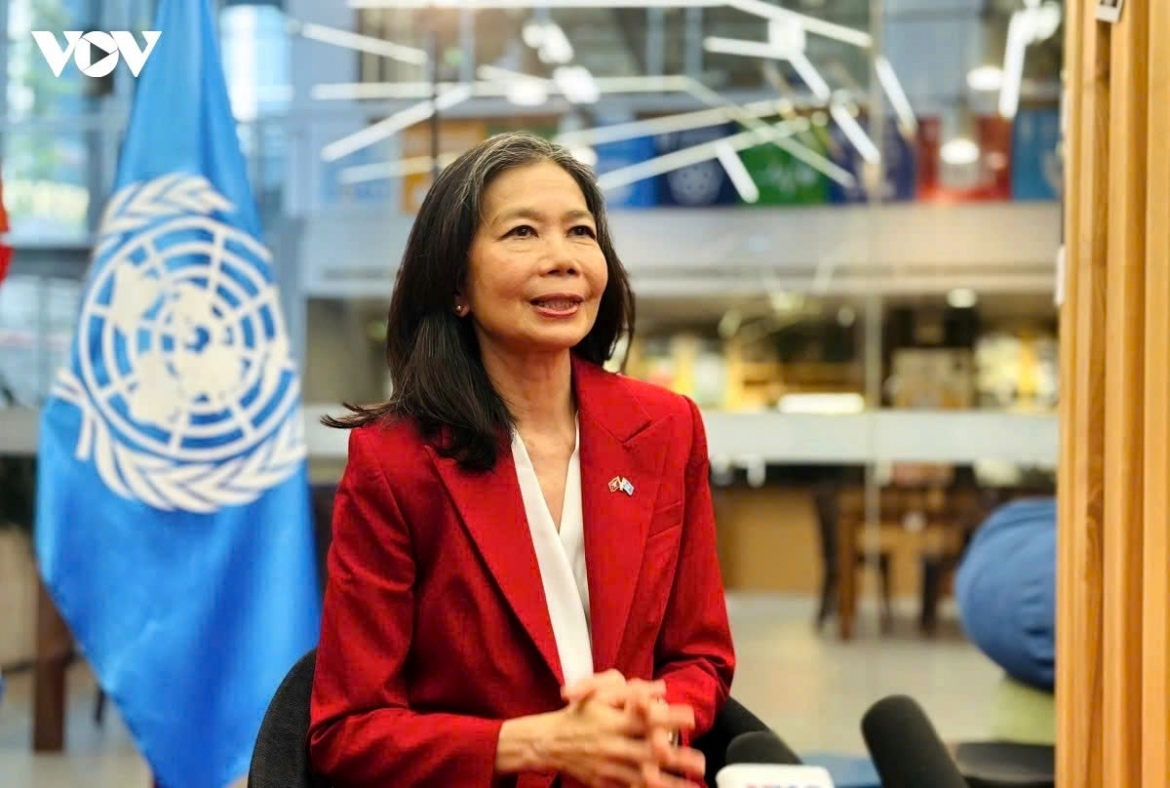 |
| Viet Nam is deepening its partnership with the United Nations, sharing experience and contributing more actively to global cooperation and sustainable development, says UN Resident Coordinator in Viet Nam Pauline Tamesis. |
Against a backdrop of geopolitical differences and fragmentation, she said countries capable of promoting dialogue, building trust and seeking common ground are taking on greater importance.
Vietnam’s own journey, she stressed, demonstrates how peace, international cooperation and development can reinforce one another.
This perspective is reflected in the new cycle of the United Nations Sustainable Development Cooperation Framework for Viet Nam for 2027-2031, which aims to build a more strategic partnership. The UN will continue to provide knowledge, expertise and international partnerships to support the country’s development goals, while Vietnam’s experience and solutions can contribute further to progress in the region and beyond.
Building resilience to emerging challenges
Alongside promoting multilateral cooperation, the Viet Nam-UN partnership in the coming period will focus on protecting development gains and strengthening resilience to emerging challenges.
According to Tamesis, as Viet Nam pursues its goal of becoming a high-income country by 2045 and achieving net-zero emissions by 2050, protecting the development gains already made is an important priority. This is also a focus of the new sustainable development cooperation framework between the two sides.
One challenge she highlighted is the growing impact of extreme weather and climate shocks, which cause annual economic losses equivalent to around 1–1.5% of Vietnam’s GDP. In response, the UN plans to work with the Government of Viet Nam across several closely interconnected areas.
The first priority is strengthening the resilience of infrastructure and agri-food systems, with climate adaptation taken into account from the outset of development planning.
This will be accompanied by efforts to strengthen adaptive capacity and promote the energy transition through improved early-warning systems, greater early action ahead of disasters and the modernisation of meteorological monitoring networks. Digital tools and artificial intelligence are also being considered to support real-time risk forecasting.
The UN is also focusing on investment in people, expanding social protection systems, promoting digital inclusion and financial inclusion, and developing green skills.
The overarching goal of these areas of cooperation is to help Viet Nam sustain economic growth, ensure social inclusion and advance its climate objectives at the same time, thereby protecting development gains and laying the foundations for a greener and more prosperous future, Tamesis concluded.
Viet Nam, Bulgaria seek to turn Strategic Partnership into tangible results
Vietnamese Ambassador to Bulgaria Nguyen Thi Minh Nguyet said Bulgaria holds a special place in Vietnam’s development journey, having been among the first nations to establish diplomatic ties in 1950 and standing by the country during its challenging times.
Thousands of Vietnamese studied and worked in Bulgaria, helping build strong bonds between the people of the two countries, she added.
Speaking at a recent ceremony marking the 81st anniversary of Vietnam’s National Day (September 2, 1945 – 2026), attended by more than 350 delegates, the ambassador highlighted the establishment of the Viet Nam-Bulgaria Strategic Partnership during General Secretary of the Communist Party of Viet Nam Central Committee To Lam’s official visit to Bulgaria in October 2025 as opening a new chapter in bilateral relations.
Reviewing the country’s 81-year journey of national construction and development, Nguyet noted that the Vietnamese economy expanded 8.02% in 2025, with gross domestic product (GDP) reaching approximately 514 billion USD and total goods trade exceeding 930 billion USD.
Viet Nam is working toward becoming a developed and prosperous country by the middle of the 21st century, with science and technology, innovation and high-quality human resources serving as key drivers of development, cited VNA.
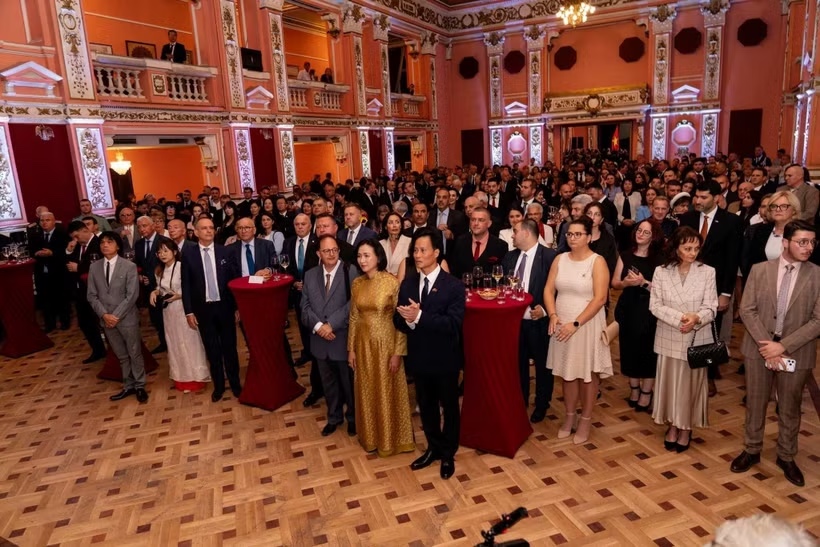 |
| Delegates attend the ceremony marking the 81st anniversary of Vietnam’s National Day (September 2, 1945 – 2026) (Photo published by VNA) |
“For more than seven decades, Viet Nam and Bulgaria have built trust. Today, it is our responsibility to turn that trust into concrete results,” the ambassador said.
She called for stronger cooperation between the parliaments and agencies of the two countries, greater connectivity among businesses, universities, research institutes and localities, and expanded exchanges among young people. These efforts, she said, would help translate the potential of the Strategic Partnership into practical programmes, projects and benefits for people and businesses.
Bulgarian Deputy Foreign Minister Christo Polendakov affirmed that Bulgaria attaches great importance to its traditional friendship with Viet Nam, which has lasted for more than 75 years.
He spoke highly of Vietnam’s robust development, describing it as a dynamic economy and an important development centre in Southeast Asia. He said the two countries have substantial room to expand cooperation in the digital and green economies.
Polendakov noted that the elevation of Viet Nam-Bulgaria relations to a Strategic Partnership in 2025 had brought bilateral ties to “the highest level of Bulgaria’s relations with any country in Asia” and made it one of the few strategic partnerships Bulgaria has established with other countries.
He affirmed that Bulgaria will continue promoting EU-Vietnam and EU-ASEAN relations and work with Viet Nam to further develop their Strategic Partnership.
Ambassador Nguyet reiterated Viet Nam pursues a foreign policy of independence, self-reliance, peace, friendship, cooperation, and development, and multilateralisation and diversification of external ties, while respecting international law, upholding multilateralism, and resolving differences and disputes via peaceful measures.
She expressed gratitude to Bulgarian agencies, partners and friends, diplomatic colleagues and the Vietnamese community in Bulgaria for their friendship, cooperation and valuable support for Viet Nam.
She affirmed that the trust and friendship nurtured by previous generations are being further enriched with new areas of cooperation under the Strategic Partnership, toward more practical outcomes for the peoples of both countries.
As part of activities marking Vietnam’s 81st National Day, the Vietnamese community in Bulgaria also organised a friendly football match drawing the participation of numerous community members, young people and students, helping strengthen community solidarity and express their affection toward the homeland.
Viet Nam, China strengthen cooperation in combating cross-border crimes
The 20th provincial-level talks between the border guard delegations from Dien Bien, Lai Chau, Tuyen Quang and Lao Cai provinces of Viet Nam and the Yunnan General Station of Exit and Entry Frontier Inspection of China was held in Dien Bien on September 18, focusing on strengthening cooperation in combating and suppressing cross-border crime.
Addressing the event, heads of the two delegations highlighted comprehensive cooperation results, which have contributed to firmly safeguarding territorial sovereignty and national border security and building a Vietnam–China border of peace, friendship, stability, cooperation and development.
This has established a foundation of solidarity and trust for an increasingly stable and prosperous border, they stressed.
They agreed on key cooperation priorities for the coming period, including strengthening border management, strictly implementing the three legal documents on the Vietnam–China land border, stepping up efforts to combat and suppress cross-border crimes, enhancing information sharing and coordination in handling cases emerging in border areas, and facilitating customs clearance, cited VNA.
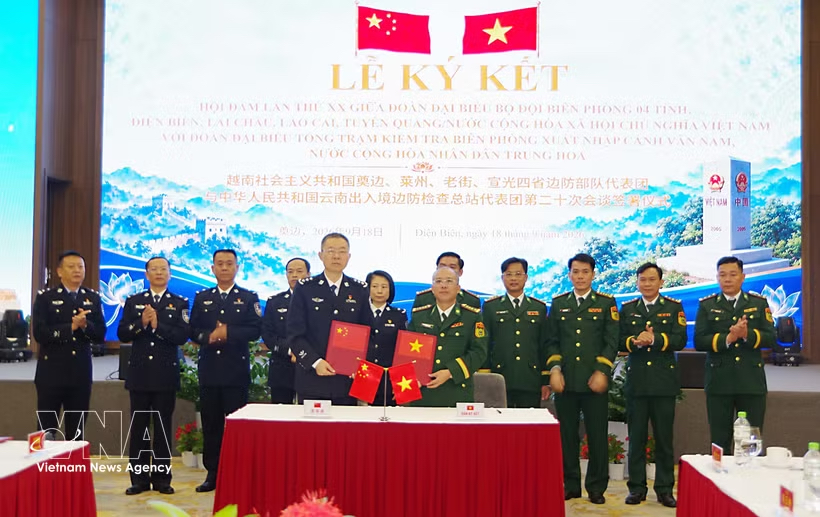 |
| The two sides exchange a memorandum of understanding at the talks (Photo: VNA) |
The two sides will also work to upgrade border gates, reopen the facilities previously closed due to disease outbreaks, and expedite construction at key border crossings, including the Ma Lu Thang (Vietnam) – Jinshuihe (China) border gate, the Ban Vuoc (Vietnam) – Ba Sa (China) bridge, and the road connection between A Pa Chai (Vietnam) and Longfu (China).
They agreed to continue legal dissemination and education activities in Vietnamese and Chinese languages, promote political, station-to-station, cultural, artistic and sports exchanges, as well as advise local authorities on people-to-people external relations activities along the shared border.
Over the recent past, the two sides have seriously implemented the three legal documents on the Vietnam–China land border and bilateral cooperation agreements, while conducting extensive legal dissemination and education to raise border residents’ awareness of the law.
They have also regularly conducted joint patrols and inspections to safeguard the borderline and markers, closely cooperated in managing border gates, border crossings, along with people, vehicles and goods entering and leaving the two countries, and facilitated trade and socio-economic development in border areas.
Cooperation in preventing and combating crimes, particularly cross-border human trafficking, smuggling, and illegal entry and exit, has proven effective, helping maintain political security and social order and safety in border areas.
The two sides reaffirmed that maintaining annual provincial-level talks remains a practical way to foster solidarity, friendship, and mutual trust between the border protection forces of the two nations.

 Vietnam News Today (Sep. 14): PM Le Minh Hung Outlines Three Major Orientations For BRICS at 18th Summit
 Vietnam News Today (Sep. 15): Thai King, Queen Arrive in Hanoi for State Visit to Vietnam