
Global steel turns to India with ASEAN Demand Offsetting
 |
India's per-capita steel consumption remains significantly below the global average, indicating substantial headroom for growth. For context, China's per-capita steel intensity peaked at approximately 600 kilograms per person annually at the height of its construction boom. India currently consumes roughly 90 kilograms per person annually — a gap that investment in railways, highways, urban transit systems, and renewable energy infrastructure is beginning to close.
| Demand Driver | Steel Consumption Implication |
|---|---|
| National highway expansion | High-volume construction-grade steel demand |
| Railway and metro modernisation | Structural and engineering steel requirements |
| Urban residential and commercial construction | Long steel products for housing and commercial builds |
| Renewable energy infrastructure | Steel-intensive wind tower and solar mounting systems |
| Manufacturing capacity expansion | Flat steel for industrial and capital goods production |
Why India's Demand Profile Is More Durable
A critically important but underappreciated distinction between India's emerging steel demand cycle and China's historical one is the diversity of demand drivers. China's steel boom was overwhelmingly property-concentrated, which created both extraordinary growth and extraordinary vulnerability when that single sector corrected.
India's steel demand growth, however, is distributed across infrastructure, manufacturing, and energy transition sectors, making it structurally more resilient to single-sector downturns. According to major miners such as BHP and Rio Tinto, India is increasingly viewed as driving steel's next wave of growth precisely because of this diversified demand base.
India's steel industry is also predominantly blast furnace-based, meaning it consumes iron ore and metallurgical coal as primary feedstocks rather than relying on scrap-fed electric arc furnaces. This is a technically significant point for iron ore exporters: blast furnace steelmaking requires substantial ore inputs per tonne of finished steel, making India a high-quality demand replacement for Australian and Brazilian iron ore producers.
India's blast furnace dominance means that every new tonne of Indian steelmaking capacity added creates genuine seaborne iron ore import demand, not merely electricity consumption. This structural characteristic makes the India demand growth story directly relevant to iron ore trade volumes in a way that some other emerging markets are not.
ASEAN's Distributed Steel Demand Growth
Southeast Asia's collective steel demand is projected to roughly double from current levels across the coming decade, driven by rapid industrialisation across multiple economies simultaneously. Unlike China's concentrated demand, ASEAN's growth is distributed across different jurisdictions with varying demand profiles, reducing concentration risk for iron ore exporters and creating a more diversified customer base.
Key ASEAN economies driving the expansion:
- Vietnam: Export-oriented manufacturing expansion, particularly electronics and textiles, is generating sustained demand for flat steel used in industrial and logistics facilitiest.
- Indonesia: Domestic infrastructure investment, combined with an emerging nickel-integrated steel industry, creates unique demand dynamics. Indonesia's downstream nickel processing ambitions are intersecting with broader steel capacity expansion.
- Philippines: Urban infrastructure investment and residential construction are underpinning long steel product demand, supported by sustained remittance-driven consumer spending.
- Thailand: Automotive manufacturing and industrial production are supporting flat steel consumption, with the country's position as a regional manufacturing hub attracting continued capital investment.
A factor not widely discussed in mainstream market commentary is the degree to which ASEAN's manufacturing-driven steel demand is directly linked to foreign direct investment flows. Companies diversifying supply chains and into Vietnam, Indonesia, and the Philippines are constructing factories, logistics parks, and industrial zones that require substantial steel inputs. Iron ore miners are consequently highlighting India and ASEAN as their primary growth markets, with sustained FDI functioning as a leading indicator for regional steel demand.
Recommended
 Economy
Legal Reforms Facilitate Corporate Securities Issuance
 Economy
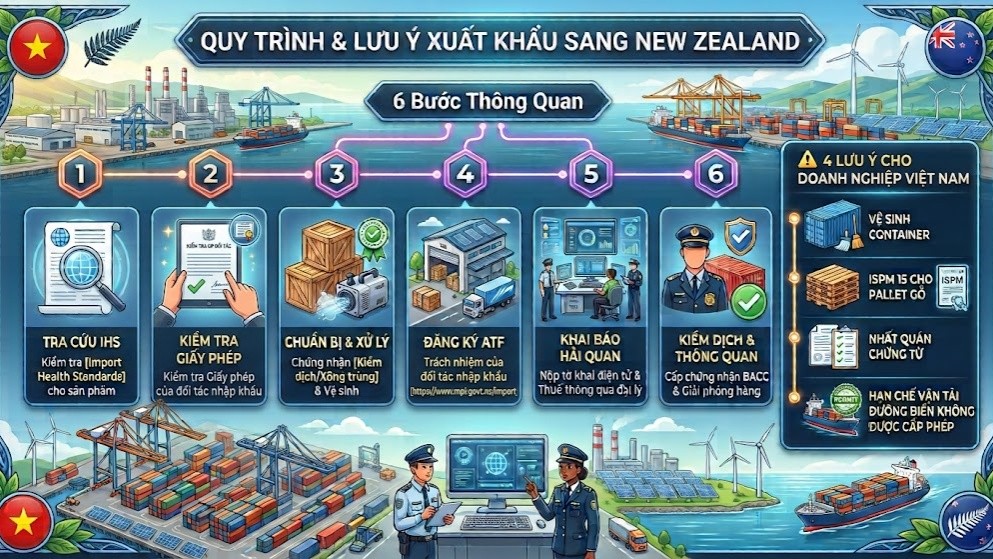
Import Procedures for Goods Entering the New Zealand Market
 Economy